


Organic Shampoos for Thinning Hair: Dermatologist Tips
Table of Contents
- Why Organic Shampoos Matter for Thinning Hair
- Causes of Hair Thinning in Women
- Key Ingredients Dermatologists Recommend
- How to Improve Scalp Health Naturally
- What to Avoid: Common Mistakes with Thinning Hair
- Organic vs. Clinical Hair Loss Treatments
- Building a Routine That Works
- Conclusion
Last Updated: August 19, 2026
Why Organic Shampoos Matter for Thinning Hair
Hair thinning affects many women, yet most solutions focus on what happens after hair falls out rather than preventing loss in the first place. The real opportunity lies in understanding that your scalp health directly determines whether hair thrives or sheds. When you choose organic shampoos for thinning hair, you're selecting formulas designed to work with your scalp's natural microbiome rather than against it. Conventional shampoos strip away protective oils and disrupt the delicate balance that keeps follicles strong. At Harmony Harvest, we believe that COSMOS-certified organic ingredients provide the foundation for genuine scalp recovery. These plant-based formulas address the root cause, literally, by nourishing follicles without the synthetic surfactants that trigger inflammation and accelerate hair loss.
The difference between a standard shampoo and one formulated for thinning hair comes down to ingredient philosophy. Organic options prioritize follicle stimulation, scalp circulation, and hair shaft strengthening through botanical extracts rather than chemical shortcuts. This approach takes longer to show results, but the outcomes tend to be more sustainable because you're rebuilding scalp health, not masking the problem.
Causes of Hair Thinning in Women
Hair thinning in women stems from multiple interconnected factors, and understanding them helps you choose the right treatment approach. Telogen effluvium, a condition where stress, hormonal shifts, or nutritional deficiencies push hair prematurely into the shedding phase, accounts for a significant portion of hair loss cases. Unlike androgenetic alopecia, which is genetic and progressive, telogen effluvium is often reversible when you address the underlying trigger.
Scalp inflammation is another overlooked culprit. When your scalp becomes irritated by harsh detergents, product buildup, or poor circulation, follicles respond by weakening. This inflammation disrupts the hair growth cycle and accelerates the transition from the active anagen phase to the resting telogen phase. Women often notice increased shedding after switching to new products or during periods of high stress, both situations that inflame the scalp and interrupt normal hair growth patterns.
Nutritional deficiencies also play a role. Hair requires biotin, iron, zinc, and B vitamins to maintain density. Without adequate nutrition, even healthy follicles struggle to produce strong hair shafts. This is why some women see improvement in hair thickness when they address diet alongside topical treatments.
Hormonal fluctuations, whether from perimenopause, thyroid imbalance, or hormonal contraceptives, can trigger or worsen thinning. These shifts affect how long hair remains in the growth phase and how efficiently follicles regenerate. The scalp's sensitivity to DHT (dihydrotestosterone), a hormone derived from testosterone, also increases with age, making follicles more vulnerable to miniaturisation even in women without genetic predisposition to hair loss.
Key Ingredients Dermatologists Recommend
Dermatologists consistently recommend specific botanical compounds for thinning hair because these ingredients have demonstrated effects on follicle stimulation and scalp health. The most evidence-backed options work through distinct mechanisms: some block DHT, others improve circulation, and still others strengthen the hair shaft itself.
DHT-Blocking Botanicals
Saw palmetto and kaempferol (a flavonoid found in plants like ginkgo and apple skin) inhibit the enzyme 5-alpha reductase, which converts testosterone into DHT. By reducing DHT at the scalp level, these ingredients help prevent follicle miniaturisation, the process where hair shafts gradually thin until they stop producing visible hair. Many dermatologists recommend products containing both DHT-blocking and anti-inflammatory ingredients because they address thinning from multiple angles simultaneously.
Scalp Stimulation and Circulation
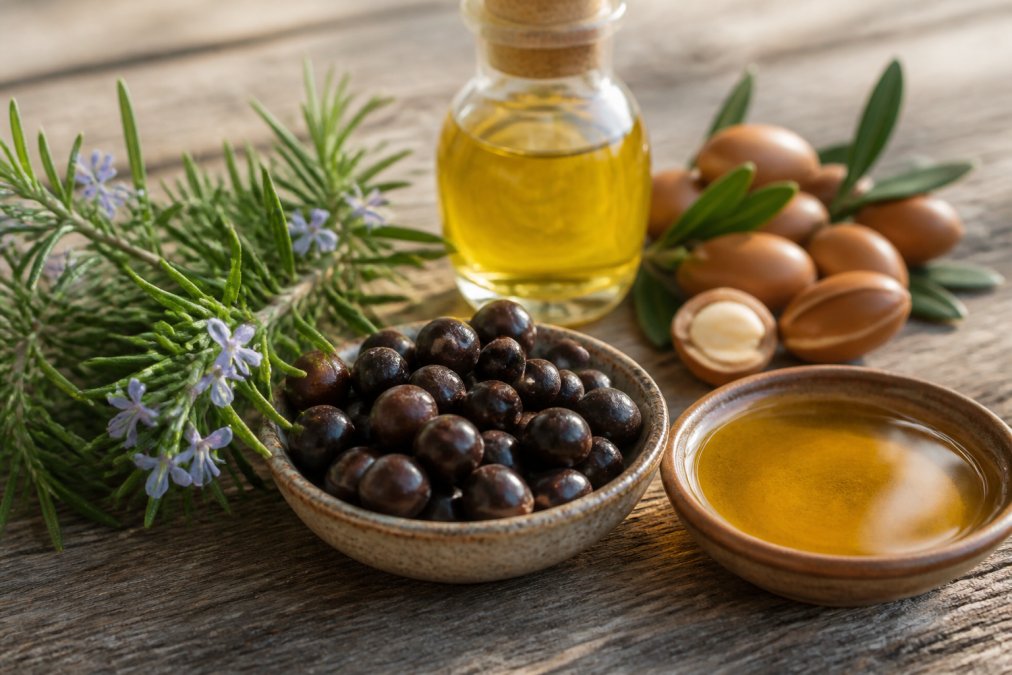
Rosemary extract and caffeine are among the most researched ingredients for improving blood flow to the scalp. Caffeine works by dilating blood vessels and increasing nutrient delivery to follicles, while rosemary contains cineole and camphor, compounds that create a mild stimulating sensation and support healthy scalp circulation. This improved blood flow means follicles receive more oxygen and nutrients during the critical anagen (growth) phase.
Peppermint and spearmint oils provide similar stimulation through their natural menthol content. The tingling sensation these oils create isn't just pleasant, it signals increased circulation to the treatment area.
Hair Shaft Strengthening
Biotin, keratin, and plant proteins strengthen the hair shaft itself, reducing breakage and improving the appearance of density. When hair breaks near the scalp, it creates the visual illusion of thinning even if follicles remain healthy. Keratin-infused formulas fill microscopic gaps in the hair cuticle, making strands more resilient to styling stress and environmental damage.
Argan oil and almond oil provide essential fatty acids and vitamin E, which protect the hair shaft from oxidative stress. These oils also help regulate scalp sebum production, too much oil suffocates follicles, while too little leaves the scalp vulnerable to irritation.
How to Improve Scalp Health Naturally
Scalp health forms the foundation for thicker, stronger hair growth. A healthy scalp maintains balanced pH (typically 4.5-5.5), supports a balanced microbiome of beneficial bacteria, and remains free from inflammation and buildup. Natural approaches to scalp care work because they support these conditions rather than disrupting them.
Gentle cleansing is the first step. Sulfate-free shampoos clean without stripping protective oils, which means your scalp doesn't overcompensate by producing excess sebum. When you use harsh detergents, your scalp responds by producing more oil, creating a cycle of greasiness and the urge to wash more frequently. Switching to a sulfate-free formula breaks this cycle within 2-3 weeks.
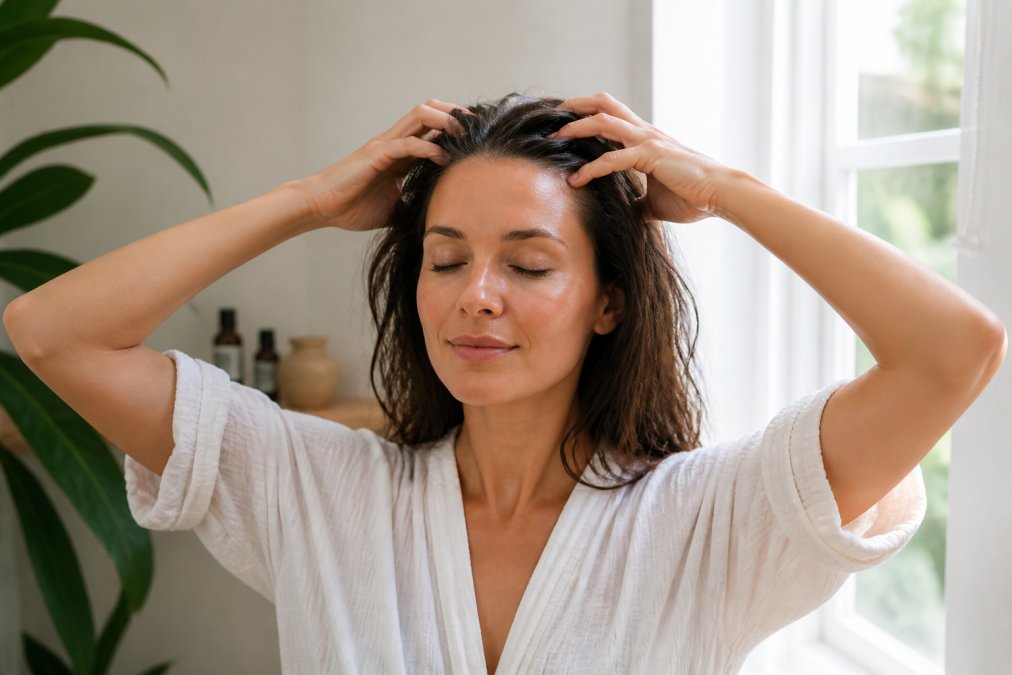
Scalp massage improves circulation and supports follicle stimulation. Spend 5 minutes daily massaging your scalp with your fingertips using gentle circular motions. This practice increases blood flow to hair follicles, reduces tension in the scalp muscles, and helps distribute natural oils evenly. Many women report noticing thicker hair growth within 4-6 weeks of consistent scalp massage combined with a supportive shampoo.
Exfoliating the scalp once weekly removes dead skin cells and product buildup that can suffocate follicles. You don't need a harsh scrub, a gentle chemical exfoliant using salicylic acid or enzymatic exfoliants works better. This removes the barrier preventing active ingredients from reaching follicles while maintaining the scalp's protective acid mantle.
Hydration matters as much for scalp health as it does for skin. A dehydrated scalp becomes flaky, inflamed, and prone to follicle dysfunction. Using hydrating ingredients like aloe vera or plant glycerin helps maintain scalp moisture without heaviness. Pair your shampoo with a lightweight, organic conditioner applied only to the ends, this protects hair while keeping the scalp light. extensions for fine hair.
Reducing heat styling and chemical treatments gives your scalp and hair a chance to recover. If you must use heat, apply a protective serum first and keep temperatures moderate. Chemical treatments like permanent colour or relaxers accelerate hair thinning by weakening the hair shaft and stressing follicles. Many women see significant improvement in density simply by extending the time between treatments.
What to Avoid: Common Mistakes with Thinning Hair
Most women with thinning hair inadvertently worsen the problem through well-intentioned but counterproductive habits. Understanding these mistakes helps you protect the hair you have while new growth strengthens.
Washing too frequently is the most common error. Daily washing strips your scalp of protective oils, triggering inflammation and forcing the scalp to overproduce sebum. This creates a false need to wash more often. Women with thinning hair benefit from washing 2-3 times weekly, allowing natural oils to coat and protect the scalp and hair shaft. If your hair feels greasy between washes, resist the urge to shampoo, instead, use a dry shampoo or simply rinse with cool water.
Using silicone-based products creates buildup that suffocates follicles. Silicones coat the hair shaft, making it appear temporarily fuller, but they accumulate on the scalp and block nutrient absorption. Over time, this buildup worsens thinning because follicles can't access the moisture and nutrients they need. Switching to silicone-free, organic formulas removes this barrier.
Applying conditioner to your scalp is another mistake. Conditioner is designed for the hair shaft, not the follicle. When you condition your scalp, you're adding weight and moisture to an area that already produces its own oils. This triggers inflammation and can accelerate shedding. Apply conditioner only from the mid-length of your hair to the ends.
Ignoring scalp health while focusing only on hair treatments is fundamentally backward. Your scalp is the soil in which hair grows. No amount of hair-strengthening serum will help if the scalp is inflamed, dehydrated, or congested with buildup. Women who see the best results prioritise scalp health first, then support hair strength with secondary treatments.
Using products with harsh surfactants, parabens, or synthetic fragrances perpetuates scalp inflammation. These ingredients disrupt the scalp's natural pH and microbiome, weakening follicles. Switching to COSMOS-certified organic formulas eliminates this source of ongoing damage.
Organic vs. Clinical Hair Loss Treatments
The debate between organic and clinical approaches often presents a false choice. The most effective strategy combines both, using organic shampoos and scalp care as the foundation while considering clinical options when appropriate.
Organic treatments work through natural mechanisms: improving circulation, reducing inflammation, blocking DHT naturally, and nourishing follicles. These approaches take 8-12 weeks to show visible results because they're rebuilding scalp health rather than forcing immediate change. The advantage is sustainability, once your scalp health improves, results tend to persist as long as you maintain the routine.
Clinical treatments like minoxidil (Rogaine) and finasteride (Propecia) work faster and more aggressively. Minoxidil stimulates blood flow directly, while finasteride blocks DHT systemically. These medications can produce noticeable results within 4-6 weeks. However, they require ongoing use, stopping treatment reverses the benefits. They also carry potential side effects and aren't suitable for everyone.
The practical approach for most women involves starting with organic shampoos and scalp care for 12 weeks. If you see meaningful improvement, continue that routine. If thinning persists despite consistent organic treatment, consult a dermatologist about clinical options. Many women find that combining a clinical treatment with organic scalp care produces better results than either approach alone, because the clinical treatment addresses follicle function while the organic routine supports scalp health.
Building a Routine That Works
An effective routine for thinning hair doesn't need to be complicated. Simplicity increases compliance, and consistency matters more than complexity.
Start with a sulfate-free, organic shampoo formulated for thinning hair. Wash 2-3 times weekly with warm (not hot) water, which is less drying to the scalp. Massage your scalp gently for 2-3 minutes during shampooing, this stimulates circulation and helps the active ingredients penetrate. Rinse thoroughly with cool water to close the hair cuticle and reduce frizz.
Follow with a lightweight conditioner applied only to the ends. Leave it on for 1-2 minutes, then rinse completely. Excess conditioner left on the scalp will cause buildup and weigh down fine hair.
Once or twice weekly, perform a scalp massage for 5 minutes using your fingertips. This takes minimal time but significantly improves circulation. If you want to enhance the massage, use a few drops of a lightweight oil like jojoba or argan, this nourishes the scalp while you massage.
Weekly exfoliation is optional but beneficial. If you choose to exfoliate, use a gentle chemical exfoliant (salicylic acid or enzymatic) rather than a physical scrub, which can irritate the scalp. Apply it to dry scalp, leave for 5-10 minutes, then shampoo as normal.
Consider adding a scalp serum or tonic on non-shampoo days. These tonics improve circulation and deliver active ingredients directly to follicles without the heaviness of a full shampoo routine.
The most important element is consistency. Your scalp needs 8-12 weeks of steady care to show improvement. Many women abandon routines after 3-4 weeks because they expect faster results. Stick with your chosen products for at least 12 weeks before evaluating effectiveness.
| Step | Frequency | Duration | Purpose |
|---|---|---|---|
| Sulfate-free shampoo | 2-3 times weekly | 5 minutes | Gentle cleansing without stripping oils |
| Scalp massage | Daily or 5 times weekly | 5 minutes | Improve circulation and follicle stimulation |
| Lightweight conditioner | 2-3 times weekly | 2 minutes | Protect hair ends without scalp buildup |
| Scalp exfoliation | Once weekly | 10 minutes | Remove dead skin and product buildup |
| Scalp serum or tonic | 2-3 times weekly | 2 minutes | Deliver active ingredients between washes |
Hair thinning responds best to consistent, evidence-based care that addresses scalp health as the foundation. Organic shampoos formulated with DHT-blocking botanicals, circulation-supporting ingredients, and hair-strengthening compounds give your follicles the support they need to produce thicker, stronger hair. The routine doesn't need to be elaborate, scalp massage, gentle cleansing, and targeted weekly treatments create measurable improvement within 12 weeks.
Harmony Harvest Hair Care collection features COSMOS-certified organic, vegan formulas that support scalp health and follicle strength without synthetic detergents or harsh chemicals. Explore the range and discover how plant-based ingredients can transform your hair density and scalp vitality.
Frequently Asked Questions
What ingredients should I look for in organic shampoos for thinning hair?
Dermatologists recommend seeking organic shampoos with DHT-blocking botanicals like saw palmetto and kaempferol, scalp stimulants such as rosemary and caffeine, and hair-strengthening agents including biotin and keratin. Look for sulphate-free, paraben-free formulas that won't strip your scalp. COSMOS-certified organic shampoos ensure you're getting pure plant-based ingredients without synthetic detergents that can weaken fragile strands.
How often should I wash thinning hair to maintain scalp health?
Most dermatologists recommend washing thinning hair 2-3 times per week with a gentle, organic shampoo. Over-washing can strip natural oils and stress delicate follicles, whilst under-washing allows buildup that inflames the scalp. Use lukewarm water, massage gently for 2-3 minutes to stimulate circulation, and follow with a hydrating conditioner. Consistency matters more than frequency, establish a routine your scalp responds well to.
Do organic shampoos actually help with hair thinning, or is it just marketing?
Organic shampoos work best as part of a holistic routine rather than standalone solutions. COSMOS-certified organic formulas eliminate harsh chemicals that damage follicles and irritate the scalp microbiome. Ingredients like procyanidin, quercetin, and botanical extracts have shown promise in clinical studies for extending the hair growth cycle and reducing inflammation. Results typically appear after 8-12 weeks of consistent use, combined with scalp massage and proper nutrition.
What's the difference between hair loss and hair thinning?
Hair thinning refers to a gradual reduction in hair density and shaft thickness, often linked to scalp inflammation, hormonal shifts, or nutrient deficiencies. Hair loss (alopecia) involves actual follicle shrinkage or dormancy, sometimes triggered by DHT sensitivity or telogen effluvium. Organic shampoos address thinning by nourishing follicles and improving scalp health, whilst clinical treatments may be needed for active hair loss. A dermatologist can distinguish between the two and recommend the appropriate approach.
This article was written using GrandRanker
Best Sellers

Read more

Best Botanical Ingredients for Hair Follicle Stimulation
Botanical ingredients hair follicles: Discover the best botanical ingredients for stimulating hair follicles naturally. Learn which plants support scalp.
Read more
Organic Shampoo for Fine Hair: Volume & Regrowth
Organic shampoo fine hair: Discover organic shampoo for fine hair that boosts volume and supports regrowth. Learn which natural ingredients work best for.
Read more