


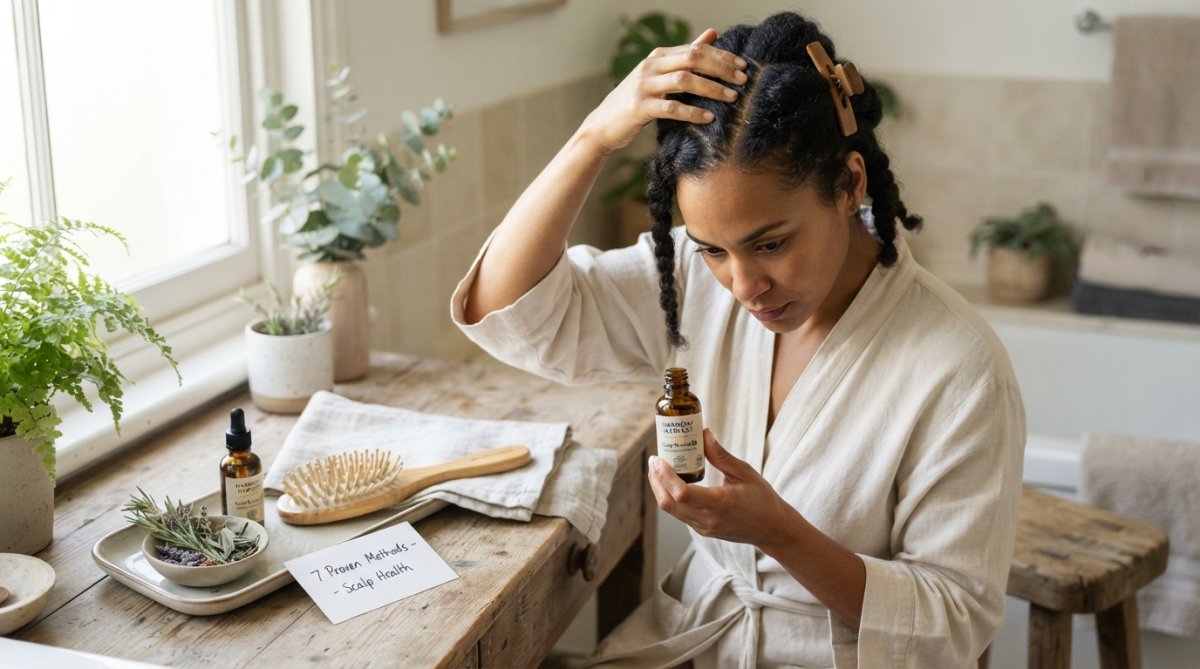
Natural ways to improve scalp health: 7 proven methods
Table of Contents
- Understanding your scalp: why natural care matters
- Healthy scalp tips for everyday routines
- Best ingredients for scalp health you can use at home
- Scalp massage benefits: a natural therapy you can do daily
- Natural scalp remedies for common concerns
- Lifestyle factors that support natural scalp improvement
- Common mistakes when trying to improve scalp naturally
- Conclusion: your path to a healthier scalp
Natural ways to improve scalp health: 7 proven methods
Last Updated: July 27, 2026
Understanding your scalp: why natural care matters
Your scalp is skin, and like all skin, it responds best to natural care that works with your body rather than against it. At Harmony Harvest, we've observed that people who shift from harsh chemical treatments to plant-based approaches often see improvements in itching, dryness, and overall scalp comfort within 2-3 weeks. The reason is straightforward: sulphates and synthetic detergents strip your scalp, triggering a rebound effect where it overproduces oil to compensate, creating a cycle of oiliness and irritation.
Natural care disrupts that cycle. When you feed your scalp nourishing plant oils, botanical extracts, and gentle cleansing agents, the microbiome stabilises, inflammation drops, and the scalp returns to its natural balance.
Healthy scalp tips for everyday routines
Healthy scalp tips start with the basics: what you do every day matters far more than occasional treatments. Most people think the solution to scalp problems is more frequent washing or stronger shampoo. It's the opposite. Overwashing strips natural oils, triggering more oil production. The sweet spot is finding a rhythm that matches your scalp type and sticking with it.
For oily scalps, washing every 2-3 days is often ideal. For dry or sensitive scalps, once or twice weekly is better. Your scalp adapts to a routine within 4-6 weeks, and you'll notice less itching, less flaking, and better texture overall.
Gentle cleansing without harsh chemicals
Gentle cleansing is about using the right product. Most commercial shampoos contain sulphates (sodium lauryl sulphate or sodium laureth sulphate) that strip the scalp's natural oils. These create immediate lather and a squeaky-clean feeling, but they damage your barrier. Sulphate-free alternatives clean without stripping.
Look for shampoos with plant-derived cleansers like saponified coconut oil, sugar-derived surfactants, or soapnuts. These lift dirt and excess oil without leaving your scalp parched. When you wash, focus on the scalp itself, not the ends of your hair. Use warm (not hot) water, which is less irritating. Massage gently with your fingertips for 60 seconds, then rinse thoroughly.
:::pro tip If you're switching from sulphate shampoos, expect a 1-2 week adjustment period where your scalp may feel oilier. This is normal, your scalp is rebalancing. Resist the urge to wash more frequently, and the oiliness will settle. :::
Finding your natural cleansing rhythm
Finding your natural cleansing rhythm means observing your scalp's actual needs rather than following a generic schedule. Start by washing every other day for one week and note how your scalp feels on day three. Adjust from there.
Some people thrive on a 2-day cycle. Others prefer washing once weekly and using a dry shampoo or scalp spray on days 2-6. Dry shampoos made from rice bran or tapioca starch absorb excess oil without water. The rhythm that feels sustainable is the one you'll stick with.
Best ingredients for scalp health you can use at home
The most effective natural remedies for scalp health address the root causes: inflammation, dehydration, microbial imbalance, and barrier damage.
Plant-based oils and their scalp benefits
Plant-based oils mimic the scalp's own sebum. Coconut oil has antimicrobial properties and penetrates the hair shaft, reducing protein loss. Argan oil is rich in vitamin E and linoleic acid, which repair the barrier and reduce inflammation. Jojoba oil closely resembles sebum and regulates oil production without clogging.
Tea tree oil is powerful for oily or flaky scalps, it has antifungal and antibacterial properties that address dandruff-causing organisms. Always dilute it (1-2 drops per 10ml carrier oil) because undiluted tea tree oil can irritate. Rosemary oil improves circulation and stimulates the scalp, promoting healthier hair growth. Peppermint oil cools the scalp and reduces itching.
Apply these oils directly to your scalp 1-2 times weekly. Warm the oil slightly (not hot), part your hair into sections, and massage it into the scalp using your fingertips. Leave it on for 20-30 minutes or overnight, then shampoo out.
| Oil | Best For | How to Use | Frequency |
|---|---|---|---|
| Coconut | Dry, itchy scalp | Warm, massage in, leave 20-30 min | 1-2x weekly |
| Argan | Barrier repair, inflammation | Apply to scalp, focus on dry areas | 1x weekly |
| Jojoba | Oily scalp, regulation | Lightweight, massage in, rinse after 20 min | 2x weekly |
| Tea tree | Flaky, oily scalp | Dilute 1-2 drops per 10ml carrier oil | 1x weekly |
| Rosemary | Hair growth, circulation | Warm oil, massage 5-10 min | 1-2x weekly |
Natural masks and treatments
Natural masks go deeper than oils. A scalp mask is a concentrated treatment you leave on for 15-60 minutes, allowing active ingredients to penetrate and work. A simple clay mask (bentonite or kaolin) mixed with water and a few drops of tea tree oil draws out sebum and toxins from oily scalps. Leave it on for 15-20 minutes, then rinse.
For dry scalps, a honey and avocado mask hydrates deeply. Mix one ripe avocado with two tablespoons of raw honey and massage into the scalp; leave for 30 minutes. Honey is humectant (draws moisture in) and antimicrobial. Avocado is rich in fatty acids that repair the barrier. For a protein-rich treatment, mix egg yolk with one tablespoon of coconut oil and apply to the scalp. Eggs contain amino acids that strengthen hair and reduce breakage. Leave for 20 minutes.
Scalp massage benefits: a natural therapy you can do daily
Scalp massage is one of the most underrated natural ways to improve scalp health, yet it costs nothing and takes just 5 minutes. Massage increases blood flow to the scalp, delivering oxygen and nutrients to hair follicles. It also stimulates the release of natural oils (sebum) that protect and hydrate the hair shaft. Regular massage can reduce stress-related hair loss, improve hair thickness, and ease tension headaches.
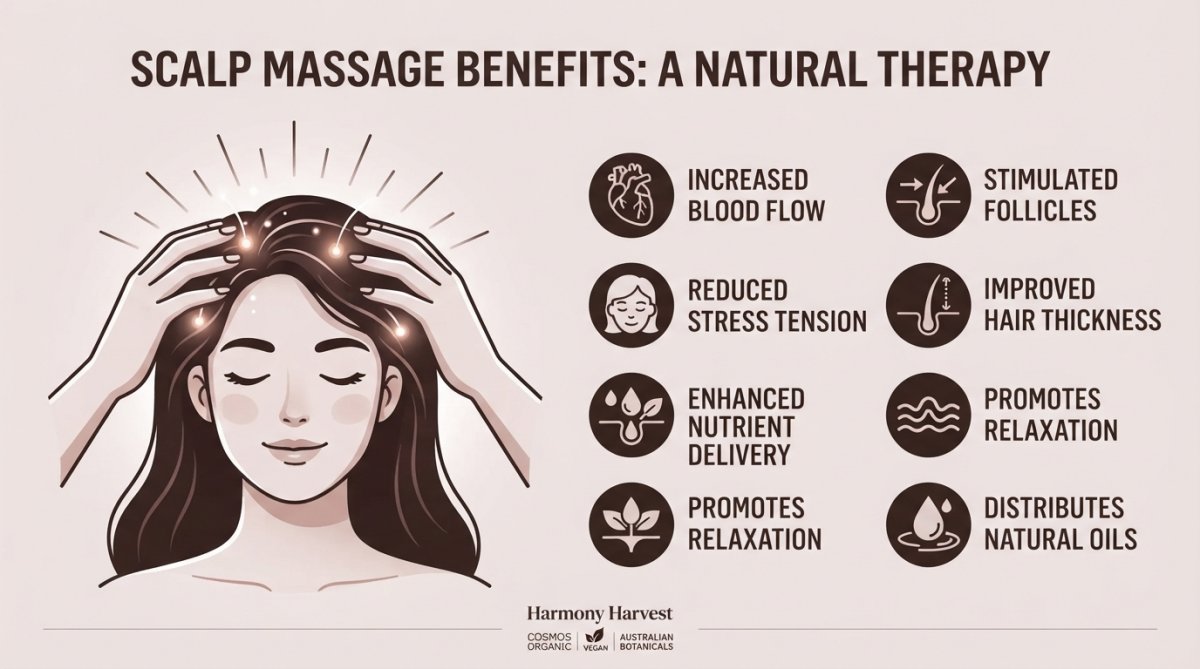
Use your fingertips (not nails) and apply firm but gentle pressure. Start at your hairline and work backward in small circular motions, moving across the entire scalp. Spend extra time on areas that feel tight or tender. Do this for 5-10 minutes daily, ideally in the evening when you're relaxed. You can do it dry or while applying an oil treatment.
Research shows that consistent scalp massage for 5 minutes daily can improve hair thickness measurably within 24 weeks. Increased blood flow to the scalp means more nutrients reach the hair follicle, extending the growth phase and reducing shedding.
Natural scalp remedies for common concerns
Natural scalp remedies address specific problems: dryness, oiliness, flaking, itching, and sensitivity.
Addressing dryness and irritation naturally
Dryness and irritation often stem from overwashing, hot water, or barrier damage. The fix is hydration plus barrier repair. Increase oil treatments from once weekly to 2-3 times weekly. Use warmer oils (coconut, argan, jojoba) rather than lighter ones.
Add a hydrating rinse to your routine. After shampooing, rinse with cool water mixed with a few drops of apple cider vinegar (1 tablespoon per litre). The vinegar balances pH and seals the cuticle, reducing moisture loss. Reduce washing frequency to once weekly and use a gentle, sulphate-free shampoo. Avoid hot water; use lukewarm or cool water instead.
For severe dryness with flaking, a honey mask applied twice weekly works quickly. Leave it on for 30-45 minutes. Most people see improvement in flaking and tightness within 1-2 weeks.
Managing oiliness with plant-based solutions
Oily scalps are often the result of overwashing or using heavy oils. The solution is not to wash more but to stop stripping the scalp. Switch to a gentle, sulphate-free shampoo and wash every 2-3 days instead of daily. Your scalp will stabilise after 1-2 weeks.
For immediate oil control between washes, use a dry shampoo made from rice bran or tapioca starch. Alternatively, use a lightweight scalp spray with witch hazel and peppermint oil, which mattifies without stripping.
When you use oils on an oily scalp, choose lightweight, fast-absorbing ones like jojoba or grapeseed oil, and use less, just 5-10 drops rather than a full tablespoon. Apply only to the scalp, not the hair lengths. A weekly scalp treatment with diluted tea tree oil helps regulate sebum production.
Lifestyle factors that support natural scalp improvement
Your scalp health reflects your overall health. Stress, sleep deprivation, poor nutrition, and dehydration all worsen scalp problems.
Stress triggers inflammation and disrupts the scalp's microbiome. Meditation, yoga, or even 10 minutes of deep breathing daily can help. Sleep is when your body repairs itself, including your scalp and hair. Aim for 7-9 hours nightly. Poor sleep increases cortisol, which triggers inflammation and hair shedding.
Nutrition matters. Your hair grows from protein and minerals. Aim for 0.8-1g of protein per kilogram of body weight daily. Iron, zinc, and B vitamins are critical for hair health. If you're vegetarian or vegan, pay special attention to these nutrients. Drink at least 2 litres of water daily.
Finally, reduce heat styling and tight hairstyles. Both damage the hair and scalp. Tight ponytails and braids can cause traction alopecia (hair loss from pulling). Opt for loose styles or leave your hair down when possible.
Common mistakes when trying to improve scalp naturally
The biggest mistake is expecting results too quickly and giving up. Natural remedies work, but they take 4-6 weeks to show noticeable improvement. Stick with a routine for at least a month before deciding it's not working.
The second mistake is using too much product. More oil doesn't mean better results; it means buildup and greasiness. Use 1-2 teaspoons of oil per application, not a quarter cup.
The third mistake is mixing too many products at once. Introduce one new product every 1-2 weeks so you know which one is helping or hurting.
The fourth mistake is ignoring underlying causes. If your scalp is oily because you're washing daily with sulphates, no amount of oil treatment will fix it. Address the root cause by changing your cleansing routine.
Finally, don't assume all "natural" products are created equal. Look for products that list actual plant ingredients (oils, extracts, butters) rather than vague terms like "natural fragrance." Harmony Harvest products are COSMOS-certified organic and vegan, which means they're independently verified to meet strict standards for purity and sustainability.
Conclusion: your path to a healthier scalp
Natural ways to improve scalp health are not shortcuts; they're a return to what actually works. Your scalp doesn't need aggressive chemicals or complicated routines. It needs consistent, gentle care with nourishing ingredients and lifestyle support.
Start with one change: swap your shampoo to a sulphate-free formula, add a weekly oil treatment, or begin a daily 5-minute scalp massage. Give it 4 weeks. You'll notice less itching, less flaking, more shine, and a scalp that finally feels balanced.
Ready to support your scalp health journey? Explore our Harmony Harvest Scalp Cleansing Treatment and discover our full Hair Care range, all COSMOS-certified organic, vegan, and cruelty-free.
Frequently Asked Questions
How can I improve my scalp health naturally without harsh chemicals?
Start with gentle, natural cleansing using products free from synthetic detergents, followed by regular scalp massage to stimulate circulation. Incorporate plant-based oils like coconut or jojoba, stay hydrated, manage stress, and avoid over-washing. Natural scalp remedies such as gentle masks with botanical ingredients support healing. Consistency matters more than complexity, simple, nurturing routines often deliver better results than complicated regimens with multiple products.
What are the best ingredients for scalp health that actually work?
Plant-based oils (coconut, jojoba, argan) nourish and protect the scalp barrier. Aloe vera soothes irritation and reduces inflammation. Tea tree and chamomile have natural antimicrobial and calming properties. Shea butter deeply hydrates without heaviness. Look for COSMOS-certified organic formulations to ensure purity and potency. The most effective ingredients are those your scalp responds to, everyone's needs differ, so observe how your scalp reacts and adjust accordingly.
How often should I use natural scalp treatments like massage and masks?
Scalp massage can be done daily for 5-10 minutes as part of your routine, it costs nothing and builds circulation naturally. Natural masks or intensive treatments work best 1-2 times weekly, depending on your scalp's condition. If your scalp is very dry or irritated, start with once weekly and increase gradually. Gentle cleansing 2-3 times weekly suits most scalp types. Listen to your scalp, if it feels tight or uncomfortable, reduce frequency and focus on hydration.
Can diet and lifestyle really affect scalp health, or is it just topical care?
Both matter equally. A scalp is living tissue that reflects overall health. Staying hydrated, managing stress, getting adequate sleep, and eating nutrient-rich foods all support scalp resilience and hair growth from within. Stress can trigger inflammation and scalp sensitivity, while dehydration weakens the skin barrier. Topical natural remedies work best when paired with these lifestyle foundations, think of them as complementary, not alternative. Holistic care yields the most sustainable results.
Ready to support your scalp with plant-based care? Explore Harmony Harvest's Hair Care collection, including our [EXTERNAL_LINK: Scalp Cleansing Treatment | harmonyharvest.com/products/scalp-cleansing-treatment-1], formulated with COSMOS-certified organic, vegan ingredients designed to cleanse gently and restore scalp balance. Our entire range is cruelty-free and crafted from pure Australian botanicals, because your scalp deserves nature's best.
This article was written using GrandRanker
Best Sellers

Read more
Itchy Scalp: Causes, Remedies & When to See a Doctor
Discover what causes itchy scalp, from dandruff to fungal infections. Learn natural remedies, best products, and when to seek professional help. Explore.
Read more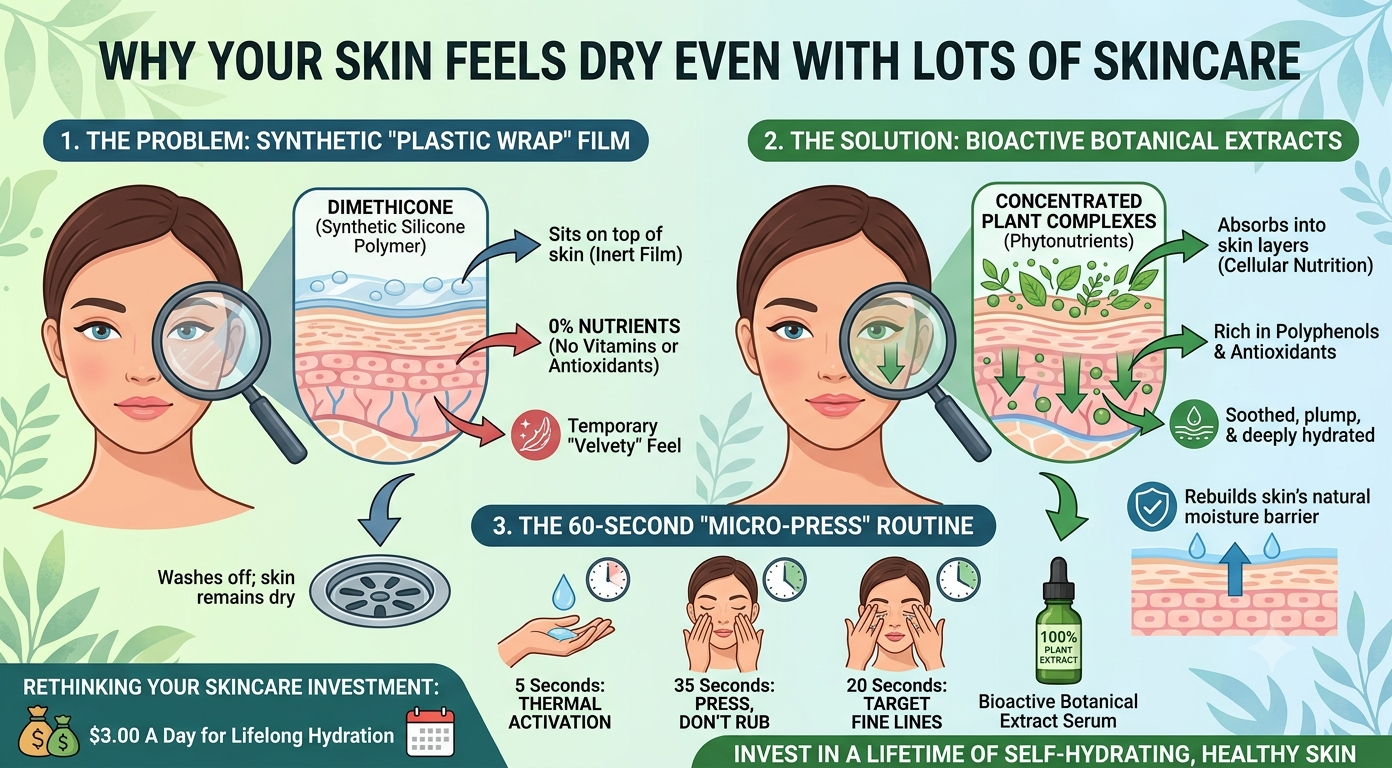
Why Does Your Skin Still Feel Dry No Matter How Much Skincare You Apply?
Does your skin still feel tight, dull, and dry by 2:00 PM—no matter how much cream you layer on? You aren't crazy, and your skin isn't broken. Most conventional moisturizers are designed to fake sm...
Read more