


Itchy Scalp: Causes, Remedies & When to See a Doctor
Table of Contents
- Understanding Itchy Scalp: What's Really Happening
- Common Causes of Itchy Scalp
- Natural Remedies for Itchy Scalp That Actually Work
- Best Shampoo for Itchy Scalp Australia: What to Look For
- The Psychological Impact of Persistent Itching
- When to See a Doctor for an Itchy Scalp
- Caring for Your Scalp Long-Term
- Conclusion
Itchy Scalp: Causes, Remedies & When to See a Doctor
Last Updated: July 26, 2026
Understanding Itchy Scalp: What's Really Happening
An itchy scalp affects far more people than most realise. Your scalp contains thousands of hair follicles, sebaceous glands, and nerve endings working together to maintain a delicate balance. When something disrupts this equilibrium, whether a fungal infection, product sensitivity, or environmental stress, the result is often persistent, maddening itching.
Scalp pruritus and inflammation
Scalp pruritus is the medical term for persistent itching of the scalp. It's not a diagnosis itself, but a symptom pointing to an underlying cause. When your nerve endings respond to inflammation or irritation, they trigger histamine release and the compulsive urge to scratch.
The challenge is that scratching worsens the problem. Repeated scratching damages the scalp's protective barrier, allowing bacteria and fungi to penetrate more easily and intensify inflammation. This creates a cycle: itch → scratch → more inflammation → worse itch. Breaking this cycle requires addressing both the underlying cause and the urge to scratch.
How the scalp microbiome affects itching
Your scalp hosts a complex ecosystem of bacteria and fungi. When balanced, it protects you; when disrupted, it causes problems. An overgrowth of Malassezia fungus is one of the most common causes of itchy scalp. This fungus naturally lives on most people's skin, but when conditions favour its growth, excess oil, warm moisture, certain pH levels, it proliferates and triggers inflammation.
The scalp microbiome is sensitive to the products you use. Harsh sulfates strip natural oils, disrupting pH balance and killing beneficial bacteria. Switching to gentler, plant-based cleansing products can make a dramatic difference. Harmony Harvest's COSMOS-certified organic and vegan Hair Care formulas are designed to cleanse without stripping, supporting your scalp's natural microbial balance rather than disrupting it.
Recent research emphasises that scalp health isn't about killing all microbes, but about restoring balance. A healthy scalp microbiome keeps itchy scalp at bay far more effectively than aggressive antimicrobial approaches.
Common Causes of Itchy Scalp
Understanding what's causing your itchy scalp is essential for choosing the right treatment.
Dandruff and seborrheic dermatitis
Dandruff affects roughly one in five people, presenting as visible white or yellowish flakes on the scalp. The flaking indicates your scalp is shedding skin cells faster than normal.
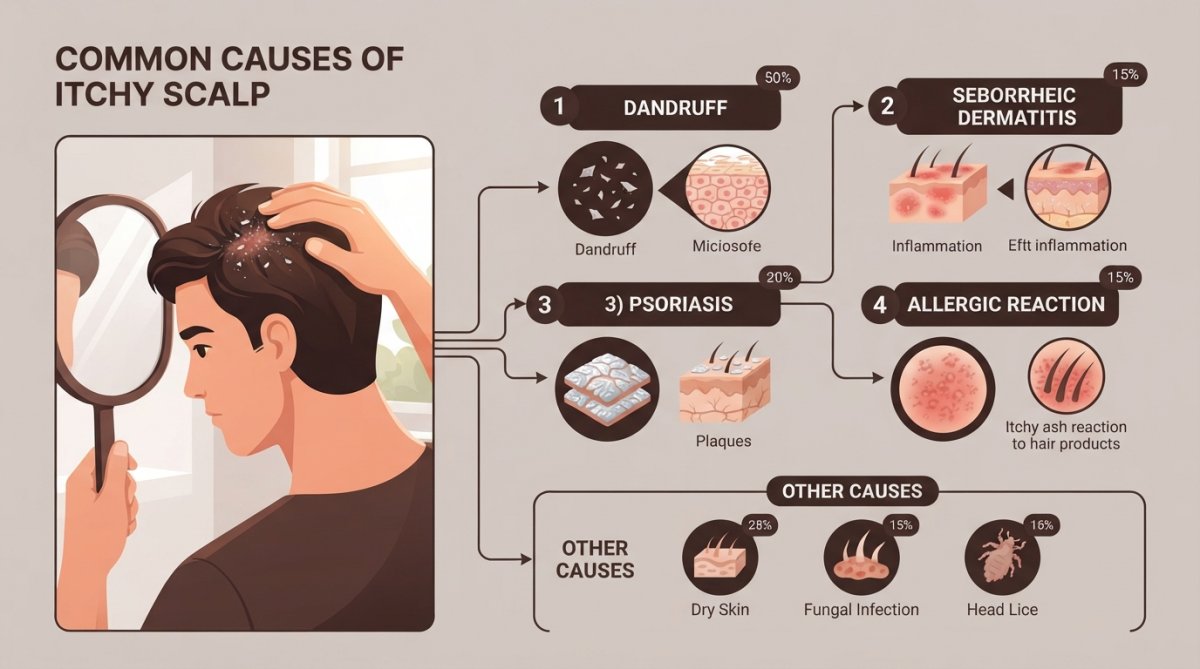
Seborrheic dermatitis is a more severe form of dandruff, causing redness, inflammation, and intense itching. Linked to Malassezia yeast overgrowth, it appears triggered by genetic predisposition, stress, and immune response. Unlike simple dry scalp, it's a chronic condition requiring ongoing management.
Itchy scalp with dandruff or seborrheic dermatitis often worsens in winter and improves in summer. Stress can trigger flare-ups. Many people find that gentle, consistent scalp care with soothing plant-based ingredients helps manage symptoms.
Fungal infections and tinea capitis
Tinea capitis (scalp ringworm) is a fungal infection causing itchy scalp, hair loss, scaling, and sometimes pustules. Unlike dandruff, it's contagious and requires medical treatment. If you suspect tinea capitis, see a dermatologist for diagnosis. Treatment usually involves prescription antifungal shampoos or oral medications.
Allergic contact dermatitis and product sensitivity
Your scalp skin is sensitive, and many hair care products contain fragrances, dyes, or preservatives that trigger allergic reactions. Allergic contact dermatitis appears within hours to days of using a new product, and itching can be severe.
Common culprits include synthetic fragrances, paraphenylenediamine (PPD) in hair dyes, preservatives like methylisothiazolinone, sulfates, and harsh detergents.
The key to managing product sensitivity is switching to genuinely gentle formulas. COSMOS-certified organic products like those from Harmony Harvest are formulated without synthetic fragrances, harsh sulfates, or synthetic preservatives, making them ideal for sensitive scalps.
Dry scalp, psoriasis, and other conditions
Dry scalp is often confused with dandruff but differs significantly. Dry scalp lacks moisture, causing tightness and itching, with larger, less oily flakes than dandruff.
Psoriasis is an autoimmune condition affecting the scalp, causing thick, silvery plaques, severe itching, and sometimes hair loss. Unlike dandruff, psoriatic plaques are raised and well-defined, requiring dermatological management.
Other less common causes include head lice, folliculitis (bacterial or fungal infection of hair follicles), and neuropathic conditions causing persistent itching without visible skin changes.
If your itchy scalp doesn't improve with gentle care within two weeks, or if you notice unusual symptoms, professional evaluation is important.
Natural Remedies for Itchy Scalp That Actually Work
Natural remedies can be remarkably effective for itchy scalp, particularly when the cause is mild inflammation, product sensitivity, or microbiome imbalance.
Scalp hygiene and gentle cleansing practices
How you cleanse your scalp matters enormously. Harsh shampoos strip natural oils, disrupting pH balance and triggering more itching.
Best practices for scalp hygiene:
- Cleanse 2-3 times per week (not daily, unless you have very oily hair)
- Use lukewarm water, not hot water, which increases inflammation
- Massage gently with fingertips for 60-90 seconds
- Rinse thoroughly to remove all product residue
- Pat dry gently; avoid vigorous rubbing
- Apply conditioner only to mid-lengths and ends, not the scalp
Look for formulas free from sulfates. Plant-based cleansers are gentler and less likely to trigger irritation. Harmony Harvest's Hair Care collection features COSMOS-certified organic formulas designed to cleanse without stripping, supporting your scalp's natural balance.
Plant-based ingredients: colloidal oatmeal, lemongrass oil, and more
Several plant-based ingredients have genuine anti-inflammatory and antifungal properties that help relieve itchy scalp.
Colloidal oatmeal is finely ground oat powder containing avenanthramides, which reduce inflammation and soothe irritation. A simple colloidal oatmeal rinse (mix 1-2 tablespoons into warm water, let sit 10 minutes, then use as a final rinse) provides immediate relief.
Lemongrass oil has antimicrobial and anti-inflammatory properties, particularly helpful for fungal-related itchy scalp. Use it diluted in a carrier oil as a pre-shampoo treatment.
Apple cider vinegar adjusts scalp pH and has mild antimicrobial properties. Mix one part apple cider vinegar with three parts water and use as a rinse after shampooing.
Tea tree oil is a well-researched antifungal, but can irritate sensitive scalps at high concentrations. Dilute well and patch-test first.
Other supportive ingredients include aloe vera (soothing), zinc pyrithione (antimicrobial), and salicylic acid (gentle exfoliation).
Home treatment approaches
Several simple home treatments ease itchy scalp discomfort:
- Scalp massage: Gentle massage increases blood flow and reduces tension. Spend 5 minutes daily massaging your scalp with fingertips.
- Moisture treatments: Apply a plant-based oil (coconut, jojoba, or argan) to your scalp 20-30 minutes before shampooing.
- Dietary support: Omega-3 fatty acids and B vitamins support scalp health. Include fatty fish, nuts, seeds, and leafy greens in your diet.
- Stress management: Stress triggers inflammatory responses. Regular exercise, meditation, or yoga can help.
- Humidity: Use a humidifier in winter to counteract dry indoor air.
- Avoid tight hairstyles: Tension on hair follicles irritates the scalp.
These approaches work best for mild to moderate itchy scalp. Severe cases require professional treatment.
Best Shampoo for Itchy Scalp Australia: What to Look For
Choosing the right shampoo is one of the most impactful decisions you can make for scalp health. The wrong product can worsen itchy scalp dramatically; the right one can resolve it.
Why COSMOS-certified organic formulas matter
A COSMOS-certified organic shampoo has been independently verified to meet strict standards for ingredient purity, sustainability, and safety. This certification means no synthetic fragrances, no synthetic preservatives that disrupt the scalp microbiome, no harsh sulfates or silicones, and all ingredients are traceable and ethically sourced.
For itchy scalp, COSMOS-certified organic formulas are particularly valuable because they eliminate the most common irritants. Many people find that switching to a certified organic shampoo resolves their itchy scalp within 2-3 weeks.
Harmony Harvest's Hair Care range is fully COSMOS-certified organic and vegan, formulated with Australian botanicals chosen specifically for scalp health.
Ingredient checklist: what to seek and what to avoid
Seek these ingredients:
- Plant-based cleansers (coconut, saponified oils)
- Soothing botanicals (calendula, chamomile, aloe)
- Antifungal herbs (lemongrass, tea tree, at safe dilutions)
- Gentle exfoliants (salicylic acid from willow bark)
- Hydrating oils (jojoba, argan, coconut)
Avoid these:
- Sodium lauryl sulfate (SLS) and sodium laureth sulfate (SLES)
- Synthetic fragrances
- Parabens and synthetic preservatives
- Silicones (dimethicone, cyclopentasiloxane)
- Dyes and colorants
- High concentrations of essential oils
Reading ingredient lists is essential. The first 5-7 ingredients make up the bulk of the formula. If the first ingredient is water and the second is a sulfate, that's a harsh cleanser to avoid.
| Ingredient Type | Examples to Seek | Examples to Avoid | Why It Matters |
|---|---|---|---|
| Cleansers | Coconut-derived, saponified oils | Sodium lauryl sulfate, SLES | Gentle cleansing vs. stripping |
| Preservatives | Natural (rosemary extract, vitamin E) | Parabens, methylisothiazolinone | Microbiome balance |
| Fragrance | Essential oils (diluted), botanical extracts | Synthetic fragrance, parfum | Sensitivity prevention |
| Conditioning | Plant oils, botanical extracts | Silicones, waxes | Breathable hydration |
| Active ingredients | Salicylic acid, zinc, tea tree (diluted) | Chemical actives in high concentration | Efficacy without irritation |
The Psychological Impact of Persistent Itching
Chronic itchy scalp has a profound psychological impact that's often overlooked. The constant urge to scratch, visible flaking, and social embarrassment can contribute to anxiety and reduced self-confidence.
Many people with persistent itchy scalp report difficulty concentrating at work because the itching is so distracting. The relationship between stress and itchy scalp is bidirectional: stress triggers inflammatory responses that worsen itching, and the itching itself creates stress, perpetuating the cycle.
When to See a Doctor for an Itchy Scalp
Most cases of itchy scalp can be managed at home with gentle care and the right products. However, some situations warrant professional evaluation.
Red flags that warrant professional evaluation
See a dermatologist if:
- Your itchy scalp persists for more than 4 weeks despite consistent, gentle care
- You notice hair loss accompanying the itching
- The scalp shows signs of infection (weeping, crusting, pus, or warmth)
- You have severe scaling, thick plaques, or raised lesions
- The itching disrupts sleep or daily function
- You suspect a fungal infection (tinea capitis) or head lice
- Your itchy scalp appeared suddenly after a new medication or supplement
- You have a weakened immune system and develop scalp symptoms
Early intervention prevents complications. Conditions like tinea capitis or severe seborrheic dermatitis require prescription treatment that over-the-counter remedies cannot provide.
What a dermatologist can diagnose and treat
A dermatologist can perform visual examination and take a detailed history, conduct fungal cultures to identify fungal infections, perform a scalp biopsy if autoimmune conditions like psoriasis are suspected, prescribe topical corticosteroids or antifungal medications, and rule out systemic conditions that might manifest as itchy scalp.
Dermatologists can also identify product sensitivities through patch testing, invaluable if you've had multiple reactions to different products.
Caring for Your Scalp Long-Term
Once you've resolved your itchy scalp, maintaining scalp health requires ongoing attention. Establish a consistent routine: cleanse 2-3 times weekly with a gentle, plant-based shampoo, use a scalp treatment or oil mask weekly, avoid heat styling when possible, manage stress through exercise or meditation, maintain a balanced diet rich in omega-3s and B vitamins, stay hydrated, and replace hair care products every 6-12 months to avoid product buildup.
Monitor your scalp regularly. Early signs of irritation, slight itching, minor flaking, or redness, signal the need to adjust your routine. Catching problems early prevents them from becoming chronic.
The scalp microbiome thrives on consistency. Frequent product changes disrupt balance. Once you find products that work for your scalp, stick with them.
An itchy scalp is treatable. Whether your itching stems from product sensitivity, fungal overgrowth, or a dermatological condition, the path forward involves identifying the cause and supporting your scalp's natural healing. Explore Harmony Harvest's Hair Care collection, featuring COSMOS-certified organic and vegan formulas designed to cleanse gently and support scalp health without harsh chemicals. Find the right products for your scalp's unique needs, all backed by a commitment to pure, plant-based, cruelty-free care that respects your skin's delicate balance.
Australian Dermatological Society guidelines on scalp conditions
National Health and Medical Research Council nutritional guidelines for skin health
COSMOS Organic certification standards for personal care products
Frequently Asked Questions
What are the most common causes of itchy scalp in Australia?
Itchy scalp can stem from multiple causes including dandruff, seborrheic dermatitis, fungal infections like tinea capitis, allergic contact dermatitis from hair products, dry skin, and psoriasis. Fragrance sensitivity and scalp microbiome imbalance also contribute. Environmental factors and water hardness in different Australian regions may play a role. If itching persists beyond two weeks, identifying the underlying cause with a dermatologist is important.
What are the best natural remedies for itchy scalp?
Effective natural remedies include colloidal oatmeal baths, lemongrass oil (diluted), and apple cider vinegar rinses. Gentle scalp hygiene with sulfate-free products supports scalp health. Switching to COSMOS-certified organic shampoos free from synthetic detergents reduces irritation. Consistent moisturising, avoiding over-washing, and managing stress help restore scalp balance. Always patch-test new ingredients first, especially if you have sensitive skin.
How do I choose the best shampoo for an itchy scalp in Australia?
Look for sulfate-free formulas that avoid harsh detergents and synthetic fragrances. COSMOS-certified organic shampoos are formulated without synthetic chemicals that trigger irritation. Check ingredient lists for soothing botanicals like colloidal oatmeal or lemongrass. Vegan, cruelty-free options often indicate gentler formulations. Test new products on a small area first, and allow two to three weeks to see results before switching again.
When should I see a dermatologist about my itchy scalp?
Consult a dermatologist if itching persists beyond two weeks, worsens despite home care, is accompanied by visible rash, weeping skin, swollen lymph glands, or hair loss. Intense itching affecting sleep or daily life also warrants professional evaluation. A dermatologist can diagnose conditions like seborrheic dermatitis, tinea capitis, or psoriasis and recommend topical treatments such as salicylic acid or ketoconazole if needed.
This article was written using GrandRanker
Best Sellers
Read more
Hair Loss Explained: Causes, Types & Treatment Options
Understand hair loss causes, types, and treatments. Learn about alopecia, prevention strategies, and when to see a dermatologist. Explore solutions today.
Read more
Natural ways to improve scalp health: 7 proven methods
Discover 7 natural ways to improve scalp health, from massage techniques to plant-based remedies. Learn what actually works for a healthier scalp.
Read more