



Hair Loss Explained: Causes, Types & Treatment Options
Table of Contents
- What Is Hair Loss and Alopecia?
- Types of Hair Loss: From Androgenic Alopecia to Telogen Effluvium
- Common Hair Loss Causes and Risk Factors
- Symptoms, Diagnosis, and When to See a Dermatologist
- Hair Loss Treatment Options: Medical and Natural Approaches
- Hair Loss Prevention: Lifestyle, Nutrition, and Scalp Health
- The Emotional and Financial Reality of Hair Loss
- Conclusion: Taking Action on Hair Loss
Hair Loss Explained: Causes, Types & Treatment Options
Last Updated: July 21, 2026
When you notice more hair on your pillow or in the shower, it's natural to worry. Hair loss affects millions of people worldwide. Understanding what's happening beneath your scalp is the first step toward meaningful action.
What Is Hair Loss and Alopecia?
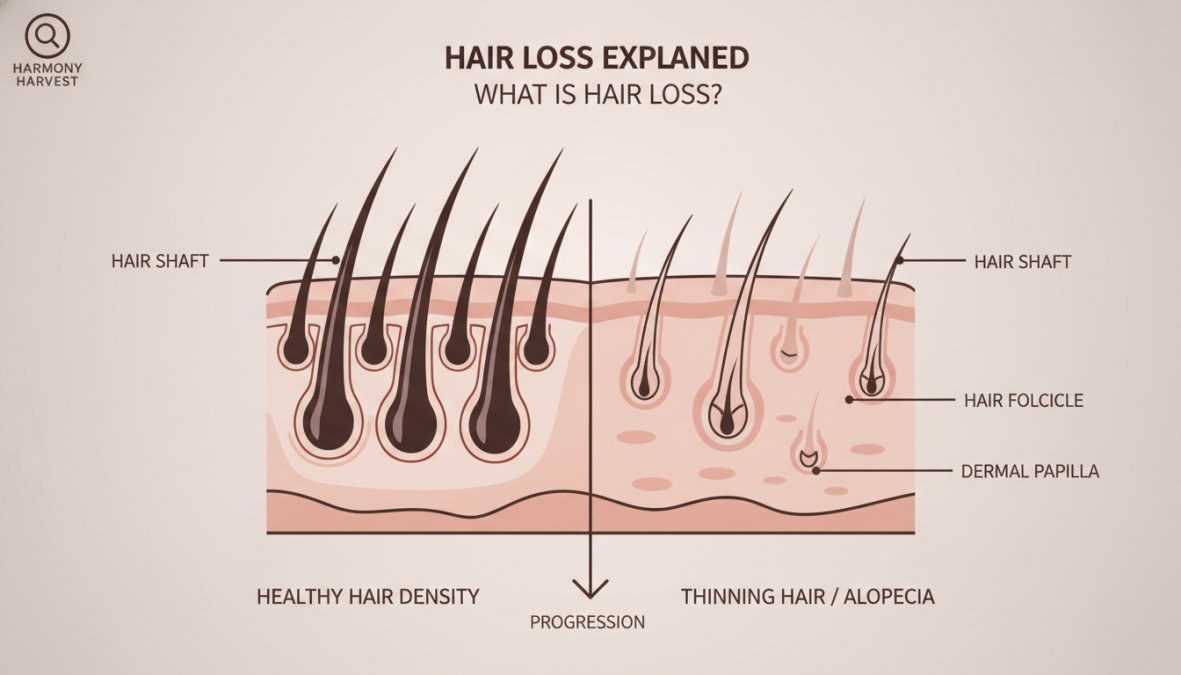
Alopecia is the medical term for hair loss, ranging from temporary shedding to permanent baldness. It's not a single condition but a symptom with many different causes. Understanding the distinction between normal shedding and actual hair loss is crucial, as one is natural and the other warrants attention.
Understanding the hair growth cycle
Your hair cycles through four phases: anagen (growth lasting 2-7 years), catagen (transition, 10 days), telogen (resting, 3 months), and exogen (shedding). At any given moment, roughly 85-90% of scalp hair is in the anagen phase, 1-2% in catagen, and 10-15% in telogen or exogen. Shedding 50-100 hairs daily is completely normal as your body replaces these hairs naturally.
When shedding becomes hair loss
The line between normal shedding and pathological hair loss is determined by whether your body replaces what it sheds. If hair follicles enter the telogen phase prematurely or stop producing new hair altogether, you have true hair loss.
Prolonged stress, hormonal shifts, nutritional deficiencies, and certain medical conditions can push more follicles into the telogen phase simultaneously, a condition called telogen effluvium. Genetic factors can cause follicles to shrink over time, producing thinner hair until they stop producing visible hair entirely, a process called androgenetic alopecia or pattern baldness.
The key distinction: normal shedding is cyclical and self-correcting. Hair loss involves follicles that aren't being replaced or are producing progressively thinner hair.
Types of Hair Loss: From Androgenic Alopecia to Telogen Effluvium
Hair loss presents in several distinct patterns, each with different underlying causes and treatment pathways.
Pattern baldness and genetic factors
Androgenetic alopecia, commonly called pattern baldness, accounts for the majority of hair loss cases in both men and women. It's driven by genetics and the hormone dihydrotestosterone (DHT). If your parents or grandparents experienced hair thinning, your risk is significantly higher.
In men, pattern baldness typically begins with a receding hairline or thinning at the crown. In women, it usually manifests as diffuse thinning across the scalp. Genetically predisposed hair follicles are sensitive to DHT, which causes them to shrink (miniaturisation), producing thinner hair shafts and eventually stopping hair production.
Autoimmune and scarring forms
Alopecia areata is an autoimmune condition where the body's immune system mistakenly attacks hair follicles, typically causing sudden, patchy hair loss. Some people experience spontaneous regrowth within months, whilst others develop more extensive hair loss.
Cicatricial alopecia (scarring alopecia) is a rarer form where inflammation permanently damages hair follicles, leaving scars on the scalp. Unlike other types of hair loss, scarring alopecia is irreversible because the follicles are destroyed. Causes include severe infections, burns, chemical injuries, or inflammatory scalp conditions like lichen planus or lupus.
Traction alopecia results from chronic tension on the hair shaft, typically from tight hairstyles like braids or extensions worn over many years. The constant pulling damages hair follicles, eventually leading to permanent hair loss if the tension isn't relieved.
Stress-induced and temporary hair loss
Telogen effluvium is a temporary form of diffuse hair loss triggered by physical or emotional stress, major surgery, severe illness, rapid weight loss, or significant hormonal changes. The stress pushes a large percentage of hair follicles into the telogen phase prematurely. Typically, you'll notice increased shedding 2-3 months after the triggering event.
The good news: telogen effluvium is usually reversible. Once the stressor is resolved, hair follicles resume normal cycling and regrowth occurs within 3-6 months.
Common Hair Loss Causes and Risk Factors
Hair loss rarely has a single cause. More often, multiple factors combine to trigger or accelerate hair thinning.
Hormonal changes and thyroid disorders
Hormones regulate hair growth profoundly. Androgenetic alopecia is driven by DHT sensitivity. Thyroid disorders, both hyperthyroidism and hypothyroidism, can trigger telogen effluvium by impairing metabolism and energy production for hair follicles.
Postpartum hair loss occurs because pregnancy elevates oestrogen levels, keeping more hair in the anagen phase. After delivery, oestrogen drops sharply, and many follicles shift into telogen simultaneously. This typically peaks 3-4 months postpartum and resolves within 6-12 months.
Changes in oral contraceptives or hormone replacement therapy can also trigger or worsen hair loss. If you're experiencing sudden hair loss after a hormonal change, a blood test can identify whether thyroid dysfunction or other hormonal imbalances are responsible.
Nutritional deficiencies and dietary impact
Hair follicles are metabolically active and require a steady supply of micronutrients. Iron deficiency is one of the most common nutritional causes of hair loss, particularly in women of reproductive age. Iron is essential for haemoglobin production, which carries oxygen to hair follicles. Low iron reduces oxygen supply, weakening hair and increasing shedding.
Vitamin D deficiency has been linked to several forms of hair loss, including pattern baldness and alopecia areata. Biotin, zinc, and B vitamins all support hair structure and growth. Protein deficiency can occur in people eating very low-calorie diets, as hair is primarily made of keratin.
If you're experiencing hair loss, a nutritional assessment is worthwhile. Simple blood tests can identify deficiencies, and targeted supplementation or dietary changes can support hair regrowth over 3-6 months.
Stress, scalp health, and inflammation
Chronic psychological stress can trigger or worsen telogen effluvium and may exacerbate autoimmune conditions like alopecia areata. Stress elevates cortisol, which can disrupt the hair growth cycle.
Scalp health is foundational for hair growth. Inflammation, infection, or poor circulation on the scalp can impair follicle function. Conditions like seborrheic dermatitis, psoriasis, or folliculitis create an inflammatory environment that slows hair growth or increases shedding.
Poor scalp circulation limits nutrient and oxygen delivery to follicles. Scalp massage, which increases blood flow, has been shown in studies to support hair thickness and growth.
Symptoms, Diagnosis, and When to See a Dermatologist
Warning signs of hair thinning and patchy loss
Common early warning signs include increased hair on your pillow or in the shower, a widening part or visible scalp, thinner ponytails, patchy circular bald spots, hair that feels thinner or breaks more easily, receding hairline, or diffuse thinning across the entire scalp.
If you've noticed any of these changes, schedule a consultation with a dermatologist, particularly if the hair loss is sudden, extensive, or accompanied by scalp symptoms like pain, itching, or flaking.
Diagnostic methods: blood tests and scalp biopsy
A dermatologist will begin with a detailed history and physical examination, asking about family history, recent stressors, medications, diet, and the pattern and timeline of your hair loss.
Blood tests are often ordered to rule out nutritional deficiencies (iron, ferritin, vitamin D, B12), thyroid dysfunction, and autoimmune conditions. Dermoscopy (examination under magnification) allows assessment of hair shaft thickness, follicle density, and signs of inflammation or scarring.
Scalp biopsy is reserved for cases where the diagnosis is unclear or scarring alopecia is suspected. Pull test is a simple in-office procedure: the dermatologist gently pulls 10-60 hairs. If more than 3-4 hairs come out painlessly, it suggests active telogen effluvium or another active hair loss condition.
Most hair loss cases can be diagnosed through history, examination, and basic blood work.
Hair Loss Treatment Options: Medical and Natural Approaches
Hair loss treatment depends on the type, cause, and severity of your condition. Some treatments slow progression, others promote regrowth, and some work best in combination.
Minoxidil, finasteride, and corticosteroids
Minoxidil (Rogaine) is an over-the-counter topical treatment applied directly to the scalp. It's FDA-approved for pattern baldness in both men and women. Minoxidil prolongs the anagen phase and increases blood flow to follicles. Results typically appear after 3-4 months of consistent use and must be continued indefinitely.
Finasteride (Propecia) is an oral medication that blocks the conversion of testosterone to DHT, the hormone driving pattern baldness. It's FDA-approved for men and taken daily. Studies show it can slow hair loss and, in some cases, promote modest regrowth. Results take 3-6 months to appear.
Corticosteroids are used for alopecia areata and other inflammatory forms of hair loss. They can be injected directly into bald patches, applied topically, or taken orally. Injections often produce regrowth within 4-6 weeks, though results are temporary and repeat injections are needed.
Laser therapy and platelet-rich plasma
Low-level laser therapy (LLLT) uses red or near-infrared light to stimulate hair follicles. Clinical evidence is mixed; some studies show modest benefits, whilst others show minimal effect. It's generally considered a low-risk adjunctive therapy but not a first-line treatment.
Platelet-rich plasma (PRP) involves extracting platelets from your own blood and injecting them into the scalp. Several small studies suggest PRP may improve hair density and thickness, but evidence is still emerging. It's best viewed as an experimental option rather than a proven standard.
Hair transplant surgery and scalp care
Hair transplant surgery is the most definitive treatment for pattern baldness. Hair follicles from the back or sides of the scalp (areas genetically resistant to DHT) are surgically moved to thinning areas. Results are permanent because the transplanted hair retains its genetic characteristics.
Two main techniques exist: follicular unit transplantation (FUT) and follicular unit extraction (FUE). FUE is more popular because it leaves minimal scarring and allows faster recovery, though it's more labour-intensive and expensive. Success depends on having adequate donor hair and realistic expectations. Results take 6-12 months to fully appear.
Scalp care supports any hair loss treatment. Use a gentle, sulfate-free shampoo and avoid harsh brushing or tight hairstyles that create traction stress. Scalp massage increases blood flow and may support follicle health. Avoid smoking and excessive heat styling, both of which can worsen hair loss.
Hair Loss Prevention: Lifestyle, Nutrition, and Scalp Health
Preventing hair loss or slowing its progression involves addressing multiple factors simultaneously.
Dietary support with iron, vitamin D, and biotin
A nutrient-dense diet is foundational for hair health. Prioritise iron-rich foods (red meat, poultry, fish, lentils, beans), vitamin D sources (fatty fish, egg yolks, mushrooms, fortified milk), biotin-rich foods (eggs, almonds, sweet potatoes, spinach), zinc sources (oysters, beef, pumpkin seeds), adequate protein (1.2-1.6 grams per kilogram of body weight daily), and omega-3 fatty acids (fatty fish, flaxseeds, chia seeds, walnuts).
A Mediterranean-style diet rich in vegetables, whole grains, healthy fats, and lean protein has been associated with better hair health outcomes.
Stress management and scalp wellness routines
Chronic stress elevates cortisol, which can disrupt hair cycling. Stress management techniques include regular physical activity (150 minutes per week), meditation or mindfulness practice (even 10 minutes daily), adequate sleep (7-9 hours nightly), and social connection.
For scalp wellness, massage your scalp gently for 5 minutes daily, use a silk or satin pillowcase to reduce friction, avoid tight hairstyles, limit heat styling, and wash hair 2-3 times weekly with lukewarm water and gentle shampoo.
| Prevention Strategy | Frequency | Expected Timeline | Best For |
|---|---|---|---|
| Iron/vitamin supplementation | Daily | 3-6 months | Nutritional deficiency-related hair loss |
| Scalp massage | Daily | Ongoing | Supporting circulation and relaxation |
| Stress management | Daily | Ongoing | Telogen effluvium and general health |
| Minoxidil application | Twice daily | 3-4 months to see results | Pattern baldness prevention |
| Dietary improvements | Ongoing | 3-6 months | Supporting overall hair health |
| Tight hairstyle avoidance | Ongoing | Ongoing | Preventing traction alopecia |
The Emotional and Financial Reality of Hair Loss
Beyond the biology, hair loss carries a significant psychological and financial burden that's often overlooked. Many people experience anxiety, depression, or reduced self-esteem following hair loss, particularly if it's sudden or extensive. Support from friends, family, or a therapist can help. Some people find community in hair loss support groups, either in-person or online.
Financially, hair loss treatment can be expensive. Minoxidil costs roughly £5-15 per month indefinitely. Hair transplant surgery ranges from £3,000-15,000+ depending on the extent of hair loss and surgeon expertise. For many people, these costs aren't covered by insurance, making prevention and early intervention particularly valuable.
Conclusion: Taking Action on Hair Loss
Hair loss is common, but it's never inevitable that you simply accept it. Whether your hair loss stems from genetics, stress, nutritional deficiency, or hormonal changes, understanding the underlying cause opens the door to effective intervention.
Start by observing your hair loss pattern and scheduling a dermatology consultation if it's sudden, extensive, or accompanied by scalp symptoms. A simple blood test can rule out treatable causes like iron or vitamin D deficiency. If pattern baldness is suspected, early intervention with minoxidil or finasteride can slow or halt progression.
Alongside medical treatments, prioritise scalp health through gentle care, adequate nutrition, stress management, and avoiding tight hairstyles. These foundational practices support hair health regardless of which treatment path you choose.
Hair health is deeply connected to overall wellbeing. Your scalp reflects your nutrition, stress levels, and self-care practices. If you're managing hair loss, supporting your scalp health with nourishing, natural products can make a real difference. Harmony Harvest's Hair Care collection features COSMOS-certified organic, vegan formulas designed to cleanse gently, reduce inflammation, and support a healthy scalp environment. Our plant-based approach means no harsh sulphates or synthetic chemicals that can irritate or weaken hair. Explore the full range of COSMOS-certified organic, vegan, and cruelty-free hair care products at Harmony Harvest Hair Care and discover how nature-inspired scalp wellness can complement your hair loss management plan.
Frequently Asked Questions
What are the most common types of hair loss?
The most prevalent forms include androgenic alopecia (pattern baldness), telogen effluvium (stress-induced shedding), and alopecia areata (autoimmune patchy loss). Pattern baldness accounts for the majority of cases and is driven by genetics and hormonal sensitivity. Telogen effluvium occurs when hair follicles prematurely enter the shedding phase due to stress, illness, or nutritional deficiency. Alopecia areata is an autoimmune condition causing sudden patchy hair loss on the scalp or body.
Can stress really cause hair loss, and is it reversible?
Yes, stress can trigger telogen effluvium, where increased cortisol pushes hair into the shedding phase. The good news is that stress-induced hair loss is often reversible once stressors are managed and hair follicles return to their normal growth cycle. However, chronic stress combined with poor nutrition or hormonal imbalance can prolong the condition. Addressing underlying causes through stress management, adequate sleep, and nutrient support typically allows hair density to recover within 3-6 months.
What should I do if I notice sudden hair thinning or patchy hair loss?
Schedule an appointment with a dermatologist to rule out autoimmune conditions, thyroid disorders, or iron deficiency. A dermatologist can perform blood tests or a scalp biopsy if needed to diagnose the exact cause. In the meantime, evaluate your stress levels, diet, and scalp health. Ensure adequate intake of iron, vitamin D, and biotin, nutrients essential for hair follicle strength. Gentle scalp care and avoiding tight hairstyles that cause traction alopecia can prevent further damage while you seek professional guidance.
Are there natural or home-based approaches to hair loss prevention?
Natural prevention focuses on scalp health and nutritional support. Maintain a balanced diet rich in iron, vitamin D, zinc, and biotin to support the hair growth cycle. Manage stress through meditation, exercise, or yoga to reduce cortisol-driven shedding. Use gentle, nourishing hair care products that support scalp inflammation reduction. Avoid tight hairstyles and excessive heat styling. While lifestyle changes alone may not reverse significant hair loss, they create an optimal foundation for hair follicle health and can slow progression when combined with professional treatment if needed.
This article was written using GrandRanker
Best Sellers


Read more

Rosemary Shampoo Benefits: A Science-First Guide
Discover rosemary shampoo benefits for hair growth, scalp health and strengthening. Learn how to use it effectively and what to expect.
Read more
Itchy Scalp: Causes, Remedies & When to See a Doctor
Discover what causes itchy scalp, from dandruff to fungal infections. Learn natural remedies, best products, and when to seek professional help. Explore.
Read more