



Sensitive Scalp: Causes, Remedies & Care Guide
Table of Contents
- What Is a Sensitive Scalp?
- Common Causes and Triggers of Scalp Sensitivity
- How to Identify If Your Scalp Is Sensitive
- Itchy Scalp Remedies That Actually Work
- Best Organic Shampoo for Sensitive Scalp
- When to Seek Professional Diagnosis
- Conclusion
Last Updated: August 19, 2026
What Is a Sensitive Scalp?
A sensitive scalp is characterised by heightened reactivity to external triggers, resulting in discomfort such as burning, stinging, itching, or tenderness. The condition reflects an underlying imbalance in the scalp's protective barrier function and microbiome, making it prone to inflammation and neurosensory responses. Unlike a dry scalp alone, sensitive scalp involves a neurological component, the scalp's nerve endings become hypersensitive, triggering pain signals even from mild irritants.
At Harmony Harvest, we understand that scalp sensitivity isn't simply about using the wrong shampoo. It's a multifaceted issue involving your skin barrier, the delicate ecosystem of microorganisms on your scalp, and your individual tolerance threshold. Many people with sensitive scalp experience redness, flaking, or persistent discomfort that disrupts their daily routine and makes choosing hair care products feel like navigating a minefield.
The scalp contains more nerve endings than most other skin areas, which explains why irritation here feels particularly intense. When your scalp's natural protective barrier weakens, whether from harsh chemicals, environmental stress, or underlying conditions, those nerves become hyperactive. This creates a cycle: irritation triggers inflammation, inflammation compromises the barrier further, and the barrier breakdown allows more irritants to penetrate.
Common Causes and Triggers of Scalp Sensitivity
Scalp sensitivity rarely stems from a single cause. Most people experience it as a combination of factors that accumulate over time. Identifying your specific triggers is essential for effective management.
Product-Related Irritants
Hair care products are often the primary culprit behind scalp sensitivity. Conventional shampoos and conditioners contain surfactants, cleaning agents designed to remove oil, that strip away the scalp's natural sebum layer. This protective layer serves a critical function: it maintains pH balance, prevents water loss, and shields against bacterial colonisation.
Sodium lauryl sulphate and sodium laureth sulphate are particularly aggressive surfactants commonly found in mainstream products. These ingredients disrupt the scalp's lipid barrier, leaving it vulnerable to irritation. Fragrance compounds, whether synthetic or "natural," are another frequent trigger. The scalp's skin is thinner and more permeable than facial skin, making it absorb fragrance molecules more readily. Silicones, often added to "condition" hair, accumulate on the scalp and create buildup that traps moisture and bacteria.
Preservatives like methylisothiazolinone and parabens can provoke reactions in sensitive individuals. Even products marketed as "gentle" or "natural" may contain problematic ingredients if they're not formulated with scalp barrier repair in mind. This is why COSMOS-certified organic products matter, they exclude synthetic surfactants and many common irritants by design.
Environmental and Lifestyle Factors
Your scalp exists within an environment, and that environment profoundly influences its health. Hard water, water with high mineral content, deposits calcium and magnesium on the scalp. These minerals bind to hair and scalp tissue, creating buildup that traps moisture and promotes bacterial growth. If you notice scalp sensitivity worsens after moving to a new location, hard water may be the culprit.
Temperature extremes stress the scalp's barrier. Cold, dry winter air reduces humidity, forcing the scalp to lose moisture faster. Conversely, hot, humid summers can trigger excessive sebum production and create conditions where bacteria and fungi thrive. Central heating indoors exacerbates winter dryness. Stress is a significant but often overlooked trigger. When you're under psychological stress, your body releases cortisol, which suppresses immune function and increases inflammation throughout your body, including your scalp. Many people report that scalp sensitivity flares during high-stress periods.
Sun exposure damages scalp tissue directly, particularly if your hair is thin or you have a centre parting that exposes the scalp line. UV radiation degrades collagen and elastin, compromising barrier integrity. Chlorine in swimming pools is highly alkalising and strips the scalp's natural oils. Tight hairstyles that create tension on the scalp, buns, braids, extensions, can trigger traction-related inflammation and sensitivity.
Underlying Skin Conditions
Sometimes scalp sensitivity signals an underlying dermatological condition that requires targeted treatment. Seborrheic dermatitis is one of the most common causes. This condition involves an inflammatory response to the yeast Malassezia, which naturally lives on the scalp. In susceptible individuals, the immune system overreacts, causing redness, flaking, and itching. Atopic dermatitis (eczema) frequently affects the scalp, particularly in people with a family history of eczema or other atopic conditions. The scalp becomes dry, inflamed, and intensely itchy.
Psoriasis can manifest on the scalp as thick, silvery plaques accompanied by significant discomfort. Scalp folliculitis, bacterial or fungal infection of hair follicles, causes painful, tender spots and pustules. Contact dermatitis occurs when the scalp reacts to a specific irritant or allergen. Identifying the trigger is essential for resolution. Trichodynia, a medical term for scalp pain without visible skin changes, is increasingly recognised as a distinct condition involving heightened nerve sensitivity and altered scalp blood flow.
If you suspect an underlying skin condition, professional diagnosis becomes important. A dermatologist can distinguish between product sensitivity and true dermatological disease, which guides treatment strategy.
How to Identify If Your Scalp Is Sensitive
Recognising sensitive scalp involves observing both physical symptoms and how your scalp responds to products and environmental changes.
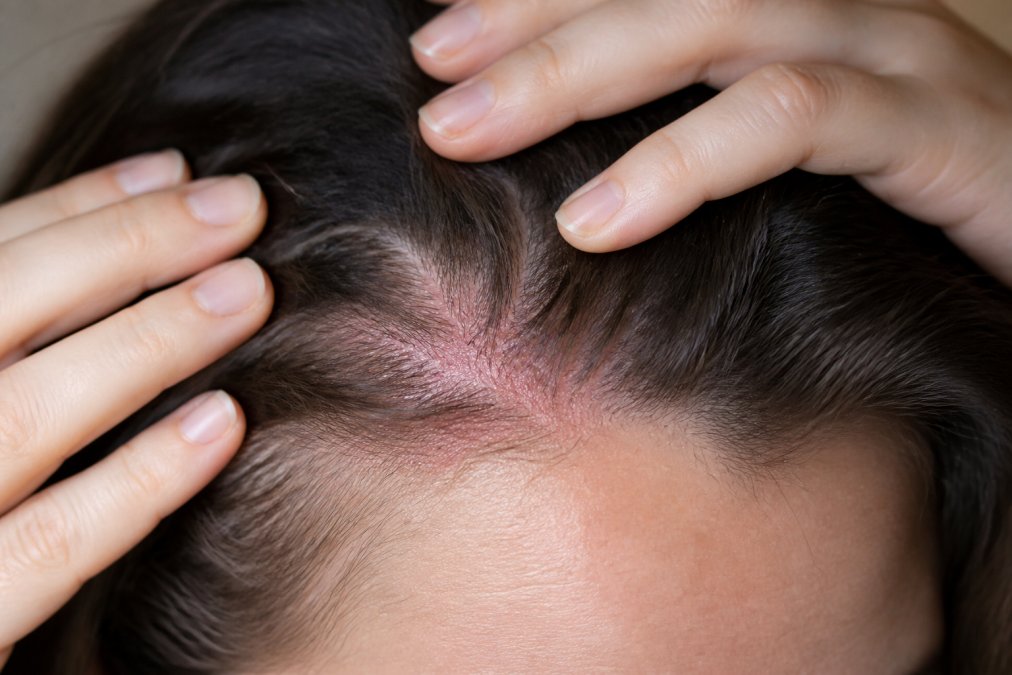
The most obvious signs are burning sensation, stinging, and itching. These symptoms may appear immediately after washing or develop gradually throughout the day. Redness or erythema is visible, particularly at the scalp line and parting. Tightness, a feeling that the scalp is stretched or uncomfortable, is another common report. Some people describe a prickling sensation or tenderness when touching their scalp, even lightly.
Pay attention to flaking and scaling, though these don't always accompany sensitivity. A sensitive scalp can feel uncomfortable without visible flaking. Conversely, visible flaking doesn't necessarily indicate sensitivity, it might be simple dryness or seborrheic dermatitis.
Track which situations trigger symptoms. Does your scalp burn after using a specific shampoo? Does heat styling worsen the discomfort? Does your sensitivity flare in winter or after stress? Does swimming in chlorinated pools cause immediate irritation? This pattern recognition helps you distinguish between product sensitivity and environmental triggers.
Test your barrier function by observing how quickly your scalp becomes oily. A compromised barrier often produces excess sebum as the scalp attempts to compensate for moisture loss. If you're washing your hair every day because it feels greasy by evening, barrier dysfunction may be the underlying issue.
Itchy Scalp Remedies That Actually Work
Addressing scalp sensitivity requires a multi-layered approach. You're not simply treating symptoms; you're repairing barrier function and rebalancing your scalp's microbiome.
Gentle Cleansing Practices
How you wash your hair matters as much as what you wash with. Water temperature is the first consideration. Hot water opens the scalp's cuticles and accelerates moisture loss. Wash with lukewarm water instead, finishing with a cool rinse to seal the cuticle and lock in moisture.
Frequency of washing directly impacts barrier health. Washing daily strips natural oils faster than they can be replenished. Most scalps benefit from washing every two to three days, allowing sebum to rebuild the protective layer. If your scalp feels greasy after one day, this often signals barrier damage, the scalp overproduces oil because it's trying to compensate for moisture loss. Gradually extending the time between washes helps reset this cycle.
Technique matters. Massage your scalp gently with fingertips, not nails. Vigorous scrubbing irritates the scalp further. Use minimal product, a coin-sized amount is sufficient for shoulder-length hair. Focus cleansing on the scalp itself, not the hair lengths. Rinse thoroughly, as product residue contributes to buildup and irritation.
Consider co-washing (conditioning without shampooing) on days between full washes. A gentle conditioner removes surface buildup without stripping oils. This practice is particularly helpful if your scalp is severely compromised.
Scalp Health and the Microbiome
Your scalp hosts a complex ecosystem of bacteria and fungi that maintain scalp health when balanced. Harsh products disrupt this microbiome, eliminating beneficial microorganisms and allowing pathogenic species to proliferate. Supporting microbiome health means using products that don't destroy this delicate community.
COSMOS-certified organic products are formulated to avoid antimicrobial ingredients that indiscriminately kill microbes. Instead, they work with your scalp's natural ecology. Plant-based ingredients like rosemary and chamomile have mild antimicrobial properties without the aggressive action of synthetic preservatives.
Scalp pH is critical to microbiome balance. The scalp's natural pH is slightly acidic (around 4.5-5.5), which discourages pathogenic bacteria whilst supporting beneficial species. Most conventional shampoos are alkaline, disrupting this balance. Organic, plant-based formulas typically maintain a more scalp-friendly pH.
Prebiotics, compounds that feed beneficial microorganisms, support microbiome recovery. Some organic hair products incorporate prebiotic ingredients that nourish the scalp's healthy bacteria. This approach addresses sensitivity at the root by restoring the scalp's natural defensive capacity.
Best Organic Shampoo for Sensitive Scalp
When selecting a shampoo for sensitive scalp, prioritise formulas that repair barrier function and support microbiome health rather than simply masking symptoms.
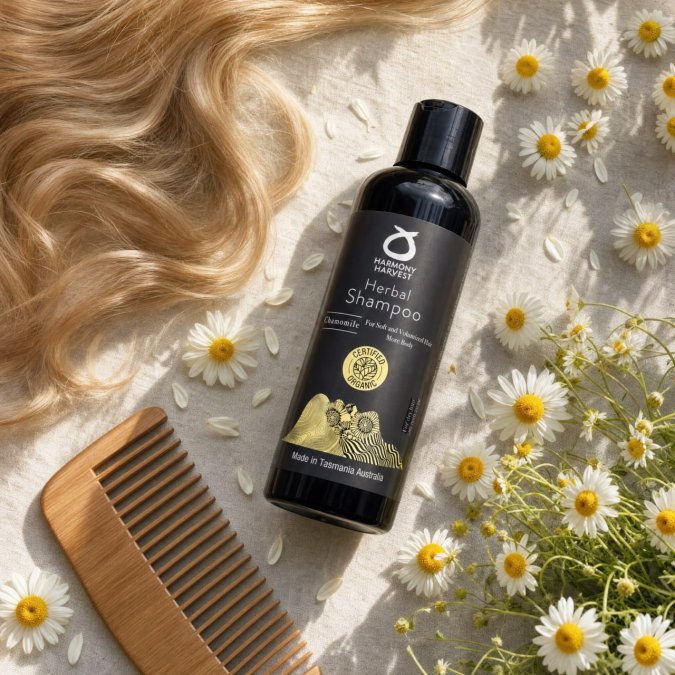
The Harmony Harvest Rosemary and Chamomile Shampoo and Conditioner is specifically formulated to address scalp sensitivity. This COSMOS-certified organic range excludes synthetic surfactants, fragrance chemicals, and harsh preservatives that compromise barrier function. Rosemary stimulates blood flow to the scalp, promoting nutrient delivery and supporting healing. Chamomile has anti-inflammatory and soothing properties, reducing erythema and calming irritated nerve endings.
Beyond the shampoo and conditioner, Harmony Harvest's Scalp Treatment set provides targeted support for barrier repair. Applied between washes, a dedicated scalp treatment delivers concentrated botanical ingredients directly to compromised tissue. This layered approach, cleansing with a gentle organic shampoo, conditioning, and treating, addresses sensitivity comprehensively.
What makes organic formulas genuinely different isn't marketing language; it's the absence of ingredients known to trigger sensitivity. No sodium lauryl sulphate means your barrier isn't stripped with every wash. No synthetic fragrance means no irritant molecules penetrating damaged tissue. No silicone buildup means your scalp can breathe and regulate naturally.
The entire Harmony Harvest hair collection is COSMOS-certified organic, meaning every product meets rigorous standards for ingredient purity and environmental responsibility. When you choose an organic shampoo for sensitive scalp, you're investing in a formula designed to work with your scalp's biology, not against it.
COSMOS organic standard requirements
When to Seek Professional Diagnosis
Not all scalp sensitivity resolves with product changes and barrier-repair routines. Certain situations warrant professional evaluation.
Seek a dermatologist if your scalp symptoms persist beyond eight weeks despite switching to gentle, organic products. Severe burning, pain, or stinging that interferes with daily life requires medical assessment. If you notice pustules, significant scaling, hair loss, or signs of infection, professional diagnosis is essential.
Scalp conditions like seborrheic dermatitis, psoriasis, and folliculitis often require topical treatments prescribed by a dermatologist. Over-the-counter organic products, whilst supportive, may not be sufficient as primary treatment for these conditions. A dermatologist can also perform patch testing if you suspect contact dermatitis, identifying the specific allergen triggering your reaction.
If your scalp sensitivity appeared suddenly without an obvious trigger, or if it worsens progressively despite appropriate care, underlying systemic issues may be involved. Thyroid dysfunction, nutritional deficiencies, and autoimmune conditions can all manifest as scalp sensitivity. A healthcare provider can investigate these possibilities.
Many dermatologists now recognise that organic, barrier-supporting products work synergistically with medical treatments. Discussing your preference for COSMOS-certified formulas with your dermatologist ensures your treatment plan aligns with your values and supports long-term scalp health.
Dermatology Association guidelines on scalp disorders
Conclusion
Sensitive scalp is fundamentally a barrier and microbiome issue, not simply a product sensitivity. Understanding the underlying mechanisms, how your scalp's protective layer functions, how its microbial ecosystem supports health, and how specific triggers compromise both, helps you to make informed choices about treatment.
The path forward involves three elements: eliminating irritants (particularly harsh synthetic surfactants and fragrance chemicals), supporting barrier repair with gentle, nourishing formulas, and allowing your scalp's microbiome time to rebalance. This process takes patience, but the results are durable. Many people find that after eight to twelve weeks of consistent, gentle care, their scalp sensitivity resolves entirely.
If you're ready to support your scalp's natural healing, explore the COSMOS-certified organic Hair Care collection from Harmony Harvest. Our range is formulated to work with your scalp's biology, free from synthetic detergents and harsh chemicals, and designed to restore barrier function and microbiome balance. Every product is vegan, cruelty-free, and crafted from pure Australian botanicals, because your scalp deserves care that's as gentle as it is effective.
Frequently Asked Questions
Why does my scalp feel sensitive?
Scalp sensitivity, or trichodynia, occurs when your skin barrier is compromised, making nerve endings more reactive. This can happen due to harsh shampoos containing sulfates, frequent heat styling, environmental stressors, or underlying conditions like dermatitis. A weakened barrier allows irritants to penetrate more easily, triggering stinging, burning, or tenderness. Using COSMOS-certified organic products free from synthetic detergents helps restore barrier function and reduce hypersensitivity.
What are the best itchy scalp remedies?
Effective itchy scalp remedies include switching to fragrance-free, sulfate-free shampoos that support pH balance; reducing heat styling; avoiding products with synthetic fragrances; and using gentle scalp treatments that calm inflammation. Incorporate weekly scalp massages to improve circulation and support microbiome health. For persistent itching, consider topical treatments designed for sensitive skin. Harmony Harvest's Scalp Treatment set is specifically formulated to soothe irritation while maintaining your scalp's natural balance.
How do I choose the best organic shampoo for a sensitive scalp?
Look for shampoos that are COSMOS-certified organic, free from sulfates, parabens, and synthetic fragrances. Check ingredient lists for soothing botanicals like chamomile, rosemary, and oat extract, which reduce erythema and calm pruritus. Avoid products with essential oils if your scalp is extremely reactive. Harmony Harvest's Rosemary and Chamomile Shampoo and Conditioner is COSMOS-certified and formulated specifically for sensitive scalps, combining certified organic ingredients with a gentle formula that supports scalp health without irritation.
Can a sensitive scalp be a sign of a serious condition?
While most scalp sensitivity stems from product irritation or environmental factors, persistent symptoms like severe inflammation, bleeding, or unexplained hair loss warrant professional evaluation. Conditions such as seborrheic dermatitis, folliculitis, or psoriasis require clinical diagnosis. If over-the-counter remedies don't improve symptoms within two weeks, consult a dermatologist to rule out underlying skin conditions and receive appropriate topical treatment recommendations.
Best Sellers

Read more
Skincare for Sensitive Skin: A Complete Guide
Skincare for sensitive skin: Learn how to care for sensitive skin with gentle, COSMOS-certified organic products. Discover ingredients to avoid, repair.
Read more
Best Botanical Ingredients for Hair Follicle Stimulation
Botanical ingredients hair follicles: Discover the best botanical ingredients for stimulating hair follicles naturally. Learn which plants support scalp.
Read more