


Gentle Hair Care Routine for Fine Hair That Works
Table of Contents
- Why Fine Hair Needs a Different Approach
- Understanding Your Hair: Diameter, Density, and Porosity
- Scalp Care for Fine Hair: The Foundation of Volume
- How to Add Volume to Fine Hair Naturally: Washing and Conditioning
- The Benefits of Rosemary and Chamomile for Hair
- Gentle Styling and Drying Techniques for Fine Hair
- Your Gentle Hair Care Routine for Fine Hair: A Weekly Plan
- Conclusion: Nurture Your Fine Hair with Nature's Wisdom
- Frequently Asked Questions
Last Updated: September 8, 2026
Why Fine Hair Needs a Different Approach
Fine hair isn't just thinner hair. It's hair with a smaller diameter per strand, which means it has less natural structural support and can look flat or limp within hours of washing. A gentle hair care routine for fine hair must respect that fragility while still delivering the body and movement you want.
Most conventional hair products rely on heavy oils, waxes, and silicones that coat the hair and weigh it down. On fine hair, those same ingredients flatten the roots, dull the shine, and create buildup that makes strands look greasy by mid-afternoon.
The goal with fine hair is to cleanse gently, condition selectively, and build volume through technique rather than heavy product layering. A minimalist approach, paired with plant-based ingredients, gives fine hair the breathing room it needs to show its natural body.
Understanding Your Hair: Diameter, Density, and Porosity
Before you change a single product, it helps to know what you're working with. Hair type is defined by three separate traits: diameter, density, and porosity. Understanding the difference between them is the single most important step in building a gentle hair care routine for fine hair, because it determines whether you should focus on strand strength, scalp stimulation, or both.
Diameter refers to the width of each individual strand. Fine hair has a smaller diameter than medium or coarse hair, which makes it more flexible but also more prone to breakage (peer-reviewed research). Diameter is largely genetic and does not change significantly over time, although it can be affected by severe nutritional deficiency or hormonal changes.
Density is how many strands you have per square centimetre of scalp. You can have fine hair that is dense, or fine hair that is sparse, and the two need different care. Dense fine hair can often handle more frequent washing because there is more hair to absorb and distribute natural oils. Sparse fine hair may look oily faster because there is less hair to spread the sebum, and it may benefit from dry shampoo between washes.
Porosity describes how easily your hair absorbs and releases moisture, determined by the condition of the cuticle layer. A simple test: place a clean strand in a glass of water. If it floats, the cuticle is tight and low-porosity. If it sinks quickly, the cuticle is raised and high-porosity. Low-porosity fine hair repels heavy products, so lightweight formulas work best. High-porosity fine hair loses moisture fast and benefits from gentle, humectant-rich ingredients that attract water without adding weight.
Fine Hair vs. Thinning Hair: Why the Distinction Matters
One of the most common points of confusion is the difference between having fine hair and experiencing hair thinning. They are not the same thing, and treating them the same way can lead you down the wrong path.
Fine hair is a diameter issue. Each strand is simply thinner. You may have a full head of hair with normal density, but each individual strand lacks bulk. The result is hair that lies flat and lacks volume, but the number of strands on your head is stable.
Thinning hair is a density issue. The number of strands per square centimetre is decreasing. You might notice a wider parting, more hair in the brush, or a receding hairline. Thinning can affect people with any hair diameter.
Many people have both: fine strands and reduced density. This combination is particularly challenging because it requires a dual approach, protecting the delicate strands from breakage while also supporting the scalp environment.
How This Changes Your Routine
If your primary concern is fine strands with normal density, focus on lightweight products that add body without weighing hair down. If you are also experiencing thinning, prioritise scalp care, gentle stimulation, ingredients that support circulation, and avoiding anything that inflames the follicle.
The Harmony Harvest Scalp Treatment set is designed for exactly this dual purpose. It uses COSMOS-certified organic botanicals to soothe and balance the scalp, creating the optimal environment for hair health, while the accompanying treatment targets the strand itself.
The Porosity Factor in Product Choice
Porosity determines how well your hair absorbs and retains moisture. Low-porosity fine hair has tightly packed cuticles that resist moisture penetration, so heavy oils and butters will simply coat the strand and attract buildup. Water-soluble, lightweight serums and mists work far better because they can penetrate without leaving residue.
High-porosity fine hair has raised cuticles that let moisture in easily but also let it escape just as quickly. This hair type benefits from humectants like glycerin and aloe vera, followed by a very light sealant to lock it in. Plant-derived squalane or a tiny amount of jojoba oil can work, whereas heavier shea butter or coconut oil would be too much.
A Simple Self-Assessment
Take a moment to assess all three traits before you choose products:
- Diameter: Pluck a single strand and roll it between your fingers. Can you barely feel it? That is fine. Does it feel like a thin thread? That is medium. Does it feel like a piece of sewing thread? That is coarse.
- Density: Part your hair in the middle and look at your scalp. Can you see large areas of scalp clearly? Your density may be low. Can you see only small glimpses? Your density is likely normal to high.
- Porosity: Take a clean, dry strand and place it in a glass of room-temperature water. Observe it for 2-4 minutes. If it floats, your cuticle is tight (low porosity). If it sinks within a minute, your cuticle is raised (high porosity).
Understanding these three traits, and the critical difference between fine and thinning, transforms your approach from guesswork to strategy. You will know exactly why some products work and others fail.
Scalp Care for Fine Hair: The Foundation of Volume
Volume starts at the scalp, not the ends. When sebum, dead skin cells, and product residue accumulate around the follicle, they can compress the hair at the root and make it lie flat.
Cleansing the scalp regularly is essential, but over-washing with harsh sulphates strips the scalp's natural moisture balance and can trigger excess oil production. A gentle, pH-balanced cleanser removes buildup without that rebound effect.
How to Add Volume to Fine Hair Naturally: Washing and Conditioning
Learning how to add volume to fine hair naturally starts in the shower. Many people with fine hair skip conditioner entirely, worried it will flatten their roots. The better approach is to condition only the mid-lengths and ends, never the scalp, and to choose a lightweight formula that rinses clean.
The Harmony Harvest Rosemary and Chamomile Shampoo and Conditioner are COSMOS-certified organic and formulated with fine hair in mind. Rosemary is traditionally used to stimulate the scalp and support hair follicles, while chamomile soothes and adds gentle shine. The conditioner detangles without heavy waxes.
For washing frequency, listen to your scalp. Some fine hair types need cleansing every second day, others twice a week. If you exercise often or live in a humid climate, you may need to wash more frequently. The key is using a non-stripping formula each time.
The Benefits of Rosemary and Chamomile for Hair
Most guides mention rosemary and chamomile as pleasant additions to a formula, but the real value lies in the specific plant chemistry and how it interacts with fine, fragile strands.
What the Science Points To
Rosemary leaf extract contains compounds such as carnosic acid and rosmarinic acid, recognised for their antioxidant and circulation-supporting properties (PubMed). The mechanism is believed to involve improved microcirculation around the hair follicle, meaning oxygen and nutrients reach the follicle more efficiently. For fine hair, this matters because the follicle is producing a strand with a smaller diameter, so any reduction in nutrient delivery can be more noticeable.
Chamomile, particularly the German variety (Matricaria recutita), contains bisabolol and chamazulene, two compounds known for their soothing and anti-inflammatory actions (peer-reviewed research). On the scalp, this translates to reduced irritation and a calmer environment for hair health.
Why This Matters for Fine Hair Specifically
Fine hair is more susceptible to the effects of inflammation because the follicle is working with less structural material. An inflamed scalp can also accelerate sebum production, leading to the oily roots that fine hair is prone to. By keeping the scalp calm, chamomile helps regulate this response, while rosemary supports the follicle's access to nutrients, contributing to overall hair health.
The Practical Difference: Plant Actives vs. Synthetic Stimulants
Many conventional volumising products rely on synthetic irritants like menthol to create a tingling sensation that consumers associate with effectiveness. This sensation is actually a mild inflammatory response that can backfire on a sensitive scalp. Plant-based extracts like rosemary and chamomile work with the scalp's natural processes rather than overriding them, making them a choice for a gentle hair care routine for fine hair.
What to Look For in a Product
The efficacy of these botanicals depends heavily on how they are extracted and formulated. Look for products that list rosemary leaf extract or chamomile extract (not just fragrance) in the ingredient list. COSMOS-certified organic products typically use gentle methods like steam distillation or cold pressing, which preserve the delicate active compounds.
A Note on Concentration and Synergy
No single botanical is a miracle worker. The benefit comes from consistent use of a well-formulated product where the active compounds are present at meaningful concentrations. In the Harmony Harvest hair collection, rosemary and chamomile are paired with other certified organic botanicals that complement their action, such as aloe vera for moisture balance.
For a complete routine that addresses both scalp health and strand strength, the entire Harmony Harvest hair collection is COSMOS-certified organic, vegan, and cruelty-free, so you can care for your hair without exposing your scalp to synthetic residues.
Gentle Styling and Drying Techniques for Fine Hair
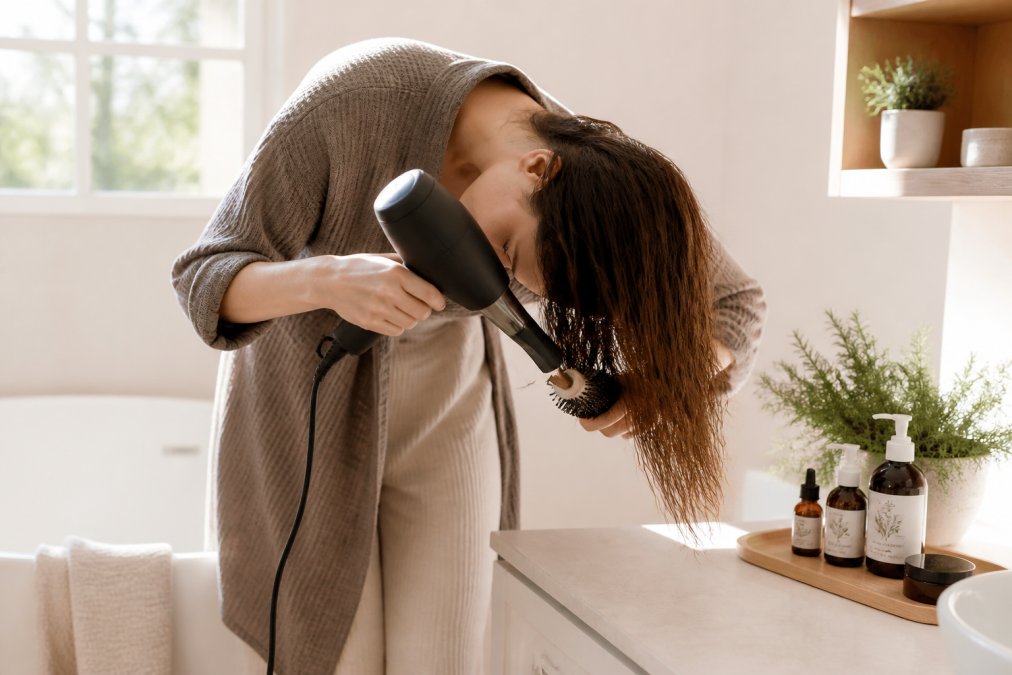
How you dry and style fine hair matters as much as what you wash it with. Rough towel drying creates friction that roughens the cuticle, leading to frizz and breakage. Instead, blot excess water with a microfiber towel or an old cotton t-shirt, then let hair air-dry until it is about 80 percent dry.
For volume, blow-dry upside down. Lean forward and dry the roots first, directing the nozzle from the roots toward the ends so the cuticle lays flat. Use a round brush to lift sections at the crown, and finish with a blast of cool air to set the style. Heat protection is non-negotiable because fine strands are more vulnerable to heat damage than thicker ones.
Skip heavy styling creams and oils. A texturizing spray or a light root-lift powder applied at the roots will give you more volume with less weight. Sleep on a silk or satin pillowcase, which creates less friction than cotton and helps prevent overnight breakage.
Your Gentle Hair Care Routine for Fine Hair: A Weekly Plan
A consistent weekly rhythm keeps fine hair at its best without over-manipulating fragile strands. Here is a simple framework:
| Day | Focus | Key Actions |
|---|---|---|
| Wash day 1 | Cleanse and stimulate | Shampoo scalp with Rosemary and Chamomile shampoo, condition mid-lengths, scalp massage |
| Day after wash | Refresh | Dry shampoo or root-lift powder at roots, no full wash |
| Wash day 2 | Deep care | Double-cleansing if buildup is visible, follow with a lightweight mask on ends only |
| Between washes | Protect | Silk pillowcase, loose styles, heat protectant before any styling |
| Weekly | Clarify | Use a gentle clarifying shampoo once a fortnight if you use many styling products |
The most common mistake is doing too much. Over-washing, over-conditioning, and over-styling all stress fine hair. A gentle hair care routine for fine hair is, above all, a restrained one: fewer products, lighter formulas, and more attention to scalp health.
Conclusion: Nurture Your Fine Hair with Nature's Wisdom
Fine hair rewards a thoughtful, gentle approach. By understanding your hair's diameter, density, and porosity, caring for your scalp, and choosing lightweight, certified organic products, you can build volume and body without compromising the health of your strands.
The entire Harmony Harvest hair collection is COSMOS-certified organic, vegan, and cruelty-free, so you can care for your hair and your values at the same time. Our Rosemary and Chamomile Shampoo and Conditioner offer a certified organic foundation for your gentle hair care routine for fine hair, while the Scalp Treatment set supports the root of healthy volume.
Frequently Asked Questions
How often should fine hair be washed to maintain volume?
Most fine hair types do best with washing every two to three days. Daily washing can strip natural oils, prompting your scalp to produce more sebum and leaving hair flat faster. However, if you exercise frequently or live in a humid climate, a gentle daily cleanse with a COSMOS-certified organic shampoo might suit you better. Pay attention to how your hair responds and adjust accordingly.
What ingredients should I avoid if I have fine hair?
Avoid heavy silicones and sulfates that can weigh hair down or cause buildup. Look for lightweight, plant-based formulas instead. Ingredients like rosemary and chamomile are excellent for fine hair as they stimulate the scalp and add natural shine without heaviness. Always choose products that are COSMOS-certified organic and vegan to ensure they are free from harsh synthetic detergents.
Can organic hair products provide enough volume for fine hair?
Yes, they can. Organic products that focus on scalp health and lightweight hydration can contribute to creating ideal conditions for volume. They avoid the heavy residues that flatten fine strands. Using a certified organic shampoo and conditioner, such as the Rosemary and Chamomile range, cleanses effectively without stripping, helping to leave hair with natural body and bounce. The key is choosing formulas designed for your specific hair needs.
How does scalp health impact the appearance of fine hair?
A healthy scalp is the foundation for beautiful hair. When your scalp is balanced and free from buildup, hair follicles can function optimally, supporting healthier-looking hair. Fine hair can appear fuller and more voluminous when it grows from a well-nourished scalp. Incorporating a scalp treatment into your routine helps maintain this balance, which is a cornerstone of any effective gentle hair care routine for fine hair.
Building a gentle hair care routine for fine hair takes a little patience, but the payoff is hair that looks and feels healthy every single day. Explore the Harmony Harvest hair collection to find certified organic, vegan, and cruelty-free formulas designed to nurture fine hair from root to tip.
Best Sellers

Read more
Best Organic Shampoo Guide: How to Choose for Your Hair
Discover the best organic shampoo for your hair type. Learn benefits, key ingredients, and how to choose a COSMOS-certified formula that supports scalp.
Read more
Why You Can Trust the COSMOS Organic Logo
Walk down any skincare aisle and you'll see the word "organic" everywhere. It's on labels, in ad copy, sprinkled through product names. But here's the honest truth: in most of the world, almost any...
Read more