


Dry Hair: Causes, Treatments & Moisture Routines
Table of Contents
- Understanding Dry Hair and What It Means
- Causes of Dry Hair: Internal and External Factors
- Recognising Symptoms of Dry Hair
- Best Shampoo for Dry Hair: What to Look For
- How to Moisturise Hair: A Complete Routine
- Testing Hair Porosity and Tailoring Your Approach
- Treating Dry Hair: Practical Steps You Can Start Today
- Conclusion: Revitalising Your Hair from Root to Tip
Last Updated: August 15, 2026
Understanding Dry Hair and What It Means
Dry hair is characterised by a lack of moisture and natural oils, leaving strands feeling rough, brittle, and prone to breakage. At Harmony Harvest, we understand that dry hair isn't simply a cosmetic concern, it's a sign that your hair's moisture barrier has been compromised, and addressing it requires a thoughtful, holistic approach.
When your hair loses its natural moisture retention capacity, the protective cuticle layer becomes raised and porous. This allows water to escape more readily, leaving strands dehydrated and vulnerable. The condition can range from mild dryness affecting just the ends, to severe dehydration throughout the entire hair shaft that makes styling difficult and painful.
Understanding what's happening at a structural level helps you choose treatments that actually work. Rather than simply applying more product, you need to restore the balance between moisture and protein, repair the cuticle layer, and protect against further damage.
Causes of Dry Hair: Internal and External Factors
The causes of dry hair are far more complex than most people realise. It's rarely just about your shampoo choice, it's a combination of internal health, environmental exposure, and how you treat your hair daily.
How scalp health affects moisture retention
Your scalp produces sebum, the natural oil that protects and hydrates your hair. When scalp health deteriorates, sebum production becomes unbalanced. Some people overproduce oil at the roots while their ends remain parched; others experience reduced sebum production across the board, leaving all their hair chronically dehydrated.
A healthy scalp maintains the right pH balance and microbial ecosystem. When this balance is disrupted, through harsh products, over-washing, or inflammation, your hair suffers directly. The sebum that does travel down the hair shaft becomes insufficient to coat and protect the entire length.
Scalp massage and gentle cleansing can help restore this balance. By improving circulation to the scalp, you encourage natural oil production and distribution. Many people find that reducing wash frequency and using gentler, sulfate-free formulas helps their scalp regulate itself within weeks.
Environmental stressors and water quality
Your environment plays a significant role in hair hydration. Chlorinated water from pools and showers strips the lipid barrier that protects your hair. UV exposure from sun exposure causes the cuticle to lift and fade colour. Low humidity in heated indoor spaces accelerates moisture loss from the hair shaft.
Water quality matters more than most people realise. Hard water, water with high mineral content, deposits minerals on the hair shaft that build up over time, making hair feel stiff and dull. These minerals interfere with moisture absorption and can actually repel water rather than allow your hair to absorb it.
If you live in an area with hard water, a chelating shampoo used occasionally can help remove mineral buildup. More importantly, consider installing a shower filter that reduces chlorine and heavy metals. This single change has helped many people notice improvement in their hair's texture and hydration within a month.
Nutritional deficiencies and internal hydration
Dry hair often reflects what's happening inside your body. Hair is made of protein, and it requires specific nutrients to maintain elasticity and moisture retention. Deficiencies in iron, zinc, B vitamins, and omega-3 fatty acids commonly show up as dry, brittle hair.
Dehydration at a systemic level also affects hair hydration. If you're not drinking enough water, your body prioritises vital organs over hair health. This can leave your hair chronically dehydrated from the inside out, making external treatments less effective.
Many people see significant improvement in their hair's moisture retention when they address their nutrition. Adding foods rich in omega-3s (fatty fish, flax seeds, walnuts), iron (leafy greens, legumes), and B vitamins helps support the hair growth cycle and moisture balance.
Recognising Symptoms of Dry Hair
Dry hair displays specific, recognisable symptoms that go beyond simply feeling dry to the touch. Understanding these signs helps you identify whether you have mild dryness or a more serious condition requiring targeted treatment.
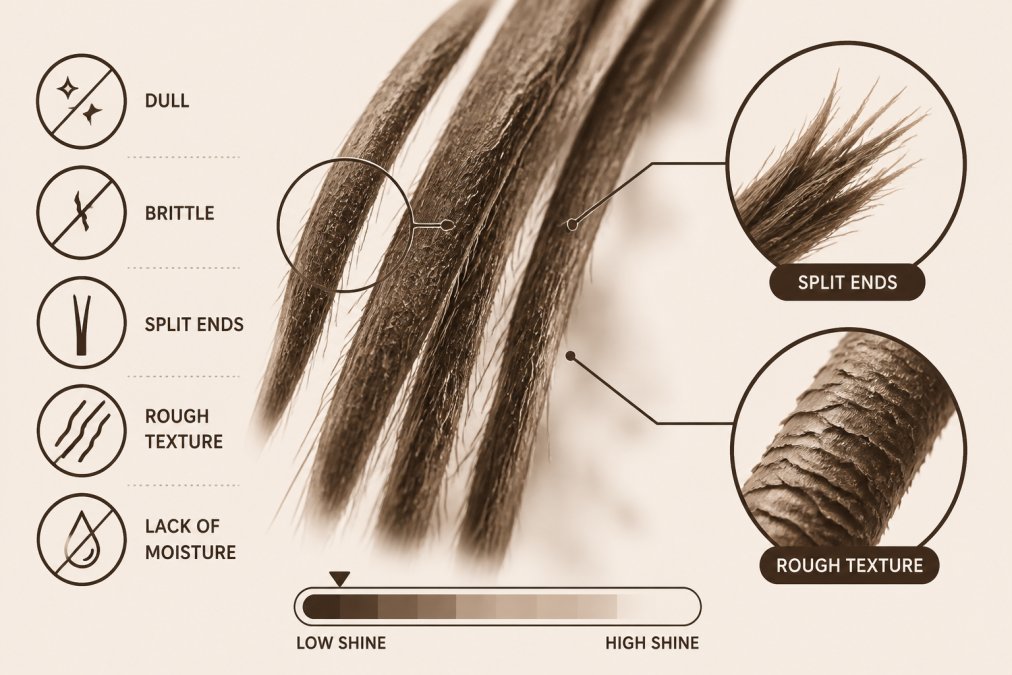
The most obvious symptom is lack of shine. Healthy hair reflects light because the cuticles lie flat and smooth. When hair is dry, the raised cuticles scatter light unevenly, creating a dull, lifeless appearance. You might notice your hair looks grey or faded even though you've recently coloured it.
Brittleness and breakage are hallmarks of severe dryness. Your hair snaps when you brush it or style it. Ends split easily, and you may notice short, broken hairs around your hairline from the stress of styling. The hair feels rough and straw-like rather than smooth.
Frizz is another key indicator. When cuticles are raised and porous, humidity causes them to swell unevenly, creating the fuzzy, flyaway appearance of frizz. This is especially noticeable on humid days or after washing.
Tangling and difficulty combing are also common. Dry hair tangles more easily because the raised cuticles catch on each other. Combing through feels painful and results in more breakage.
Some people experience an itchy, flaky scalp alongside dry hair. This suggests the scalp's protective barrier is compromised, which directly affects the hair growing from it.
Best Shampoo for Dry Hair: What to Look For
Choosing the best shampoo for dry hair requires understanding what ingredients help and which ones harm. Most conventional shampoos are formulated to strip away oil, the opposite of what dry hair needs.
Why sulfate-free formulas matter
Sulfates are harsh detergents that strip away both dirt and your hair's natural protective oils. For dry hair, this is catastrophic. Every time you wash with a sulfate-based shampoo, you're removing the very oils your hair desperately needs to stay hydrated.
Sulfate-free shampoos use gentler cleansing agents that remove dirt and buildup without stripping away sebum. This allows your scalp to regulate oil production more effectively and your hair to retain moisture between washes.
The transition to sulfate-free products can feel strange initially. Your hair may feel greasier for the first week or two as your scalp adjusts and begins producing the right amount of sebum. This is normal and temporary. Once your scalp rebalances, most people find their hair feels softer, shinier, and more manageable.
The importance of natural oils in cleansing
The best shampoos for dry hair include nourishing oils and plant extracts that support moisture retention. Look for ingredients like coconut oil, argan oil, jojoba oil, and shea butter. These mimic your hair's natural sebum and help seal the cuticle.
Natural plant extracts also matter. Ingredients like aloe vera, chamomile, and green tea have soothing and hydrating properties. They reduce inflammation on the scalp and help the hair shaft retain moisture.
When you're selecting a shampoo, read the ingredient list. The first few ingredients are what the product is made mostly of. For dry hair, you want to see nourishing oils and plant extracts near the top, not silicones or heavy waxes that coat the hair without truly hydrating it.
The Harmony Harvest Hair Care collection is formulated with COSMOS-certified organic ingredients and natural oils designed specifically to support moisture retention without harsh chemicals. These plant-based formulas work with your hair's natural hydration cycle rather than against it.
How to Moisturise Hair: A Complete Routine
A complete routine for dry hair goes beyond shampooing. It requires a multi-step approach that cleanses gently, conditions deeply, and protects against further moisture loss.
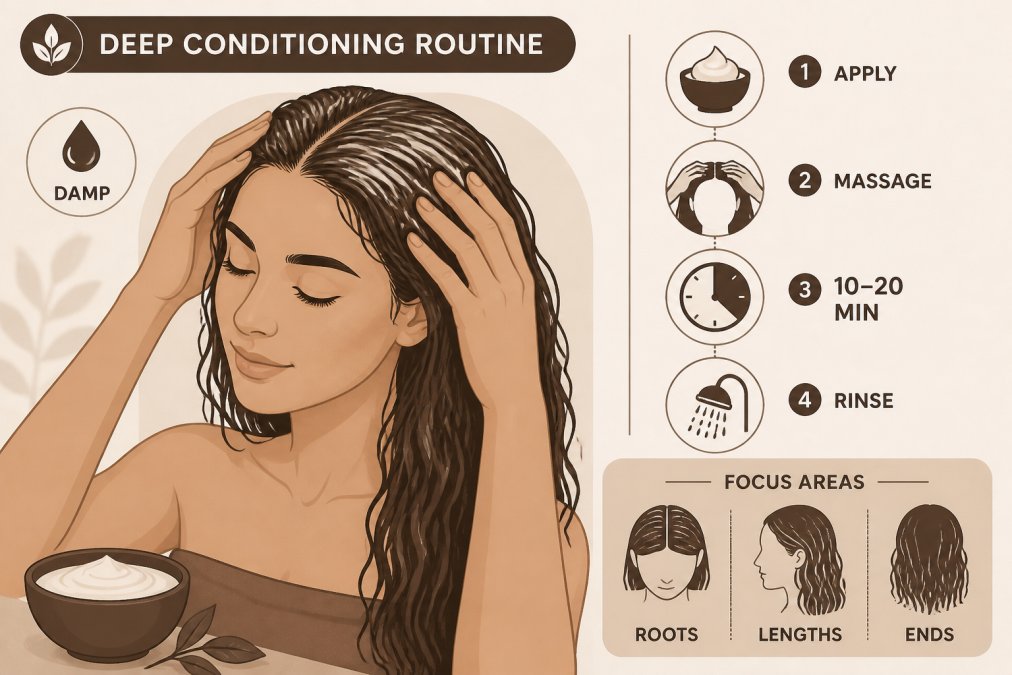
Start with a sulfate-free shampoo used no more than 2-3 times per week. On other days, use a co-wash (conditioner wash) or simply rinse with water. This reduces the frequency of cleansing and allows your scalp to maintain its natural oil balance.
After shampooing, apply a rinse-out conditioner to the mid-lengths and ends. Leave it on for at least 3-5 minutes, or longer if your hair is severely dry. Comb through gently while the conditioner is in your hair, this helps distribute it evenly and detangle without breakage.
Once weekly, use a deep conditioning treatment. Apply it to damp hair, focusing on the mid-lengths and ends. Leave it on for 15-30 minutes, or even overnight if your hair is extremely dry. Deep conditioning treatments penetrate the hair shaft more thoroughly than regular conditioner, restoring moisture and elasticity.
Deep conditioning and protein-moisture balance
The key to effective deep conditioning is understanding the protein-moisture balance. Hair needs both moisture and protein to be healthy. Moisture makes hair soft and flexible; protein makes it strong and elastic.
If your hair is very dry and stretches easily when wet, it needs more protein. If it's dry but snaps without stretching, it needs more moisture. Most dry hair benefits from alternating between moisture-focused and protein-focused treatments, perhaps a moisture-rich deep conditioner one week and a protein treatment the next.
Leave-in conditioners are also valuable for dry hair. Apply them to damp hair after washing, focusing on the ends. These products remain in your hair all day, providing ongoing hydration and protection.
Heat styling and thermal protection
Heat styling is one of the biggest culprits in dry hair. High temperatures cause the cuticle to lift permanently, moisture to evaporate rapidly, and protein to denature. If you have dry hair, minimising heat styling is essential.
When you do use heat, blow dryers, straighteners, or curling tools, always apply a thermal protectant first. These products create a barrier between your hair and the heat source, reducing damage. Allow your hair to air-dry partially before blow-drying, and use the lowest heat setting that achieves your desired result.
Consider styling techniques that don't require heat. Air-drying, braiding damp hair, and using heatless curlers all create styles without damaging your hair further.
Testing Hair Porosity and Tailoring Your Approach
Hair porosity describes how easily your hair absorbs and retains moisture. Understanding your hair's porosity helps you choose products and treatments that actually work for your specific hair type.
To test your hair porosity, take a clean strand of hair (from your brush or a fallen strand) and drop it in a glass of water. If it floats, your hair has low porosity and resists moisture absorption. If it sinks slowly, your hair has normal porosity. If it sinks immediately, your hair has high porosity and absorbs moisture readily but struggles to retain it.
Low porosity hair needs lightweight products that won't sit on the surface. High porosity hair benefits from heavier, more occlusive products that seal moisture in. Understanding this helps you avoid wasting money on products that won't work for your hair.
High porosity dry hair often responds well to protein treatments followed by moisture-sealing products. Low porosity dry hair may need humectant-rich products (like glycerin) that draw moisture into the hair, paired with lightweight oils.
Treating Dry Hair: Practical Steps You Can Start Today
You don't need to overhaul your entire routine to see improvement. Start with these practical steps that address the root causes of dry hair.
First, reduce washing frequency. Wash your hair 2-3 times per week maximum, using cool or lukewarm water. Hot water opens the cuticle and accelerates moisture loss. Cool water seals the cuticle and helps your hair retain moisture.
Second, invest in a good conditioner and use it every time you wash. Don't skimp on conditioning, this is where the moisture restoration happens. Leave conditioner on for at least 3-5 minutes.
Third, add a weekly deep conditioning treatment to your routine. This single step, done consistently, produces noticeable results within 4-6 weeks for most people.
Fourth, minimise heat styling. If you must blow-dry, use a heat protectant and a lower temperature setting. Air-dry whenever possible.
Fifth, address your water quality. If you have hard water, install a shower filter. If you swim regularly, rinse your hair with fresh water immediately after to remove chlorine.
Sixth, examine your nutrition. Ensure you're eating enough protein, omega-3s, and iron-rich foods. Stay hydrated by drinking adequate water daily.
Finally, be patient. Hair grows slowly, and the damage that's already there takes time to improve. New growth will be healthier if you address the underlying causes. Existing dry hair will gradually improve as you moisturise and protect it consistently.
Conclusion: Revitalising Your Hair from Root to Tip
Dry hair responds best to a combination of internal support, gentle external care, and protection against further damage. There's no single product that fixes everything, it's the consistent application of the right approach that creates lasting change.
Addressing dry hair means understanding what's causing it, whether that's scalp health issues, environmental damage, nutritional deficiencies, or product choices. Once you identify the root cause, you can tailor your routine to address it directly.
The Harmony Harvest Hair Care collection is specifically formulated to support this approach. Our COSMOS-certified organic, vegan products are crafted with Australian botanicals and natural oils designed to restore moisture retention, support scalp health, and protect your hair from further damage. Rather than relying on harsh chemicals or heavy silicones, our formulas work with your hair's natural hydration cycle to deliver genuine, lasting improvement.
Explore the Harmony Harvest Hair Care collection to discover COSMOS-certified organic, vegan formulas designed to restore moisture, support scalp health, and revitalise dry hair naturally. Every product is crafted from pure Australian botanicals and formulated without harsh chemicals, because your hair deserves nourishment that's as pure as nature intended.
Frequently Asked Questions
How do I fix the dryness in my hair?
Start by switching to a sulfate-free shampoo that won't strip natural oils, and introduce a weekly deep conditioning treatment. Reduce heat styling frequency and use thermal protection when you do style. Address internal factors by staying hydrated and ensuring adequate protein and healthy fats in your diet. If dryness persists, consult a healthcare provider to rule out nutritional deficiencies or scalp conditions. Harmony Harvest's COSMOS-certified organic hair collection is formulated specifically to restore moisture balance without harsh chemicals.
What causes of dry hair are most common?
The most common causes of dry hair include over-washing, harsh shampoos containing sulfates, heat styling without protection, chlorinated or hard water exposure, and low humidity environments. Internal causes include dehydration, nutritional deficiencies (particularly B vitamins, iron, and omega-3 fatty acids), and hormonal changes. Scalp health also plays a critical role—if your scalp isn't producing enough sebum, your hair shaft won't receive adequate natural oils. Chemical processing and UV exposure further damage the hair cuticle, preventing moisture retention.
How often should I wash my hair if it's prone to dryness?
If you have dry hair, aim to wash no more than twice weekly, or even once weekly if your hair allows it. Frequent washing strips the scalp of natural oils that protect and hydrate your strands. When you do wash, use lukewarm water rather than hot, which can open the hair cuticle and cause moisture loss. Between washes, use a dry shampoo or simply rinse with water if needed. This approach helps your scalp restore its natural oil production and improves overall moisture retention.
What are the best natural ingredients for treating dry hair?
Look for ingredients like coconut oil, argan oil, shea butter, and plant-based proteins that help seal the hair cuticle and lock in moisture. Aloe vera soothes the scalp and provides hydration, whilst botanical extracts like chamomile and lavender support scalp health. Glycerin acts as a humectant, drawing moisture into the hair shaft. Avoid products with silicones that create temporary shine but trap moisture inside and prevent the scalp from breathing. COSMOS-certified organic products ensure you're getting pure botanicals without synthetic additives that can exacerbate dryness.
Best Sellers

Read more
Hair Loss: Causes, Treatments & Natural Care
Understand hair loss causes, types, and treatments. Learn natural scalp care tips and when to seek medical help. Discover holistic solutions.
Read more
Chemical vs. Organic Hair Growth Shampoo: Which Is Safer
Organic hair growth shampoo: Discover whether organic or chemical hair growth shampoos are safer. Compare ingredients, efficacy, and scalp health benefits.
Read more