


Dry Scalp: Causes, Symptoms & Treatment Guide
Table of Contents
- What Is Dry Scalp and Why It Matters
- Causes of Dry Scalp in Australia's Climate
- Recognising Dry Scalp Symptoms
- Best Shampoo and Treatment for Dry Scalp Australia
- Building Your Scalp Care Routine Australia
- Prevention Tips and When to See a Dermatologist
- Conclusion
Dry Scalp: Causes, Symptoms & Treatment Guide
Last Updated: July 27, 2026
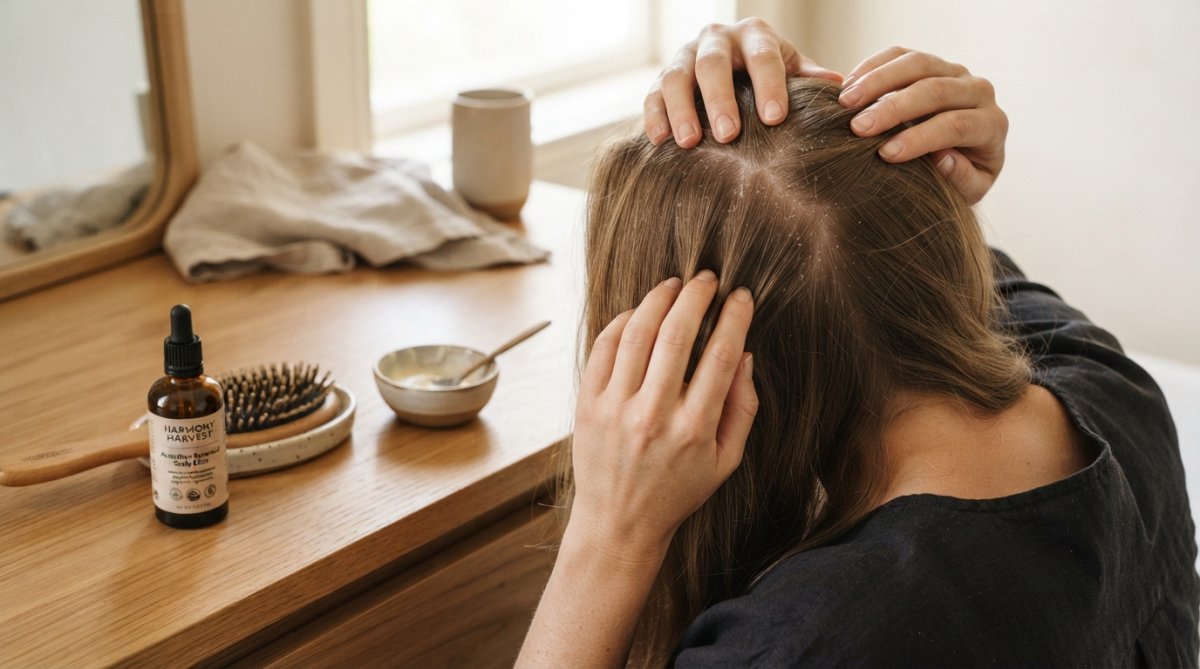
Dry scalp is a common condition characterised by flaking, itching, and tightness caused by insufficient moisture and natural oils, not fungal overgrowth like dandruff. At Harmony Harvest, we understand that scalp health is foundational to healthy hair, which is why we've developed targeted solutions using COSMOS-certified organic ingredients to address this frustrating issue.
What Is Dry Scalp and Why It Matters
Dry scalp occurs when the scalp lacks sufficient moisture and natural oils, leading to visible flaking, itching, and sometimes redness. Unlike dandruff, which stems from fungal overgrowth, dry scalp results from inadequate hydration and moisture loss from the skin barrier itself.
The distinction matters because treatment approaches differ significantly. A dry scalp needs moisture replenishment and barrier support, whilst dandruff requires anti-fungal intervention. Many people waste months using the wrong products because they've assumed their flaking scalp is dandruff when it's actually dehydration.
Scalp health directly affects hair quality. When your scalp's skin barrier is compromised, hair follicles don't receive adequate nourishment, leading to brittleness, breakage, and a dull appearance. Addressing dry scalp early prevents cascading damage to your hair's structure and shine.
How Dry Scalp Differs From Dandruff
Dry scalp produces fine, white flakes that feel tight and itchy. The scalp feels uncomfortable, especially after washing, and worsens in dry climates or after hot showers. It responds to moisture-rich treatments and barrier repair.
Dandruff (seborrheic dermatitis) produces larger, yellowish, oily flakes that are often clustered. The condition is caused by an overgrowth of Malassezia yeast and requires anti-fungal shampoos, not hydrating treatments.
A simple test: if your scalp feels tight and uncomfortable even after moisturising, you likely have dry scalp. If your flakes are oily and persist despite using anti-dandruff shampoo, dandruff is the culprit.
Causes of Dry Scalp in Australia's Climate
Australia's climate presents unique challenges for scalp health. The combination of intense UV exposure, low humidity in inland regions, and hard water in many areas creates an environment where moisture loss accelerates.
Environmental and Lifestyle Factors
Hot showers are one of the most overlooked causes of dry scalp. Water temperature above 40°C strips away natural oils and damages the scalp's moisture barrier. Using lukewarm water (around 35-37°C) preserves sebum and reduces transepidermal water loss.
Australia's intense sun exposure damages the scalp directly. UV rays break down the proteins and lipids that maintain hydration. If you spend time outdoors without protecting your scalp (hats, UV-protective hair products), sun damage compounds dry scalp symptoms.
Hard water is prevalent in many Australian regions, particularly in South Australia and parts of Queensland. Dissolved minerals create a barrier that prevents moisture absorption. Installing a shower filter or using chelating treatments monthly can mitigate this issue.
Air conditioning and heating systems create artificially dry indoor environments. This accelerates moisture loss from the scalp, and the contrast between air-conditioned indoors and hot outdoors stresses the skin barrier further.
The Scalp Microbiome and Moisture Loss
Your scalp hosts a delicate ecosystem of bacteria that maintain its health. When disrupted by harsh sulfate-based shampoos, frequent washing, or products containing parabens, the scalp's natural defences weaken. A healthy microbiome produces antimicrobial compounds and supports the skin barrier.
Sulfate-free and paraben-free products preserve the scalp microbiome, allowing beneficial bacteria to thrive. Switching to gentler formulations often produces dramatic improvements in dry scalp symptoms.
Frequent washing strips the scalp of sebum faster than it can be naturally replenished. Most people wash their hair too often; finding your optimal wash frequency (typically 2-3 times weekly) allows sebum levels to stabilise.
Hard Water and Nutritional Deficiencies
Hard water mineral deposits create a physical barrier that prevents moisture from penetrating the scalp. Nutritional deficiencies in omega-3 fatty acids, zinc, biotin, and B vitamins also impair the skin's ability to produce and retain moisture.
Dehydration at the systemic level affects scalp hydration. Drinking adequate water supports skin barrier function throughout your body, including your scalp. Combined with topical treatments, adequate hydration supports faster improvement.
| Factor | Impact on Dry Scalp | Solution |
|---|---|---|
| Hard water | Mineral buildup blocks moisture absorption | Chelating shampoo or shower filter |
| Hot water temperature | Strips natural oils and damages barrier | Use lukewarm water (35-37°C) |
| Frequent washing | Depletes sebum faster than it regenerates | Reduce to 2-3 times weekly |
| Sulfate-based products | Disrupts scalp microbiome | Switch to sulfate-free formulations |
| Low humidity | Accelerates transepidermal water loss | Use hydrating scalp treatments |
| Nutritional gaps | Impairs skin barrier function | Address zinc, omega-3, biotin intake |
Recognising Dry Scalp Symptoms
Identifying dry scalp accurately is the first step toward effective treatment.
Fine white flaking is the hallmark symptom. Unlike dandruff flakes, which are larger and yellowish, dry scalp produces small, white, powdery flakes scattered across the scalp.
Itching and tightness accompany the flaking. Your scalp feels uncomfortable, sometimes uncomfortably tight, especially a few hours after washing. The itching intensifies in dry weather or after hot showers.
Redness and sensitivity develop as the condition worsens. The scalp becomes inflamed from constant irritation. Products that normally wouldn't irritate your skin may cause burning or stinging sensations.
Hair becomes brittle and dull. As the scalp fails to nourish hair follicles adequately, the hair shaft loses moisture and structural integrity. You'll notice increased breakage, frizz, and a lack of shine.
Best Shampoo and Treatment for Dry Scalp Australia
Selecting the right products is essential because many mainstream shampoos worsen dry scalp.
What to Look for in Scalp Care Products
Sulfate-free formulations are non-negotiable. Sulfates are harsh detergents that strip natural oils and disrupt the microbiome. Sulfate-free shampoos cleanse gently without stripping.
Hydrating and soothing ingredients should form the core of your product. Look for glycerin, hyaluronic acid, and plant-based oils that replenish moisture. Aloe vera, chamomile, and oat extract soothe inflammation.
Paraben-free formulations preserve the scalp microbiome. Parabens are preservatives linked to microbiome disruption. Natural preservative systems maintain the delicate balance of bacteria that protect your scalp.
pH-balanced formulas support the scalp's natural acidity (around 4.5-5.5). Alkaline shampoos disrupt this balance and compromise the skin barrier.
The Harmony Harvest Scalp Cleansing Treatment is formulated specifically for dry, irritated scalps. It combines COSMOS-certified organic botanicals with a sulfate-free, paraben-free base that cleanses without stripping. The formula includes hydrating plant oils and soothing extracts that address the root causes of dryness whilst supporting scalp microbiome health.
Building Your Scalp Care Routine Australia
A consistent routine is more important than any single product.
Step-by-Step Daily and Weekly Routine
Daily care (lightweight maintenance):
-
Gentle cleansing 2-3 times weekly, not daily. Use lukewarm water (35-37°C) and massage your scalp gently with fingertips for 60-90 seconds. Allow the shampoo to sit for 1-2 minutes before rinsing thoroughly.
-
Rinse with cool water. A final cool rinse seals the hair cuticle and strengthens the skin barrier.
-
Pat dry, don't rub. Use a microfibre towel or cotton t-shirt and gently squeeze moisture out.
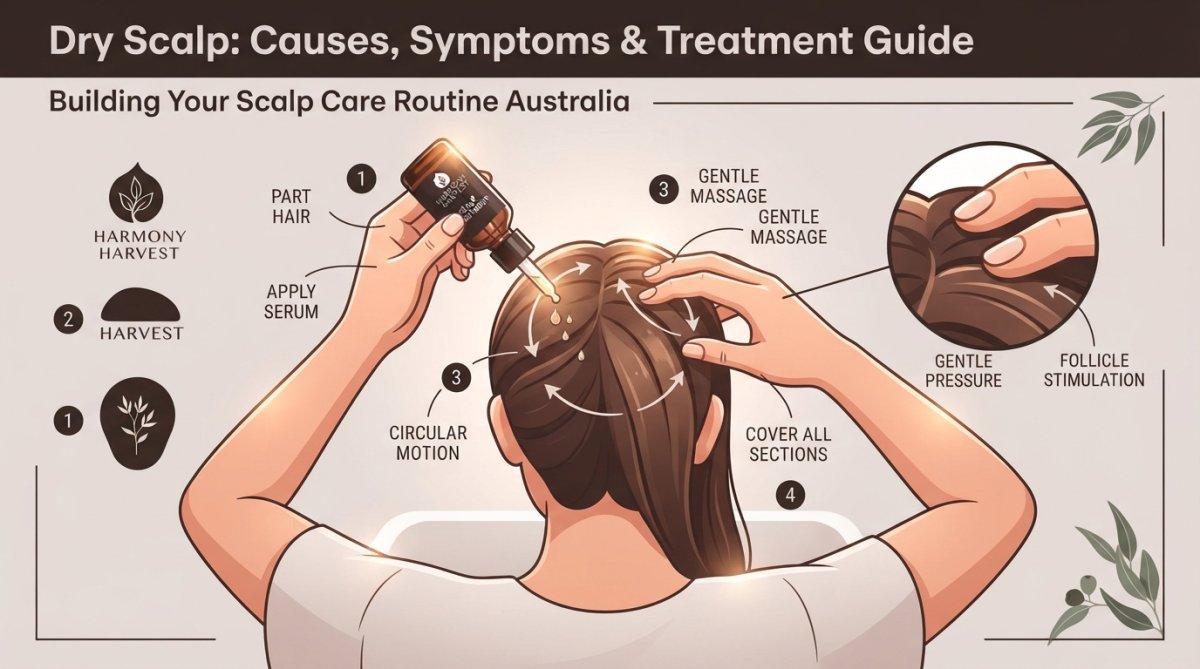
Weekly intensive treatment (barrier repair):
-
Apply a scalp treatment once weekly to damp (not dripping wet) hair. Part your hair into sections and apply directly to the scalp, massaging gently for 2-3 minutes.
-
Leave on for 10-15 minutes. Wrap your hair in a warm towel to enhance absorption.
-
Rinse thoroughly with lukewarm water to ensure no product residue remains.
-
Air-dry when possible. If you must blow-dry, use the lowest heat setting and keep the dryer at least 15 cm from your scalp.
Product Layering and Application Order
The order in which you apply products matters significantly.
-
Cleanse first with your sulfate-free shampoo to remove buildup and prepare the scalp.
-
Apply treatment while damp, not soaking wet or completely dry. Damp hair allows products to absorb without diluting them excessively.
-
Leave-in products last. If using a lightweight leave-in scalp serum or oil, apply this after rinsing out your main treatment.
-
Allow settling time of 5-10 minutes before styling or touching your hair.
Prevention Tips and When to See a Dermatologist
Once you've resolved acute dry scalp symptoms, maintaining scalp health prevents recurrence.
Maintain consistent routine. Don't revert to daily washing or hot showers once your scalp improves. Consistency matters more than intensity.
Protect your scalp from UV damage. Wear hats when outdoors for extended periods, especially during peak sun hours (10 am-3 pm). Use hair products with UV protection if you spend significant time outside.
Stay hydrated systemically. Drink adequate water daily. Most adults need 2-3 litres daily, more in hot climates.
Manage stress levels. Chronic stress impairs skin barrier function and can trigger or worsen dry scalp.
Address nutritional gaps. Ensure adequate intake of omega-3 fatty acids, zinc, biotin, and B vitamins. Consider supplementation if dietary sources are insufficient.
Consult a dermatologist if:
- Dry scalp symptoms persist after 4-6 weeks of consistent treatment
- Itching becomes severe or you develop signs of infection (oozing, crusting, warmth)
- Symptoms spread beyond the scalp to other areas of your body
- You experience hair loss alongside scalp dryness
- You suspect an underlying condition like psoriasis or seborrheic dermatitis
A dermatologist can perform a scalp assessment, rule out fungal infections or autoimmune conditions, and recommend prescription-strength treatments if necessary.
Dry scalp is frustrating, but it's entirely treatable with the right approach. The key is understanding that your scalp needs hydration, barrier repair, and gentle care, not harsh cleansing. By identifying the specific causes affecting your scalp (hard water, hot showers, product choices, or nutritional gaps), you can address them directly.
The Harmony Harvest Scalp Cleansing Treatment is formulated with COSMOS-certified organic, vegan ingredients designed to cleanse without stripping, hydrate deeply, and support scalp microbiome health. Combined with the routine and prevention strategies outlined above, it provides a complete approach to restoring scalp health and maintaining it long-term.
Frequently Asked Questions
What is the main cause of dry scalp?
Dry scalp occurs when the scalp loses moisture faster than it can be replenished, often due to overwashing, hot water exposure, environmental factors like low humidity or harsh Australian sun, or an imbalance in the scalp's natural oil production. Hard water, nutritional deficiencies, and scalp microbiome disruption can also contribute significantly to transepidermal water loss and reduced skin barrier function.
What's the difference between dry scalp and dandruff?
Dry scalp causes fine, dry flaking due to moisture loss and lacks inflammation, whilst dandruff (often linked to Malassezia yeast overgrowth or seborrheic dermatitis) produces larger, oily flakes with visible scalp irritation. Dry scalp typically feels tight and itchy, whereas dandruff may involve redness and a stronger odour. Treatment differs significantly, dry scalp needs hydration, whilst dandruff often requires anti-fungal or anti-inflammatory ingredients.
How often should you wash your hair if you have a dry scalp?
Limit washing to 2-3 times per week with lukewarm (not hot) water, as frequent washing strips natural oils and increases moisture loss. Use a sulfate-free, gentle cleanser that supports your scalp's pH balance. Between washes, use dry shampoo sparingly. When you do wash, focus cleansing on the scalp rather than the hair lengths, and always follow with a hydrating scalp treatment to restore moisture and soothe irritation.
What ingredients should I look for in dry scalp products?
Choose products with hydrating and soothing ingredients such as glycerin, hyaluronic acid, plant-based oils, and botanical extracts that support the skin barrier and reduce transepidermal water loss. Look for COSMOS-certified organic formulations that avoid sulfates, parabens, and synthetic detergents. Anti-inflammatory botanicals and natural humectants help lock in moisture, whilst gentle exfoliating agents (like oat extract) can remove buildup without causing further irritation to your scalp.
This article was written using GrandRanker
Best Sellers

Read more
Organic Shampoo for Hormonal Hair Loss: Does It Work?
Organic shampoo for hormonal hair loss: Discover how organic shampoo can support hair health during hormonal changes. Learn which ingredients matter and.
Read more
How to Fix Your Skin Barrier: A Science-Backed Guide
Fix skin barrier: Learn how to fix your skin barrier with proven steps, key ingredients, and a repair routine. Discover what damages it and how long.
Read more