


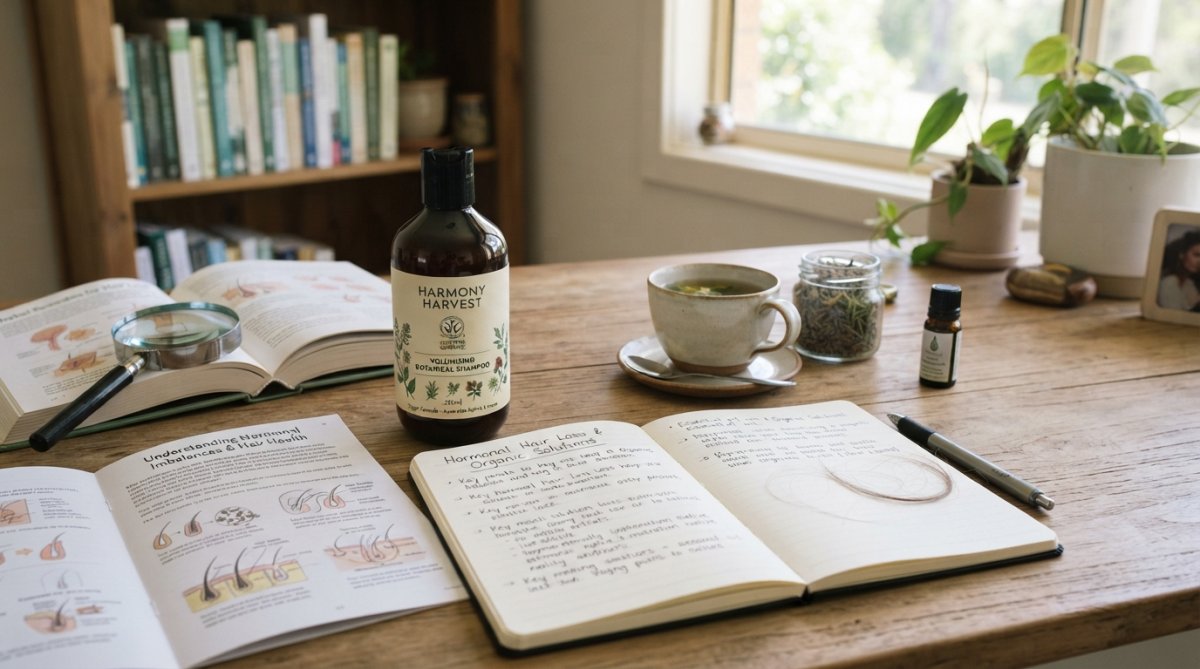
Organic Shampoo for Hormonal Hair Loss: Does It Work?
Table of Contents
- Can Organic Shampoo Help with Hormonal Hair Loss?
- How Hormones Affect Your Hair Growth Cycle
- Key Ingredients in Organic Shampoo for Hormonal Hair Loss
- DHT Blocking Shampoo Australia: Understanding Organic Options
- Postpartum Hair Loss Shampoo Australia: Why Organic Matters
- Scalp Health for Hair Loss Australia: The Organic Foundation
- Ingredients to Avoid in Shampoo for Hair Loss
- Building a Simple Routine with COSMOS-Certified Organic Hair Care
Organic Shampoo for Hormonal Hair Loss: Does It Work?
Last Updated: July 27, 2026
Yes, organic shampoo for hormonal hair loss can support scalp health and reduce breakage as part of a comprehensive approach. While no shampoo reverses hormonal imbalances alone, COSMOS-certified organic formulas avoid harsh chemicals that stress hair follicles. Switching to plant-based, chemical-free products often marks the turning point where customers see improvement after years of frustration with conventional options.
Can Organic Shampoo Help with Hormonal Hair Loss?
Organic shampoo addresses the scalp environment rather than the hormonal cause itself. Your hair is already under siege from internal hormonal changes. If you're simultaneously exposing it to sulphates, parabens, silicones, and synthetic detergents, you're fighting on two fronts. These chemicals strip the scalp's natural protective layer, disrupt the microbiome, and accelerate shedding.
Research from the International Journal of Trichology shows that scalp microbiome health directly influences hair retention rates. When you use COSMOS-certified organic shampoos, you preserve beneficial bacteria that stabilise the scalp environment. A compromised microbiome accelerates hair loss, regardless of the hormonal trigger.
(https://c72936-3.myshopify.com/blogs/blog/hair-loss-causes-types-treatment)?]The real value emerges over weeks and months. You won't see new hair growth from shampoo alone, but you will see less breakage, a calmer scalp, and reduced shedding once the follicle environment stabilises. For people dealing with postpartum hair loss or perimenopausal shedding, that stabilisation is the difference between fragile-looking hair and hair strong enough to grow through the hormonal phase.
How Hormones Affect Your Hair Growth Cycle
Your hair cycles through three phases: anagen (growth, lasting 2-7 years), catagen (transition, lasting weeks), and telogen (resting, lasting months before shedding). Hormones can truncate this cycle dramatically.
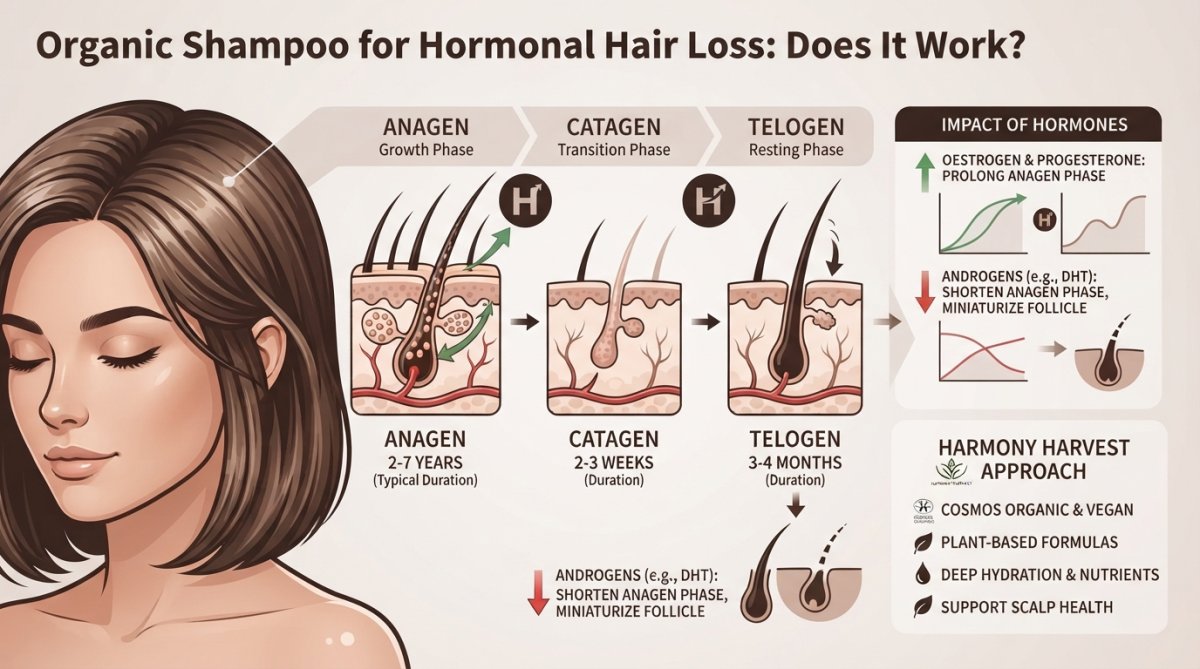
When oestrogen levels drop (postpartum, perimenopause) or androgens spike (PCOS, hormonal imbalance), hair follicles shift prematurely from anagen into telogen. Instead of growing for years, hairs rest for months then shed. This is called telogen effluvium when acute, or androgenetic alopecia when chronic.
The follicle doesn't die during this process, it's dormant. This is good news: hormonal hair loss is reversible once hormones stabilise. But the follicle is vulnerable during dormancy. If the scalp is inflamed, dry, or colonised by unfriendly bacteria, the follicle can remain stuck in telogen longer than necessary. An organic shampoo keeps the scalp calm, hydrated, and balanced, allowing the follicle to transition back to anagen on its natural timeline.
Key Ingredients in Organic Shampoo for Hormonal Hair Loss
Not all organic shampoos are equal. The best formulas contain ingredients that actively support follicle health and scalp balance.
Saw palmetto inhibits 5-alpha reductase, the enzyme that converts testosterone to DHT (dihydrotestosterone), the hormone most implicated in androgenetic alopecia. Research shows modest but measurable improvements in hair density over 6 months.
Biotin and plant-based B vitamins support keratin synthesis, the structural protein that gives hair strength. Hair weakened by hormonal stress breaks more easily. Biotin reduces breakage, making retained hair appear fuller and healthier.
Neem oil is antimicrobial and anti-inflammatory. It reduces scalp inflammation, inhibits fungal overgrowth, and supports a balanced microbiome.
Rosemary extract improves blood flow to the scalp and has shown promise in studies for slowing hair loss. It's also a natural preservative, so COSMOS-certified organic formulas use it instead of synthetic alternatives.
Plant-based proteins (from rice, pea, or wheat) coat the hair shaft and reduce breakage, protecting the hair you have from further damage.
The absence of certain ingredients matters equally. Sulphates strip natural oils. Parabens disrupt hormonal signalling. Silicones trap bacteria. Synthetic fragrances irritate sensitive scalps. An organic shampoo for hormonal hair loss avoids all of these.
| Ingredient | Benefit for Hormonal Hair Loss | Source Type |
|---|---|---|
| Saw palmetto | Reduces DHT conversion | Plant extract |
| Biotin | Strengthens hair shaft | Plant-derived |
| Neem oil | Anti-inflammatory, antimicrobial | Plant oil |
| Rosemary | Improves scalp circulation | Plant extract |
| Plant proteins | Reduces breakage | Plant-derived |
DHT Blocking Shampoo Australia: Understanding Organic Options
In Australia, "DHT blocking shampoo" has become a catch-all for any product claiming to slow hormonal hair loss. Organic formulas excel at scalp support through saw palmetto, nettle root, and pumpkin seed oil.
The limitation: a shampoo sits on your scalp for 2-5 minutes, not enough time for botanical DHT blockers to penetrate deeply enough to significantly reduce systemic DHT levels. If you have androgenetic alopecia driven by genetic sensitivity to DHT, a DHT blocking shampoo is a supporting player, not the lead actor.
Organic DHT blocking shampoo options are worth using because they do no harm and provide mild benefit. They're particularly valuable for people who can't tolerate or choose not to use pharmaceutical options. Harmony Harvest's Hair Care collection includes formulas incorporating saw palmetto and other DHT-supportive botanicals, all COSMOS-certified organic and free from synthetic chemicals that could further stress your scalp.
The best approach: use an organic DHT blocking shampoo as part of a layered strategy. Pair it with oral supplements (if appropriate), scalp massage, and patience as hormones rebalance.
Postpartum Hair Loss Shampoo Australia: Why Organic Matters
Postpartum hair loss affects up to 40% of new mothers in Australia. The cause is straightforward: oestrogen levels plummet after delivery, shocking hair follicles out of the growth phase into the resting phase. The result is dramatic shedding 2-4 months postpartum.
The good news: postpartum hair loss is temporary and reversible. Hair typically regrows within 6-12 months as hormones restabilise. A postpartum hair loss shampoo needs to be gentle, nourishing, and free from irritants that could inflame an already stressed scalp. Organic formulas shine here.
Organic postpartum hair loss shampoo options avoid sulphates and synthetic fragrances that trigger scalp sensitivity. They often include hydrating botanicals like coconut oil, argan oil, and plant glycerin, supporting the scalp barrier and reducing breakage. COSMOS-certified organic formulas ensure you're not exposing yourself or your baby to endocrine-disrupting chemicals during an already hormonally volatile period.
For postpartum hair loss, organic shampoo works best when paired with adequate protein intake, iron supplementation (if deficient), and stress management. Hair regrowth takes time, typically 3-6 months before new growth appears, and 12+ months before density returns to pre-pregnancy levels.
Scalp Health for Hair Loss Australia: The Organic Foundation
Most people focus on treating the hair itself. The real breakthrough comes from treating the scalp. A healthy scalp is the foundation for hair that grows, survives hormonal stress, and resists breakage.
Scalp health depends on pH balance, microbiome diversity, sebum production, inflammation levels, and circulation. Harsh shampoos disrupt all of these. Organic formulas support them.
pH balance matters because your scalp is naturally acidic (pH 4.5-5.5). This acidity protects against bacterial overgrowth and maintains the skin barrier. Most conventional shampoos are alkaline (pH 7+), stripping this protective layer. Organic shampoos typically maintain a lower pH, keeping the scalp's acid mantle intact.
Microbiome diversity is the new frontier in scalp science. Your scalp hosts hundreds of bacterial species. Sulphate shampoos kill indiscriminately, allowing opportunistic pathogens to dominate. Organic formulas with minimal surfactants preserve beneficial bacteria, reducing inflammation and supporting hair health.
Sebum production is often misunderstood. Sebum is protective, not the enemy. Conventional shampoos strip it aggressively, triggering overproduction. Organic shampoos cleanse without stripping, allowing sebum production to normalise.
Inflammation is the silent driver of hair loss. A chronically inflamed scalp creates an environment where follicles struggle. Organic formulas with anti-inflammatory botanicals (neem, rosemary, chamomile) calm the scalp without steroids.
Circulation determines how well follicles are nourished. Scalp massage, warm water, and ingredients that dilate blood vessels improve circulation. Organic shampoos often include ingredients supporting vasodilation, like caffeine or ginger extract.
Scalp health is the unglamorous but essential foundation for hair recovery.
Ingredients to Avoid in Shampoo for Hair Loss
Knowing what to avoid is as important as knowing what to include. Certain ingredients actively worsen hair loss or scalp health.
Sodium lauryl sulphate (SLS) and sodium laureth sulphate (SLES) strip the scalp's natural oils, disrupt the microbiome, and trigger inflammation. Organic shampoos use gentler surfactants like decyl glucoside or coco-glucoside.
Parabens (methylparaben, propylparaben, butylparaben) have weak oestrogenic activity. When managing hormonal imbalance, every source of endocrine disruption matters. COSMOS-certified organic products exclude parabens entirely.
Silicones (dimethicone, cyclomethicone) coat the hair temporarily but accumulate on the scalp, trapping bacteria and blocking moisture. Organic formulas skip silicones, relying instead on plant proteins and oils.
Synthetic fragrances often irritate sensitive scalps and may contain phthalates, endocrine disruptors. Organic shampoos use essential oils or botanical extracts.
Dyes and artificial colours serve no functional purpose and can irritate the scalp. Organic formulas are naturally coloured or uncoloured.
Formaldehyde releasers (DMDM hydantoin, imidazolidinyl urea) slowly release formaldehyde, a known irritant and carcinogen. No organic product should contain these.
Mineral oil is a petroleum byproduct that coats without nourishing. Plant-based oils (coconut, argan, jojoba) are superior because they're actually absorbed and provide genuine benefit.
The safest approach: look for COSMOS-certified organic certification. This third-party verification means every ingredient has been vetted for safety, sustainability, and efficacy. Harmony Harvest's Hair Care collection carries COSMOS-certified organic status, ensuring harmful ingredients are excluded and beneficial ones included.
Building a Simple Routine with COSMOS-Certified Organic Hair Care
You don't need a complicated routine to address hormonal hair loss. Simplicity is an asset, the fewer products you use, the easier it is to identify what's working.
Step 1: Gentle cleansing (2-3 times per week) Use an organic shampoo for hormonal hair loss. Wash with lukewarm water, as heat irritates the scalp. Massage gently with your fingertips for 2-3 minutes, focusing on the scalp. Rinse thoroughly. Less frequent washing preserves natural oils and reduces microbiome disruption.
Step 2: Conditioning (optional, 1-2 times per week) If your hair feels dry, use a lightweight organic conditioner on the lengths only, never the scalp. Leave on for 1-2 minutes, then rinse.
Step 3: Scalp treatment (1-2 times per week) A scalp oil or serum with saw palmetto, neem, or rosemary extract provides concentrated support. Apply directly to the scalp, massage gently, and leave on for at least 20 minutes (or overnight). This is the most impactful step beyond the shampoo itself.
Step 4: Avoid heat and tension Hair weakened by hormonal stress breaks more easily. Air-dry when possible. Use a wide-tooth comb on wet hair, starting from the ends. Avoid tight hairstyles.
Step 5: Patience and consistency Expect 4-8 weeks before noticing reduced shedding, and 3-6 months before seeing new growth. Consistency compounds over months.
This routine is simple enough to sustain long-term. Harmony Harvest's Hair Care collection is designed to work together, the COSMOS-certified organic shampoo, conditioner, and scalp treatments complement each other without overwhelming your routine.
Hormonal hair loss feels beyond your control, and in many ways, it is. You can't stop your hormones from fluctuating. But you can control your scalp environment. An organic shampoo for hormonal hair loss removes additional stressors that compound the problem, creating the best possible conditions for hair to survive and regrow.
Harmony Harvest's Hair Care collection is COSMOS-certified organic, vegan, and cruelty-free, formulated specifically to support scalp health without harsh chemicals. Whether you're navigating postpartum shedding, perimenopausal thinning, or chronic androgenetic alopecia, switching to organic hair care is a tangible step you can take today. Explore the Harmony Harvest Hair Care collection and discover formulas that nurture your scalp and support your hair's recovery.
Frequently Asked Questions
Can organic shampoo actually help with hormonal hair loss?
Organic shampoo can support scalp health and reduce irritation that may worsen hair loss, but it cannot reverse hormonal imbalances alone. Look for COSMOS-certified organic formulas that avoid harsh detergents and include nourishing botanicals. Pairing a gentle organic shampoo with lifestyle adjustments and professional advice offers the best approach to managing hormonal hair loss.
What ingredients in organic shampoo are best for hormonal hair loss?
Seek organic shampoos containing saw palmetto, nettle extract, rosemary oil, and biotin, ingredients traditionally associated with scalp health. Avoid sulphates and synthetic detergents that can strip the scalp and weaken hair. COSMOS-certified organic shampoos are formulated without these harsh chemicals, making them gentler on sensitive, loss-prone hair whilst still cleansing effectively.
How long does it take for organic shampoo to show results for hormonal hair loss?
Hair growth cycles take time, typically 3 to 6 months to notice visible improvement. Consistency matters more than speed. Use your chosen organic shampoo regularly as part of a complete routine, and monitor scalp health alongside any other treatments you're using. Be patient; sustainable results come from supporting your scalp's natural healing process.
Are all natural shampoos truly organic and effective for hair loss?
No. Many brands use 'natural' or 'organic' marketing without third-party certification. Look for COSMOS certification, which guarantees genuine organic standards and excludes synthetic additives. This certification ensures you're getting a truly organic formula, not greenwashing. Checking for certifications protects you from misleading claims and ensures you're investing in a product that actually meets rigorous organic standards.
This article was written using GrandRanker
Best Sellers
Read more
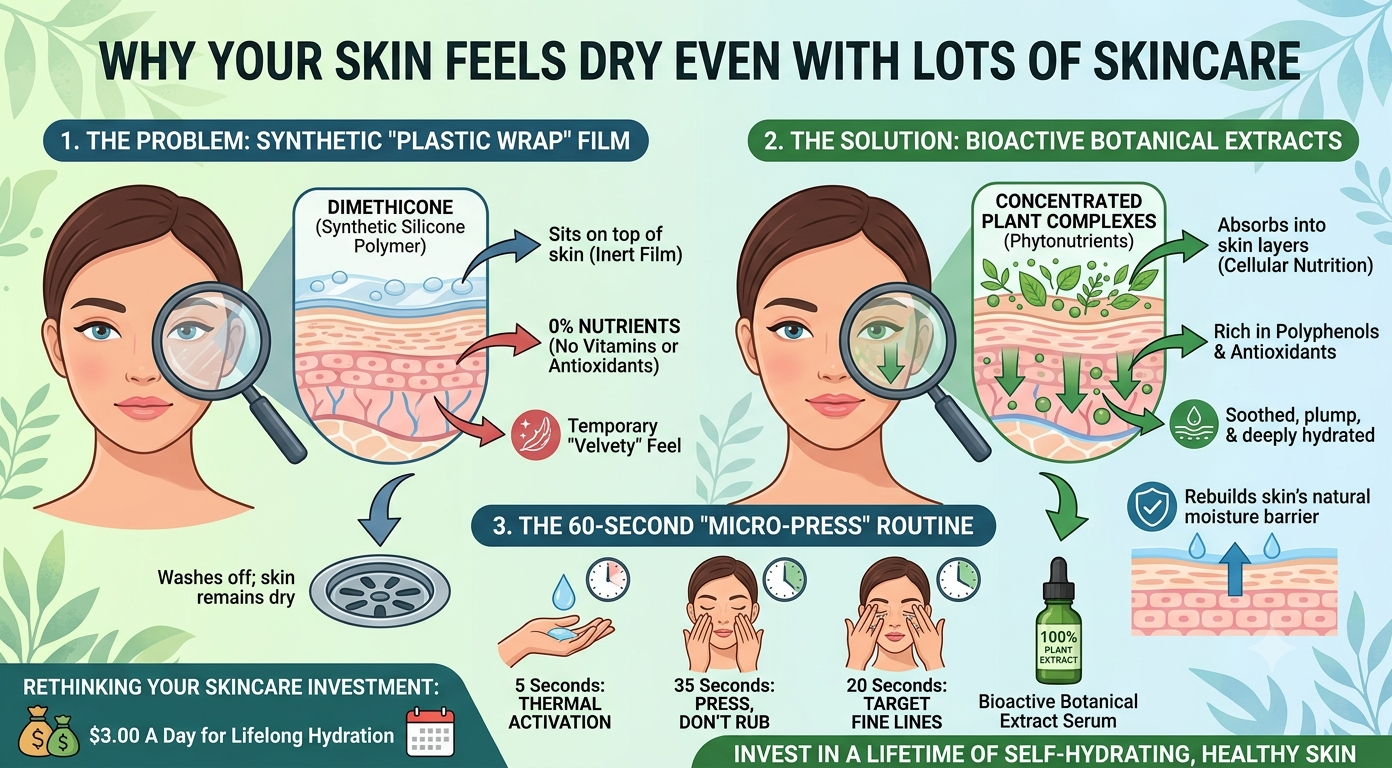
Why Does Your Skin Still Feel Dry No Matter How Much Skincare You Apply?
Does your skin still feel tight, dull, and dry by 2:00 PM—no matter how much cream you layer on? You aren't crazy, and your skin isn't broken. Most conventional moisturizers are designed to fake sm...
Read more
Dry Scalp: Causes, Symptoms & Treatment Guide
Discover what causes dry scalp, how to treat it, and the best routine to restore scalp health. Learn the difference from dandruff and find relief.
Read more