


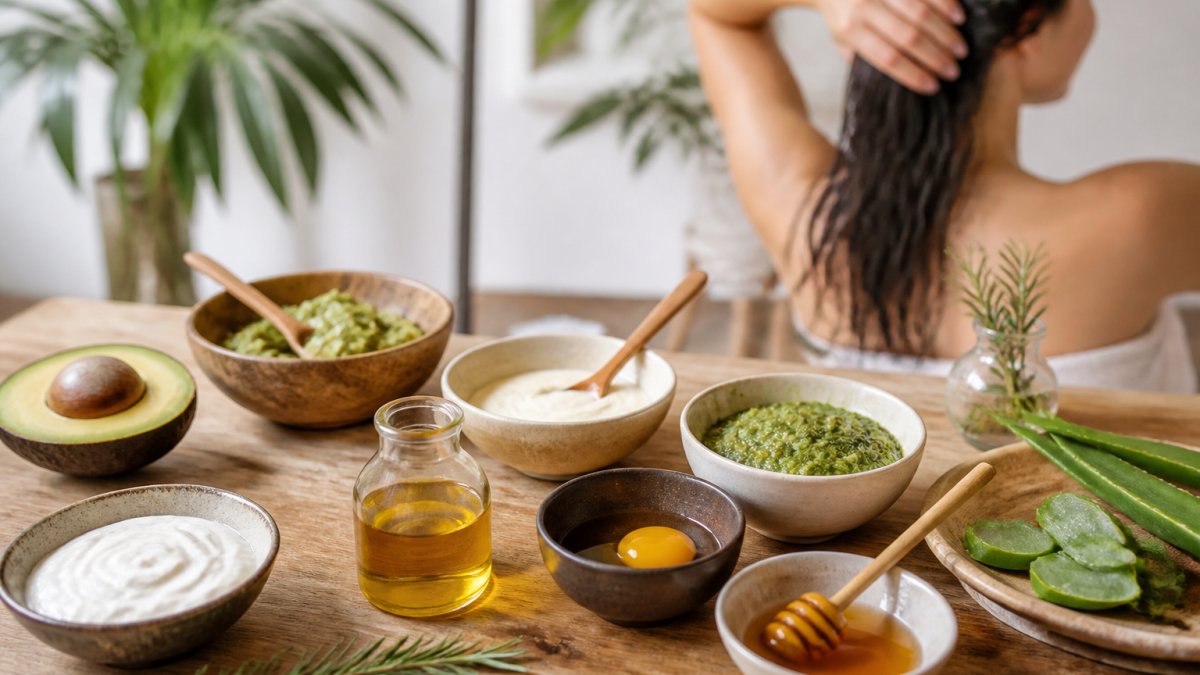
DIY Organic Hair Masks for Hair Fall: 5 Recipes
Table of Contents
- Understanding Hair Fall vs Hair Breakage
- Why DIY Organic Hair Masks Work for Hair Fall
- 5 Homemade Hair Mask Recipes for Hair Fall
- Coconut Oil Hair Mask Benefits for Hair Strength
- How to Mix, Apply, and Rinse Your Hair Mask
- How Often to Use a Hair Mask and Storage Tips
- Hair Breakage Prevention Tips Beyond the Mask
- When Hair Fall Needs Professional Assessment
- Frequently Asked Questions
Last Updated: October 10, 2026
Understanding Hair Fall vs Hair Breakage
Hair fall and hair breakage are two distinct issues, though they're often confused. Hair fall occurs when hair sheds from the root, typically during the growth cycle.
The difference matters because the solutions differ. Hair fall that exceeds normal shedding may signal scalp stress or nutritional gaps.
If you're noticing more hair in your brush or drain than usual, a DIY organic hair mask can help restore balance to your scalp and hair roots.
Why DIY Organic Hair Masks Work for Hair Fall
Organic hair masks deliver concentrated nutrition directly to your scalp and hair. Unlike commercial products laden with synthetic detergents and preservatives, homemade masks use whole, recognisable ingredients that your hair can actually absorb.
How natural ingredients nourish the scalp and hair root
Natural oils penetrate the hair cuticle and seal in moisture. Proteins rebuild the hair structure. Plant extracts soothe inflammation and balance scalp pH. When you apply these ingredients as a mask, you're creating an intensive treatment that works for hours, far longer than a quick rinse-out conditioner.
The scalp responds to this nourishment by reducing stress-related shedding. A calmer, healthier scalp environment means stronger hair growth from the root.
The difference between moisture, hydration, and deep conditioning
These terms get used interchangeably, but they're not the same. Moisture refers to water content in the hair. Hydration is the ability of hair to hold that water. Deep conditioning is a treatment that penetrates the hair shaft and restores both.
A DIY organic hair mask does all three. Ingredients like honey and aloe vera add moisture. Oils like coconut and olive lock that moisture in place.
5 Homemade Hair Mask Recipes for Hair Fall
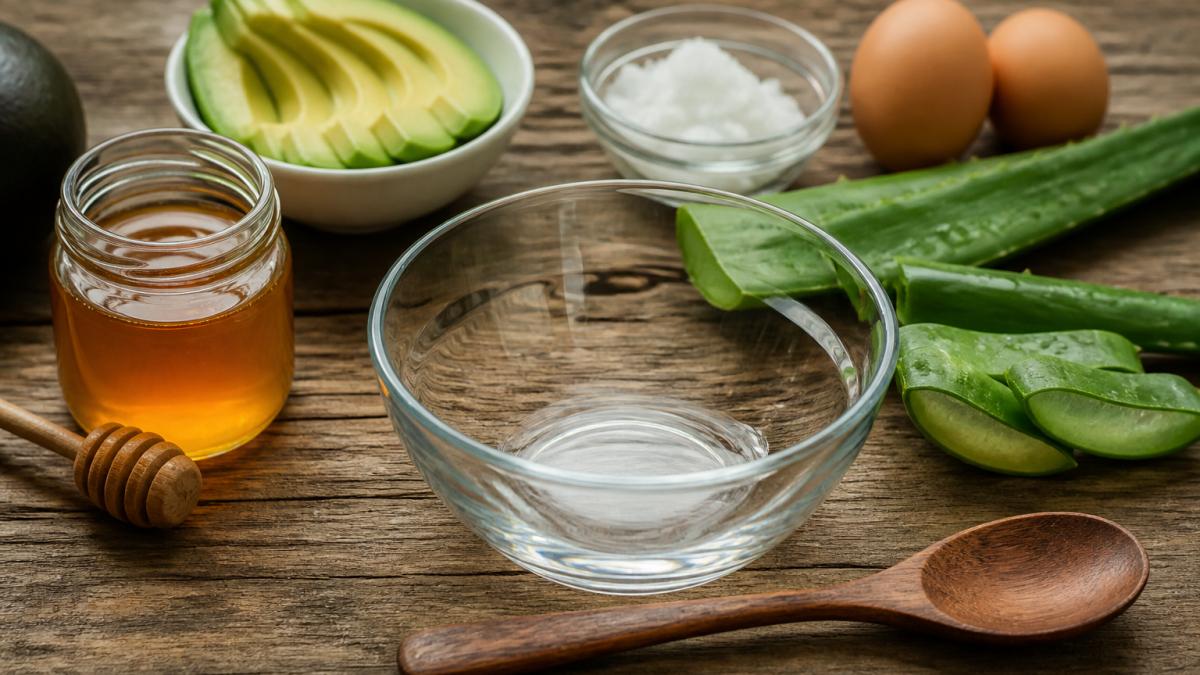
Recipe 1: Coconut Oil and Honey Nourishing Mask
This mask combines two powerhouse ingredients for scalp nourishment and shine.
Ingredients:
- 3 tablespoons coconut oil
- 2 tablespoons raw honey
- 1 teaspoon apple cider vinegar (optional, for scalp balance)
Instructions:
- Warm the coconut oil gently (it should be soft, not hot)
- Mix in honey until combined
- Add apple cider vinegar if using
- Apply to damp hair, focusing on roots and scalp
- Leave on for 20-30 minutes
- Rinse thoroughly with lukewarm water
Coconut oil is rich in lauric acid, which penetrates the hair shaft and reduces protein loss (pubmed.ncbi.nlm.nih.gov). Honey is a natural humectant, it draws moisture into the hair. Together, they strengthen hair and reduce breakage.
Recipe 2: Avocado and Olive Oil Deep Conditioning Mask
Avocado is packed with vitamins and healthy fats. This mask works best for dry, damaged hair.
Ingredients:
- 1 ripe avocado
- 2 tablespoons extra virgin olive oil
- 1 tablespoon honey
Instructions:
- Mash the avocado until smooth (no lumps)
- Stir in olive oil and honey
- Apply to damp hair from mid-length to ends
- Massage gently into the scalp
- Cover with a shower cap
- Leave for 15-25 minutes
- Rinse with cool water to seal the cuticle
Olive oil contains polyphenols that protect hair from oxidative stress. Avocado's potassium strengthens hair roots. This combination is ideal for reducing hair fall linked to dryness.
Recipe 3: Aloe Vera and Castor Oil Scalp-Soothing Mask
If your hair fall is linked to scalp irritation or inflammation, this mask calms and heals.
Ingredients:
- 3 tablespoons fresh aloe vera gel
- 2 tablespoons castor oil
- 1 teaspoon lemon juice
Instructions:
- Extract fresh aloe vera gel from a leaf
- Mix with castor oil and lemon juice
- Apply directly to the scalp, massaging gently
- Leave on for 20 minutes
- Rinse with mild, lukewarm water
Aloe vera reduces scalp inflammation and promotes healing. Castor oil is nutrient-dense and improves circulation. Lemon juice balances pH without harshness.
Recipe 4: Egg and Shea Butter Strengthening Mask
Eggs are rich in protein and biotin, both essential for strong hair.
Ingredients:
- 1 egg (or 2 egg whites for fine hair)
- 2 tablespoons shea butter
- 1 tablespoon coconut oil
Instructions:
- Whisk the egg until smooth
- Melt shea butter gently and combine with coconut oil
- Mix egg into the oil blend
- Apply to damp hair, avoiding the scalp if you have oily hair
- Leave for 15-20 minutes
- Rinse with cool water (hot water can cook the egg)
Shea butter is rich in vitamins A and E. Combined with egg protein, this mask rebuilds damaged hair and reduces breakage.
Recipe 5: Apple Cider Vinegar and Herbal Mask
This mask balances scalp pH and adds herbal benefits.
Ingredients:
- 2 tablespoons apple cider vinegar
- 1 tablespoon honey
- 1 tablespoon coconut oil
Instructions:
- Brew the tea and let it cool completely
- Mix all ingredients together
- Apply to the scalp and hair
- Leave for 10-15 minutes
- Rinse thoroughly with water
Apple cider vinegar clarifies the scalp and removes buildup. Herbal tea adds antioxidants. Honey and coconut oil provide nourishment.
Coconut Oil Hair Mask Benefits for Hair Strength
Coconut oil is a standout ingredient for reducing hair fall. It works by penetrating the hair shaft and reducing protein loss, a key factor in hair breakage.
Many people find that coconut oil masks can improve hair texture with regular use.
For hair strength specifically, coconut oil:
- Reduces breakage with consistent use
- Improves shine and smoothness
- Protects against environmental damage
Coconut oil also has antimicrobial properties, making it useful if hair fall is linked to scalp issues. A healthy scalp environment supports stronger hair growth.
How to Mix, Apply, and Rinse Your Hair Mask
Step-by-step preparation and application guide
Preparation (5 minutes):
- Gather all ingredients and a mixing bowl
- Warm oil ingredients gently (never boiling, warmth should be comfortable to touch)
- Mix ingredients thoroughly until the consistency is uniform
- Test temperature on your inner wrist
Application (10 minutes):
- Section damp hair into four quadrants
- Starting at the scalp, apply the mask to one section at a time
- Use a comb or your fingers to distribute evenly from root to tip
- Massage the scalp gently for 2-3 minutes to stimulate circulation
- Pile hair on top of your head or cover with a shower cap
Timing:
- Leave the mask on for 15-30 minutes depending on the recipe
- Set a timer so you don't forget
Rinsing (10 minutes):
- Rinse with lukewarm water first to remove most of the mask
- Use a gentle, sulfate-free shampoo if needed (many masks rinse out with water alone)
- Rinse again with cool water to seal the hair cuticle
- Pat dry gently, never rub
Safety, allergies, and patch testing
Before applying any new mask to your entire scalp, perform a patch test.
Patch Test (24 hours before full application):
- Apply a small amount of the mask to the inside of your elbow or behind your ear
- Leave for 10 minutes
- Rinse and observe for 24 hours
- Look for redness, itching, or irritation
Common allergens in hair masks include:
- Eggs (can trigger reactions in people with egg allergies)
- Tree nuts (found in shea butter and some oils)
- Citrus (in lemon juice or certain oils)
If you have a known allergy, omit that ingredient or choose a different recipe. If you experience itching, burning, or redness during application, rinse immediately and discontinue use.
How Often to Use a Hair Mask and Storage Tips
Frequency depends on your hair type:
| Hair Type | Recommended Frequency | Why |
|---|---|---|
| Fine or oily hair | Once every 7-10 days | Lighter masks prevent buildup |
| Normal hair | Once every 5-7 days | Balanced nourishment |
| Dry or damaged hair | Twice weekly or weekly | Needs intensive moisture |
| Curly hair | Once or twice weekly | Curls retain moisture longer |
Start with once weekly and adjust based on how your hair responds. Overuse can leave hair greasy or weighed down.
Storage tips:
Most homemade masks keep for 3-5 days in an airtight container in the refrigerator. Oil-based masks last longer than water-based ones.
For longer storage, freeze portions in ice cube trays. Thaw one cube at a time as needed. This works best for masks with stable ingredients like oils and butters.
Hair Breakage Prevention Tips Beyond the Mask
While DIY organic hair masks address hair fall at the root, breakage prevention requires a broader approach.
Minimise mechanical damage:
- Use a wide-tooth comb on wet hair instead of a brush
- Avoid tight hairstyles that pull on the roots
- Sleep on a silk or satin pillowcase to reduce friction
Protect from heat and environment:
- Limit heat styling to once or twice weekly
- Use a heat protectant spray before styling
- Wear a hat in strong sun to prevent UV damage
Maintain scalp health:
- Massage your scalp for 5 minutes daily to boost circulation
- Use a gentle, sulfate-free shampoo
- Avoid over-washing, twice weekly is often enough
Support hair from within:
- Eat protein-rich foods (eggs, legumes, fish)
- Include healthy fats (nuts, seeds, avocado)
- Ensure adequate iron and zinc intake
Breakage prevention and hair fall reduction work best together. A strong, nourished scalp produces stronger hair that resists breakage.
When Hair Fall Needs Professional Assessment
Most hair fall responds well to improved scalp care and nourishment. However, certain patterns warrant professional advice.
Consult a healthcare provider if you notice:
- Sudden, dramatic increase in hair shedding (more than 100 hairs daily)
- Bald patches or areas of hair loss
- Scalp pain, bleeding, or severe itching
These signs may indicate underlying conditions like thyroid dysfunction, nutritional deficiencies, or scalp disorders that require medical evaluation.
A dermatologist can assess whether your hair fall is seasonal, stress-related, or linked to a treatable condition.
Hair fall is frustrating, but it's also reversible.
When you're ready to support your hair care routine with premium, plant-based products, explore Harmony Harvest's Hair Care collection. Our COSMOS-certified organic, vegan formulas work beautifully alongside DIY treatments, delivering the deep nourishment your hair deserves.
Frequently Asked Questions
Can a DIY organic hair mask actually stop hair shedding?
DIY organic hair masks can reduce shedding by strengthening hair roots and improving scalp health through natural ingredients like coconut oil, honey, and aloe vera. However, shedding is a natural process, most people shed 50-100 hairs daily. If shedding increases noticeably or persists beyond a few weeks of regular mask use, it may signal an underlying concern requiring professional assessment. Masks work best as part of a consistent routine combined with gentle handling and a nourishing scalp care approach.
How often should you use a homemade hair mask for best results?
Most hair types benefit from a homemade hair mask once per week to once every two weeks. Dry or damaged hair may tolerate weekly use, while fine or oily hair may need masks less frequently, every two to three weeks. Start with weekly applications and adjust based on how your hair responds. Consistency matters more than frequency; a regular routine over 4-6 weeks is more effective than occasional heavy treatments. Track your results to find the rhythm that suits your hair.
What makes coconut oil hair masks beneficial for preventing breakage?
Coconut oil penetrates the hair shaft to reduce protein loss and moisture evaporation, which are key causes of breakage. Its lauric acid has antimicrobial properties that support scalp health, while its fatty acids coat and smooth the hair cuticle. This combination strengthens hair from root to tip and improves elasticity, making strands less prone to snapping during brushing or styling. Coconut oil works especially well in masks combined with other nourishing ingredients like honey or avocado for enhanced conditioning.
How long should you leave a hair mask on before rinsing?
Most DIY hair masks are most effective when left on for 15-30 minutes, though some can be left overnight for deeper conditioning. Start with 20 minutes to allow ingredients to penetrate without over-saturating. Longer isn't always better, once the hair is fully hydrated, additional time offers diminishing returns. If your mask contains acidic ingredients like apple cider vinegar, rinse after 10-15 minutes to avoid irritation. Always rinse thoroughly with lukewarm water and follow with a gentle rinse to remove any residue.
Best Sellers

Read more
How to Repair a Damaged Skin Barrier Naturally: 2026 Guide
Learn how to repair a damaged skin barrier naturally, with a step-by-step skin barrier repair routine and a realistic recovery timeline.
Read more
Best Vegan Skincare Brands for Anti Aging in 2026
Compare the best vegan skincare brands for anti aging in 2026, with ingredient evidence, skin-type fit, price and verified vegan status.
Read more