


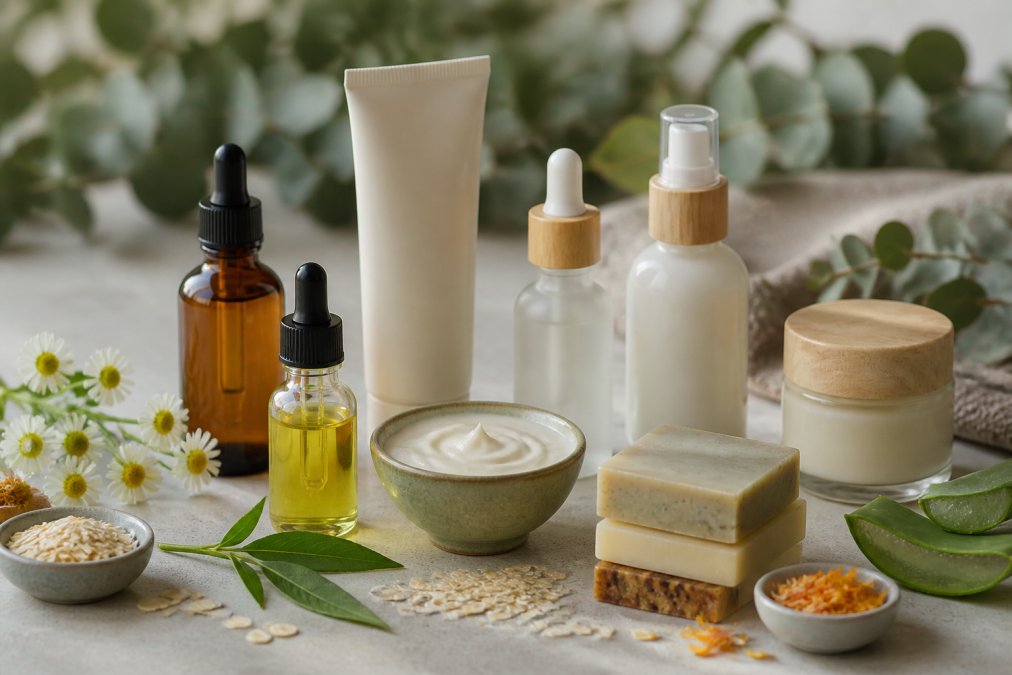
7 Best Organic Vegan Skincare Brands for Sensitive Skin
Table of Contents
- Quick Comparison: 7 Best Organic Vegan Skincare Brands for Sensitive Skin
- How to Choose Skincare for Sensitive Skin
- 1. Harmony Harvest: COSMOS-Certified Organic Australian Botanicals
- 2. Pai Skincare: Formulated for Highly Reactive Skin
- 3. Cocokind: Affordable Barrier Support for Daily Care
- 4. Herbivore Botanicals: High-Performance Plant Extracts
- 5. Activist Skincare: Microbiome-Friendly Preservation
- 6. OSEA: Mineral-Rich Seaweed Hydration
- The Bottom Line on Vegan Skincare for Sensitive Skin
- Frequently Asked Questions
Last Updated: September 25, 2026
Quick Comparison: 7 Best Organic Vegan Skincare Brands for Sensitive Skin
Finding a vegan skincare brand that respects reactive skin is harder than it should be. Many plant-based labels still load formulas with essential oils, synthetic fragrance, or harsh preservatives that trigger redness and stinging. This guide from Harmony Harvest cuts through the noise with seven brands judged on certification, ingredient transparency, and how gently each formula treats a compromised skin barrier.
Quick Picks:
- Best Overall: Harmony Harvest, COSMOS-certified organic, vegan, and built on Australian botanicals
- Best for Highly Reactive Skin: Pai Skincare, formulated for the most sensitive complexions
- Best Budget Option: Cocokind, simple barrier support at an accessible price
- Best for Microbiome Health: Activist Skincare, toxin-free preservation methods
| Brand | Starting Price | Certification | Best For | Standout Feature |
|---|---|---|---|---|
| Harmony Harvest | Contact for pricing | COSMOS-certified organic | Families wanting certified botanicals | Synthetic detergent-free formulas |
| Pai Skincare | $35 AUD | Certified organic | Highly reactive skin | Rigorous irritant testing |
| Cocokind | $20 AUD | Certified vegan | Budget-conscious daily care | Simple ingredient profiles |
| Herbivore Botanicals | $32 AUD | Vegan, cruelty-free | High-performance botanicals | Concentrated plant extracts |
| Activist Skincare | $40 AUD | Vegan, toxin-free | Microbiome balance | Microbiome-friendly preservation |
| OSEA | $50 AUD | Certified vegan | Mineral-rich hydration | Seaweed-based formulas |
How to Choose Skincare for Sensitive Skin
Choosing skincare for sensitive skin comes down to three checks: certification you can verify, an ingredient list free of common irritants, and a formula that supports rather than strips your skin barrier. Vegan skincare is a useful starting point, but the label alone tells you nothing about how a product will behave on reactive skin.
Start with the barrier, not the label
A healthy skin barrier is a brick-and-mortar structure: corneocytes (the "bricks") held together by a lipid matrix of ceramides, cholesterol, and free fatty acids (the "mortar"). When that mortar is depleted, through over-cleansing, harsh surfactants, or genetics, water escapes and irritants get in, which is why sensitive skin often feels tight, flushed, or stingy rather than simply dry.
- Humectants such as glycerin, sodium hyaluronate, and panthenol draw water into the upper layers. They help hydration but do nothing to rebuild the lipid mortar on their own.
- Emollients such as cold-pressed jojoba, squalane, and shea butter fill the gaps between corneocytes and soften the surface.
- Occlusives such as candelilla wax and some plant butters sit on top and slow water loss. Useful at night, sometimes too heavy under makeup.
- Ceramides and phytosterols (found in oat, shea, and some seed oils) are the closest thing to actual mortar replacement. These are the ingredients to prioritise if your barrier is genuinely compromised rather than just fussy.
Verify the certification, don't trust the word "natural"
"Natural" and "botanical" are marketing terms with no legal definition in skincare. "Organic" can also be used loosely unless it is tied to a recognised standard.
Standards worth looking for on an Australian label include:
- COSMOS ORGANIC, independently verifies organic content and manufacturing. Requires a minimum percentage of organic ingredients and restricts the preservatives and processing methods allowed.
- COSMOS NATURAL, a lower tier that still restricts synthetic inputs but does not require the same organic percentage.
- ACO (Australian Certified Organic), a domestic certification that also covers imported and exported goods.
- Vegan and cruelty-free marks, these are separate claims from organic certification. A product can be vegan and cruelty-free without being organic, and vice versa. Check both if both matter to you.
Read the ingredient list for known triggers
Scan for these categories before you buy:
- Synthetic fragrance and parfum, the single most common cause of contact reactions in cosmetics.
- Essential oils, natural, but not automatically gentle. Citrus, peppermint, eucalyptus, and lavender are frequent triggers on reactive skin.
- Drying alcohols, denatured alcohol, ethanol, and isopropyl alcohol in high concentrations.
- Harsh surfactants, sulphates and some high-foaming cleansers that strip the lipid barrier.
- Preservatives of concern, some people react to methylisothiazolinone and similar preservatives; others tolerate them fine. Patch testing is the only way to know for your skin.
Look instead for soothing agents like colloidal oat, bisabolol, allantoin, panthenol, and cold-pressed oils that reinforce the lipid barrier and reduce transepidermal water loss.
Favour pH-balanced, non-comedogenic formulas
Skin sits naturally at around pH 4.5 to 5.5. Cleansers and toners well above that range can disrupt the acid mantle and leave skin tight and reactive. Non-comedogenic formulas reduce congestion without stripping, and gentle, antioxidant-rich botanical extracts do more good on a weakened barrier than aggressive actives.
A dermatologist-informed checklist
Useful questions before introducing a new product:
- Does the brand name its certifier, or just claim "organic"?
- Is the preservative system disclosed, or hidden behind "preservative" on the label?
- Does the formula pair humectants with lipids, or rely on humectants alone?
- Is the pH stated or reasonably inferable from the product type?
- Has the brand published any irritancy or patch-testing data, or only marketing claims?
Patch Testing and the Transitioning Guide
Patch testing is the single most useful habit for sensitive skin. Apply a small amount behind your ear or on your inner forearm, wait 24 to 48 hours, and check for redness, itching, or inflammation before using it on your face. For leave-on products, repeat on a small patch of jawline skin for a further 48 hours if the first test is clear.
A simple transition plan:
- Patch test each new product for 48 hours
- Introduce one new product every 5 to 7 days
- Keep your existing cleanser until the new one is proven
- Note any redness, stinging, or breakouts in a simple log
- Give each formula 2 to 3 weeks before judging results
1. Harmony Harvest: COSMOS-Certified Organic Australian Botanicals
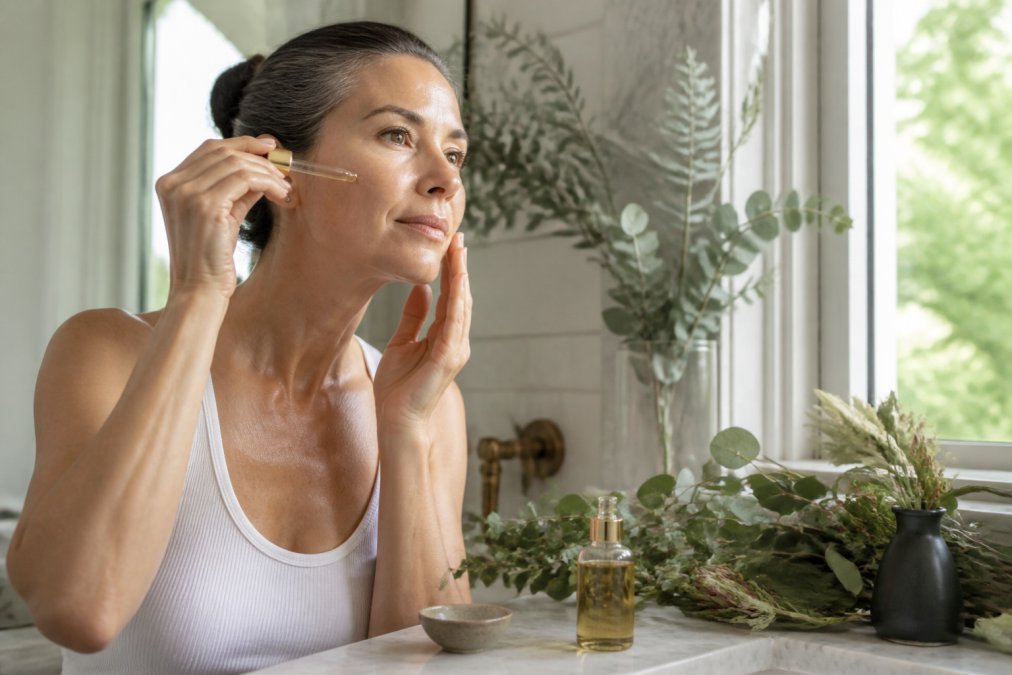
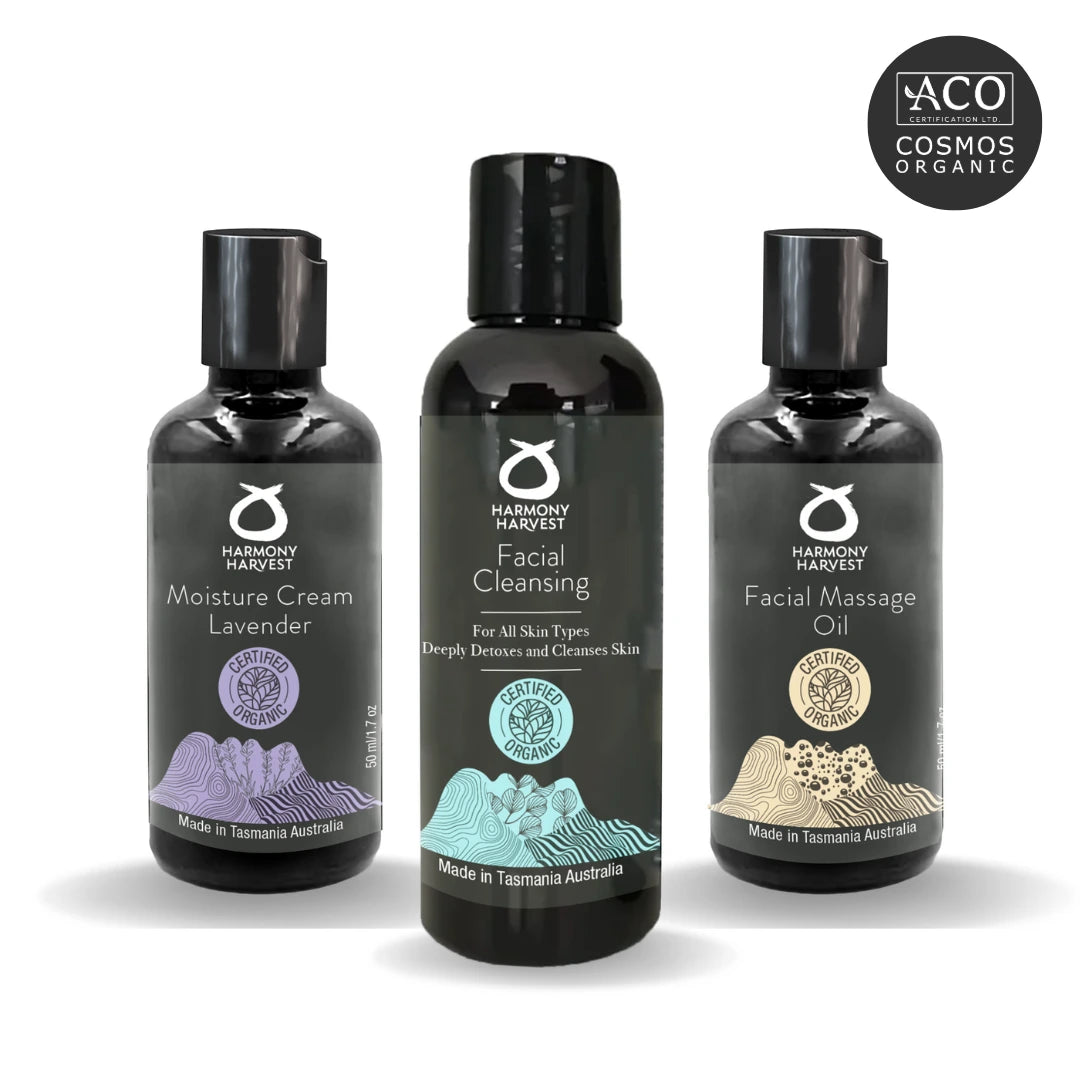
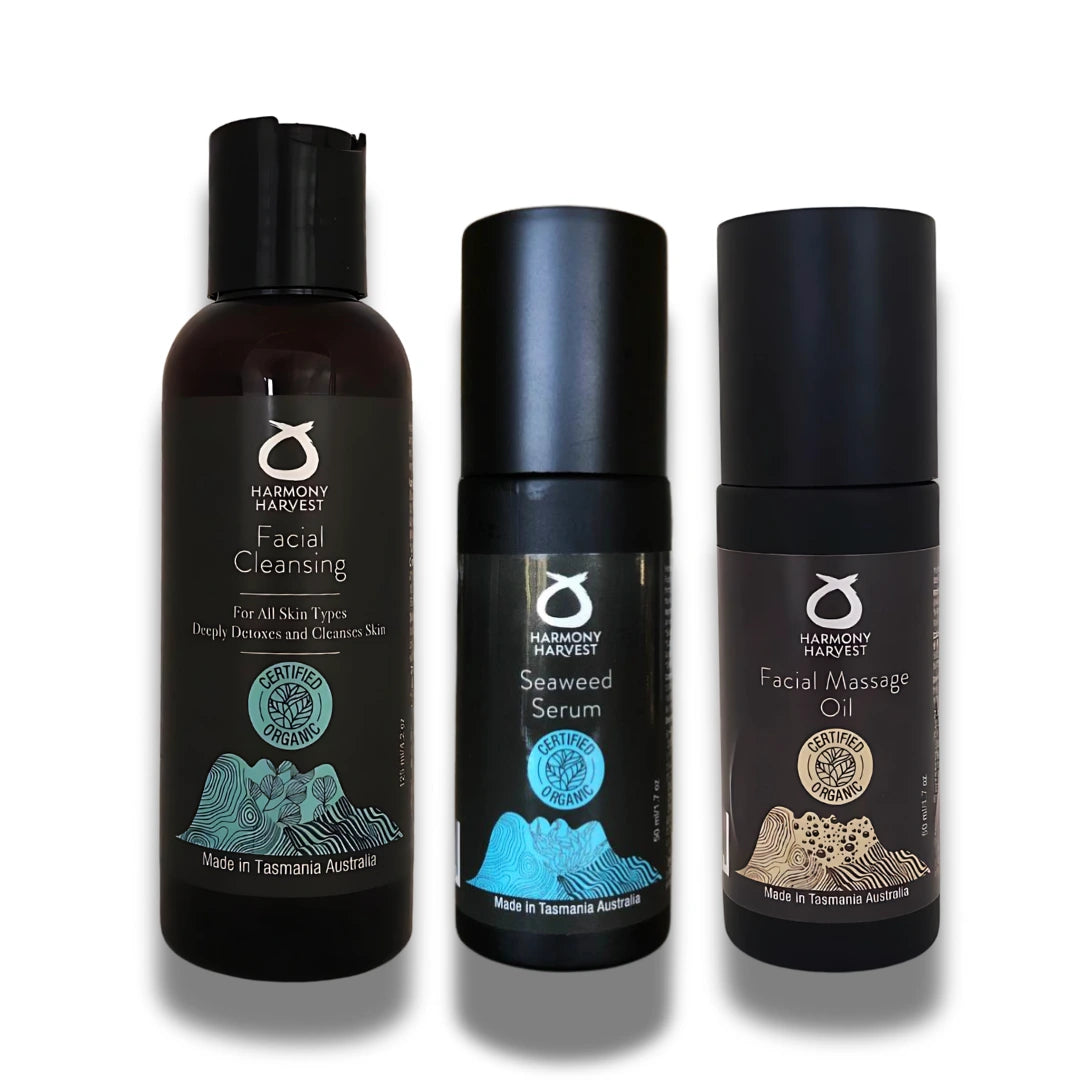
Harmony Harvest is our top pick because it is one of the few ranges that is genuinely COSMOS-certified organic and vegan, not just marketed that way. COSMOS is an independent standard that verifies organic content, restricts permitted preservatives and processing methods, and requires a traceable supply chain, a brand has to be audited against it.
Pros:
- Fully COSMOS-certified organic range, independently audited
- Formulated with Australian botanicals
- Free from synthetic detergents and toxins
- Vegan-friendly and cruelty-free
- Range spans facial, body, and hair care, so a routine can stay within one certification system
Cons:
- Limited availability compared to mass-market brands
- Smaller product line than some larger international labels, so very specific actives may need to be sourced elsewhere
If certification is your deciding factor, Harmony Harvest removes the guesswork. The COSMOS standard is independently verified, so you are not relying on a brand's own claims about what "organic" means, and because the whole range shares that standard, you are not re-checking credentials with every product you add.
2. Pai Skincare: Formulated for Highly Reactive Skin
Pai Skincare exists for people whose skin reacts to almost everything. It formulates specifically for reactive complexions and tests ingredients rigorously to screen out common irritants, building a strong reputation among people who have given up on mainstream options.

Pros:
- Excellent reputation for sensitive skin tolerance
- Transparent ingredient lists
- Certified organic and cruelty-free
Cons:
- Higher price point for smaller volumes
3. Cocokind: Affordable Barrier Support for Daily Care
Cocokind proves gentle daily care does not have to be expensive. Starting around $20 AUD, it is the most accessible option here, focusing on barrier-supporting ingredients rather than trendy actives that can aggravate sensitive skin.
Pros:
- Highly accessible price point
- Simple, effective ingredient profiles
- Transparent sustainability practices
Cons:
- Limited range of complex anti-ageing treatments
4. Herbivore Botanicals: High-Performance Plant Extracts
Herbivore Botanicals leans into concentrated, food-grade plant ingredients and high-performance botanical extracts, noticeably more potent than most natural ranges. Starting around $32 AUD, it sits mid-list on price.
Pros:
- High-quality, concentrated formulas
- Beautifully packaged for gifting
- Vegan and cruelty-free
Cons:
- Some products contain essential oils that may irritate sensitive skin
5. Activist Skincare: Microbiome-Friendly Preservation
Activist Skincare takes a different approach to preservation. Instead of harsh systems that irritate reactive skin, it uses microbiome-friendly methods and toxin-free, vegan ingredients. Starting around $40 AUD, it targets people who care about barrier health and the skin's microbiome balance.
Pros:
- Innovative approach to preservation
- Highly compatible with sensitive skin
- Toxin-free and vegan
Cons:
- Smaller product range compared to larger brands
6. OSEA: Mineral-Rich Seaweed Hydration
OSEA builds its formulas around seaweed, naturally rich in minerals and good at holding hydration. For sensitive skin that runs dry, that mineral-rich hydration is the main appeal, and the brand meets certified vegan and cruelty-free standards.

Pros:
- Excellent hydration properties
- High-quality marine-based ingredients
- Certified vegan and cruelty-free
Cons:
- Higher price point
The Bottom Line on Vegan Skincare for Sensitive Skin
The right vegan skincare for sensitive skin pairs verifiable certification with an ingredient list your barrier can tolerate. Start with a COSMOS-certified organic option, patch test everything, and transition one product at a time.
Frequently Asked Questions
What is the best skincare brand for very sensitive skin?
There is no single best brand, but look for vegan skincare that is COSMOS-certified organic, synthetic fragrance-free, and dermatologically tested. Harmony Harvest, Pai Skincare, and Activist Skincare all formulate for reactive and sensitive skin. Patch test any new product on your inner arm for 48 hours before applying it to your face, and introduce one product at a time so you can identify any triggers.
How can I tell if a skincare brand is truly vegan and organic?
Check for third-party certification rather than front-label claims. COSMOS-certified organic means the formula has been independently verified for organic content and manufacturing standards. For vegan status, look for a registered vegan trademark. A brand that lists its certifying body, publishes full ingredient lists, and avoids vague terms like 'natural' is far more trustworthy than one relying on green marketing alone.
What are the benefits of using COSMOS-certified organic skincare?
COSMOS-certified organic skincare limits synthetic pesticides, GMO ingredients, and certain preservatives, which reduces the chance of irritation for sensitive skin. Certified formulas also support the skin barrier through antioxidant-rich botanical extracts and cold-pressed oils. Because the standard is independently audited, you get verified ingredient sourcing and environmental impact accountability rather than unverified marketing claims.
How do I transition to a new organic skincare routine without irritation?
Start with a single product, such as a gentle cleanser, and use it for one to two weeks before adding another. Keep your routine minimal: cleanse, moisturise, and protect. If your skin reacts, stop the newest product first. Choose pH-balanced, essential oil-free formulas while your barrier recovers, and reintroduce products one at a time so you always know what caused any flare.
Can vegan skincare be as effective as traditional products for sensitive skin?
Yes. Effectiveness depends on formulation quality, not on whether ingredients are animal-derived. Plant-based ceramides, cold-pressed oils, and antioxidant-rich botanical extracts can support the lipid barrier and reduce transepidermal water loss. For anti-ageing, COSMOS-certified organic formulas stimulate natural collagen production over time, though results appear gradually rather than overnight.
Best Sellers
Read more
COSMOS Approved vs Certified Ingredients: What's the Difference?
COSMOS approved vs certified ingredients explained: what each status means, the requirements behind them, and how to read a label with confidence. Explore.
Read more
Organic vs Synthetic Skincare Ingredients: Key Differences
Organic vs synthetic skincare explained: how each type works, how to read labels, and what to weigh up. Explore the differences and find your best fit.
Read more