

COSMOS Approved vs Certified Ingredients: What's the Difference?
Table of Contents
- COSMOS Approved vs Certified: The Core Difference
- What Is the COSMOS Standard and Who Runs It?
- COSMOS Organic Certification Requirements Explained
- Can a Product Be Certified With Only Approved Ingredients?
- The Benefits of COSMOS Certified Skincare for Your Skin and the Planet
- How to Spot Genuine Certification: A Visual Guide
- Frequently Asked Questions
Last Updated: September 25, 2026
COSMOS Approved vs Certified: The Core Difference
COSMOS approved vs certified comes down to one distinction: approved status applies to a single ingredient, while certified status applies to a finished product. An ingredient can be COSMOS approved without ever appearing in a certified formula. A product, by contrast, cannot carry the COSMOS seal unless its entire composition meets the standard.
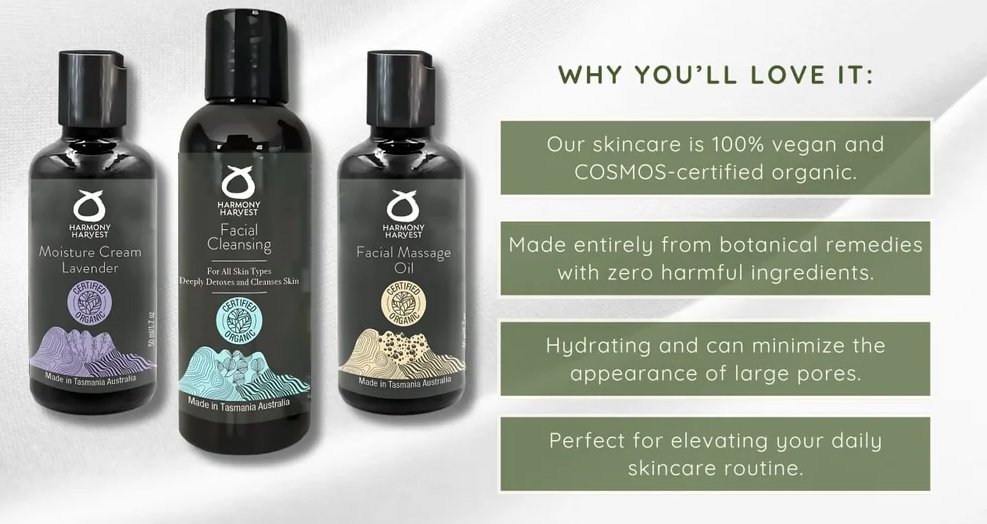
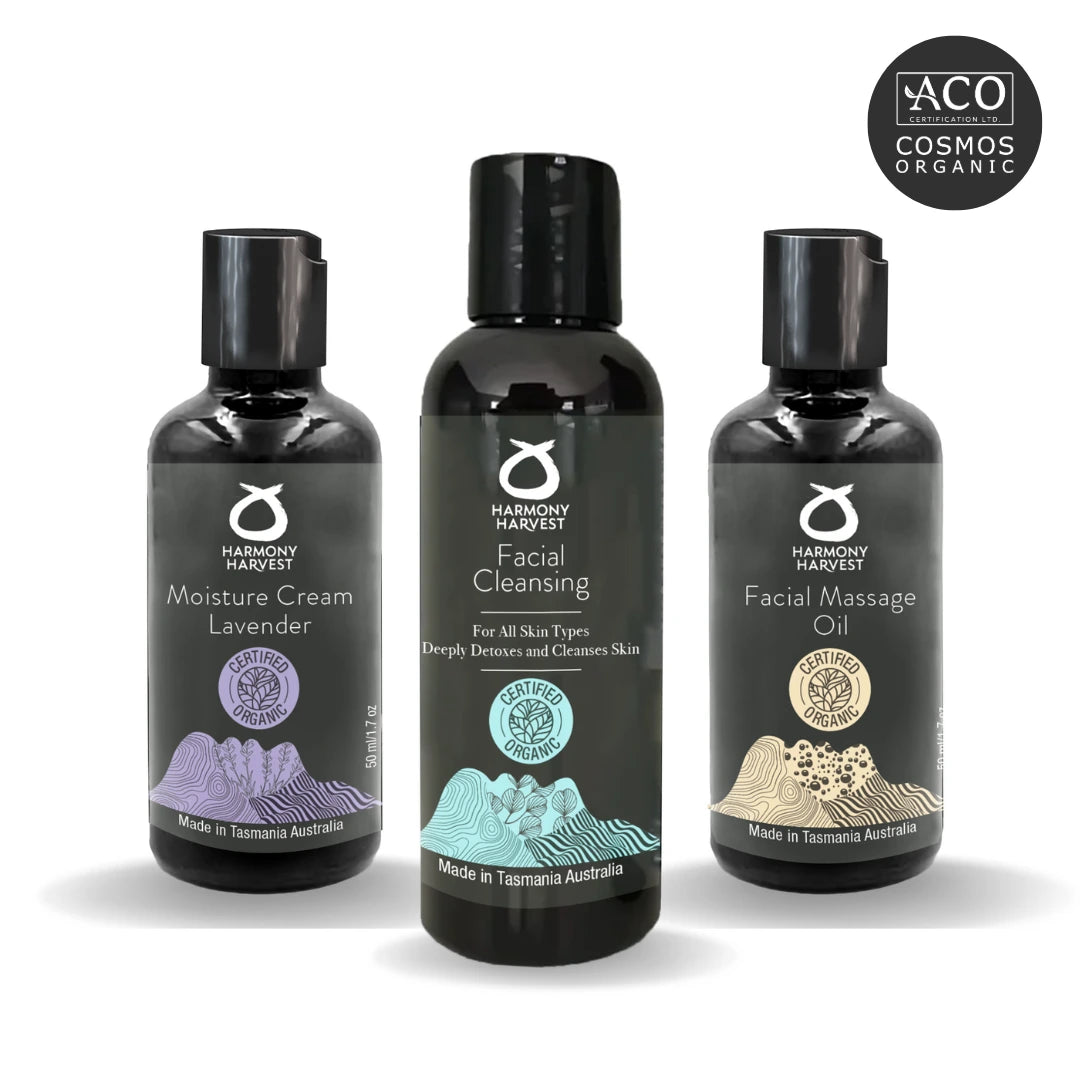
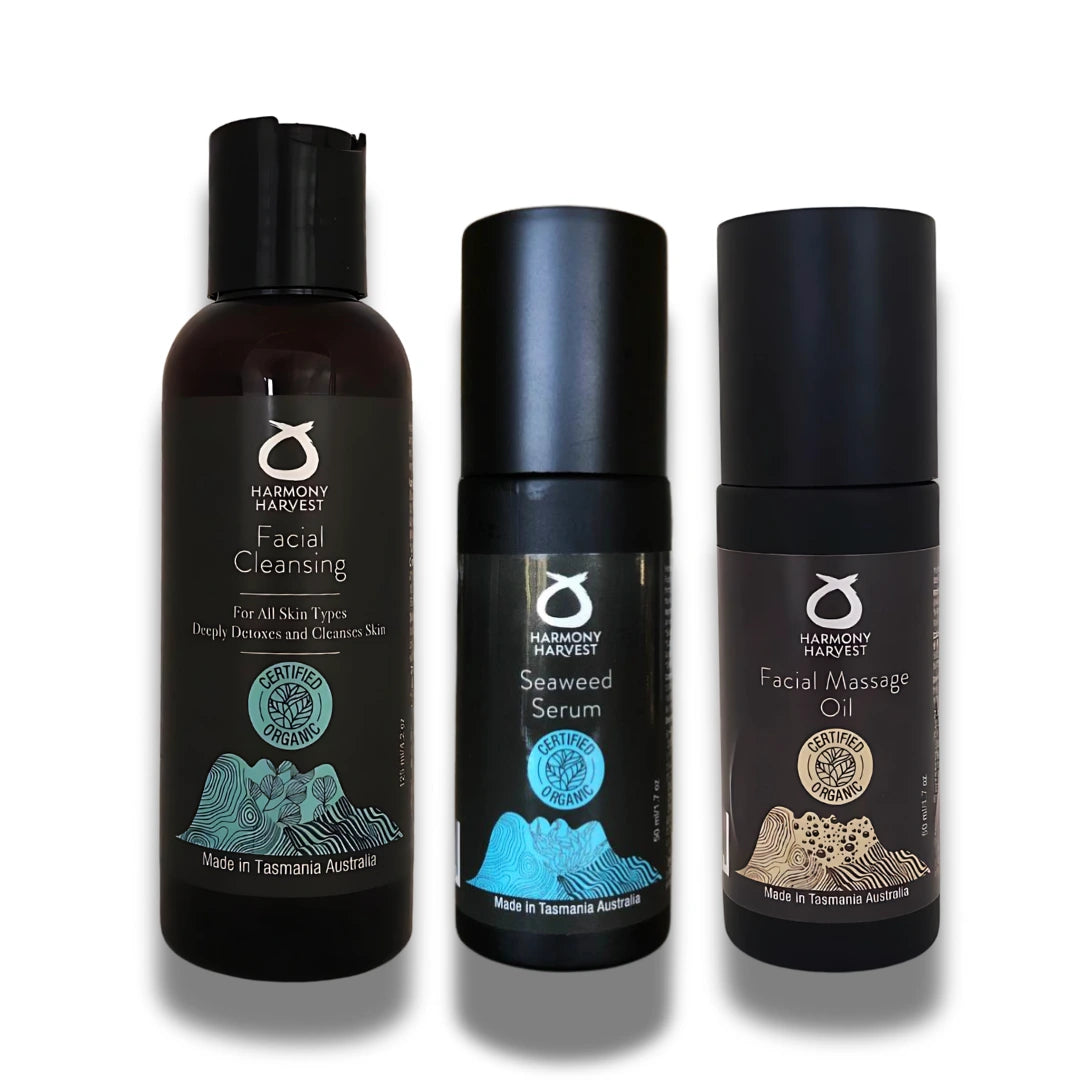
At Harmony Harvest, our facial care range is fully COSMOS-certified organic and vegan. That difference matters more than most shoppers realise.
Here's why it matters. The COSMOS-standard is managed by a non-profit body, and its rules split cleanly into two tiers. One tier governs what goes into a bottle. The other governs what comes out of a factory. Confusing the two is a common mistake in "organic" marketing.
Below, we'll walk through both tiers, how certification requirements actually work, and how to spot a genuine seal on a label.
What Is the COSMOS Standard and Who Runs It?
The COSMOS-standard is the leading international certification framework for organic and natural cosmetics, governed by COSMOS-Standard AISBL, a non-profit based in Europe. Certification bodies around the world carry out the actual audits against its rules.
The COSMOS-standard certification framework sets out two separate designations. Understanding them is the foundation of everything else .
Approved Ingredients: The Building Blocks
An approved ingredient is a single raw material that meets the COSMOS criteria for origin and processing. It has passed a screening process and appears in the approved ingredient database.
Approval says nothing about the finished product. A formulator can buy an approved botanical extract, then blend it with synthetic preservatives and still call that ingredient "COSMOS approved." The claim is technically true and practically misleading.
Certified Products: The Finished Formula
A certified product is the whole formula, audited end to end. Every ingredient must be approved or permitted, the organic content must hit a set threshold, and the manufacturing process must meet sustainability criteria.
Certification covers the label claims too. If a bottle says "organic," an auditor has verified that claim against the actual composition.
COSMOS Organic Certification Requirements Explained
COSMOS organic certification requirements begin with two thresholds: a minimum share of organic content and a minimum share of natural origin content. Both are calculated on the full formula, excluding water and minerals.
The exact percentages differ between the COSMOS ORGANIC and COSMOS NATURAL tiers, and they are set out in the COSMOS-standard technical documents. A brand cannot pick and choose which parts to follow.
Natural Origin vs Organic Origin Content
These two terms are not interchangeable, and the gap between them trips up a lot of buyers.
Natural origin content means the ingredient comes from a plant, mineral, or animal source rather than a petrochemical one. A coconut-derived surfactant is natural origin. It is not automatically organic.
Organic origin content means the ingredient came from certified organic farming. That requires documented proof from the grower through every handler in the chain.
A formula can be high in natural origin content and low in organic content. Only the second number earns the word "organic" on the label.
Processing Methods and Composition Criteria
How an ingredient is processed counts as much as where it came from. The standard restricts chemical processing methods and sets composition criteria for what may appear in a certified formula.
Permitted preservatives are tightly limited.
Can a Product Be Certified With Only Approved Ingredients?
No. A product cannot achieve COSMOS certification using only approved ingredients. Approval is necessary but not sufficient, and the gap between the two is where most of the real work sits.
What a Supplier Actually Has to Produce for Approval
This is the part most explainers skip, and it is the part that decides whether an ingredient ever reaches your bottle.
- A material safety data sheet (MSDS) for the raw material, covering handling, hazard classification, and storage.
- A technical data sheet (TDS) setting out the ingredient's specification, its INCI name, physical form, solubility, and recommended use level.
- A declaration of origin, stating whether the material is plant, mineral, or animal derived, and naming the source.
- A manufacturing process description, sufficient for the auditor to assess which processing methods were used and whether any are restricted.
- A composition breakdown, showing the ingredient's full content, including any carriers, solvents, or preservatives that travel with it.
- Certificates of analysis (CoAs) for the batch, confirming the material matches its declared specification.
- Organic certificates where an organic origin claim is being made, tracing the material back to a certified organic grower.
Why This Matters to the Finished Product
Every approved ingredient in a certified formula carries this documentation with it. When a brand applies for product certification, the auditor follows that paper trail through each input.
The Benefits of COSMOS Certified Skincare for Your Skin and the Planet
The benefits of COSMOS certified skincare run in two directions at once: what lands on your skin and what lands in the environment.
How to Spot Genuine Certification: A Visual Guide
Genuine certification leaves a paper trail, and you can check most of it from the label in your hand.
Reading the Marks Themselves
COSMOS marks are not one logo. There are separate marks for the two product tiers, and they look different on a label:
- The COSMOS ORGANIC mark is used on products that meet the organic content threshold. It is the mark you want if an organic claim is the reason you are buying.
- The COSMOS NATURAL mark is used on products that meet the natural origin criteria but fall below the organic threshold. It is a genuine certification, but it does not mean the product is organic.
- Both marks name the certification body that issued them, for example, a body that audits against the COSMOS-standard for the local market. No named body, no audit.
Reading the Ingredient List
Once you have identified the mark, read the ingredient list against it. Certified formulas list ingredients by their INCI names, and organic ingredients are usually marked as such.
Documentation and Traceability Behind the Label
Behind every genuine seal sits a documentation chain. Certification bodies require technical documentation for each raw material, covering its origin, its processing, and its path from grower to factory.
Approved or Certified? A Decision Guide for Brands
Most articles explain the definitions and stop there. The more useful question for a brand owner is which tier to pursue, and the answer depends on what you are selling and who you are selling it to.
Reach for Approved ingredients when:
- You are formulating a product where organic content is not the headline claim.
- You want to signal that your inputs have passed a recognised screen without committing to a full product audit.
- You are still developing a formula and want to source responsibly while you refine it.
- Your target market is not yet asking for a product-level organic seal.
Reach for full product Certification when:
- Organic content is central to your brand promise and your packaging claims.
- You are selling into a market where shoppers actively look for a recognised seal.
- You want a claim that has been independently audited end to end, not just at the ingredient level.
- You are prepared to maintain the documentation chain across every supplier, every batch, and every label revision.
Feature |
COSMOS Approved |
COSMOS Certified |
|---|---|---|
Applies to |
Single raw material |
Whole finished product |
Organic content threshold |
Not applicable |
Must meet set minimum |
Supply chain audit |
No |
Yes |
Processing criteria |
Ingredient level |
Full manufacturing process |
Label claim strength |
Ingredient-level only |
Product-level, verified |
Documentation required |
MSDS, TDS, origin declaration, CoA |
All of the above, plus full formula and process audit |
Best for |
Formulators sourcing inputs |
Shoppers wanting a verified product |
Frequently Asked Questions
What are COSMOS certified raw materials?
COSMOS certified raw materials are ingredients that meet the COSMOS-standard for organic content and processing. They must come from verified natural or organic sources, be processed using approved methods, and be traceable through documented supply chains. Ingredients like certified organic plant oils, butters, and extracts fall into this category. The COSMOS standard maintains a database of over 10,000 approved ingredients that formulators can reference when building compliant products.
Can a product be COSMOS certified if it only contains approved ingredients?
No. Using only COSMOS approved ingredients does not automatically make a finished product COSMOS certified. The product must also meet minimum organic content thresholds, follow approved processing and manufacturing methods, and pass an independent audit by a recognised certification body. The approved status applies to individual ingredients; certification applies to the complete formulation and its production process. Both stages matter for the final COSMOS signature.
What are the requirements for an ingredient to be COSMOS approved?
An ingredient must meet several criteria to earn COSMOS approved status. It needs documented natural or organic origin, must be processed using permitted methods, and cannot contain prohibited substances like certain preservatives or solvents. The supplier must provide technical documentation and traceability records. Once assessed, the ingredient is added to the COSMOS approved database, which formulators use to build certified products.
Why should consumers look for COSMOS-certified organic skincare?
COSMOS-certified organic skincare gives you verified assurance about what is in the bottle. The certification covers organic content percentages, processing methods, environmental impact, and supply chain transparency. Unlike vague natural claims, the COSMOS signature means an independent body has audited the product. Harmony Harvest's facial care range is fully COSMOS-certified organic, vegan, and cruelty-free, so every ingredient meets the standard from raw material through to finished formula.
Best Sellers
Read more

Avoiding Harsh Chemicals in Australian Hair Products
Learn how to spot harsh chemicals in hair products, read labels with confidence, and transition to COSMOS-certified organic hair care. Discover.
Read more
7 Best Organic Vegan Skincare Brands for Sensitive Skin
Discover the 7 best organic vegan skincare brands for sensitive skin in 2026, plus how to choose and the benefits of COSMOS-certified organic formulas.
Read more