

Avoiding Harsh Chemicals in Australian Hair Products
Table of Contents
- Why Harsh Chemicals in Hair Products Deserve a Closer Look
- Common Harsh Chemicals to Avoid in Hair Products
- How to Read Hair Product Labels Like a Pro
- What Makes COSMOS-Certified Organic Hair Products Different
- Transitioning to Natural Hair Care Without the Drama
- Budget-Friendly Natural Alternatives and Chemical Buildup
- Conclusion
- Frequently Asked Questions
Last Updated: September 24, 2026
Why Harsh Chemicals in Hair Products Deserve a Closer Look
Your scalp absorbs what you put on it, and hair products sit against the skin for hours. That is why avoiding harsh chemicals in Australian hair products has moved from a niche concern to a mainstream one. This guide from Harmony Harvest walks through what to look for, how to read a label properly, and how to switch without wrecking your routine.
The case for paying attention is straightforward.
Common Harsh Chemicals to Avoid in Hair Products
The ingredients worth flagging fall into a few clear groups. Learning the names helps you scan a label in seconds rather than minutes.
Sulfates, Parabens and Phthalates
Sulfates are surfactants, the compounds that create lather and lift oil from the scalp. Sodium lauryl sulfate and sodium laureth sulfate are the most common. They clean effectively, sometimes too effectively, stripping the natural oils that keep the hair cuticle smooth and the scalp comfortable.
Formaldehyde-Releasing Preservatives and Other Irritants
Some preservatives work by slowly releasing formaldehyde over the life of the product. Look for DMDM hydantoin, quaternium-15 and diazolidinyl urea on an ingredient list. They keep a formula microbe-free, but they are a known irritant for reactive scalps.
Other names worth knowing:
- Silicones (dimethicone, cyclopentasiloxane): coat the hair for instant shine, but build up over time and can weigh fine hair down
- Mineral oil and petrolatum: occlusive, cheap and derived from petroleum, they sit on the surface rather than absorbing
- Triclosan: an antibacterial agent
- Coal tar: used in some medicated shampoos, and a recognised irritant
- Chemical dyes and UV filters: common in colour-treated and sun-protection formulas
How to Read Hair Product Labels Like a Pro
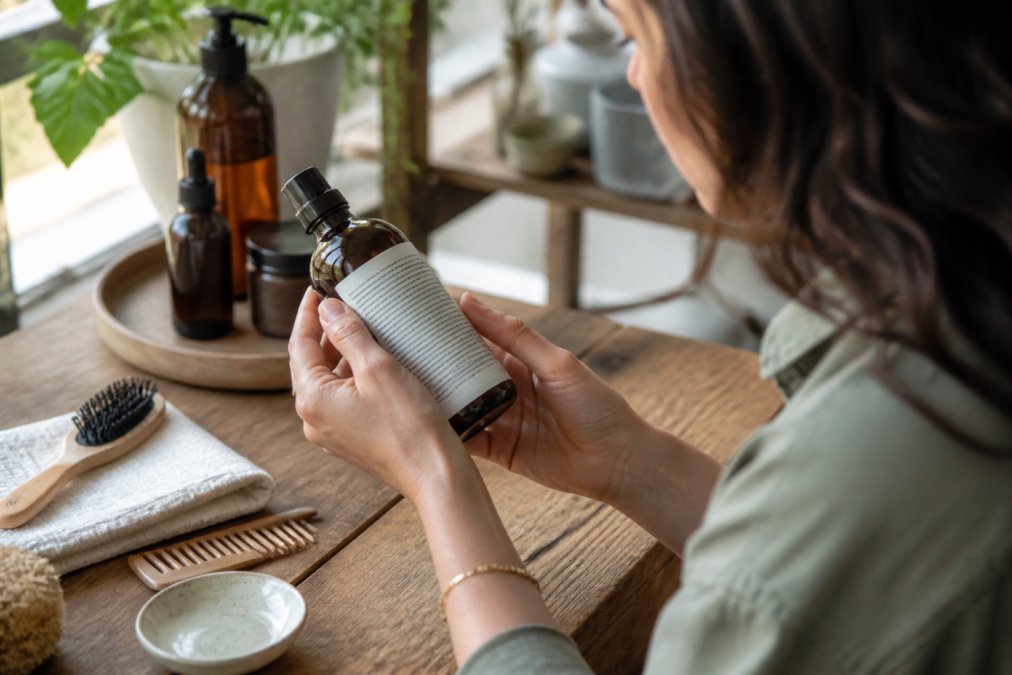
Reading a label properly takes about thirty seconds once you know the order of operations. In Australia, cosmetic ingredients must be declared on the label in descending order of concentration, so the first five names tell you what the product mostly is. That single rule does most of the work for you.
Work through it in this sequence:
- Scan the first five ingredients. If water is followed immediately by a sulfate, the formula is surfactant-heavy. If water is followed by a botanical extract or a gentle glucoside surfactant, the base is milder.
- Check the middle of the list for preservatives. Look for parabens (methylparaben, propylparaben) and formaldehyde-releasing names such as DMDM hydantoin, quaternium-15 and diazolidinyl urea.
- Find the word "fragrance" or "parfum". If it appears without qualification, you cannot know what is inside it. Phthalates commonly hide inside this catch-all term.
- Look for certification logos. A COSMOS seal means an independent body has verified the formulation against a published standard, not the brand's own claims. Certification marks are the one label element a brand cannot self-issue.
- Cross-check the claims against the list. A bottle that says "sulfate-free" should not list any sulfate in the top half. A bottle that says "preservative-free" is a red flag, because any water-based formula needs some preservation system to stay safe.
What Australian Labelling Rules Actually Require
This is the part most guides skip. In Australia, cosmetics are regulated as therapeutic goods only if they make therapeutic claims; otherwise they fall under the general consumer product and industrial chemicals framework. The practical upshot for a shopper is this:
- Ingredient lists are mandatory on cosmetic products sold here, in descending order of concentration, with ingredients present at 1 per cent or less able to be listed in any order after the 1 per cent mark.
- The word "natural" has no legal definition in Australian cosmetics labelling. Neither does "botanical", "plant-powered" or "clean". A brand can use any of them freely.
- "Organic" is also not legally protected on its own. Only a third-party certification mark, such as COSMOS, carries verifiable meaning, because it is audited against a published standard by an approved certifying body.
- Therapeutic claims trigger stricter rules. If a shampoo claims to treat dandruff or a scalp condition, it moves into a different regulatory category with different evidence requirements. A product making those claims is not simply a cosmetic any more.
A Worked Example
Imagine a bottle lists: Aqua, Sodium Laureth Sulfate, Cocamidopropyl Betaine, Glycerin, Parfum, Dimethicone, Methylparaben, DMDM Hydantoin.
What Makes COSMOS-Certified Organic Hair Products Different
COSMOS-certified organic hair products are formulations that have been independently audited against the COSMOS Standard, which governs organic content, permitted ingredients and manufacturing processes. The certification is issued through approved certifying bodies, and it is renewed, which means a brand cannot simply claim it once and drift.
Transitioning to Natural Hair Care Without the Drama
Switching formulas is rarely dramatic, but it does have a settling-in period, and knowing that in advance stops most people from giving up in week two.
The transition usually looks like this:
- Weeks 1-2: your scalp may produce more oil than usual, because it has been over-cleansed and is recalibrating
- Weeks 2-4: oil production settles as the scalp adjusts to gentler surfactants
- Weeks 4-8: hair typically feels lighter as silicone and product buildup gradually washes out
Budget-Friendly Natural Alternatives and Chemical Buildup
Going chemical-free does not require an expensive routine, and it does not require replacing everything at once. The most effective approach is to simplify rather than substitute, and to understand what you are actually removing.
Why Buildup Makes Natural Products Feel Like They 'Don't Work'
This is the mechanism most guides never explain. Silicones (dimethicone, cyclopentasiloxane), mineral oil and petrolatum are occlusive, they form a film on the hair shaft that smooths the cuticle and reflects light, which is why conventional products deliver instant shine. That film does not wash off with a gentle surfactant. It accumulates.
A Budget-Friendly Transition Plan
Start with one product. Replacing your shampoo first gives you the biggest reduction in surfactant exposure for the smallest spend, and it lets you judge results before committing further. Buy the smallest size available, and only scale up once a formula suits your scalp. Concentrated formulas also stretch further than they look, since you need less per wash.
A practical sequence:
- Clarify once. A single clarifying wash to strip accumulated silicone and mineral oil.
- Swap the shampoo. This is where most of the surfactant exposure sits.
- Wait four weeks. Give the scalp time to recalibrate before judging results.
- Swap the conditioner. Once the shampoo suits you, move the conditioner across.
- Leave the styling products for last. They are the smallest exposure and the easiest to replace once the base routine is settled.
What to Watch For
| What to Watch For | Why It Matters | What to Do |
|---|---|---|
| Sulfates in the first five ingredients | Strips natural oils, irritates scalp | Choose gentler surfactant systems |
| "Fragrance" or "parfum" unqualified | May conceal phthalates | Look for certified formulations |
| Formaldehyde-releasing preservatives | Irritant for reactive scalps | Avoid DMDM hydantoin, quaternium-15 |
| Silicones and mineral oil | Build up on the hair shaft | Clarify before transitioning |
| No certification mark | Claims are unverified | Look for a COSMOS seal |
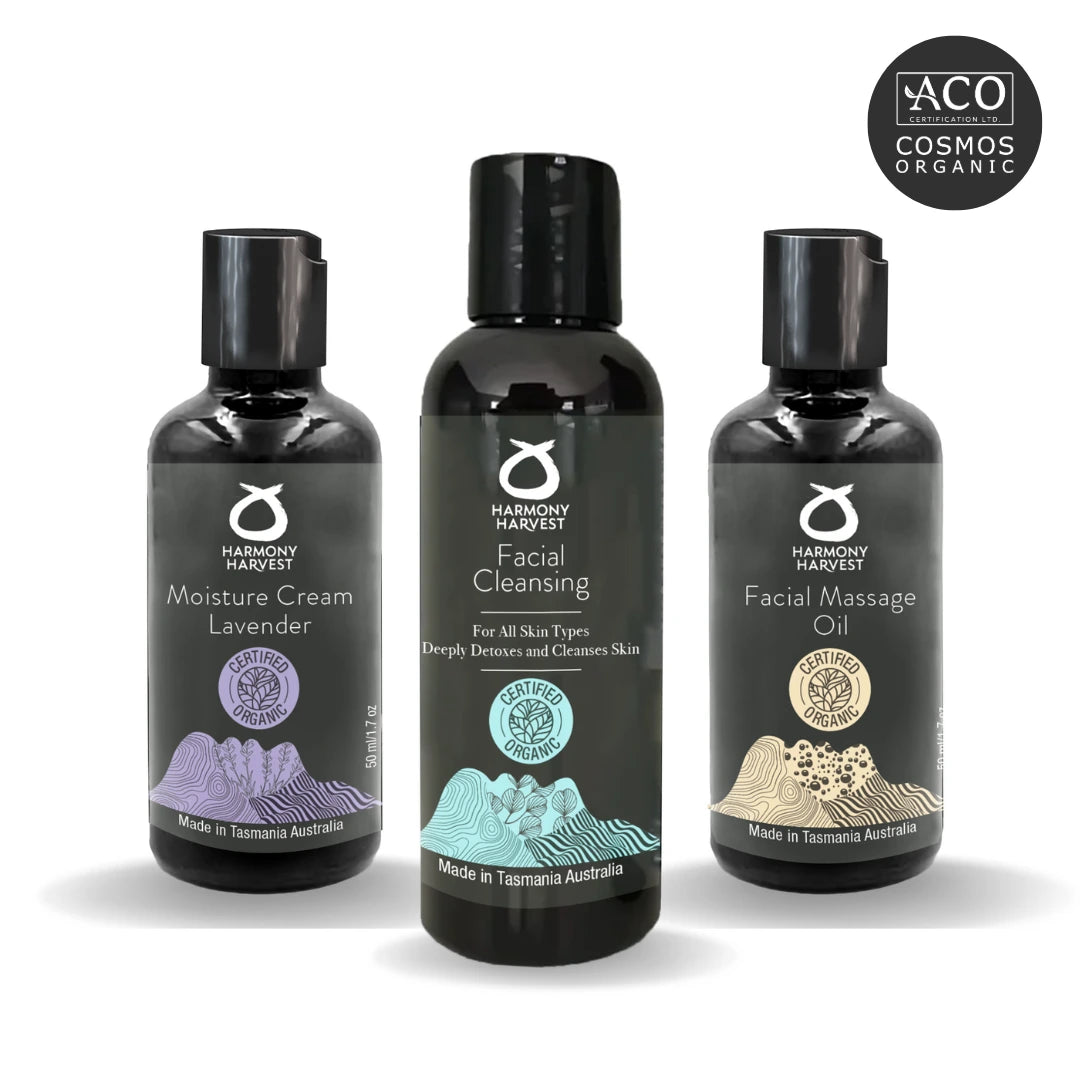
You can explore the full Harmony Harvest hair care collection, a COSMOS-certified organic, vegan, and cruelty-free range.
Conclusion
The hardest part of avoiding harsh chemicals in Australian hair products is not finding alternatives, it is knowing which claims to trust. Certification solves that problem, because it replaces a brand's own assurances with an independent audit against a published standard.
Frequently Asked Questions
What are the most common harsh chemicals found in hair products?
Sulfates, parabens, phthalates, silicones, mineral oil, formaldehyde-releasing preservatives such as DMDM hydantoin and quaternium-15, triclosan, synthetic fragrances, chemical dyes, petrolatum and coal tar are among the most common. These ingredients can strip natural oils, cause scalp irritation and lead to product buildup over time. Checking the label for these names is the first step in avoiding harsh chemicals in hair products.
How can I identify clean hair care products when shopping?
Start by reading the ingredient list, not the front label. Look for plant-based ingredients, short ingredient lists you recognise, and third-party certifications like COSMOS. Avoid products listing sulfates, parabens, phthalates or synthetic fragrances high on the list. For a deeper dive, our guide on how to read hair product labels walks through every section of a typical bottle.
Why should I choose COSMOS-certified organic hair products?
COSMOS certification verifies that a product meets strict organic and environmental standards, covering ingredient sourcing, manufacturing and packaging. It is not a marketing claim; it is an independently audited standard. Choosing COSMOS-certified organic hair products gives you confidence that the formula is free from harsh chemicals and produced with ethical, sustainable practices.
What are the benefits of switching to plant-based hair care?
Plant-based formulas work with your scalp's natural balance rather than stripping it. Many people notice less irritation, softer hair and reduced buildup after transitioning. The switch also supports eco-friendly and sustainable haircare choices. When transitioning to natural hair care, give your scalp a few weeks to adjust, and introduce one product at a time to see what works best for you.
If you are ready to simplify your routine, the Harmony Harvest hair care collection is COSMOS-certified organic, vegan and cruelty-free, made with Australian botanicals and free from synthetic detergents. Start with a single product, give your scalp a few weeks to adjust, and let the certification do the verifying for you.
Best Sellers
Read more
Are ACO Certified Hair Products Safer for Children?
Are ACO certified hair products safer for children? Learn how ACO and COSMOS certification work, what to avoid, and how to read labels. Discover more.
Read more
COSMOS Approved vs Certified Ingredients: What's the Difference?
COSMOS approved vs certified ingredients explained: what each status means, the requirements behind them, and how to read a label with confidence. Explore.
Read more