

Are ACO Certified Hair Products Safer for Children?
Table of Contents
- What ACO Certification Actually Means for Hair Products
- Why Children's Skin and Scalp Respond Differently to Hair Products
- Common Chemicals in Children's Shampoo and Hair Products
- How to Read Hair Product Labels Without Being Misled
- Do Certified Organic Hair Products Outperform Regular Ones for Kids?
- Frequently Asked Questions
Last Updated: September 23, 2026
What ACO Certification Actually Means for Hair Products
Whether ACO certified hair products are safer for children comes down to what the certification actually verifies, not what the label implies. Australian Certified Organic (ACO) is a certification body that audits products against the COSMOS Standard, a global framework for organic and natural cosmetics. When a shampoo or conditioner carries ACO certification, it means an independent auditor has verified the organic content claims, the ingredient sourcing, and the manufacturing process.
The key word is verified. ACO certification is not self-declared. Brands must submit to annual audits, document their supply chains, and meet minimum organic content thresholds. This is where the certification versus marketing distinction matters most. Any brand can print "natural" or "organic" on a bottle. Only a certified product carries third-party proof.
ACO certification standards and COSMOS framework
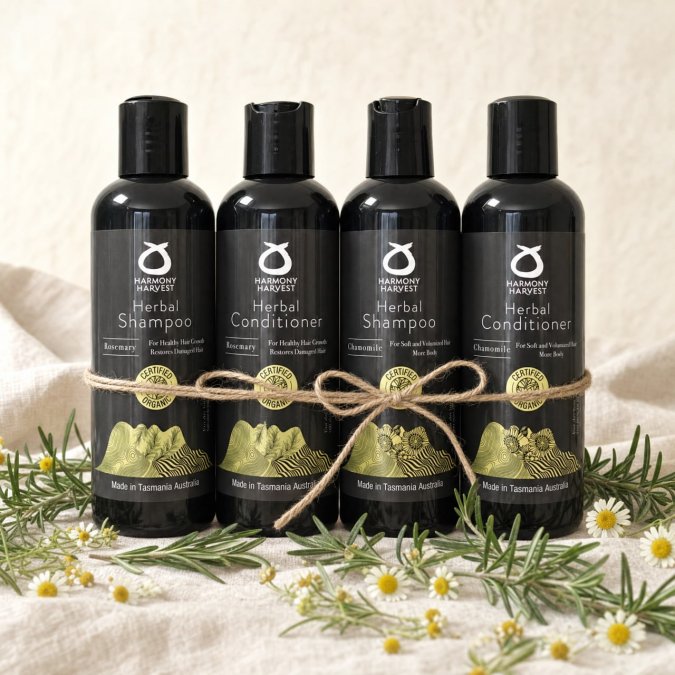
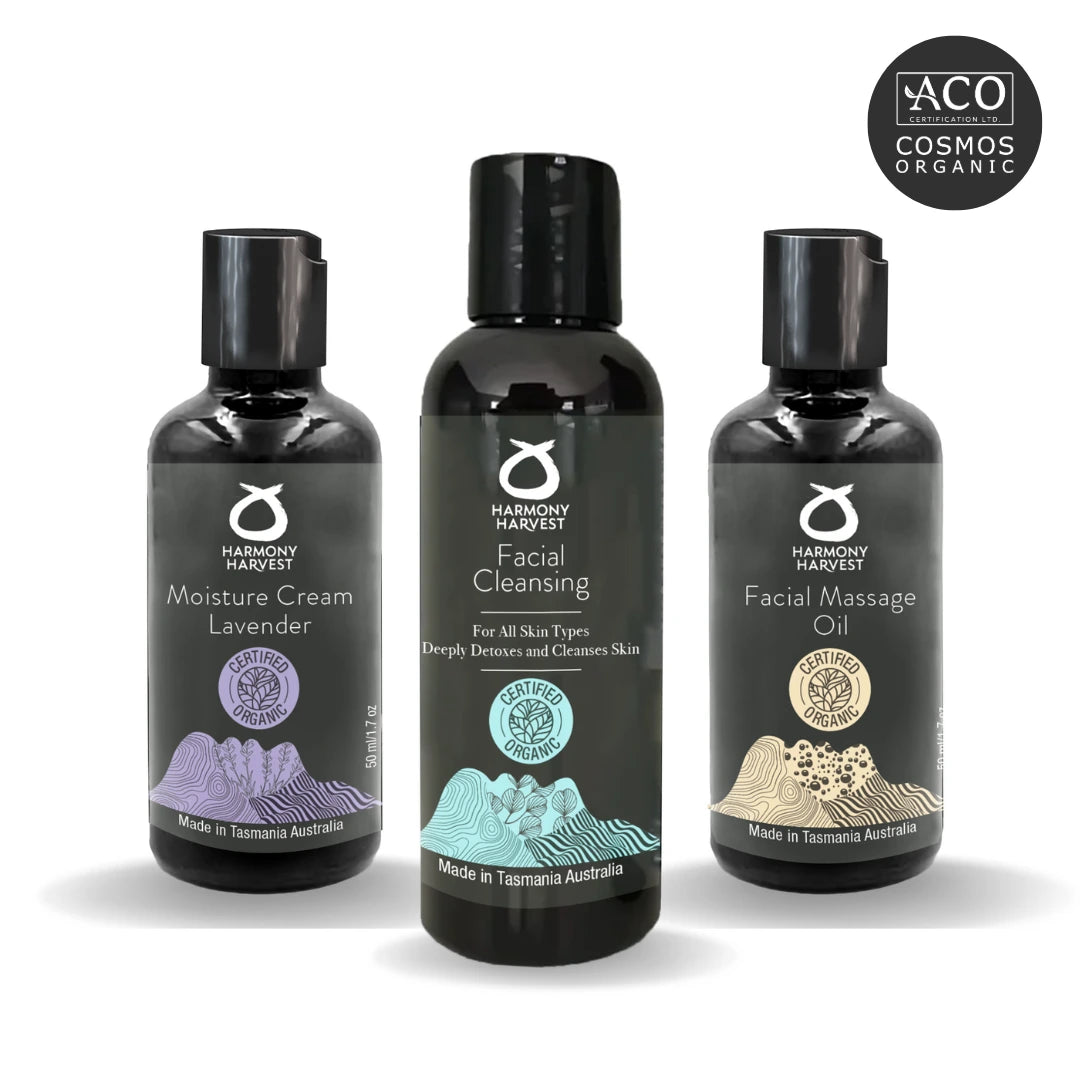
Harmony Harvest's hair care range holds COSMOS-certified organic status, which means every formula has been assessed against these standards rather than simply labelled to sound clean.
ACO, COSMOS and the Certification vs. Marketing Distinction
ACO certification is the Australian arm of the COSMOS Standard, which sets rules for organic content, prohibited ingredients, and environmental practices in cosmetics. COSMOS is governed internationally, and ACO is one of its approved certifiers.
The practical difference for parents: a "natural" shampoo might still contain synthetic preservatives, sulfates, or phthalates. A COSMOS-certified organic product cannot. Certification limits which preservatives are permitted, bans ingredients like parabens and phthalates outright, and requires full ingredient transparency on the label.
COSMOS Standard overview for organic cosmetics
That gap between a marketing claim and a verified standard is the single biggest thing to understand when comparing children's hair products.
Why Children's Skin and Scalp Respond Differently to Hair Products
Children's skin is not simply smaller adult skin. It is structurally and functionally different, and those differences change how a hair product behaves once it touches the scalp.
The Skin Barrier Is Still Under Construction
The outermost layer of skin, the stratum corneum, works as a brick-and-mortar barrier: skin cells are the bricks, and lipids (ceramides, cholesterol, fatty acids) are the mortar. In infants and young children, this barrier is thinner and its lipid composition is still maturing. The practical consequence is greater transepidermal water loss and higher permeability, substances applied to the surface cross into deeper layers more readily than they would on an adult.
This is not a marginal difference.
The Scalp Is a High-Absorption Site
The scalp is highly vascular, it has one of the richest blood supplies of any skin region, and its follicles create additional pathways into the dermis. Ingredients left on the scalp, even briefly during a wash, have more opportunity to enter circulation than the same ingredients applied to, say, the forearm. For a child whose liver and kidney detoxification pathways are still developing, the margin for cumulative exposure is narrower.
Age Bands Matter
Safety considerations are not uniform across childhood:
- Under 12 months: the barrier is at its most permeable and the surface area-to-body-weight ratio is highest, so a given dose per kilogram is larger. Guidance generally favours the simplest possible formulas, or water alone for most washes.
- 1-3 years: the barrier continues maturing, and toddlers are more likely to get product in their eyes and mouth during bath time. Tear-free and low-fragrance formulas become practical safety features, not just conveniences.
- 3-12 years: the barrier is closer to adult function, but cumulative exposure across shampoo, conditioner, body wash and leave-in products still adds up. Fewer products with cleaner ingredient lists reduce the total load.
Why This Justifies Stricter Standards, Not Just Gentler Ones
Because children absorb more per unit of product and detoxify more slowly, the ingredient categories that are merely 'worth watching' for adults become 'worth avoiding' for children. This is the mechanism behind the case for certified formulas: certification removes entire categories of questionable chemistry at the source, rather than relying on a parent to calculate exposure product by product.
Allergy vs. Toxicity: Two Different Risks Parents Confuse
These are not the same thing, and treating them as one leads to bad decisions.
Common Chemicals in Children's Shampoo and Hair Products
Several ingredient families appear routinely in conventional children's hair products, and each carries its own profile of concern.
- Sulfates (sodium lauryl sulfate, sodium laureth sulfate): harsh surfactants that strip natural oils and can irritate a sensitive scalp
- Parabens: preservatives linked to endocrine-disrupting activity in some studies
- Phthalates: often hidden in "fragrance" and associated with hormone disruption
- Synthetic fragrances: proprietary blends that may contain dozens of unlisted compounds
- Formaldehyde-releasing preservatives: added to extend shelf life but classified as potential irritants
Australian regulatory guidance on cosmetic ingredients
How to Read Hair Product Labels Without Being Misled
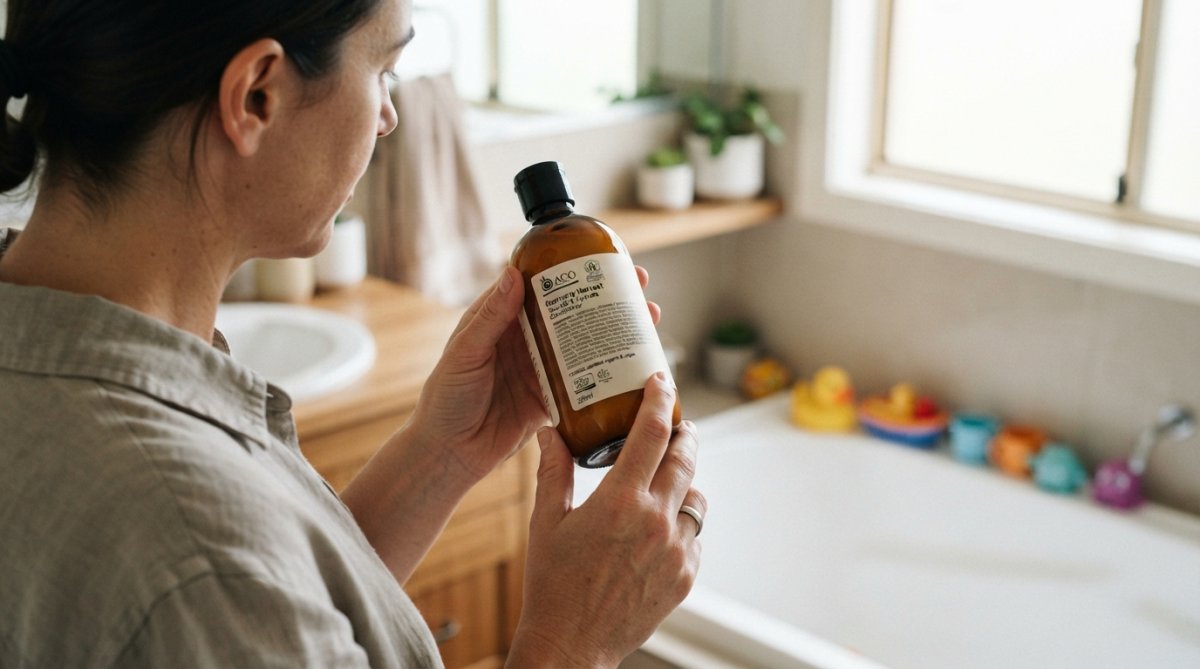
Learning how to read hair product labels is the most practical skill a parent can develop. The front of the bottle is marketing. The back is where the truth lives, but only if you know what you are looking at.
The Ingredient List Has Rules
Ingredients are listed in descending order by concentration. Anything in the first five ingredients makes up the bulk of the formula. If sulfates or synthetic fragrance appear early, that tells you more than any front-of-bottle claim. Ingredients present at very low concentrations (generally under 1%) can be listed in any order after the main ones, which is why 'fragrance' near the end of a list can still be a meaningful presence.
INCI Names: What You Are Actually Reading
Cosmetic ingredients are declared using INCI (International Nomenclature of Cosmetic Ingredients) names. This is why the label says 'Aqua' rather than 'water', 'Sodium Lauryl Sulfate' rather than 'foaming agent', and 'Parfum' rather than 'fragrance'. INCI names are not a warning sign in themselves, they are a standardised language. The skill is recognising which INCI names correspond to the categories you want to avoid.
The 'Certification vs. Marketing' Distinction
This is the single most useful lens for cutting through greenwashing, and most articles skip it entirely.
Greenwashing Signals to Watch For
- Vague terms ('clean', 'pure', 'botanical') with no certification behind them
- A leaf or flower graphic that mimics a certification logo but is not one
- 'Made with organic ingredients' when only one minor ingredient is organic
- 'Chemical-free', everything is a chemical, including water; this phrase signals marketing rather than science
- 'Dermatologist tested' without naming the test, the sample size, or the outcome
- A certification logo that is not on the certifier's own public register
How to Verify a Certification Claim
A genuine certification is checkable. Certifiers publish registers of certified products and brands, so you can confirm a seal is real rather than decorative. If a brand displays a certification mark but you cannot find the product on the certifier's register, that is a red flag worth acting on.
Your Safe Ingredient Checklist for Children's Hair Care
Use this checklist when evaluating any product for a child:
- Does it carry a recognised third-party certification (ACO, COSMOS)?
- Can you find the product on the certifier's public register?
- Are sulfates absent from the first five ingredients?
- Is 'fragrance' or 'parfum' listed without further breakdown?
- Are parabens and phthalates absent?
- Is the ingredient list short and readable?
- Does the brand disclose full ingredient transparency?
- Does it state its organic content percentage?
Do Certified Organic Hair Products Outperform Regular Ones for Kids?
The honest limitation: certified organic products are not automatically hypoallergenic. Natural botanical ingredients can still trigger reactions in sensitive children. Certification reduces chemical risk, but it does not eliminate allergy risk.
What certification does deliver is regulatory compliance and ingredient transparency. You know what is in the bottle, and you know an auditor has verified it. For parents navigating a market full of unregulated claims, that transparency is worth more than any single performance metric.
Frequently Asked Questions
What is ACO certified organic and does it mean a hair product is safe for children?
ACO certification is an Australian standard that verifies a product's organic content and production methods through independent audit. It confirms the formula meets defined organic thresholds and restricts certain synthetic inputs. It is not, however, a paediatric safety certification. ACO certified hair products may still contain essential oils or botanicals that some children react to, so parents should patch test and check the ingredient list even on certified products.
What ingredients should I avoid in children's hair products?
Common chemicals in children's shampoo worth avoiding include sulfates such as SLS and SLES, parabens, phthalates, synthetic fragrances, and some preservatives like methylisothiazolinone. These can strip the scalp, trigger irritation, or have endocrine-disrupting activity concerns. ACO and COSMOS certified formulas restrict many of these, but always read the label because 'natural' and 'organic' claims alone are not regulated the same way as third-party certification.
How does COSMOS certification differ from other organic standards?
COSMOS is an international standard with two tiers: COSMOS Organic and COSMOS Natural. It sets rules for ingredient origin, processing, packaging, and environmental impact, and requires independent verification. Compared with some national organic schemes, COSMOS applies across the whole supply chain and covers greenwashing-resistant criteria. A product carrying COSMOS certification has been assessed against these benchmarks, which gives parents a clearer signal than a brand's own marketing claims.
Is it necessary to use certified organic hair products for children?
It is not strictly necessary, but certified organic formulas reduce exposure to certain synthetic ingredients that may irritate a child's developing skin barrier. Children have thinner skin and a higher surface-area-to-body-weight ratio, so dermal absorption of chemicals is proportionally greater. Choosing ACO or COSMOS certified hair products is a practical way to lower that exposure while still getting effective cleansing and conditioning.
Best Sellers
Read more

Benefits of Native Australian Botanicals in Shampoo
Discover the benefits of native Australian botanicals in shampoo, from scalp rejuvenation to hair strength. Learn how COSMOS-certified organic hair care.
Read more
Avoiding Harsh Chemicals in Australian Hair Products
Learn how to spot harsh chemicals in hair products, read labels with confidence, and transition to COSMOS-certified organic hair care. Discover.
Read more