


Shampoo for Itchy Scalp: Causes and Best Ingredients
Table of Contents
- Why Your Scalp Itches: Common Causes of Itchy Scalp
- Ingredients That Soothe: Best Ingredients for Sensitive Scalp
- How to Choose a Shampoo for Itchy Scalp
- How Hard Water and Product Build-Up Affect Scalp Irritation
- Your Post-Wash Routine for a Calmer, Healthier Scalp
- When to See a Doctor About Your Itchy Scalp
- Conclusion
- Frequently Asked Questions
Last Updated: September 14, 2026
Why Your Scalp Itches: Common Causes of Itchy Scalp
An itchy scalp is a sign your scalp barrier is irritated, and the cause determines everything about how you treat it. People often reach for a shampoo for itchy scalp before they understand what is actually driving the itch.
The most common culprits are:
- Seborrheic dermatitis, a yeast-related condition that produces greasy, yellowish flakes
- Dry scalp, often from cold weather, over-washing or harsh surfactants
- Product build-up, which traps oil and irritants against the skin
- Contact reactions to fragrance, preservatives or dyes
- Hard water minerals, which leave a film that disrupts the scalp barrier
Most people assume flaking means dryness. It usually doesn't. That single misdiagnosis sends people down the wrong treatment path for months.
Dandruff vs Dry Scalp: How to Tell the Difference
Dandruff flakes are larger, oilier and often yellowish, and they cluster near the hairline (Seborrhoeic dermatitis - treatment and causes). Dry scalp flakes are smaller, white and dry, and they fall away easily.
Location matters too. Dandruff tends to appear where oil glands are densest, while dryness shows up across the whole scalp. If your scalp feels tight and itchy rather than greasy, you're likely dealing with dryness, not dandruff.
When Itching Is a Sign of Something More
Persistent itching with redness, swelling or weeping patches points to something beyond ordinary irritation. Allergic contact dermatitis, for example, develops after repeated exposure to an ingredient your scalp has sensitised to, and it often appears suddenly after years of using the same product (pubmed.ncbi.nlm.nih.gov).
Ingredients That Soothe: Best Ingredients for Sensitive Scalp
The best ingredients for sensitive scalp fall into four groups: barrier-repairing humectants, anti-inflammatory botanicals, gentle exfoliants, and microbiome-supporting actives. Each does a different job, and the strongest formulas combine two or three rather than relying on one hero ingredient.
Niacinamide supports the scalp barrier by encouraging ceramide production, which reduces water loss and calms redness over time. Panthenol (provitamin B5) holds moisture in the upper skin layers and eases the tight, stretched feeling that often accompanies dryness. Glycerin and sodium PCA are humectants that draw water into the stratum corneum without leaving a heavy film.
Colloidal oatmeal and aloe vera quiet irritation on contact, colloidal oatmeal is well recognised for soothing itch associated with dry, irritated skin. Bisabolol (from chamomile) and allantoin are gentle anti-inflammatories that suit reactive scalps.
For flaking that needs loosening, salicylic acid and urea dissolve the bonds between dead skin cells so they shed cleanly instead of clumping. Salicylic acid is oil-soluble, so it works well on oily, flaky scalps; urea is also a humectant at lower concentrations, making it a good fit for dry, tight scalps.
For fungal-related flaking, ketoconazole and selenium disulfide are clinically studied actives. They work, but they're strong, so alternating them with a gentler wash rather than using them daily is often suggested.
Why the Scalp Microbiome Matters
Your scalp hosts a community of bacteria and yeast, chiefly Malassezia species and Cutibacterium, that normally live in balance with your skin. Itch and flaking often begin when that balance shifts: an overgrowth of Malassezia feeds on sebum and produces irritants, while a disrupted bacterial population weakens the barrier that keeps those irritants out.
This is why harsh, stripping shampoos can make an itchy scalp worse over time. They remove the oils the microbiome depends on, and the rebound in sebum production feeds the very yeast you're trying to calm. Gentle surfactants, a slightly acidic pH, and ingredients that support rather than sterilise the scalp tend to produce steadier results than aggressive cleansing.
Prebiotic ingredients, think colloidal oatmeal, inulin, and certain plant sugars, feed beneficial bacteria rather than wiping everything out. They won't fix an active flare on their own, but they help the scalp hold its balance between washes.
Ingredients to Avoid in an Itchy Scalp Shampoo
Harsh sulphates strip the scalp's natural oils and worsen dryness. Synthetic fragrance is one of the most common triggers of allergic contact dermatitis on the scalp (pubmed.ncbi.nlm.nih.gov). Some preservatives, including certain parabens and methylisothiazolinone, are also frequent sensitisers.
If your scalp is reactive, look for SLS-free, sulfate-free, pH-balanced and hypoallergenic formulas. Fewer ingredients generally means fewer chances of a reaction.
How to Choose a Shampoo for Itchy Scalp
Match the formula to the cause, not the marketing. A gentle, sulfate-free shampoo suits dryness and sensitivity, while a medicated formula with ketoconazole or salicylic acid suits persistent dandruff. The trick is knowing which category you're in before you spend money on the wrong bottle.
Work through these steps:
- Identify whether your flakes are oily or dry, oily and yellowish points to dandruff, small and white points to dryness
- Check whether build-up or hard water is a factor, a filmy residue after rinsing is a strong clue
- Choose a gentle base for dryness, a medicated active for dandruff
- Patch test on your inner arm for 48 hours before using it on your scalp
- Wash no more than every second day to protect the barrier
- Alternate medicated and gentle formulas if you need both
| Scalp Concern | Key Ingredient to Look For | Avoid |
|---|---|---|
| Dry, tight scalp | Panthenol, aloe, niacinamide | Sulfates, fragrance |
| Greasy dandruff | Ketoconazole, selenium disulfide | Heavy oils, silicones |
| Product build-up | Salicylic acid, charcoal | Waxes, thick butters |
| Sensitive, reactive | Colloidal oatmeal, urea | Synthetic fragrance, dyes |
| Microbiome out of balance | Prebiotics, gentle surfactants, pH-balanced base | Harsh sulphates, antibacterial agents |
Is It Itch, or an Allergic Reaction?
This is the question most guides skip, and it changes everything about what you should buy. Ordinary itch from dryness or dandruff tends to be steady and predictable: it flares with weather, washing frequency or stress, and it eases when you address the cause.
Allergic contact dermatitis behaves differently. It often appears suddenly after months or years of using the same product without issue, because sensitisation builds with repeated exposure. The itch is usually accompanied by redness, a burning or stinging sensation, and sometimes small bumps or weeping patches along the hairline, ears and nape, the places where shampoo sits longest.
If that pattern sounds familiar, the fix isn't a stronger medicated shampoo. It's removing the ingredient your scalp has reacted to. Fragrance mixes and preservatives such as methylisothiazolinone are among the most frequently implicated sensitisers in rinse-off hair products, which is why fragrance-free, short-ingredient-list formulas are the sensible starting point for a reactive scalp.
A practical test: stop the suspected product for two weeks and use only a plain, fragrance-free cleanser. If the itch settles and then returns when you reintroduce the original, you may have your answer. If it doesn't settle, seeing a doctor for patch testing can help identify the specific allergen.
Harmony Harvest's Hair Care collection is built on this principle: a gentle, plant-based base that cleans without stripping, so the scalp barrier can recover rather than being re-irritated at every wash. Every formula in the range is COSMOS-certified organic and vegan.
How Hard Water and Product Build-Up Affect Scalp Irritation
Hard water leaves calcium and magnesium deposits on the scalp, and those minerals interfere with how surfactants rinse away. The result is a film that traps oils, dead skin and product residue against the skin, which keeps the itch cycle going even after you've switched to a better shampoo.
Build-up works the same way. Layering styling products, dry shampoo and heavy conditioners without a proper cleanse leaves a residue that clogs follicles and irritates the scalp barrier. A clarifying wash once a week, or a shampoo with salicylic acid, breaks that cycle.
Your Post-Wash Routine for a Calmer, Healthier Scalp
What you do after washing matters as much as the shampoo itself. Rushing the rinse leaves residue behind, and rubbing wet hair with a rough towel creates friction that aggravates an already irritated scalp.
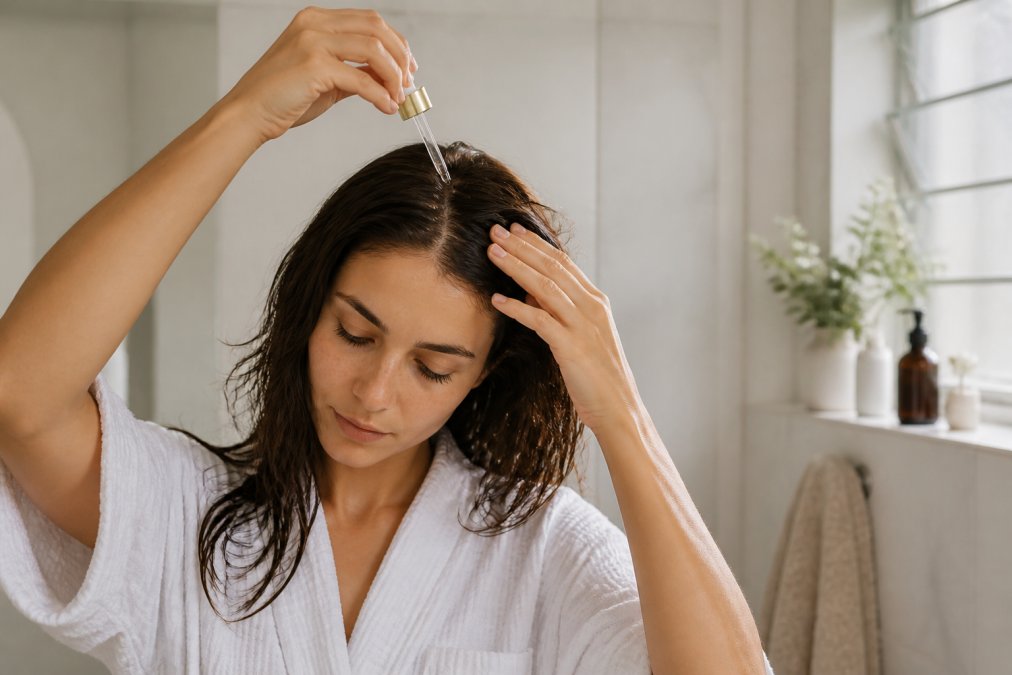
Keep the routine simple:
- Rinse for a full 30 seconds longer than feels necessary
- Pat, don't rub, with a soft microfibre towel
- Apply a lightweight scalp serum to damp skin, not soaked hair
- Let hair air-dry when you can, and keep heat tools off the scalp
- Avoid tight styles for the first hour after washing
This is also where a COSMOS-certified organic, vegan scalp treatment earns its place. Soothing botanicals applied to a clean, damp scalp absorb better than anything layered over residue.
When to See a Doctor About Your Itchy Scalp
See a doctor if the itch persists beyond four to six weeks, if you have open sores or significant hair loss, or if over-the-counter medicated shampoos haven't helped after a month of consistent use.
Other reasons to seek medical advice:
- Sudden, severe itching with no obvious trigger
- Redness or swelling that spreads beyond the hairline
- Flaking that worsens despite treatment
- Itching that disrupts your sleep
A dermatologist can confirm whether you're dealing with seborrheic dermatitis, psoriasis or allergic contact dermatitis, and prescribe a medicated formula matched to the diagnosis. Self-treating the wrong condition wastes time and can make irritation worse.
Conclusion
An itchy scalp is a signal, not a sentence. Once you know whether you're dealing with dryness, dandruff, build-up or a contact reaction, the right shampoo for itchy scalp becomes obvious, and relief usually follows within a few weeks of consistent care.
Frequently Asked Questions
What is the best shampoo for an itchy scalp?
The best itchy scalp shampoo depends on the cause. If flaking and itching point to dandruff, look for actives such as ketoconazole, salicylic acid or zinc pyrithione. For dryness or sensitivity, choose a sulfate-free, pH-balanced formula with soothing ingredients like niacinamide, panthenol or aloe. A gentle, COSMOS-certified organic shampoo can support the scalp barrier without stripping natural oils.
What are the common causes of an itchy scalp?
Itching usually comes from one of a few triggers: dandruff or seborrheic dermatitis, a dry or compromised scalp barrier, product build-up, hard water minerals, or an allergic reaction to fragrance and preservatives. Stress, cold weather and infrequent washing can make any of these worse. Identifying which cause applies to you is the first step to choosing the right shampoo.
Why is my scalp so itchy but there is no dandruff?
Itching without visible flakes often points to a dry scalp, a damaged skin barrier or contact irritation from a product. Hard water and residue from styling products can also trigger itch without flaking. Switching to a gentle, sulfate-free shampoo and reducing fragrance exposure frequently calms this type of irritation within a few weeks.
What should I avoid in hair care products if my scalp is irritated?
Avoid harsh sulfates such as SLS, strong synthetic fragrances, drying alcohols and heavy silicones that trap residue against the scalp. These can strip oils, disrupt the scalp microbiome and worsen redness and itching. A fragrance-free or naturally scented, pH-balanced formula is gentler while your scalp barrier recovers.
Persistent scalp irritation rarely resolves on its own, and the products you use every wash either support your scalp barrier or wear it down. Harmony Harvest's Hair Care collection is formulated with gentle Australian botanicals and is COSMOS-certified organic, vegan and cruelty-free, so you can cleanse and soothe without stripping. Explore the range and give your scalp the calm, balanced care it's been asking for.
Best Sellers
Read more
Best Australian Organic Hair Brands for Fine Hair
Discover the best Australian organic hair brands for fine hair. Compare volumising formulas, ingredients and certifications. Explore COSMOS-certified.
Read more
Is Organic Shampoo Better for Colour Treated Hair?
Is organic shampoo better for colour treated hair? Learn how pH, sulfates and COSMOS-certified organic formulas protect colour and keep hair vibrant.
Read more