

Is Organic Shampoo Better for Colour Treated Hair?
Table of Contents
- Why Colour Fades: The Real Reasons Your Dye Washes Out
- Is Organic Shampoo Better for Colour Treated Hair? What the Evidence Shows
- Sulfate-Free vs Conventional Shampoo: What Changes in Your Hair
- Colour-Safe Shampoo Ingredients to Avoid
- How to Maintain Hair Colour Naturally Between Washes
- The Transition Period: What to Expect When You Switch
- Frequently Asked Questions
Last Updated: September 15, 2026
Why Colour Fades: The Real Reasons Your Dye Washes Out
Colour loss starts the moment water touches your hair. The cuticle, the protective outer layer of each strand, lifts slightly when wet, allowing both water and the cleansing agents in your shampoo to slip underneath and carry dye molecules away with them.
The biggest culprits are surfactants, the compounds that create lather and lift oil. Strong ones, particularly sulfates, strip the cuticle aggressively. Add UV exposure, heat styling, and hard water minerals, and you have a recipe for rapid fading.
Is Organic Shampoo Better for Colour Treated Hair? What the Evidence Shows
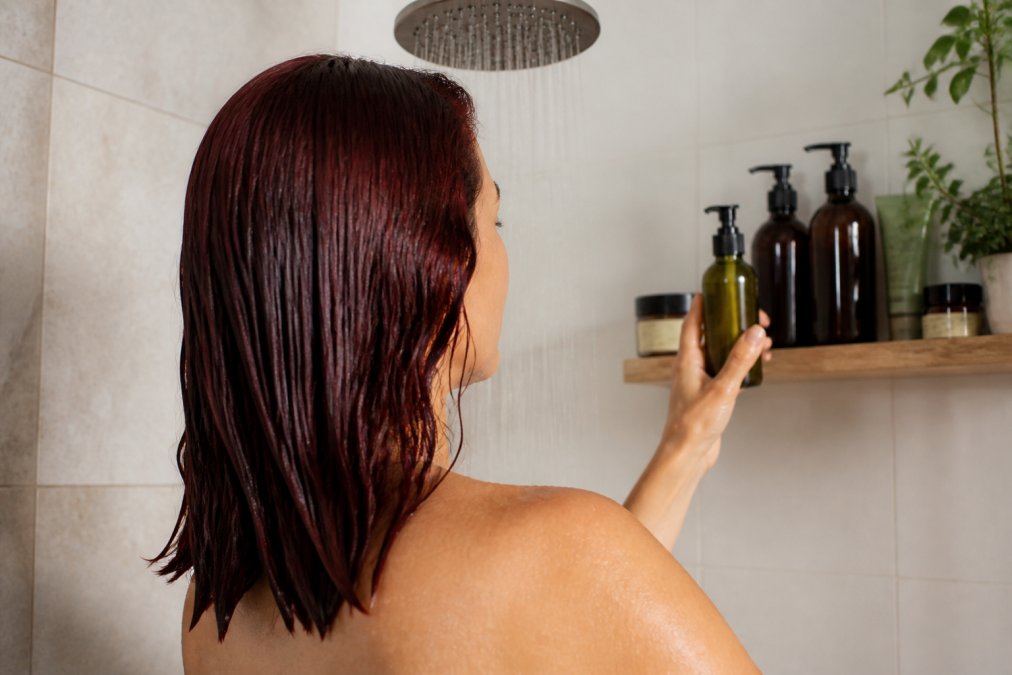
For colour-treated hair, a gentle, low-surfactant shampoo is generally better than a harsh conventional one, though "organic" on a label guarantees nothing on its own. The benefit comes from what the formula leaves out and from how its cleansing agents behave at the cuticle, not from the word on the bottle.
To understand why, it helps to know how a surfactant actually works. Every surfactant molecule has two ends: a water-loving head and an oil-loving tail. The tails grab onto oil, sebum and loosened dye, while the heads pull the whole package into water so it rinses away. That is the entire mechanism of washing, and it is also the mechanism of colour loss, because a surfactant cannot tell the difference between a droplet of scalp oil and a dye molecule that has not fully bonded to the cortex.
What separates a harsh cleanser from a gentle one is charge and size. Anionic surfactants, the family that includes sulfates such as sodium lauryl sulfate and sodium laureth sulfate, carry a negative charge and are small and efficient. They lather hard, strip oil fast, and lift the cuticle's outer scales as they go, which is why colour fades quickly with repeated use. Plant-derived alternatives behave differently. Glucosides (decyl glucoside, coco-glucoside) are non-ionic, meaning they carry no charge, so they interact far less aggressively with the negatively charged surface of wet hair. Amino acid-derived surfactants (sodium cocoyl glycinate, sodium cocoyl isethionate) are larger molecules that clean more slowly and rinse away without the same cuticle lift.
The practical trade-off is real: milder surfactants clean less aggressively, so a very oily scalp may need a second wash or a slightly longer massage to feel properly clean. For colour-treated hair, that slower clean is the point. Less cuticle lift means fewer gaps for dye to escape through, and the pigment that has bonded to the cortex stays put for longer.
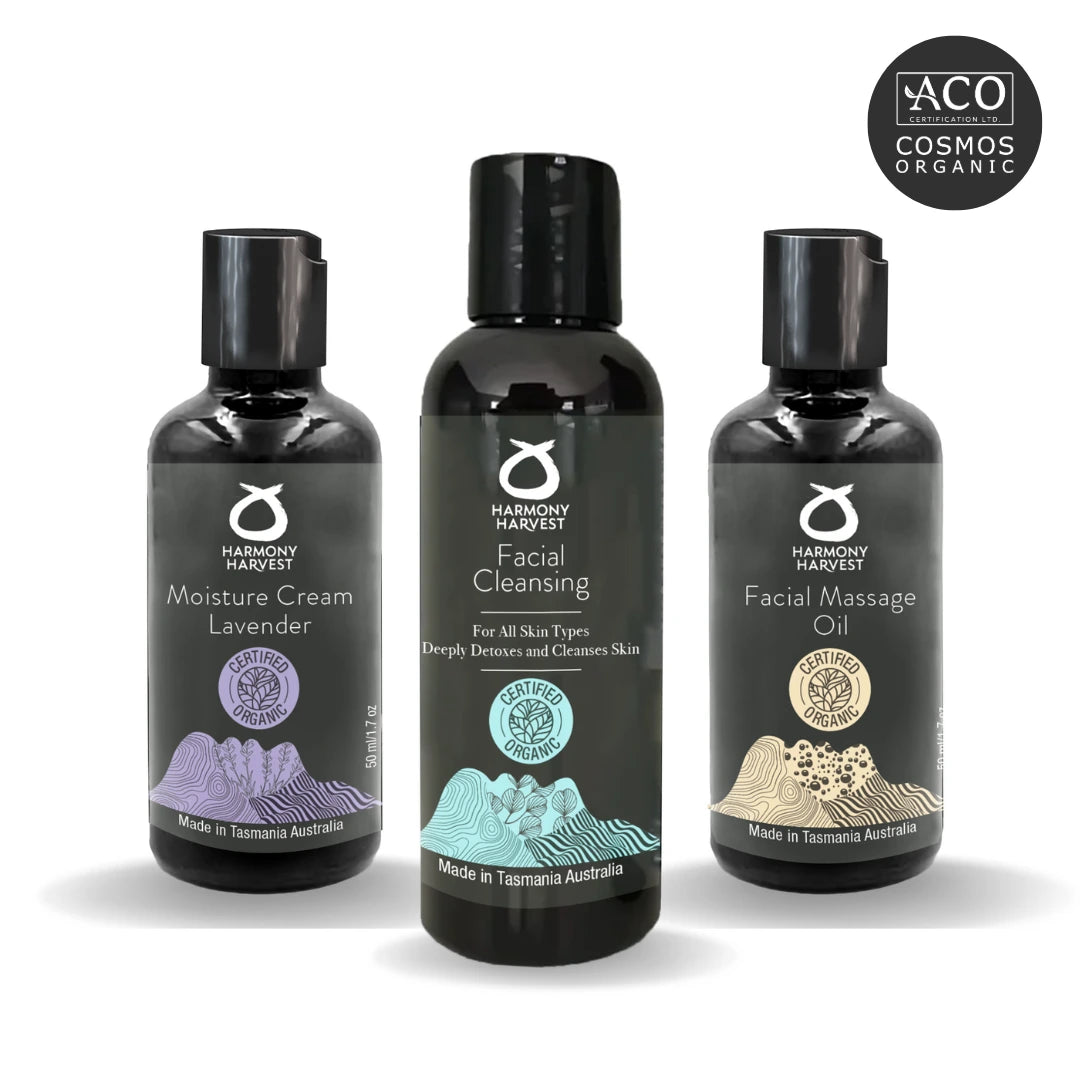
What most guides miss is that certification is the real filter. A product can call itself "natural" with a single botanical extract and still contain the same harsh cleansers as a supermarket brand. Look for a recognised standard, such as COSMOS organic certification explained, which verifies both organic content and manufacturing ethics. Harmony Harvest's hair care products are COSMOS-certified organic and vegan, which means the surfactant system has been assessed against a published standard rather than a marketing claim.
How pH Balance and the Hair Cuticle Affect Colour Longevity
pH is where colour protection is won or lost. Hair and scalp sit naturally around pH 4.5 to 5.5, slightly acidic (Health topics). When you wash with an alkaline product, the cuticle swells and opens, and dye leaches out through the gaps.
A pH-balanced, colour-safe shampoo keeps the cuticle lying flat, sealing pigment in. This is why salon professionals reach for acidic formulas after a colour service. If you want to keep a fresh tone for longer, check that your shampoo sits in that mildly acidic range rather than the alkaline end of the shelf.
Water Quality: The Variable Most Guides Ignore
Even a perfectly formulated organic shampoo performs differently depending on what is already in your water. In hard water areas, dissolved calcium and magnesium ions are present in higher concentrations. These minerals can bind to the surface of the hair shaft and to the surfactant molecules themselves, which reduces lather, leaves a dulling film over the colour, and can make hair feel rougher than it did before you washed.
Soft water does the opposite: surfactants lather more readily, so you may find you need less product to get the same clean. If you have recently moved and your usual shampoo suddenly seems to underperform, water hardness is the first thing worth checking, most water suppliers publish a hardness figure for your area.
If your water is hard, a few adjustments help. A shower filter reduces mineral content at the point of use. A periodic acidic rinse, diluted apple cider vinegar is the common household version, helps dissolve mineral build-up and returns the cuticle to its natural mildly acidic state. And because hard water minerals can accumulate gradually, a clarifying wash every few weeks keeps colour looking brighter between salon visits.
Sulfate-Free vs Conventional Shampoo: What Changes in Your Hair
Sulfate-free shampoo cleans with milder surfactants, so colour fades more slowly, but you trade away the thick lather many people associate with "clean". Conventional formulas rely on sulfates to strip oil fast, which is effective on greasy scalps and brutal on dye.
The switch is not purely cosmetic. If your hair is colour-treated, porous, or dry, a sulfate-free formula usually leaves it softer and less tangled because it is not scrubbing the cuticle raw. If your hair is very oily and untreated, you may find a conventional wash feels more thorough.
| Factor | Sulfate-Free | Conventional |
|---|---|---|
| Colour retention | Slower fading | Faster fading |
| Lather | Light, low foam | Thick, high foam |
| Best for | Colour-treated, dry, porous hair | Oily, untreated hair |
| Cuticle impact | Gentle | More stripping |
Colour-Safe Shampoo Ingredients to Avoid
Certain ingredients are best left off your bathroom shelf if you want colour to last. The list is shorter than most people expect, and it is worth learning to read the label.
- Sulfates (sodium lauryl sulfate, sodium laureth sulfate): strong surfactants that strip dye quickly.
- Parabens: preservatives some people choose to avoid for personal reasons.
- Silicones: can coat the hair and dull colour over time.
- Synthetic dyes and fragrances: unnecessary additions that can irritate a sensitive scalp.
- Harsh alcohols: drying, and they leave the cuticle more vulnerable.
A genuinely colour-safe formula leans on plant-derived cleansing agents and botanical extracts instead. Harmony Harvest's COSMOS-certified organic and vegan products are built around Australian botanicals and free from synthetic detergents, which makes them a sensible choice for anyone maintaining a colour service.
How to Maintain Hair Colour Naturally Between Washes
Stretching the time between washes is the single most effective habit for colour longevity. Every wash removes some pigment, so washing less often directly extends how long your colour looks fresh.
A few practical habits make a real difference:
- Wash two to three times a week rather than daily.
- Use lukewarm water, not hot.
- Apply a UV-protective leave-in before sun exposure, since UV light breaks down dye.
- Use a toning product between salon visits to manage brassiness.
- Deep-condition weekly to support moisture retention and the lipid barrier.
- Wear a hat or scarf when you will be in strong sun for extended periods, particularly in summer.
The Transition Period: What to Expect When You Switch
Switching to a gentler, sulfate-free shampoo often comes with an adjustment phase that surprises people, and it is the part most guides skip entirely. In the first week or two, your hair may feel slightly oilier, flatter, or less "squeaky clean" than you are used to. Some people also notice their colour looks temporarily duller before it settles.
This is normal, and there is a mechanism behind it. Conventional shampoos often pair sulfates with silicone conditioning agents, dimethicone and similar ingredients that coat the hair shaft in a thin, smooth film.
A few things make the transition easier:
The Transition Period: What to Expect When You Switch
Frequently Asked Questions
Does organic shampoo strip hair colour?
A COSMOS-certified organic shampoo made without sulfates is far less likely to strip colour than a conventional formula. Harsh surfactants lift the hair cuticle and rinse dye molecules away with each wash, while plant-derived cleansing agents clean the scalp and strands more gently. If a product labelled organic still lists sulfates near the top of the ingredients, treat it with caution, because the colour-fading risk stays the same regardless of the label.
What ingredients should I avoid in shampoo for coloured hair?
Check the label for sulfates such as sodium lauryl sulfate, which strip colour fastest, plus parabens, silicones and synthetic dyes that can dull vibrancy or leave buildup. Synthetic fragrances are another common irritant for a sensitive scalp. A colour-safe shampoo instead uses plant-derived surfactants, natural oils and botanical extracts.
Is organic shampoo effective for maintaining hair colour vibrancy?
Yes, when the formula is genuinely colour-safe. A pH-balanced organic shampoo keeps the hair cuticle lying flat, which slows colour-fading and helps moisture retention. Botanical extracts also support the lipid barrier along the strand. The result is better hydration and hair that holds its tone for longer between salon visits, especially compared with a harsh everyday shampoo.
How does COSMOS-certified organic shampoo differ from conventional options?
COSMOS certification is an independent standard, not a marketing claim, so it verifies the percentage of organic ingredients and restricts synthetic additives. Harmony Harvest formulas are COSMOS-certified organic and vegan, made with Australian botanicals and free from synthetic detergents. Conventional shampoos can contain stronger surfactants, silicones and synthetic fragrance, which may clean faster but tend to fade colour and disrupt the scalp's natural balance over time.
Maintaining vibrant colour-treated hair comes down to one principle: treat the cuticle gently and it will hold onto pigment for longer. Harmony Harvest's COSMOS-certified organic, vegan, and cruelty-free Hair Care collection is made with Australian botanicals and free from synthetic detergents, so you can care for your colour without harsh chemicals. Explore the range and give your hair the gentle, plant-based support it deserves.
Best Sellers

Read more

Shampoo for Itchy Scalp: Causes and Best Ingredients
Find the best shampoo for itchy scalp. Learn causes of irritation and the best ingredients for sensitive scalp, plus how to choose a soothing formula.
Read more
How to Read Haircare Labels for Organic Certification
Learn how to read haircare labels for organic certification. Spot COSMOS logos, decode INCI lists, and tell certified organic from greenwashing. Start.
Read more