


COSMOS Certified vs Natural Haircare: What's the Difference?
Table of Contents
- COSMOS Certified vs Natural Haircare: What Is the Difference?
- COSMOS Organic vs COSMOS Natural: Two Tiers Explained
- The Benefits of COSMOS Certification for Your Hair and Scalp
- Greenwashing vs Certification: How to Read a Haircare Label
- Sustainability, Sourcing and Supply Chain Transparency
- How Certified Organic Haircare Supports Hair Health
- Is COSMOS Certified Haircare Worth the Cost?
- Frequently Asked Questions
Last Updated: September 12, 2026
COSMOS Certified vs Natural Haircare: What Is the Difference?
The word "natural" on a haircare bottle is a marketing claim, not a verified standard. COSMOS certified haircare, by contrast, has been independently audited against a published international standard. That is the core difference, and it matters more than most shoppers realise. This guide from Harmony Harvest walks through what certification actually guarantees, where "natural" labelling falls short, and how to tell the two apart on a shelf.
Here is the short version: COSMOS certification is a third-party audited standard covering organic content, manufacturing, packaging and sustainability, while "natural" is an unregulated descriptor any brand can print. The two are not interchangeable, and treating them as such is exactly how greenwashing survives.
Below, we break down the two COSMOS tiers, what each one guarantees, and how to verify a claim in under a minute.
COSMOS Organic vs COSMOS Natural: Two Tiers Explained
COSMOS has two certification tiers, and the gap between them is the single most misunderstood part of organic labelling.
COSMOS Organic requires a minimum percentage of organic ingredients in the total formula, with stricter thresholds again for rinse-off products. COSMOS Natural allows natural-origin ingredients but does not guarantee a set organic percentage.
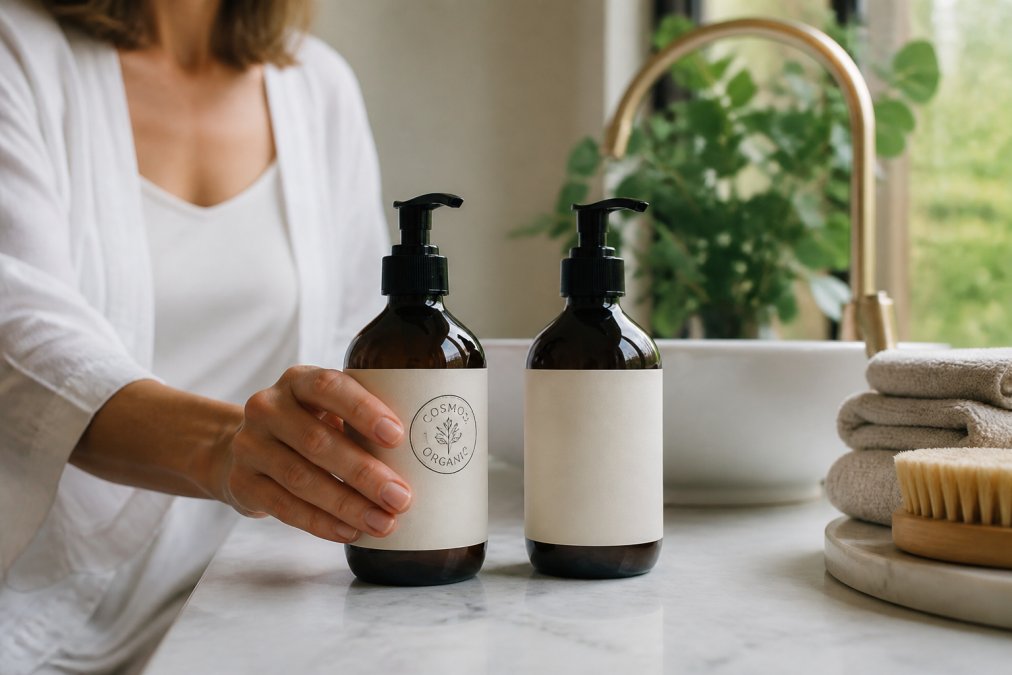
Minimum Organic Content and What Each Tier Guarantees
The distinction comes down to thresholds and verification.
| Tier | Organic Content Requirement | What It Guarantees | Best For |
|---|---|---|---|
| COSMOS Organic | Minimum organic percentage of total formula | Audited organic content, restricted processing, packaging rules | Shoppers prioritising verified organic ingredients |
| COSMOS Natural | Natural-origin ingredients, no organic minimum | Audited natural origin, prohibited synthetics | Those wanting natural formulas without an organic threshold |
| "Natural" (uncertified) | None | Nothing verifiable | No one, if certification matters to you |
Both tiers sit under the same international cosmetic standard and share rules on prohibited ingredients, manufacturing processes and environmental impact. The difference is the organic floor.
The Benefits of COSMOS Certification for Your Hair and Scalp
Certification delivers three practical benefits: verified ingredient integrity, a documented audit trail, and standardised testing across every batch.
For your scalp, that means fewer unknown variables. COSMOS restricts synthetic chemicals, sets preservative systems to an approved list, and requires toxicological assessment of every formula. Brands operating to that standard cannot quietly swap a raw material for a cheaper synthetic one without losing certification.
Sustainability is built into the standard too. Packaging requirements, biodegradability expectations and manufacturing processes are all assessed as part of the audit, not bolted on as a marketing extra.
That is the theory. In practice, the benefit you feel is consistency: the formula you bought last month is held to the same documented standard this month.
Greenwashing vs Certification: How to Read a Haircare Label
Greenwashing works because most labels are never checked. Certification removes that gap, but only if you know which claims are actually checkable and which are just decoration.
In Australia, cosmetic claims sit under the Therapeutic Goods Administration's advertising rules and the Australian Consumer Law, which prohibits misleading or deceptive conduct. In practice, that means a brand cannot lie outright about what is in a bottle. What it can do is use words that are technically true but functionally meaningless, and "natural" is the most common of those.
The Three Claim Types on a Haircare Label
Not every claim on a bottle carries the same weight. Sorting them is the fastest way to see through marketing.
| Claim Type | Example | Who Checks It | What It Actually Means |
|---|---|---|---|
| Regulated | Ingredient list (INCI) | Legally required, enforced | Accurate, but says nothing about origin or processing |
| Self-declared | "Natural", "clean", "botanical", "eco" | No one | Whatever the brand decides it means |
| Third-party certified | COSMOS Organic, COSMOS Natural | Independent certifier, audited annually | Verified against a published standard |
Only the third column gives you something to verify. The first is accurate but silent on the questions most shoppers care about. The second is where greenwashing lives.
Spot the Fake: A Side-by-Side Comparison
Most guides define the standard. Fewer show you what a misleading label actually looks like next to a verified one. Here is the pattern to watch for.
| Signal | Unverified "Natural" Label | COSMOS-Certified Label |
|---|---|---|
| Logo | Leaf icon, botanical illustration, or no logo | Certification mark with the certifier's name |
| Licence number | Absent | Printed next to the mark, checkable on a public register |
| Organic claim | "Made with organic ingredients" (one input, not the formula) | Tier stated: COSMOS Organic or COSMOS Natural |
| Ingredient list | Fragrance, parabens, or synthetic silicones present | Restricted ingredient list, approved preservatives only |
| Sourcing | "Ethically sourced" with no detail | Documented supply chain traceability |
| Verifiability | Nothing to check | Certifier's directory confirms the licence is current |
If a label fails on the logo or the licence number, stop there. Everything else on the bottle is unverified by default.
Checking the Certification Body and Licence Number
Verification takes about a minute:
- Find the certification logo on the label or product page
- Note the certifying body named alongside it
- Locate the licence number printed near the logo
- Check the certifier's public directory to confirm the licence is current
- Confirm whether the claim is COSMOS Organic or COSMOS Natural
- Check the ingredient list for the organic percentage where stated
If any of those steps fails, treat the claim as unverified. The ACO certification directory is a useful starting point for checking Australian-certified products.
Sustainability, Sourcing and Supply Chain Transparency
Certification extends past the bottle into raw material sourcing and manufacturing.
COSMOS requires traceability across the supply chain, which means a certified brand must be able to document where its botanical inputs came from and how they were processed. Non-GMO requirements, restrictions on chemical processing, and eco-friendly manufacturing expectations all form part of the audit trail.
This is where uncertified "clean beauty" claims tend to fall apart. Sustainability language is easy to write and hard to prove. An audit trail is the opposite: unglamorous, but checkable.
For Australian shoppers, the COSMOS standard documentation sets out exactly which environmental and sourcing criteria a product must meet before it can carry the mark.
How Certified Organic Haircare Supports Hair Health
Hair health starts at the scalp, and the scalp responds badly to over-stripping.
Many conventional shampoos rely on aggressive surfactants that remove natural oils faster than the scalp can replace them (PubMed). Certified organic formulas tend to use milder, plant-derived cleansing agents, which is why people with sensitive or reactive scalps often notice less tightness and irritation after switching.
Hair itself benefits from the same logic. Plant oils and botanical extracts in a certified formula support the hair shaft and reduce the brittleness that comes from repeated harsh cleansing. The result is not a dramatic overnight transformation. It is a scalp that stops fighting back.
What most guides miss is that the ingredient list matters less than the formulation standard behind it. A long list of plant extracts means nothing if the base surfactants are stripping your scalp every wash.
Is COSMOS Certified Haircare Worth the Cost?
Certification costs money, and that cost lands in the price. What most guides skip is where the money actually goes, and whether that spend buys something you would notice.
Where the Premium Actually Goes
A certified product carries costs an uncertified one simply avoids:
- Annual audits. Every certified product is inspected against the standard, not just at launch but on an ongoing basis. That is a recurring cost, not a one-off.
- Traceable sourcing. Documenting where each botanical input came from, and how it was processed, takes administrative work that self-declared brands skip.
- Restricted processing. Approved preservative systems and prohibited synthetics narrow the formulator's toolkit, which can mean slower development and higher raw material costs.
- Packaging and environmental compliance. Packaging rules and biodegradability expectations are assessed as part of the audit, so the bottle itself carries a cost the standard requires.
None of that is glamorous. All of it is checkable, which is the point.
A Framework for Deciding
The honest answer is that certification is not worth it for every shopper. Here is how to tell which group you are in.
| If your priority is... | Certification matters because... |
|---|---|
| A reactive or sensitive scalp | Restricted synthetics and approved preservatives reduce the number of unknown variables touching your skin |
| Supply chain ethics | Traceability is audited, not asserted |
| Verifiable organic content | The organic percentage is checked against a published threshold, not a marketing claim |
| Avoiding greenwashing | You have a licence number to check, which is the only claim on the bottle a third party has verified |
| A pleasant-smelling bottle at the lowest price | Certification is irrelevant to this goal, and an uncertified product may suit you fine |
There is no wrong answer here. The mistake is paying a premium for the word "natural" when the certification is what actually justifies the price.
The Honest Trade-Off
Certified organic haircare typically costs more than drugstore equivalents, and results are gradual rather than dramatic. A certified shampoo will not transform your hair overnight, and anyone promising that is selling something other than verification.
What you get in return is a formula held to a published standard, with an audit trail behind every claim. For shoppers who have spent money on products that promised "natural" and delivered irritation, that consistency is often the part that makes the premium feel justified.
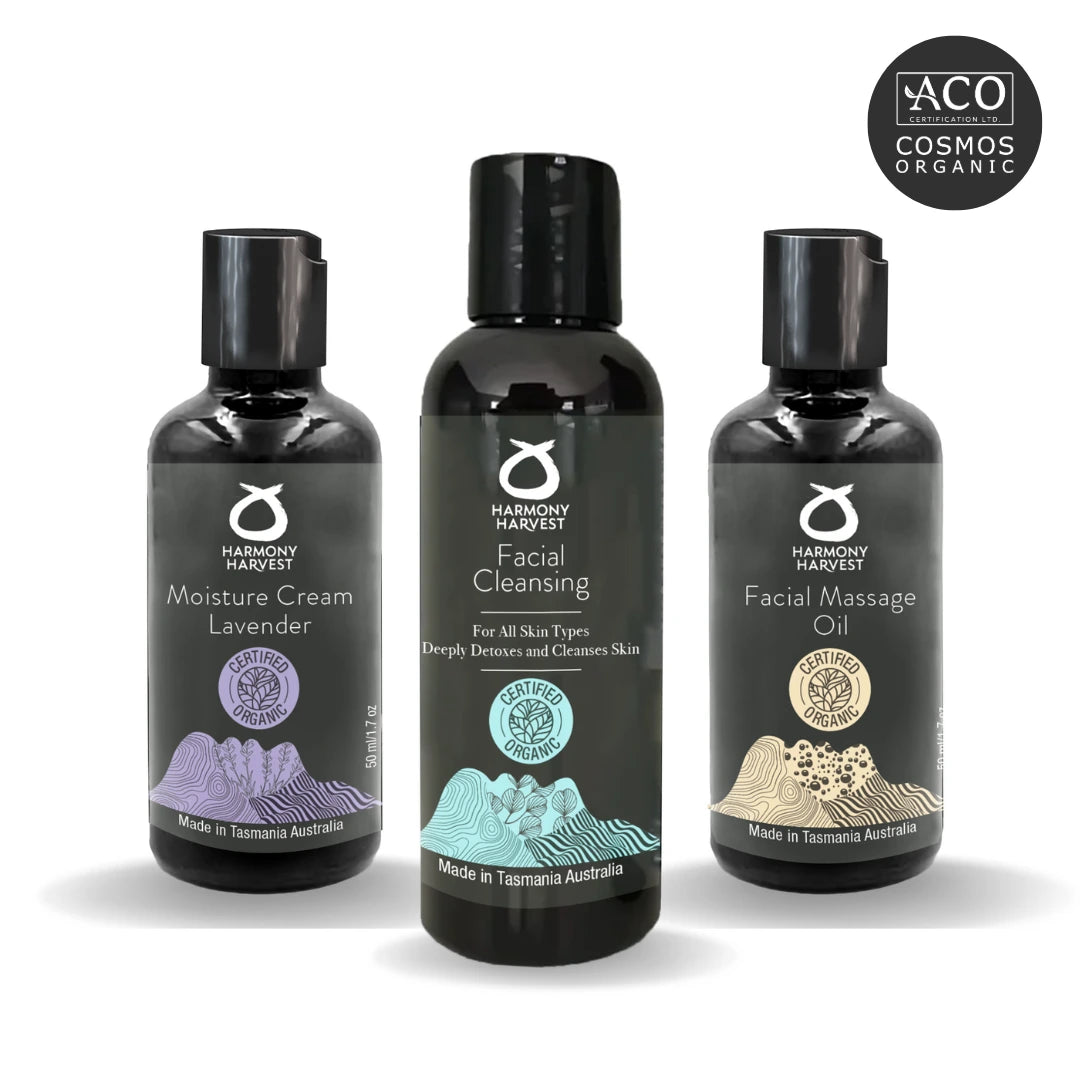
Harmony Harvest's hair care range is COSMOS-certified organic and vegan, formulated with Australian botanicals and free from synthetic detergents. If you want to see what a verified standard looks like in practice, the Hair Care collection is the place to start.
Frequently Asked Questions
What does it mean to be COSMOS certified?
COSMOS is an international cosmetic standard that verifies a product's organic content, manufacturing processes and environmental impact through independent audits. A COSMOS certified haircare product has passed third-party verification covering raw material sourcing, formulation standards, preservative systems and packaging requirements. This means the organic claims on the label are backed by an audit trail rather than marketing language, giving you a reliable way to compare products.
Is there a legal difference between 'natural' and 'certified organic' in Australia?
Yes. In Australia, 'natural' is not a regulated term for cosmetics, so any brand can use it without proving ingredient origin. 'Certified organic' means an accredited certifier has audited the product against a recognised standard such as COSMOS, checking organic content percentage, non-GMO sourcing and prohibited synthetic chemicals. If a label says natural but carries no certification logo or licence number, treat the claim as unverified.
What is the difference between COSMOS Organic and COSMOS Natural?
COSMOS Organic requires at least 95% of plant-based ingredients to be certified organic, with a minimum of 20% organic content in the total formula (10% for rinse-off products). COSMOS Natural guarantees at least 95% of ingredients are of natural origin but does not set an organic percentage threshold. Both ban prohibited synthetic chemicals and require sustainability and biodegradability checks, so the main difference is the organic content guarantee.
How does the COSMOS standard ensure ingredient transparency?
Every COSMOS certified product is linked to an audit trail covering raw material sourcing, manufacturing processes and toxicological assessment. Certifiers inspect suppliers and verify documentation, and the finished label must show which ingredients are organic. This traceability makes it harder for brands to hide synthetic chemicals or overstated organic content, and lets you check the certifier and licence number before buying.
Best Sellers
Read more
Organic Shampoo Australia: What to Look For in 2026
Organic shampoo in Australia: learn how to read COSMOS certification, choose for dry or fine hair, and transition to natural hair care without.
Read more
Shampoo for Dandruff: Best Options & How to Use Them
Find the best shampoo for dandruff in Australia. Learn about medicated ingredients, scalp health, and how to treat dry scalp with rosemary oil for hair.
Read more