


Shampoo for Dandruff: Best Options & How to Use Them
Table of Contents
- What Causes Dandruff and Why It Keeps Coming Back
- Active Ingredients in Shampoo for Dandruff: What Actually Works
- How to Treat Dry Scalp Without Making Flaking Worse
- Rosemary Oil for Hair: A Gentle Botanical Approach to Scalp Health
- How to Use Shampoo for Dandruff Effectively: Step-by-Step
- When to See a Doctor About Scalp Conditions
- Long-Term Scalp Maintenance vs. Acute Treatment
- Frequently Asked Questions
Last Updated: September 12, 2026
What Causes Dandruff and Why It Keeps Coming Back
Dandruff is a scalp condition marked by flaking, itching and irritation, and it almost always traces back to an overgrowth of a naturally occurring yeast rather than poor hygiene (healthdirect.gov.au). This guide from Harmony Harvest explains what drives the flaking and how a well-chosen shampoo for dandruff can settle it.
The culprit is Malassezia, a yeast that lives on most healthy scalps. When sebum production rises, Malassezia multiplies and breaks down oils into irritants that trigger inflammation and shedding skin cells. That is why dandruff returns: the yeast is always present, so treatment manages it rather than erasing it.
The Role of Malassezia and Scalp Microbiome
The scalp microbiome is the community of microbes, including Malassezia, that lives on your scalp. A balanced microbiome keeps flaking in check; an imbalance tips it toward irritation, itching and visible flakes.
Several factors push that balance off course:
- Hormonal shifts that increase sebum
- Stress, which can amplify inflammation
- Cold, dry weather that dries the scalp
- Infrequent washing that lets oil and dead cells build up
Understanding this matters because a shampoo for dandruff targets the yeast and the buildup, not just the visible flakes.
Active Ingredients in Shampoo for Dandruff: What Actually Works
The ingredients that genuinely work in a shampoo for dandruff fall into a few proven groups, each with a different mechanism. Matching the ingredient to your scalp type, and to how you wash your hair, matters more than the brand on the bottle.
The main actives include:
- Ketoconazole: a strong antifungal that targets Malassezia directly by disrupting the yeast cell membrane (PubMed)
- Zinc pyrithione: slows yeast growth and eases inflammation, and is gentle enough for frequent use
- Selenium sulfide: reduces yeast and slows how quickly skin cells shed, which helps with thick scaling (PubMed)
- Salicylic acid: exfoliates to lift existing flakes and scalp buildup, but does not treat the yeast itself
- Coal tar: eases itching and flaking, useful for stubborn seborrheic dermatitis, though the smell and staining put many people off
- Ciclopirox olamine: a prescription-strength antifungal sometimes used when other actives have not worked
Comparing Ketoconazole, Zinc Pyrithione, and Selenium Sulfide
Ketoconazole is the most potent of the three and best for persistent cases. Zinc pyrithione is gentler and suits regular maintenance. Selenium sulfide sits between them, tackling both yeast and cell turnover.
Active |
Strength |
Best For |
Watch Out For |
|---|---|---|---|
Ketoconazole |
High |
Persistent, stubborn dandruff |
Dryness with overuse; can feel stripping on fine hair |
Zinc pyrithione |
Mild |
Ongoing maintenance |
Slower results; not ideal if you wash less than twice a week |
Selenium sulfide |
Moderate |
Flaking plus buildup |
Can dull or shift colour-treated hair; avoid within 48 hours of a colour service |
Salicylic acid |
Mild-moderate |
Lifting visible flakes and scale |
Can dry the scalp; not a yeast treatment on its own |
Coal tar |
Moderate |
Stubborn seborrheic dermatitis |
Strong odour; can stain light hair and bedding |
If you are unsure which to start with, a mild option used consistently often beats a strong one used occasionally.
How the Actives Interact, and What Not to Mix
Most guides list actives without explaining how they behave together. A few practical rules help:
- Do not layer two strong actives in the same wash. Ketoconazole and selenium sulfide used back-to-back can over-strip the scalp barrier and trigger rebound flaking. Alternate them across washes instead.
- Space salicylic acid and strong antifungals. Salicylic acid thins the surface layer, which can make a strong antifungal feel harsher. Use salicylic acid on a separate wash day.
- Give colour-treated hair a buffer. Selenium sulfide and coal tar are the two most likely to affect colour. If you colour your hair, choose zinc pyrithione or a gentle botanical wash between treatments, and leave at least 48 hours between a colour service and a selenium sulfide wash.
- Do not combine a medicated wash with a clarifying wash on the same day. Both strip the scalp, and the combination is a common cause of irritation that gets mistaken for worsening dandruff.
- Check for known sensitisers if your scalp is reactive. Fragrance and some preservatives can mimic dandruff symptoms. If flaking worsens after starting a new product, that is a signal to simplify rather than escalate.
Why the Microbiome Matters More Than the Label
Malassezia is not a contaminant to be eliminated, it is part of a normal scalp microbiome. The goal of a shampoo for dandruff is to bring the yeast back into balance with the rest of the microbial community, not to sterilise the scalp. That is why over-treating often backfires: harsh, frequent washing disrupts the barrier, sebum production rebounds, and the yeast returns with less competition.
A balanced approach, one proven active used at the right frequency, supported by a gentle, low-irritation wash, tends to hold results longer than an aggressive routine. For readers who prefer a plant-based baseline between treatments, Harmony Harvest's Rosemary Shampoo and Conditioner is COSMOS-certified organic and vegan and works well as the gentle half of a rotation.
How to Treat Dry Scalp Without Making Flaking Worse
Treating a dry scalp means calming irritation and restoring moisture, not stripping the scalp further. Harsh washing and hot water are the most common reasons flaking gets worse during treatment.
A few habits help:
- Use lukewarm water rather than hot
- Choose a gentle, low-irritation formula
- Avoid scratching, which inflames the follicle
- Space strong actives so the scalp can recover
Rosemary Oil for Hair: A Gentle Botanical Approach to Scalp Health
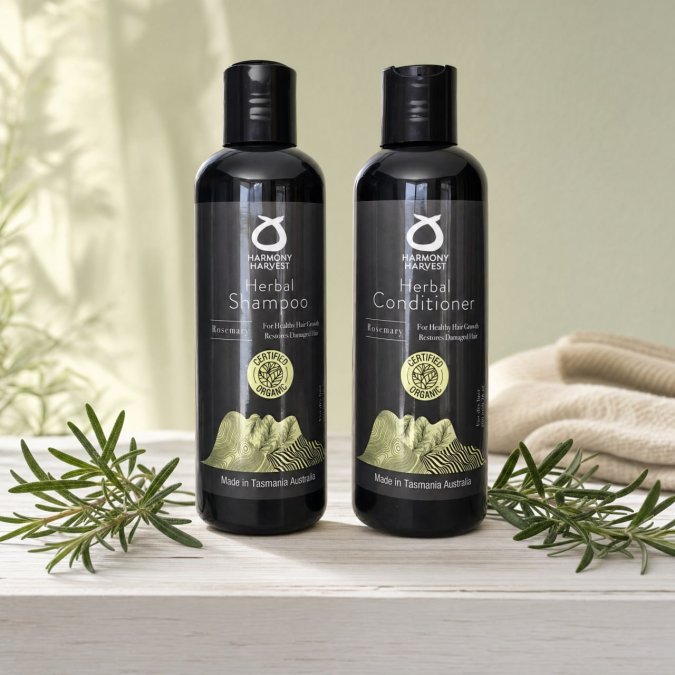
Rosemary oil for hair has become a popular botanical option for scalp health, valued for its soothing and circulation-supporting properties. It will not replace a medicated active in a severe case, but it works well for mild flaking and ongoing scalp care.
For those who prefer a plant-based routine, a rosemary shampoo and conditioner can support the scalp gently between stronger treatments. Harmony Harvest's Rosemary Shampoo and Conditioner is COSMOS-certified organic and vegan, made for exactly this kind of gentle, ongoing scalp care.
The honest limitation: botanical options suit mild, maintenance-level flaking. If you have thick, stubborn scaling, a proven active will do more.
How to Use Shampoo for Dandruff Effectively: Step-by-Step
Using a shampoo for dandruff correctly matters as much as which one you pick. Most people rinse too quickly, which is why results stall. Follow these steps:
- Wet hair thoroughly with lukewarm water
- Apply enough product to lather across the scalp
- Massage into the scalp, not just the hair
- Leave it on for five minutes so the active can work
- Rinse completely until the water runs clear
- Repeat two to three times a week, tapering as flakes ease
When to See a Doctor About Scalp Conditions
See a doctor if flaking is severe, spreads beyond the scalp, or comes with redness, swelling or weeping. These signs can point to seborrheic dermatitis or another condition that needs medical treatment.
Seek advice sooner if:
- Over-the-counter shampoo for dandruff has not helped after several weeks
- You notice hair loss alongside the flaking
- The scalp is painful, raw or bleeding
- Patches appear on eyebrows, beard or chest
A doctor can confirm the diagnosis and, where needed, prescribe a stronger treatment.
Long-Term Scalp Maintenance vs. Acute Treatment
Most guides treat dandruff as a single problem to be solved. In practice, it behaves more like a condition with two distinct phases, and confusing them is the main reason flakes keep coming back.
Phase 1: Acute Treatment
The acute phase is when flakes, itching and irritation are active. The goal here is to reduce the Malassezia overgrowth and calm inflammation, which usually means:
- A proven active (ketoconazole, zinc pyrithione or selenium sulfide) used two to three times a week
- Full contact time, around five minutes per wash, so the active can work
- Consistency for at least four weeks before judging whether it is helping
A common pattern is that people stop as soon as flakes disappear, which is exactly when the yeast is still recovering and most likely to rebound.
Phase 2: Maintenance
Maintenance begins once flakes have settled. The goal shifts from reduction to prevention, and the routine gets lighter rather than stopping altogether:
- Drop to one active wash a week, or one a fortnight if your scalp stays calm
- Fill the other washes with a gentle, low-irritation formula
- Keep washing regularly, skipping washes lets sebum and dead cells build up, which feeds the yeast
- Re-escalate to twice weekly if you notice itching or flaking returning
A Simple Rotation That Works for Most People
A practical weekly pattern looks like this:
- One active wash, your chosen antifungal, left on for five minutes
- One or two gentle washes, a mild, moisture-focused formula, including a rosemary shampoo and conditioner if you prefer a botanical baseline
- One rest day, no washing, or a simple rinse if you have been active
Rotating rather than stacking is the key. Using an active every day tends to dry the scalp, and a dry scalp flakes in a way that looks identical to dandruff, which leads people to treat harder, not smarter.
What Triggers a Flare
Recurrence is rarely random. Common triggers include:
- Cold, dry weather, which dries the scalp and disrupts the barrier
- Stress, which amplifies inflammation and can increase sebum
- Hormonal shifts, including those around the menstrual cycle
- Travel and climate change, especially moving between humid and dry environments
- Stopping maintenance too early, the most common trigger of all
Knowing your own triggers lets you pre-empt a flare, for example, stepping up to twice-weekly active washes during a cold snap or a stressful period, then tapering back down.
When Maintenance Is Not Enough
If you are maintaining consistently and flakes still return within days, or if the scalp becomes red, raw or painful, that is a signal to see a doctor rather than escalate your routine. Persistent seborrheic dermatitis often needs prescription treatment, and no over-the-counter shampoo for dandruff will resolve it on its own.
If you are building a gentler routine, Harmony Harvest's Hair Care collection is a lovely place to start, the range is COSMOS-certified organic, vegan and cruelty-free.
Frequently Asked Questions
What shampoo is best for dandruff?
The best shampoo for dandruff depends on your scalp's specific needs. Medicated options containing ketoconazole, zinc pyrithione, or selenium sulfide target the malassezia fungus that drives flaking. For a gentler, botanical approach, rosemary oil for hair and scalp can reduce inflammation and support a balanced scalp microbiome. Look for formulas that clean without stripping natural oils, and rotate ingredients if one stops working after several weeks.
How to tell if dandruff is fungal?
Fungal dandruff, often linked to seborrheic dermatitis, tends to produce yellowish, greasy flakes that cling to the scalp and hair, along with persistent itchiness. It may worsen in humid conditions or during stress. A dry scalp, by contrast, sheds smaller white flakes and feels tight. If over-the-counter medicated shampoo for dandruff does not improve symptoms after a few weeks, a dermatologist can confirm whether a fungal infection is involved.
How often should you wash your hair if you have dandruff?
Most people with dandruff benefit from washing every second day, or daily during flare-ups, using a gentle shampoo for dandruff. Frequent washing removes scalp buildup and excess sebum that feed malassezia. If your scalp feels tight or irritated after washing, reduce frequency or switch to a more soothing, pH-balanced formula. Always rinse thoroughly to avoid residue that can trigger further flaking and irritation.
Are there gentle alternatives to harsh anti-dandruff treatments?
Yes. Botanical ingredients like rosemary oil for hair and scalp offer a gentler path to scalp health. Rosemary oil has anti-inflammatory properties that calm irritation while supporting circulation to the follicle. Pair it with a COSMOS-certified organic shampoo that avoids synthetic detergents, and you can manage mild flaking without the dryness that strong medicated formulas sometimes cause. For persistent or severe dandruff, see a doctor before relying on botanicals alone.
Best Sellers

Read more
COSMOS Certified vs Natural Haircare: What's the Difference?
COSMOS certified haircare vs natural labels: learn what certification really means, compare COSMOS Organic and Natural, and choose with confidence.
Read more
Best Australian Organic Hair Brands for Fine Hair
Discover the best Australian organic hair brands for fine hair. Compare volumising formulas, ingredients and certifications. Explore COSMOS-certified.
Read more