



Best Facial Cleanser for Your Skin Type: A 2026 Guide
Table of Contents
- What Makes a Facial Cleanser the Best Choice for Your Skin
- Best Facial Cleanser for Dry Skin in Australia
- Best Facial Cleanser for Sensitive and Reactive Skin
- Best Facial Cleanser for Oily and Acne-Prone Skin
- How to Wash Your Face Properly: Morning and Evening Routines
- Ingredients That Matter: What to Look For and What to Avoid
- Sustainability and Skin Health: Why Cleansing Choices Matter
- Choosing the Best Facial Cleanser: A Practical Framework
Best Facial Cleanser for Your Skin Type: A 2026 Guide
Last Updated: August 3, 2026
Finding the right facial cleanser isn't about marketing claims or celebrity endorsements, it's about understanding what your skin actually needs. At Harmony Harvest, we believe the best facial cleanser cleanses effectively without compromising your skin barrier, and we've built our entire COSMOS-certified organic and vegan range around this principle.
Over 60% of people use a cleanser that doesn't suit their skin type, leading to persistent dryness, irritation, or breakouts. The problem isn't that good cleansers don't exist; it's that most people choose based on feel, scent, or packaging rather than understanding the science behind what makes a cleanser right for their individual needs.
Below, we'll show you how to identify your skin type, understand what your skin barrier needs during cleansing, and find the facial cleanser best suited to your concerns, whether that's dryness, sensitivity, oiliness, or acne.
What Makes a Facial Cleanser the Best Choice for Your Skin
The right cleanser removes impurities and makeup without stripping natural oils, maintains your skin's pH balance, and supports rather than damages your skin barrier.
Why skin type matters more than marketing claims
Your skin type, whether dry, oily, combination, sensitive, or normal, determines which surfactants and humectants will work for you. A foaming gel that feels amazing on oily skin will leave dry skin feeling tight and uncomfortable within hours. The mistake most people make is choosing a cleanser based on how it performs in the first 30 seconds rather than how their skin feels 2-3 hours later. That squeaky-clean feeling? That's often a sign of over-stripping.
The role of pH balance and skin barrier protection
Your skin's natural pH sits between 4.5 and 5.5, slightly acidic. This acidic mantle protects against bacteria and maintains the skin barrier's structural integrity. When you use a cleanser with a pH above 7 (alkaline), you disrupt this balance, leading to inflammation, sensitivity, and compromised barrier function.
The skin barrier itself is a lipid-rich structure that keeps moisture in and irritants out. A good cleanser supports barrier health by including ceramides, hyaluronic acid, or plant-based lipids that replenish what cleansing removes.
Best Facial Cleanser for Dry Skin in Australia
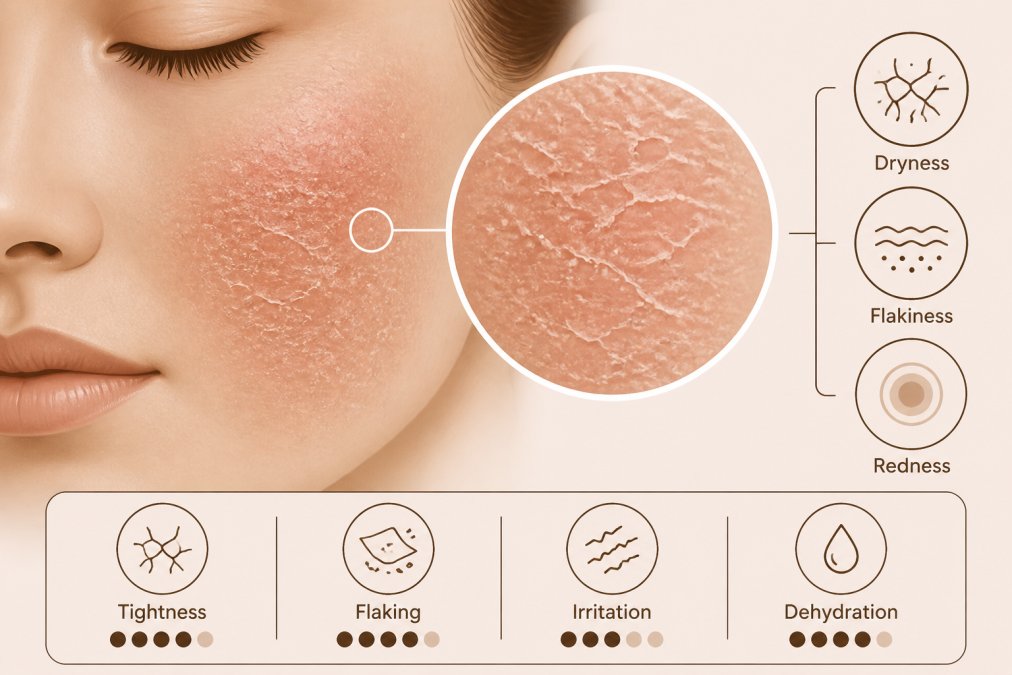
Dry skin needs a cleanser that prioritises moisture retention above all else. This means avoiding foaming formulas, harsh surfactants, and anything that leaves your skin feeling tight.
What dry skin needs during cleansing
Dry skin typically lacks natural oils and often has a compromised barrier. A cleanser for dry skin must replace what it removes. Look for non-foaming, creamy, or oil-based cleansers with glycerin, hyaluronic acid, and plant oils. Many people with dry skin skip cleansing at night out of fear of further drying their skin, but the right cleanser actually improves barrier function over time, making skin more resilient and less reactive.
Ingredients that support moisture retention
Ceramides are lipids that mimic the skin's natural barrier structure and are essential for dry skin. Hyaluronic acid acts as a humectant, drawing moisture into the skin, a single molecule can hold up to 1,000 times its weight in water. Glycerin is another humectant that's been used in skincare for decades. Plant oils, such as jojoba, rosehip, or evening primrose, provide occlusive protection and nourishment.
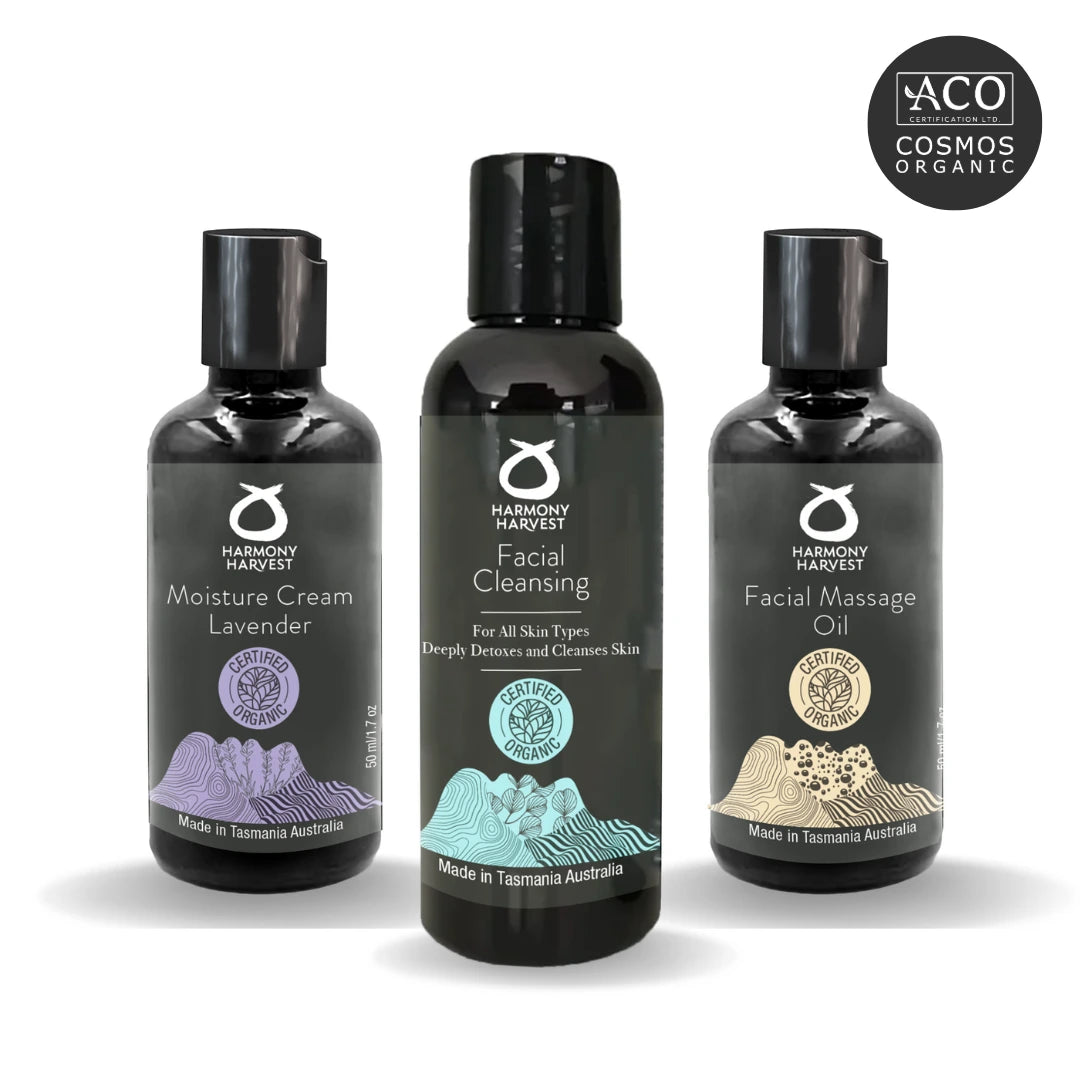
For those seeking a COSMOS-certified organic option, Harmony Harvest facial cleansers are formulated with Australian botanicals that support moisture retention without synthetic detergents or harsh surfactants, designed to deeply hydrate whilst maintaining your skin barrier's integrity.
Best Facial Cleanser for Sensitive and Reactive Skin
Sensitive skin reacts to fragrances, essential oils, preservatives, and harsh surfactants. The goal is to find a cleanser that calms rather than irritates.
Recognising true sensitivity versus irritation
True skin sensitivity is often genetic; your skin barrier is naturally more permeable and your immune system reacts more strongly to irritants. If your skin feels reactive to most products, you likely have true sensitivity and should start with the simplest, most minimal formula possible, fragrance-free, preservative-minimal, and free from essential oils. A single, well-formulated cleanser is often better than a multi-step routine, as fewer ingredients mean lower chance of triggering a reaction.
Hypoallergenic formulas and barrier repair
A hypoallergenic cleanser is formulated to minimise the risk of allergic reactions by excluding common allergens like fragrances, essential oils, and certain preservatives. For barrier repair, look for cleansers that include niacinamide, which reduces inflammation and supports barrier function. Harmony Harvest's COSMOS-certified organic formulas are crafted to be gentle enough for sensitive skin whilst providing the nourishment needed to repair a compromised barrier.
Best Facial Cleanser for Oily and Acne-Prone Skin
Oily skin produces excess sebum, often due to hormonal factors, genetics, or using cleansers that strip the skin, triggering overproduction. Acne-prone skin needs gentle exfoliation and pore decongestion without irritation.
Balancing sebum control without over-stripping
The biggest mistake people with oily skin make is using harsh, high-pH cleansers that strip all oil away. Within hours, the skin overcompensates and produces even more sebum. Instead, use a pH-balanced cleanser with gentle surfactants that remove excess oil without destroying the barrier. Gel and foam cleansers work well for oily skin, but they must still be formulated to respect pH balance.
Gentle exfoliation and pore congestion
Pore congestion happens when sebum, dead skin cells, and environmental debris accumulate in pores. Chemical exfoliants like BHAs (beta-hydroxy acids) such as salicylic acid are oil-soluble, making them ideal for oily, congested skin. A cleanser with gentle exfoliating ingredients can be used daily without irritation.
How to Wash Your Face Properly: Morning and Evening Routines
Cleansing technique matters as much as product choice. The right technique maximises efficacy and minimises irritation.
Double cleansing for makeup and environmental debris
Double cleansing is a two-step process: first, an oil-based cleanser removes makeup and oil-soluble impurities; second, a water-based cleanser removes water-soluble dirt and residue from the first cleanser. This method is particularly important if you wear makeup or sunscreen daily.
Step 1: Oil-based cleanser (1-2 minutes) Apply to dry skin and massage gently for 30-60 seconds. Add a small amount of water and continue massaging; the texture will change to a milky emulsion. Rinse thoroughly.
Step 2: Water-based cleanser (1-2 minutes) Apply to damp skin and massage for 30-60 seconds, focusing on areas prone to congestion. Rinse with lukewarm water.
Water temperature, technique, and frequency
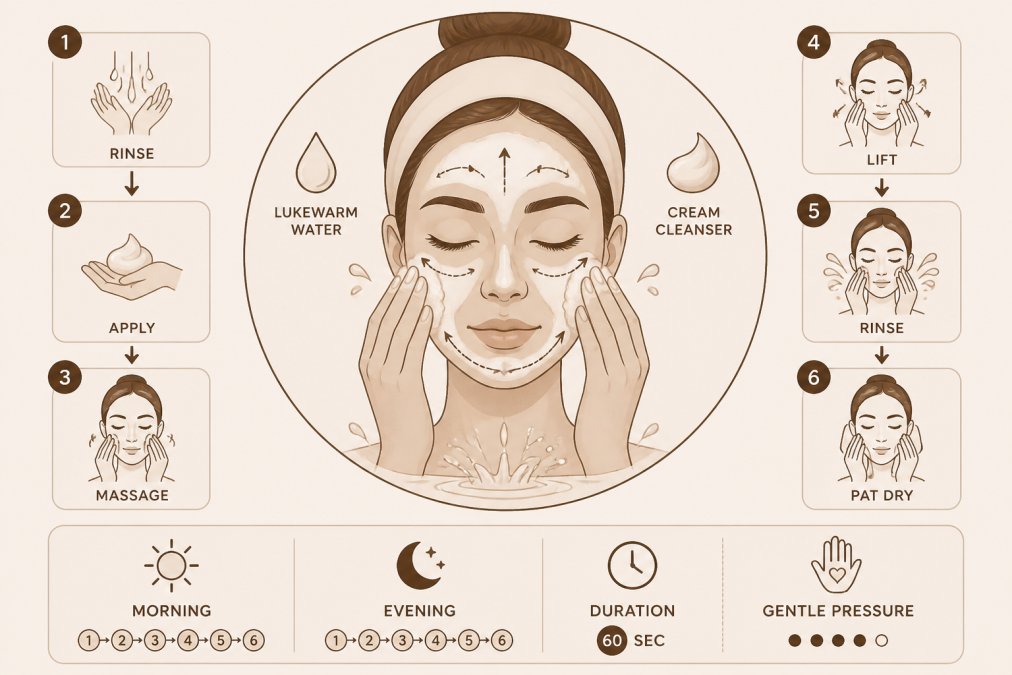
Water temperature: Always use lukewarm water. Hot water can strip the skin barrier; cold water doesn't cleanse effectively. Lukewarm (around 32-35°C) is ideal.
Technique: Use gentle, upward motions with your fingertips. Avoid dragging or tugging, which can cause micro-tears in delicate facial skin. Spend at least 30-60 seconds on each cleanse.
Frequency: Most people benefit from cleansing twice daily. However, if your skin feels tight or irritated, reduce to once daily in the evening and use only lukewarm water in the morning.
Pat dry: After rinsing, gently pat your face dry with a clean towel rather than rubbing.
Ingredients That Matter: What to Look For and What to Avoid
Understanding key ingredients helps you decode product labels and make informed choices.
Beneficial actives: ceramides, hyaluronic acid, niacinamide
Ingredient |
What It Does |
Best For |
|---|---|---|
Ceramides |
Repair and strengthen skin barrier |
All skin types, especially dry and sensitive |
Hyaluronic acid |
Humectant that draws moisture into skin |
Dry, dehydrated, mature skin |
Niacinamide |
Reduces inflammation, supports barrier |
Sensitive, oily, acne-prone skin |
Glycerin |
Humectant; provides hydration |
All skin types |
Plant oils |
Occlusive; provide nourishment |
Dry, mature, sensitive skin |
Salicylic acid |
BHA; exfoliates pores |
Oily, acne-prone, congested skin |
Lactic acid |
AHA; gentle exfoliation |
All skin types, especially dull or textured |
Niacinamide (Vitamin B3) is one of the most versatile ingredients in skincare. It reduces sebum production, strengthens the barrier, and has anti-inflammatory properties, working well for all skin types. Ceramides are essential for barrier health and are naturally present in your skin but diminish with age and harsh cleansing.
Red flags: harsh surfactants and synthetic detergents
Sodium Lauryl Sulfate (SLS) and Sodium Laureth Sulfate (SLES) are harsh surfactants that strip the skin barrier. Fragrance (listed as "fragrance" or "parfum") is a common irritant, especially for sensitive skin. Alcohol denat (denatured alcohol) is drying and can irritate sensitive skin. Essential oils are natural but often irritating for sensitive skin.
Harmony Harvest products are free from synthetic detergents and harsh surfactants, instead using plant-based cleansing agents that are gentler on the skin barrier whilst remaining effective.
Sustainability and Skin Health: Why Cleansing Choices Matter
The products you choose affect not just your skin but also the environment. COSMOS-certified organic cleansers represent a commitment to both personal and planetary health.
COSMOS-certified organic cleansers and what that means
COSMOS certification (Cosmetic Organic Standard) is one of the most rigorous certifications in the beauty industry. It means at least 95% of ingredients are natural or derived from natural sources, at least 20% of total ingredients are certified organic, no synthetic pesticides or GMOs, sustainable sourcing and ethical labour practices, and cruelty-free formulation. This is not greenwashing. COSMOS certification requires third-party auditing and ongoing compliance. Harmony Harvest's entire range is COSMOS-certified organic and vegan, meaning you're using a cleanser formulated from pure Australian botanicals without synthetic detergents or toxins.
Choosing the Best Facial Cleanser: A Practical Framework
Use this framework to assess your skin and find the right cleanser.
Assessing your current skin condition and concerns
Skin Type |
Primary Concern |
Best Cleanser Type |
Key Ingredients |
|---|---|---|---|
Dry |
Tightness, flaking, sensitivity |
Creamy, oil-based, non-foaming |
Ceramides, hyaluronic acid, glycerin |
Oily |
Shine, congestion, breakouts |
Gel or foam, pH-balanced |
Niacinamide, salicylic acid, zinc |
Combination |
T-zone oiliness, cheek dryness |
Gentle gel or cream |
Balanced hydration and sebum control |
Sensitive |
Reactivity, redness, irritation |
Minimal, fragrance-free |
Niacinamide, ceramides, calming botanicals |
Normal |
General maintenance |
Any well-formulated option |
Balanced ingredients |
Start by identifying your skin type. Oily skin feels greasy within 2-3 hours of cleansing. Dry skin feels tight and may show flaking. Combination skin is oily in the T-zone and dry elsewhere. Sensitive skin reacts to most products. Next, identify your primary concern: acne, dryness, sensitivity, dullness, or texture.
Patch testing and transition periods
Before committing to a new cleanser, patch test it on your inner arm or behind your ear and wait 24 hours. When transitioning to a new cleanser, do so gradually. Use the new cleanser once daily for 3-5 days, then twice daily. Expect a transition period of 2-3 weeks as your skin adjusts, especially if you're switching from a harsh cleanser to a gentler one.
Finding the best facial cleanser for your skin is one of the most impactful skincare decisions you can make. A good cleanser sets the foundation for everything else in your routine, serums, moisturisers, and treatments all work better when your skin is properly cleansed and your barrier is intact. Explore the [Facial Care collection](https://www.harmonyharvest.com/products/facial-cleansing) to find a cleanser suited to your skin type. Every product in our range is COSMOS-certified organic, vegan, and cruelty-free.
Frequently Asked Questions
What is the best facial cleanser for sensitive skin in Australia?
The best facial cleanser for sensitive skin prioritises a pH-balanced, non-foaming formula that supports the skin barrier. Look for cleansers with ceramides, hyaluronic acid, and glycerin rather than harsh surfactants. CeraVe Hydrating Cleanser and QV Gentle Wash are widely endorsed by dermatologists in Australia for sensitive skin. COSMOS-certified organic options like those from Harmony Harvest offer plant-based formulas free from synthetic detergents, which is ideal for reactive skin that needs gentle, nourishing cleansing without irritation.
How do I choose a facial cleanser that won't strip my skin?
Avoid foaming agents and surfactants that create squeaky-clean sensations, as these often indicate over-cleansing. Instead, choose cream, milk, or gel cleansers with emollients like glycerin, ceramides, and plant oils. Test the product on a small patch first; your skin should feel soft and hydrated after cleansing, never tight or uncomfortable. If you're using other actives like retinol or acids, a gentler cleanser becomes even more important to maintain your skin's protective barrier during the transition.
Are COSMOS-certified organic cleansers better for your skin?
COSMOS-certified organic cleansers are verified to contain no synthetic pesticides, harsh chemicals, or synthetic detergents, making them a reliable choice if you want transparency about what touches your skin. They're particularly beneficial for sensitive skin, children, and anyone concerned about cumulative chemical exposure. Harmony Harvest's COSMOS-certified organic facial cleansers, for example, use Australian botanicals and plant-based ingredients instead of synthetic foaming agents, delivering effective cleansing without the irritation risk of conventional formulas.
How often should you use a facial cleanser for best results?
Most people benefit from cleansing twice daily: morning and evening. In the morning, a quick rinse with a gentle cleanser removes overnight oil and sweat. In the evening, a more thorough cleanse (sometimes double cleanse for makeup removal) clears daily grime, sunscreen, and environmental debris. If you have very dry or sensitive skin, once-daily cleansing in the evening may be sufficient, with just water in the morning. Listen to your skin; if it feels tight or irritated, reduce frequency or switch to a gentler formula.
Best Sellers


Read more

Gentle Shampoo for Irritated Scalp: Complete Guide
Find the right gentle shampoo for irritated scalp. Learn what causes scalp irritation, ingredients to avoid, and how to soothe your scalp naturally.
Read more
Vegan Skincare: A Complete Guide to Plant-Based Beauty
Discover what vegan skincare truly means, how to identify certified products, and why plant-based formulas benefit sensitive skin. Learn to start your.
Read more