


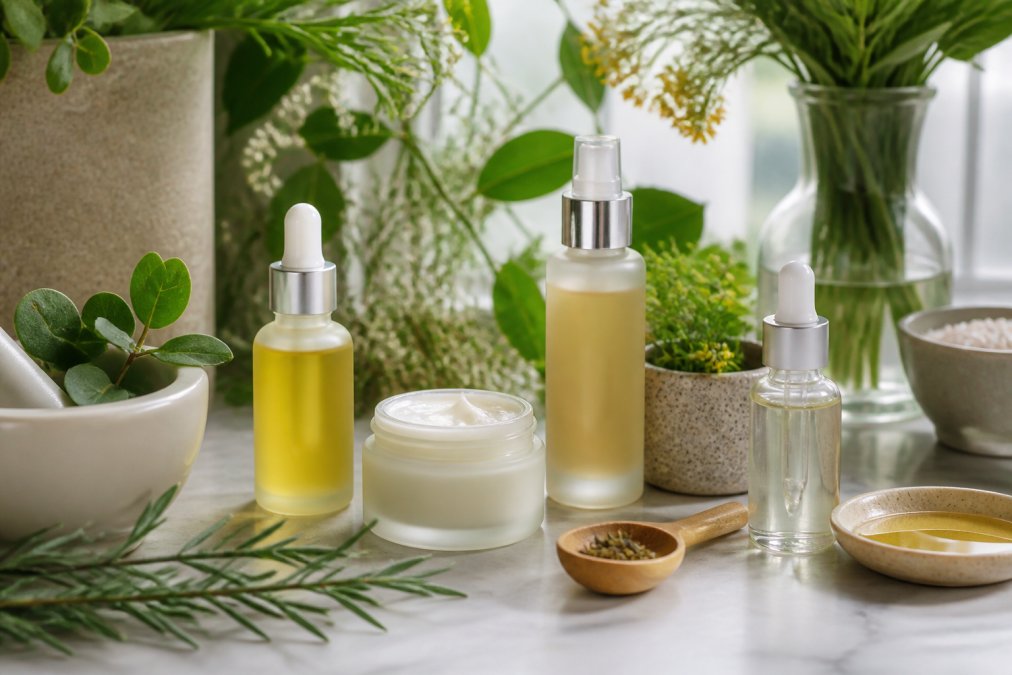
Vegan Skincare: A Complete Guide to Plant-Based Beauty
Table of Contents
- What Is Vegan Skincare and Why It Matters
- Key Plant-Based Ingredients That Actually Work
- How to Start a Vegan Skincare Routine
- Vegan Skincare for Sensitive Skin and Barrier Repair
- COSMOS-Certified Organic Skincare Australia: What the Certification Means
- Vegan Skincare vs Conventional Products: What You Actually Gain
- Conclusion
Vegan Skincare: A Complete Guide to Plant-Based Beauty
Last Updated: August 3, 2026
What Is Vegan Skincare and Why It Matters
Vegan skincare refers to beauty products formulated without any animal-derived ingredients or animal testing, relying instead on plant-based botanicals, minerals, and synthetic actives to deliver skin health benefits. Conventional skincare often contains hidden animal derivatives: lanolin (from sheep's wool), squalene (from shark liver oil), carmine (crushed insects), and collagen from animal tissues. Beyond ingredients, many conventional products are tested on animals, a practice vegan skincare explicitly rejects. For those seeking plant-based beauty solutions, this means choosing formulations where every component aligns with your values.
The difference between vegan and cruelty-free
Cruelty-free means the finished product wasn't tested on animals, though individual ingredients might have been years ago, or the brand might use animal-derived components. Vegan means zero animal ingredients, but doesn't guarantee the parent company hasn't tested on animals historically.
The gold standard is both: vegan and cruelty-free. Better still is COSMOS-certified organic, which verifies the entire supply chain, from farming practices to manufacturing to packaging. Harmony Harvest products are COSMOS-certified organic, meaning they meet strict European standards for organic content, sustainable sourcing, and ethical production. This certification is audited annually by independent third-party bodies.
Common animal-derived ingredients to avoid
Watch for these hidden animal ingredients when transitioning to vegan skincare:
- Lanolin, from sheep's wool; used in moisturisers and lip balms
- Squalane/Squalene, traditionally from shark liver oil; now often plant-derived
- Carmine, red pigment from crushed cochineal insects; found in blushes and lip products
- Collagen, usually from bovine or marine sources; used in anti-ageing serums
- Gelatin, from animal bones; used in capsule supplements and face masks
- Beeswax, from honeycomb; common in balms and salves
- Glycerin, can be plant or animal-derived; check the source
- Keratin, often from animal hair or feathers; used in hair and nail products
Plant-based alternatives exist for each. Vegan skincare brands use plant-derived squalane, botanical collagen boosters (which stimulate your skin's own collagen production), and wax alternatives like candelilla or carnauba.
Key Plant-Based Ingredients That Actually Work
Plant-based actives have been used in traditional medicine for centuries and are now validated by modern dermatology. The key is choosing formulations with proven concentrations of active ingredients, not just botanical window dressing.
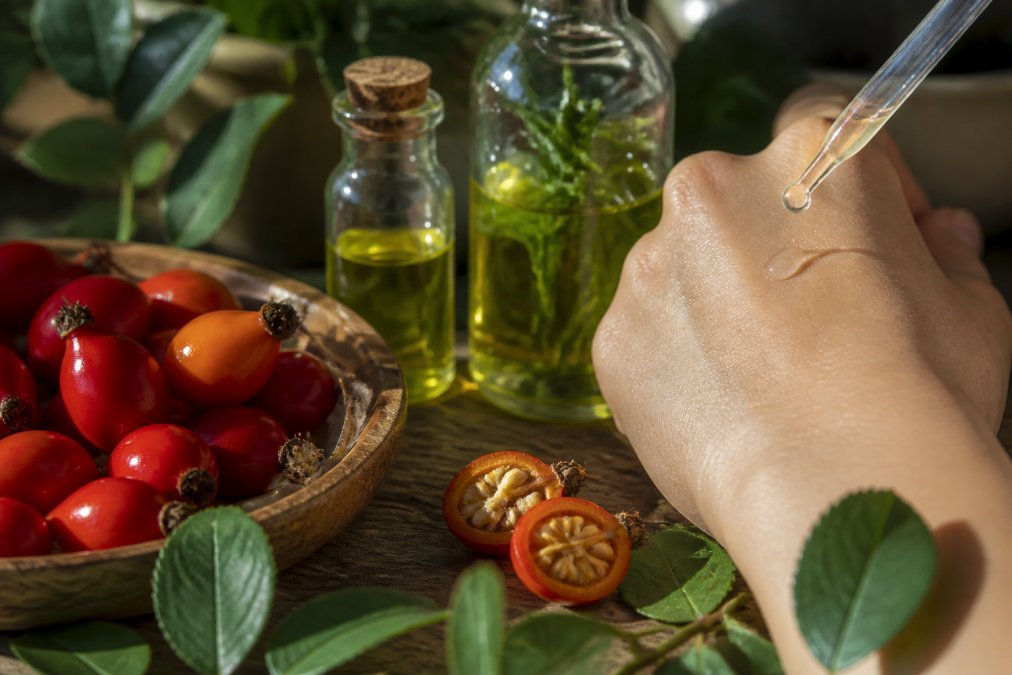
Hydrating botanicals: hyaluronic acid, rosehip oil, and plant serums
Hyaluronic acid is a humectant that draws water into the skin and holds it there. Now synthesised through fermentation, it works identically to the naturally occurring version in your skin. A single molecule can bind up to 1,000 times its weight in water, making it the gold standard for hydration.
Rosehip oil is where plant-based skincare shines. Rich in vitamins A, C, and E, plus essential fatty acids, rosehip addresses multiple concerns: fine lines, uneven tone, and barrier repair. Unlike mineral oil, rosehip is absorbed readily by skin and leaves no greasy residue. Many users notice improved skin texture and a visible glow within 2-3 weeks of consistent use.
Plant serums using extracts from green tea, niacinamide (vitamin B3), and botanical peptides deliver active ingredients in high concentrations. A quality vegan serum should list active ingredients in the first five components on the label. Harmony Harvest's plant serums are formulated with Australian botanicals, ensuring potency and freshness.
Anti-ageing actives from natural extracts
Bakuchiol, a compound from the babchi plant, mimics retinol's effects without irritation or photosensitivity. Research shows bakuchiol increases cell turnover, stimulates collagen production, and reduces fine lines without the peeling associated with retinol.
Vitamin C (ascorbic acid), when stabilised correctly, brightens skin, boosts collagen synthesis, and provides antioxidant protection. Look for products with at least 10-15% L-ascorbic acid; lower concentrations are largely ineffective.
Peptides derived from plant sources signal your skin to produce more of its own collagen. Combined with hyaluronic acid and rosehip oil, peptide-rich formulations create a synergistic effect: hydration + structural support + cellular renewal. Most users see visible firmness improvements within 6-8 weeks.
How to Start a Vegan Skincare Routine
The biggest mistake when switching to vegan skincare is overcomplicating your routine. Most dermatologists recommend a minimal routine: cleanse, treat, moisturise, protect (with SPF).
Building a minimal routine that works
Start with a gentle cleanser using plant-derived surfactants instead of harsh sulphates. Choose cream or oil cleansers for dry skin; gel or foam for oily or combination skin. Cleanse once daily (evening) or twice if you wear makeup or sunscreen.
Add one active treatment: either a hydrating serum (hyaluronic acid) or an anti-ageing serum (bakuchiol or vitamin C). Use one, not both, until your skin adapts. Apply to damp skin and let it absorb for 30 seconds.
Follow with a moisturiser using plant oils (rosehip, jojoba, argan) and botanical butters (shea, cocoa) instead of silicones or mineral oil. Choose a texture that feels comfortable: lightweight lotions for oily skin, richer creams for dry skin.
Finally, apply sunscreen every morning. SPF is non-negotiable for anti-ageing and skin health. Vegan sunscreens use mineral filters (zinc oxide, titanium dioxide) or newer chemical filters derived from plant sources.
| Step | Product Type | Frequency | Duration |
|---|---|---|---|
| Cleanse | Gentle cream or gel cleanser | Once or twice daily | 1-2 minutes |
| Treat | Hydrating or anti-ageing serum | Once daily (evening) | 30 seconds to absorb |
| Moisturise | Plant-based cream or lotion | Twice daily | Apply to damp skin |
| Protect | Vegan SPF 30+ sunscreen | Every morning | 15 minutes before sun exposure |
Transitioning from conventional skincare
If you're switching from conventional products, expect a transition period of 2-4 weeks. Your skin may initially feel different, sometimes drier, sometimes slightly more oily, as it adjusts to new ingredients. This is normal and usually temporary.
Conventional skincare often contains silicones and mineral oil that create a temporary "plumping" effect. When you remove them, skin feels less immediately smooth until plant-based hydrators settle in. Stick with your new routine for at least three weeks before deciding it's not working.
For sensitive skin, transition more slowly. Use your new vegan cleanser for a week, then add the moisturiser, then introduce a treatment serum. Harmony Harvest's 30 Day Vegan Skincare Set is designed specifically for this transition. It includes a COSMOS-certified organic cleanser, hydrating serum, and moisturiser, all formulated to work synergistically and gentle enough for barrier repair.
Vegan Skincare for Sensitive Skin and Barrier Repair
Sensitive skin often results from a compromised skin barrier, the outer layer that protects against environmental stressors and retains moisture. Plant-based skincare, when formulated correctly, actively repairs barrier function.
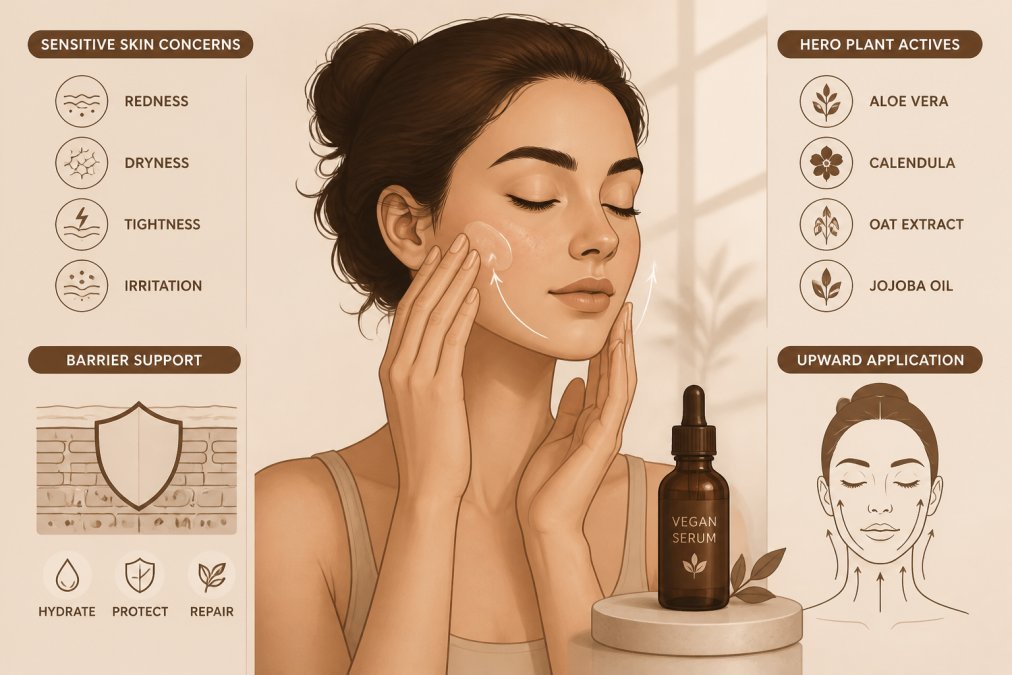
The best vegan skincare for sensitive skin avoids common irritants: alcohol denat, essential oils, fragrance, and high concentrations of actives. Instead, look for formulations with barrier-repairing ingredients like plant-derived ceramides, centella asiatica (cica), and oat extract.
Centella asiatica is particularly effective for sensitive and reactive skin. This Asian herb has been used in traditional medicine for wound healing and is now validated by dermatology research. It reduces inflammation, strengthens the skin barrier, and calms redness within days of use. Oat extract provides similar benefits: it's naturally anti-inflammatory and soothing without being occlusive.
For barrier repair, avoid exfoliants, vitamin C serums, and retinol alternatives for the first 4-6 weeks. Focus on hydration and barrier support: hyaluronic acid serum, plant-based moisturiser, and a gentle cleanser. Once your barrier feels stronger, you can slowly introduce a gentler active like bakuchiol.
COSMOS-Certified Organic Skincare Australia: What the Certification Means
COSMOS (Cosmetic Organic and Natural Standard) certification is the most rigorous standard for organic beauty products globally. Administered in Australia by the Australian Certified Organic (ACO), COSMOS certification verifies that products contain a minimum percentage of certified organic ingredients, use only approved processing methods, and exclude synthetic chemicals, GMOs, and animal testing.
For a product to be COSMOS-certified organic, at least 95% of the formula must be organic (excluding water). The remaining 5% can be non-organic only if no certified organic alternative exists. This is why COSMOS-certified products cost more than "natural" or "organic-sounding" products, the standard is genuinely rigorous.
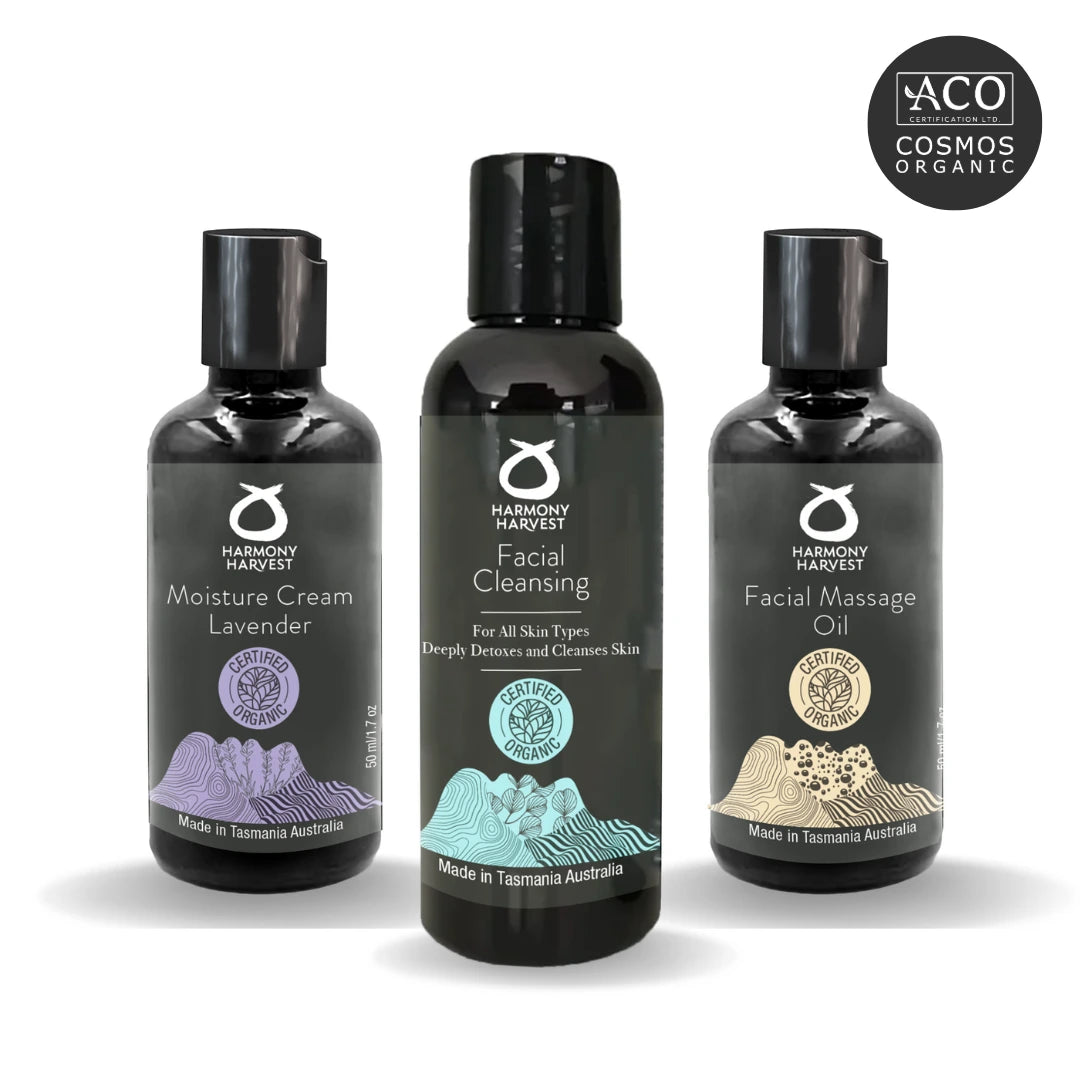
Harmony Harvest products are COSMOS-certified organic, meaning every botanical in our formulations is traceable to certified organic farms. Our Australian botanicals, native plant extracts, oils, and butters are grown without synthetic pesticides, herbicides, or fertilisers. This matters not just for your skin but for the environment: organic farming builds soil health, supports biodiversity, and eliminates chemical runoff into waterways.
How to identify genuine certification versus greenwashing
Greenwashing is rampant in the beauty industry. Brands use words like "natural," "botanical," and "organic-inspired" without third-party verification. A genuinely certified product displays the COSMOS logo on packaging and lists the certifying body (in Australia, typically ACO or Ecocert). You can verify certification by searching the certifier's database online.
Beware of these greenwashing tactics: "Made with organic ingredients" (could be 1% organic), "Natural formula" (no legal definition), "Eco-friendly packaging" (without certified sustainable sourcing), and "Dermatologist approved" (often just means it was tested). True certification requires annual audits, ingredient traceability, and compliance with strict standards.
Vegan Skincare vs Conventional Products: What You Actually Gain
When formulated correctly, vegan skincare delivers the same results as conventional products, and often better, because plant-based ingredients tend to be gentler on the skin barrier while still delivering measurable results.
Efficacy without synthetic actives
Plant-based actives work differently from synthetic alternatives. Rather than forcing change, they support your skin's natural processes. Bakuchiol stimulates collagen production without irritating skin. Hyaluronic acid draws hydration into skin without occlusion. Vitamin C brightens and protects without the instability of synthetic versions. Results are slower, visible improvement in 6-8 weeks rather than 2-3, but they're sustainable and gentler.
For anti-ageing specifically, research increasingly shows that consistent hydration and barrier support outperform aggressive actives. A well-hydrated, protected skin barrier naturally appears firmer, smoother, and more radiant. This is where vegan skincare excels: it prioritises barrier health as the foundation of skin health.
Environmental and ethical impact
Vegan skincare represents a shift toward more sustainable beauty. Conventional skincare's reliance on animal-derived ingredients drives demand for animal agriculture, which carries significant environmental costs: land use, water consumption, and greenhouse gas emissions.
Plant-based alternatives are more sustainable, especially when sourced from certified organic farms. Organic farming sequesters carbon in soil, supports pollinators, and eliminates chemical pollution. Vegan brands also tend to prioritise sustainable packaging: glass, aluminium, and compostable materials rather than virgin plastic.
The ethical dimension extends beyond animals. Fair-trade certification, which many vegan brands pursue, ensures farmers are paid fairly for their crops. Supporting COSMOS-certified organic skincare means supporting farming practices that respect both people and ecosystems.
Making the switch to vegan skincare doesn't mean compromising on results, it means choosing formulations that work with your skin's natural processes rather than against them. The key is selecting COSMOS-certified organic products from brands committed to transparency and efficacy. Harmony Harvest's range of COSMOS-certified organic, vegan skincare products is formulated with pure Australian botanicals to deeply hydrate, rejuvenate, and support your skin barrier. Start your transition with our Harmony Harvest 30 Day Vegan Skincare Set, a curated COSMOS-certified organic collection designed to repair and nourish sensitive skin while delivering visible anti-ageing benefits. Explore our complete [Facial Care](https://www.harmonyharvest.com/collections/facial-care) collection, every product is COSMOS-certified organic, vegan, and cruelty-free.
Frequently Asked Questions
What does it mean for skincare to be vegan?
Vegan skincare contains no animal-derived ingredients such as beeswax, lanolin, collagen, carmine, or squalane from sharks. Instead, it uses plant-based alternatives like plant oils, botanical extracts, and synthetic or fermented substitutes. Vegan doesn't automatically mean cruelty-free or organic, though many vegan brands prioritise these values. Always check labels for certifications like COSMOS-certified organic to confirm the full ethical story.
How can I tell if my skincare is truly vegan and COSMOS-certified organic?
Look for official COSMOS certification logos on packaging or the brand's website, which verify organic status and vegan credentials. Check the ingredient list for animal-derived items like beeswax, lanolin, or carmine. Visit the Cosmos Standard website to search certified brands. Be cautious of vague terms like 'natural' or 'clean' without third-party certification, as these can mask greenwashing. Harmony Harvest products carry COSMOS-certified organic verification, ensuring both vegan and organic authenticity.
Is vegan skincare better for sensitive skin?
Vegan formulas can be excellent for sensitive skin because they exclude common irritants like lanolin and synthetic preservatives often found in conventional products. Plant-based ingredients such as rosehip oil, hyaluronic acid, and botanical extracts naturally support skin barrier repair and hydration. However, sensitivity depends on individual ingredients, not veganism alone. COSMOS-certified organic vegan products remove synthetic detergents and harsh chemicals, making them gentler overall. Always patch-test new products, even plant-based ones, if your skin is reactive.
How do I transition to a vegan skincare routine without irritating my skin?
Start by replacing one product at a time, waiting 1-2 weeks between changes to monitor how your skin responds. Begin with a gentle cleanser, then add a hydrating serum or moisturiser. If you're switching from retinol or other active ingredients, introduce plant-based alternatives gradually, as your skin may need time to adjust. Keep your routine minimal at first, then add targeted products like facial oils or exfoliators once your skin stabilises. A 30-day vegan skincare set can guide this transition with carefully formulated COSMOS-certified organic products designed to work together.
This article was written using GrandRanker
Best Sellers
Read more

Best Facial Cleanser for Your Skin Type: A 2026 Guide
Find the best facial cleanser for your skin type. Compare gentle formulas, cleansing methods, and COSMOS-certified organic options. Discover yours today.
Read more
5 Best Organic Skincare Products for Sensitive Skin
5 best organic skincare products for sensitive skin: Discover the best organic skincare for sensitive skin. Learn which COSMOS-certified, plant-based.
Read more