

Benefits of COSMOS Certified Organic Haircare
Table of Contents
- What COSMOS Certified Organic Haircare Really Means
- COSMOS Organic Standard Requirements: What Has to Be Proven
- Scalp and Hair Benefits of Certified Organic Formulas
- How to Transition to Organic Haircare Without the Guesswork
- Reading a Label: How to Identify Genuine COSMOS Certified Products
- The Environmental Case for Certified Organic Haircare
- Is Certified Organic Haircare Worth the Cost?
- Frequently Asked Questions
Last Updated: September 28, 2026
What COSMOS Certified Organic Haircare Really Means
COSMOS certified organic haircare is hair product that has passed an independent audit against the COSMOS standard, a certification framework that verifies organic content, manufacturing processes and environmental claims rather than simply accepting a brand's word for them. This guide from Harmony Harvest covers what that certification actually requires, what it delivers for your scalp and hair, and how to tell a genuinely certified product from a clever label. The difference matters more than most shoppers realise.
COSMOS is a global standard for organic and natural cosmetics, governed by an international association of certifying bodies. A product carrying the COSMOS ORGANIC logo has had its ingredient sourcing, percentage of organic content, preservative systems and manufacturing conditions independently verified. That verification is the whole point: it converts a marketing claim into an auditable fact. This rigorous transparency ensures that consumers can trust the underlying benefits of organic cosmetics when evaluating the long-term impact of their personal care routines on skin health.
COSMOS Organic Standard Requirements: What Has to Be Proven
The COSMOS standard sets rules across five areas: ingredient origin, processing methods, packaging, environmental management and labelling transparency. Brands must document the supply chain for each ingredient, prove the percentage of organic content, and restrict permitted preservatives to an approved list. A product cannot simply add a dash of botanical extract and call itself organic.
The Two Tiers: COSMOS ORGANIC and COSMOS NATURAL
This is the detail most summaries skip, and it is the one that changes what you are actually buying. COSMOS certification comes in two tiers, and they are not interchangeable.
COSMOS ORGANIC is the stricter tier. It requires a minimum percentage of organic ingredients in the total formula, a higher minimum in the rinse-off or leave-on product as a whole, and a defined organic share of the plant-derived ingredients. Products in this tier carry a stated organic percentage on the pack.
COSMOS NATURAL is the entry tier. It requires the same manufacturing, environmental and labelling rigour, but the organic-content thresholds are lower, so a product can be certified NATURAL while containing a modest organic share. It is a genuine certification, not a marketing badge, but it is not the same claim as ORGANIC.
A useful rule of thumb: if a brand is proud of its organic content, it will certify to the ORGANIC tier and print the percentage.
How the Two Certifying Bodies Differ
Two bodies dominate COSMOS certification: Soil Association Certification and ECOCERT. Both audit against the same COSMOS standard, so the core requirements are identical. The practical difference is administrative: Soil Association Certification is the main route for brands sourcing heavily from UK and European supply chains, while ECOCERT operates across a broader international network. For a shopper, either logo signals the same level of rigour.
Why Greenwashing Slips Through Weaker Claims
Terms like "natural", "botanical" and "clean" carry no legal definition in cosmetics labelling, which is exactly why they appear on so many bottles. A product can be 95 per cent water and synthetic surfactant and still print "plant-based" on the front. COSMOS certification closes that gap because the claim is verified by a third party, not written by the brand's own marketing team.
Scalp and Hair Benefits of Certified Organic Formulas
Certified organic formulas support the scalp's natural balance, reduce exposure to harsh surfactants and help maintain the hair's protective outer layer. The benefit is cumulative rather than instant, which is why the transition period matters as much as the product itself.
Supporting the Scalp Microbiome
The scalp hosts a community of microorganisms that help regulate oil production and defend against irritation. Sulfate-heavy cleansers can strip this balance, leaving the scalp tight, flaky or reactive. COSMOS-certified formulas typically rely on gentler plant-based surfactants that clean without dismantling the scalp's natural defences. Many people with sensitive scalps find this shift alone reduces itchiness within a few washes.
Texture, Shine and Cuticle Integrity
Silicones coat the hair shaft and create instant slip, but they also build up over time, leaving hair limp and dull. Certified organic conditioners instead use botanical oils and plant proteins that smooth the cuticle without sealing it. The result is hair that reflects light more evenly and holds moisture for longer.
| Concern | Synthetic Approach | Certified Organic Approach |
|---|---|---|
| Cleansing | Sulfate surfactants strip oils | Plant-based surfactants clean gently |
| Smoothing | Silicones coat the shaft | Botanical oils nourish the cuticle |
| Preserving | Synthetic preservatives | Approved natural preservatives |
| Fragrance | Synthetic fragrances | Botanical extracts and essential oils |
How to Transition to Organic Haircare Without the Guesswork
Switching to organic haircare usually takes two to four weeks for your scalp and hair to adjust, and a gradual swap works better than replacing everything at once. Start with the product you use most often, usually shampoo, and keep your existing conditioner for the first fortnight.
- Week 1-2: Replace your shampoo only. Expect a slightly different lather; plant-based surfactants foam less than sulfates but clean just as effectively.
- Week 3-4: Swap in a certified organic conditioner. This is when silicone build-up begins to clear and hair may feel temporarily drier.
- Week 5 onward: Add treatments or serums as needed. By this point most people notice improved scalp comfort and softer texture.
Reading a Label: How to Identify Genuine COSMOS Certified Products
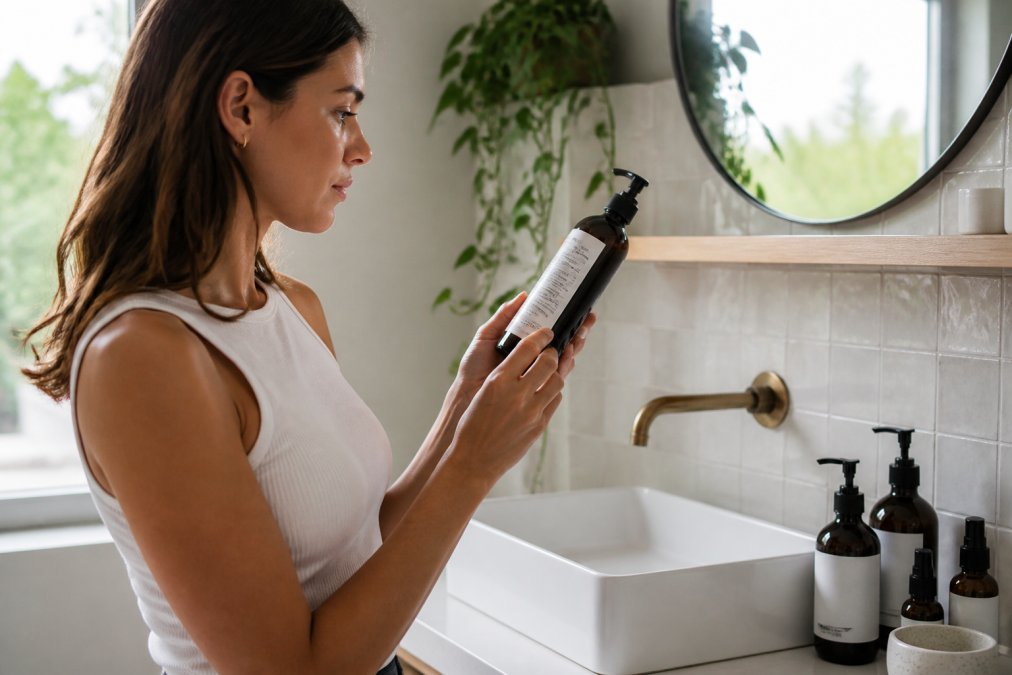
Check for:
- The COSMOS ORGANIC or COSMOS NATURAL logo, printed clearly
- The name of the certifying body, such as Soil Association Certification or ECOCERT
- A stated organic percentage, typically 95 per cent or higher for the ORGANIC tier
- An ingredient list that names botanicals rather than vague "fragrance" or "parfum"
How to Verify a Certification Claim Yourself
A logo on a bottle is a claim. Verification is what turns it into a fact, and it takes about two minutes.
- Find the certifying body. Look for the auditor's name on the pack, usually printed near the logo or in the small print on the back.
- Check the certifier's own database. Soil Association Certification and ECOCERT both publish searchable lists of certified products and brands. Search the brand name, then the specific product.
- Match the product, not just the brand. A brand can hold certification for one line and not another. Confirm the exact product you are holding appears on the list.
- Check the tier. Confirm whether the listing is COSMOS ORGANIC or COSMOS NATURAL, and whether the organic percentage on the pack matches the register.
The Environmental Case for Certified Organic Haircare
Certification extends beyond the bottle. COSMOS requires brands to document biodegradability, restrict environmentally harmful ingredients and account for packaging and manufacturing waste. Plant-based surfactants break down more readily than their synthetic counterparts, which reduces the chemical load reaching waterways after every wash.
Is Certified Organic Haircare Worth the Cost?
Certified organic haircare costs more because independent auditing, traceable sourcing and smaller production runs all carry real expense. Whether that premium is worth it depends on what you are solving for.
The premium buys verification. You are paying for an independent audit that confirms what is in the bottle, not just what the front label claims.
Frequently Asked Questions
What is COSMOS certification?
COSMOS is an international standard for organic and natural cosmetics, run by five European certifying bodies. It sets rules for how ingredients are sourced, how much of a formula must be organic, and how products are manufactured and preserved. A product can be certified as COSMOS ORGANIC or COSMOS NATURAL, and the logo on the pack confirms an independent auditor has checked the claim. In practice, this is what separates genuine COSMOS certified organic haircare from a bottle that simply says 'natural'.
How does COSMOS certified organic haircare differ from standard natural products?
A 'natural' shampoo only has to avoid a handful of ingredients the brand chooses to leave out. COSMOS certified organic haircare has to meet fixed thresholds: a minimum share of the formula must be organic, permitted preservatives are tightly limited, and no silicone, sulfate or synthetic fragrance is allowed. The COSMOS organic standard requirements also cover manufacturing, waste and packaging. That is why a certified product can be traced from the farm to the finished bottle, while an uncertified one usually cannot.
How can I identify genuine COSMOS certified organic products?
Look for the COSMOS ORGANIC or COSMOS NATURAL logo printed on the pack, along with the certifying body's name and licence number. You can then check that number against the certifier's public database. Be cautious with words like 'botanical', 'pure' or 'clean', which carry no legal weight. If a brand claims certification but the logo is missing from the label, treat the claim as unverified until you can confirm it independently.
How do I transition to organic haircare if my scalp is used to regular shampoo?
Switch one product at a time rather than replacing your whole routine in a day. Start with your shampoo and give your scalp two to three weeks to adjust, since it may produce extra oil while it rebalances after silicone and sulfate are removed. Rinse with lukewarm water, massage rather than scrub, and keep conditioner on the mid-lengths and ends. If your scalp feels tight, reduce washing frequency rather than adding more product.
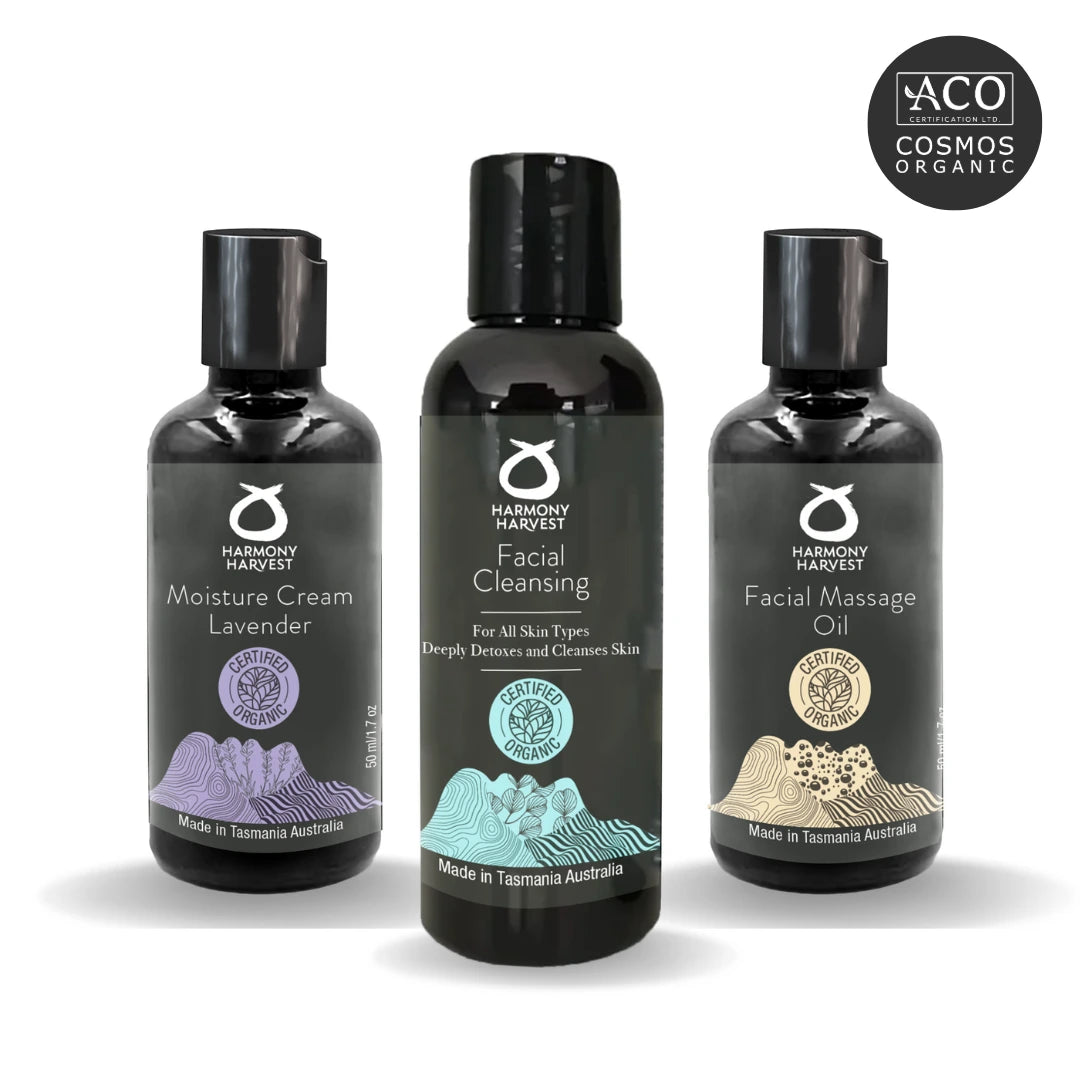
Choosing haircare that genuinely lives up to its label takes more than reading the front of a bottle. At Harmony Harvest, our Hair Care collection is COSMOS-certified organic, vegan and cruelty-free, formulated with Australian botanicals to support scalp balance and healthier-looking hair over time. Explore the range and give your hair the kind of care that is verified, not just promised.
Best Sellers

Read more

Does Diet Affect Itchy Scalp Health? A 2026 Guide
Does diet affect itchy scalp health? Explore how food, nutrient gaps and gut balance influence scalp comfort, and what helps. Learn the facts today.
Read more
Common Scalp Irritants in Commercial Hair Products
Learn to spot common scalp irritants in commercial hair products, from sulfates to fragrance. Discover gentle hair care and signs of allergic reaction.
Read more