


Shampoo for Hair Growth: What Actually Works in 2026
Table of Contents
- How Hair Growth Shampoos Actually Work
- Key Ingredients That Support Hair Density
- Rosemary Oil for Hair Growth: What the Evidence Suggests
- The Best Scalp Care Routine for Hair Growth
- How to Improve Hair Density Naturally
- Choosing the Right Shampoo for Your Hair Type
- Conclusion
- Frequently Asked Questions
Last Updated: September 21, 2026
How Hair Growth Shampoos Actually Work
A shampoo for hair growth cannot reverse genetics, but it can improve the environment your follicles grow in. Most disappointing results trace back to expecting a wash-off product to do the work of a treatment. At Harmony Harvest, we formulate around a simpler idea: healthy hair starts with a calm, well-nourished scalp.
The Hair Growth Cycle and the Anagen Phase
The anagen phase is the active growth stage of the hair cycle, when the follicle produces a new hair shaft. It typically lasts several years, while the resting phases last months. Strands shed at the end of the cycle are replaced, so daily shedding is normal.
Key Ingredients That Support Hair Density
Ingredients that genuinely support hair density fall into two groups: those that strengthen the strand, and those that support the scalp environment the follicle sits in. Caffeine, biotin, saw palmetto, keratin, amino acids and rosemary extract appear most often in products for thinning hair. What separates them is mechanism, and whether the concentration in a wash-off product is high enough to do anything.
| Ingredient | How it works | What the evidence supports | Realistic expectation |
|---|---|---|---|
| Caffeine | A methylxanthine that constricts blood vessels and is studied for its effect on the hair follicle in laboratory and small clinical work | Some evidence it can reduce the effects of DHT on the follicle in vitro; human trial evidence is limited and mostly short-term | Cosmetic support for scalp circulation, not a DHT-blocking cure |
| Biotin | A B-group vitamin that supports keratin infrastructure | Only meaningful if you are actually deficient, which is uncommon outside specific medical conditions | Helps if you are deficient, limited otherwise |
| Saw palmetto | A plant extract studied for its effect on 5-alpha-reductase, the enzyme that converts testosterone to DHT | Weak evidence at shampoo concentration; most positive studies use oral doses, not wash-off products | Unlikely to do much from a rinse-off formula |
| Keratin and amino acids | Fill gaps in the hair shaft and temporarily smooth the cuticle | Cosmetic improvement in feel and shine, no effect on the follicle | Smoother, stronger-feeling strands |
| Rosemary extract | Contains antioxidants including carnosic acid, studied for scalp circulation support | Encouraging early evidence, mostly from small trials and traditional use, not conclusive | Gentle daily scalp support, not a treatment |
The concentration problem most guides skip
A common pattern is a formula that lists a hero ingredient near the bottom of the INCI list, after fragrance and preservatives. In a wash-off product, that ingredient has under a minute of contact time, and at a fraction of a percent it is unlikely to do anything measurable. Treat the claim as cosmetic rather than clinical.
Ingredients to avoid: sulphates, parabens and harsh detergents
Harsh detergents strip the scalp's natural oils, which for a reactive scalp shows up as tightness, flaking or irritation. Sulphate-free and paraben-free formulas are gentler on the scalp microbiome, the community of microorganisms that helps keep the scalp balanced.
How ingredients interact with the rest of your routine
A shampoo does not work in isolation, and the order you apply things in changes what actually reaches the follicle.
- Shampoo first, then treatment. A gentle cleanse removes build-up so that a leave-in serum or scalp treatment can actually reach the skin. Applying serum to a coated scalp wastes it.
- Leave-in products do the heavy lifting. Rosemary oil, caffeine serums and minoxidil all stay on the scalp for hours. A shampoo's job is to prepare the scalp for them, not to replace them.
- Supplements work from the inside. Biotin, iron and protein intake affect the hair shaft months before you see it. A shampoo cannot compensate for a deficiency.
- Do not layer too much at once. If you are using a medicated treatment, keep the shampoo simple. A mild, sulphate-free formula is less likely to interact with or irritate a treated scalp.
Rosemary Oil for Hair Growth: What the Evidence Suggests
Rosemary oil for hair growth is the most researched botanical in this category, and the results are interesting rather than miraculous. Its active compounds, including carnosic acid and rosmarinic acid, are antioxidants that appear to support scalp circulation and reduce oxidative stress around the follicle, a plausible mechanism, not proof of regrowth. Clearing away the accumulated buildup that hinders these botanical benefits often requires a consistent scalp detox for regrowth to ensure the follicles remain receptive to topical treatments.
Oil, extract or shampoo: does the format matter?
Yes. The format determines how long the ingredient stays on your scalp, and contact time is everything for a botanical.
- Rosemary essential oil (diluted): applied to the scalp and left on for at least 20 to 30 minutes, sometimes overnight. This is the format used in most of the positive trials. It needs a carrier oil because undiluted essential oil can irritate skin.
- Rosemary extract in a leave-in serum: lighter than oil, easier for oily scalps, still hours of contact time.
- Rosemary in a shampoo: the most convenient format, but contact time is under a minute. The extract supports the scalp during cleansing and pairs well with massage, but it cannot match a leave-in for delivery.
How to build rosemary into a realistic routine
A workable pattern most people can sustain:
- Wash days: use a rosemary shampoo with a sulphate-free base, massage for 60 seconds, rinse well.
- Two to three evenings a week: apply a diluted rosemary oil or a rosemary scalp serum, massage in, and leave it on for at least 30 minutes before washing out or sleeping on it.
- Daily: keep the scalp clean, avoid tight styles, and do not scratch or pick at the scalp.
- Give it three months. The hair cycle is slow. Anything you judge in a fortnight is being judged on nothing.
If you have a sensitive scalp, patch-test any new oil on the inner forearm for 24 hours before applying it to your head, and start with a lower dilution.
The Best Scalp Care Routine for Hair Growth
The best scalp care routine for hair growth is short, consistent and gentle. Most people need three steps, not ten: cleanse, condition, and protect the scalp from unnecessary stress between washes.

A workable weekly rhythm looks like this:
- Wash two to three times a week with a sulphate-free shampoo
- Massage the scalp for 60 seconds with fingertips, never nails
- Condition mid-length to ends, keeping heavy product off the roots
- Rinse with lukewarm water, not hot
- Avoid tight styles and harsh brushing on wet hair
How to Improve Hair Density Naturally
Improving hair density naturally comes down to reducing what damages strands and supporting what grows them. No single product does this, gentle cleansing, good nutrition and less mechanical stress together produce the changes people actually notice.
Choosing the Right Shampoo for Your Hair Type
Choosing the right shampoo for your hair type means matching the cleanser to your scalp, not your strands. Scalp type determines surfactant strength; hair texture determines what you condition with.
- Fine or thinning hair: lightweight, sulphate-free formulas that will not weigh roots down
- Thick or coarse hair: richer conditioners, with shampoo still focused on the scalp
- Dry or sensitive scalp: mild plant-based surfactants, no fragrance-heavy formulas
- Oily scalp: more frequent washing with a slightly stronger cleanser
- Curly or textured hair: low-lather cleansing and generous conditioning
Conclusion
Finding a shampoo for hair growth that genuinely earns its place in your routine takes patience, because consistency beats intensity. A gentle, sulphate-free formula used regularly, paired with scalp massage and sensible styling, gives your follicles the best chance to do their job.
Frequently Asked Questions
Which shampoo is best for hair growth?
There is no single best shampoo for everyone. Look for formulas that pair gentle cleansing with ingredients linked to scalp and follicle support, such as caffeine, rosemary oil, biotin and saw palmetto, and that skip harsh sulphates. Harmony Harvest's rosemary shampoo and conditioner is COSMOS-certified organic and vegan, which suits anyone who wants a plant-based option without synthetic detergents. Consistency matters more than the label, so plan on at least three months of regular use before judging results.
How often should I use a growth-focused shampoo?
Most people do well washing two to three times a week, adjusting for how oily your scalp gets and how much product you use. If you exercise daily or live somewhere humid, you may need to wash more often. Massage the shampoo into your scalp for about a minute rather than just working it through the ends, since that is where follicle stimulation and scalp circulation matter most. Follow with a conditioner on the mid-lengths and ends to reduce breakage.
Can organic shampoos effectively support hair density?
They can support the conditions that help hair thrive, though no shampoo regrows hair on its own. A COSMOS-certified organic formula such as Harmony Harvest's rosemary shampoo cleanses without stripping the scalp microbiome, which matters because irritation and product build-up can worsen thinning hair. Pair it with scalp massage, a balanced diet and gentle styling habits. If you notice sudden or patchy hair loss, see a doctor, as that can signal an underlying health issue.
Are there specific botanicals known for stimulating hair follicles?
Rosemary oil is the most talked about, and some studies suggest it supports scalp circulation when massaged in regularly. Other botanicals used in hair care include peppermint, saw palmetto and green tea, though evidence varies and most research is small. Treat botanical claims with healthy scepticism: they can complement a good routine but are not a substitute for treating medical causes of hair loss. A rosemary-based shampoo is an easy, low-irritation way to include one.
Hair thinning is frustrating precisely because it moves slowly and the fixes are rarely dramatic. If you want a routine that supports scalp health without harsh ingredients, Harmony Harvest's Hair Care range is COSMOS-certified organic, vegan and cruelty-free, formulated with Australian botanicals and free from synthetic detergents. Start with the Rosemary Shampoo and Conditioner and build a wash-day ritual your scalp will thank you for.
Best Sellers


Read more
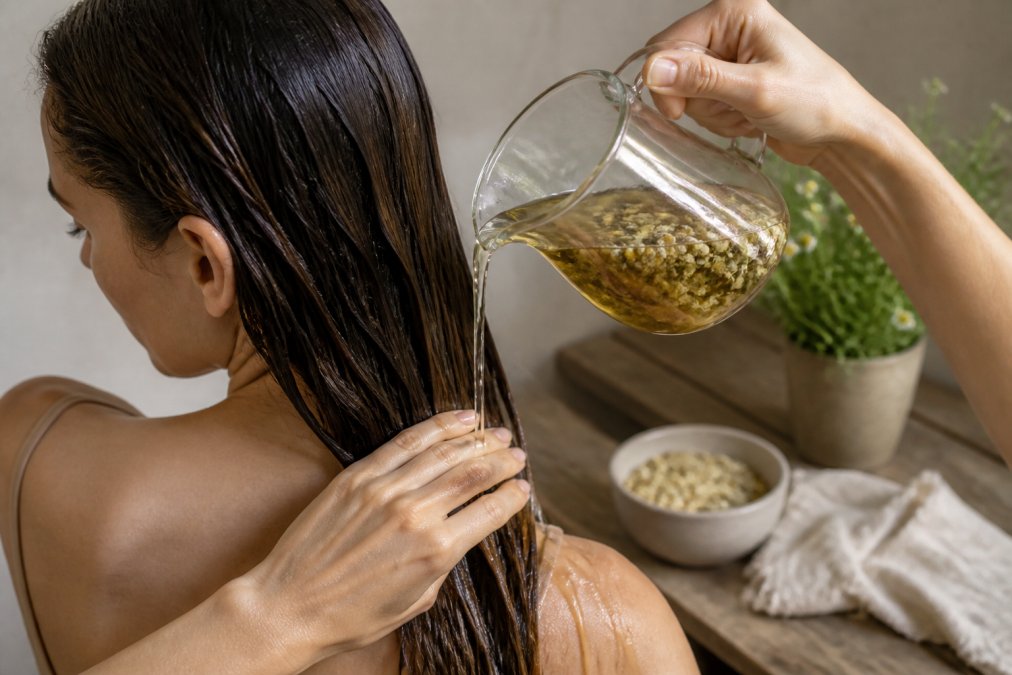
How to Make Chamomile Hair Rinse at Home: 2026 Guide
Learn how to make a chamomile hair rinse at home for softer, shinier hair. Discover steeping tips, safety advice and how long to leave it in.
Read more
Benefits of Native Australian Botanicals in Shampoo
Discover the benefits of native Australian botanicals in shampoo, from scalp rejuvenation to hair strength. Learn how COSMOS-certified organic hair care.
Read more