


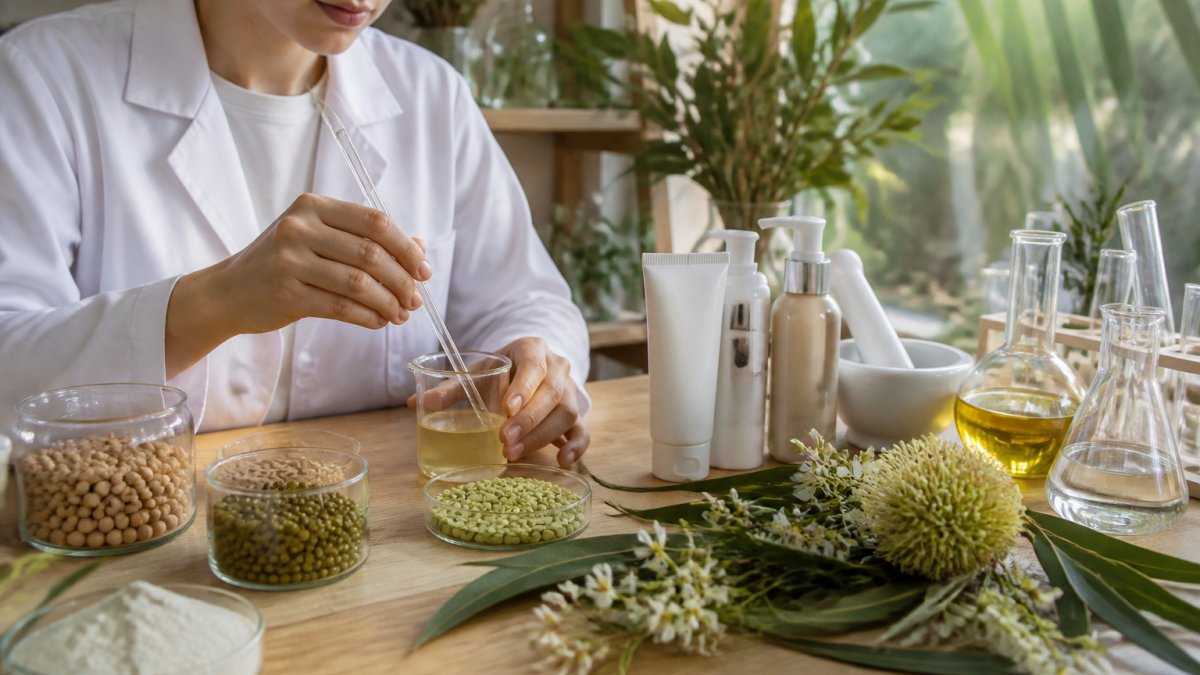
Plant-Based Peptides: The Science Explained
Table of Contents
- What Are Plant-Based Peptides?
- How Plant Peptides Work: From Protein Chains to Cellular Repair
- The Benefits of Plant Peptides for Skin
- Plant vs Animal vs Synthetic Peptides: What Sets Them Apart
- Best Practices for Using Peptide Serums
- Quality, Standardisation and Bioavailability: What to Look For
- Conclusion: Choosing Plant Peptides with Confidence
- Frequently Asked Questions
Last Updated: October 2, 2026
What Are Plant-Based Peptides?
Plant-based peptides are short chains of amino acids extracted from plant proteins, and they work as signalling molecules that tell skin cells to repair, hydrate and rebuild. This guide from Harmony Harvest explains the science behind them, from protein chains to visible results.
The difference between a peptide and a protein comes down to size. A protein is a long, folded molecule; a peptide is a fragment of it, typically two to fifty amino acids long. That small size matters because it changes how the molecule behaves in the body and on the skin. According to Nature Reviews Molecular Cell Biology, peptides act as signalling molecules in nearly every biological process, from immune response to tissue repair.
Peptides as Biological Signalling Molecules
A signalling molecule is a compound that carries a message from one cell to another, triggering a specific response. Peptides do this by binding to receptors on the cell surface, much like a key fitting a lock.
In plant physiology, secreted signal peptides coordinate growth, stress-tolerance and defence against pathogens. The same principle applies in human skin: when a peptide binds to a fibroblast, it can prompt that cell to produce more collagen.
How Plant Peptides Work: From Protein Chains to Cellular Repair
Plant peptides work by mimicking the body's own repair signals. Once they reach living skin cells, they trigger collagen production, support the skin barrier and help calm inflammation.
The path from a whole plant protein to a bioactive peptide is not simple. It requires breaking the protein down in a controlled way, and that process determines whether the resulting peptides are active or useless.
Enzymatic Hydrolysis and Bioactive Peptide Formation
Enzymatic hydrolysis is the process of using enzymes to cleave long protein chains into shorter bioactive fragments. Think of it as precision cutting rather than blunt chopping.
The enzymes used, the temperature, the pH and the timing all shape the final peptide profile. Get any of these wrong and you end up with protein hydrolysates that nourish the skin but do not signal it.
Peptides are usually grouped by size, and the group matters:
- Di- and tripeptides (2-3 amino acids): small enough for easier skin penetration, often used for signalling
- Oligopeptides (4-10 amino acids): the most common bioactive range, balancing stability and activity
- Polypeptides (10-50 amino acids): larger, more fragile, often better suited to surface barrier support than deep signalling
The bioavailability question most articles skip
A peptide is only useful if it reaches living cells intact. That is the bioavailability problem, and it applies both to topical serums and to ingested peptides.
Topically, the stratum corneum is designed to keep molecules out. Peptides above roughly 500 daltons struggle to cross it passively, which is why formulators use liposomal carriers, encapsulation or penetration enhancers.
Orally, ingested peptides face a different gauntlet: stomach acid and digestive enzymes break most protein chains into single amino acids before absorption.
Why this matters for what you buy
Understanding the mechanism changes how you read a product page. A serum that names its peptide, states its concentration and describes its delivery system is telling you it has solved the bioavailability problem. One that simply says "plant peptides" is not. That distinction, not the plant-versus-synthetic debate, is what separates a formula that works from one that simply sounds scientific.
The Benefits of Plant Peptides for Skin
The benefits of plant peptides for skin centre on collagen production, barrier support and antioxidant activity. Unlike harsh actives, they work with the skin rather than stripping it.

Key benefits reported with consistent use include:
- Collagen support: peptides signal fibroblasts to produce more collagen, which helps with firmness over time
- Barrier repair: some peptides support the skin's natural lipid structure, reducing moisture loss
- Anti-inflammatory action: certain plant-derived peptides help calm reactive, sensitised skin
- Antioxidant activity: they help neutralise free radicals that accelerate visible ageing
For anyone weighing up the science of skin barrier function, the appeal of plant peptides is that they support repair without the irritation that stronger synthetic actives can cause.
Plant vs Animal vs Synthetic Peptides: What Sets Them Apart
Plant, animal and synthetic peptides share the same basic chemistry, a chain of amino acids joined by peptide bonds, but they differ in source, molecular size, stability and how readily they penetrate skin. Understanding those differences is what separates a useful label claim from a marketing one.
Molecular size and stability
Peptide size is usually expressed in kilodaltons (kDa). As a general rule, the smaller the peptide, the better it penetrates the stratum corneum, because the skin's outer layer favours molecules under roughly 500 daltons for passive diffusion.
Stability is the other axis. Animal-derived collagen peptides are well characterised and have decades of comparative research behind them. Synthetic peptides are chemically defined and batch-consistent.
| Peptide Type | Typical Source | Molecular Size | Stability | Key Strength | Main Trade-off |
|---|---|---|---|---|---|
| Plant | Fermented botanicals, grains, legumes | Often 1-10 kDa | Sensitive to pH and heat | Vegan, sustainable, gentle | Fewer clinical studies per individual peptide |
| Animal | Collagen, silk, milk proteins | Variable, often larger | Well characterised | Extensive research base | Not vegan; ethical and sourcing concerns |
| Synthetic | Lab-synthesised chains | Engineered, often small | Highly consistent | Precise, standardised, reproducible | Can feel clinical; higher production cost |
What the research actually shows
Direct head-to-head efficacy studies between plant-derived and synthetic peptides are still limited, and most published work looks at one peptide in isolation rather than comparing sources. What the evidence does suggest is that the source matters less than three things: the specific peptide sequence, its concentration in the finished product, and whether the delivery system gets it to the target cell.
For anyone weighing up the science of skin barrier function, the appeal of plant peptides is that they support repair without the irritation that stronger synthetic actives can cause.
The sustainability angle
Sourcing is where plant peptides pull clearly ahead. Animal-derived peptides depend on livestock supply chains with a higher land, water and emissions footprint, while plant peptides can be produced from agricultural by-products, grain husks, legume pressings, fermentation leftovers, turning waste streams into actives. That circularity is a genuine point of difference, and it is one reason COSMOS-certified organic and vegan formulations are gaining ground with consumers who want efficacy without the ethical compromise.
Best Practices for Using Peptide Serums
The best practices for using peptide serums come down to timing, layering and consistency. Peptides are fragile, and how you apply them affects how much actually reaches your skin.
- Apply to clean, slightly damp skin so the serum spreads evenly
- Use before heavier creams, not after, so the peptides are not blocked
- Avoid layering directly with strong acids in the same step, as low pH can destabilise some peptides
- Use morning and night for at least eight to twelve weeks before judging results
- Store away from direct sunlight to protect peptide stability
Consistency beats intensity here. A peptide serum used daily for three months will outperform one used sporadically for a year.
Quality, Standardisation and Bioavailability: What to Look For
Standardisation and bioavailability are the two factors that separate a peptide serum that works from one that simply sounds scientific. Standardisation means every batch contains a consistent, measured amount of the active peptide. Bioavailability means enough of it actually penetrates the skin to do something.
This is where most products fall short, and where the gap between marketing and reality opens up.
What to check before buying:
- Named peptides, not vague claims: a specific peptide name signals controlled formulation
- Concentration transparency: reputable makers state the percentage of active
- Delivery systems: encapsulation and liposomal carriers improve dermal penetration
- Certification: independent certification verifies sourcing and purity claims
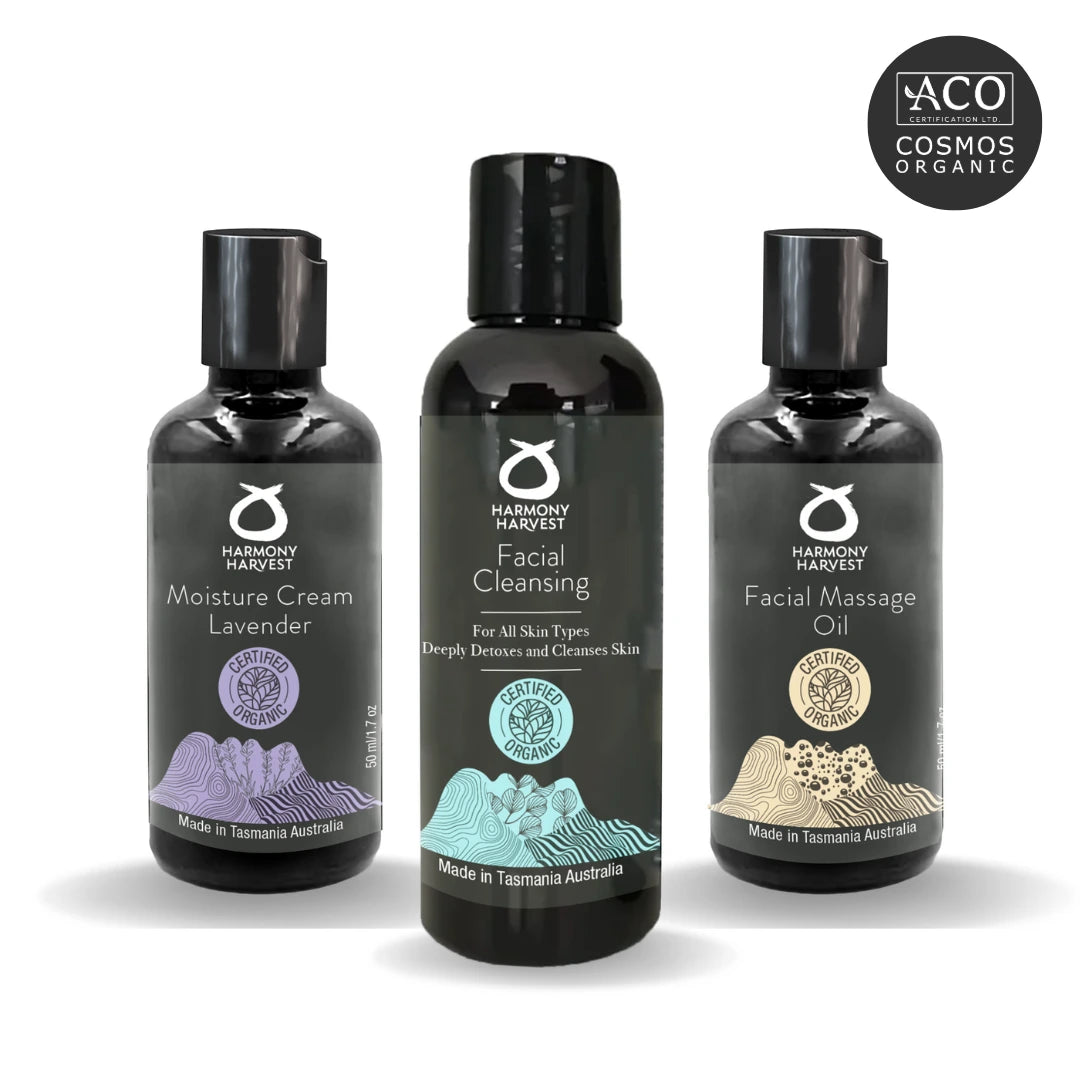
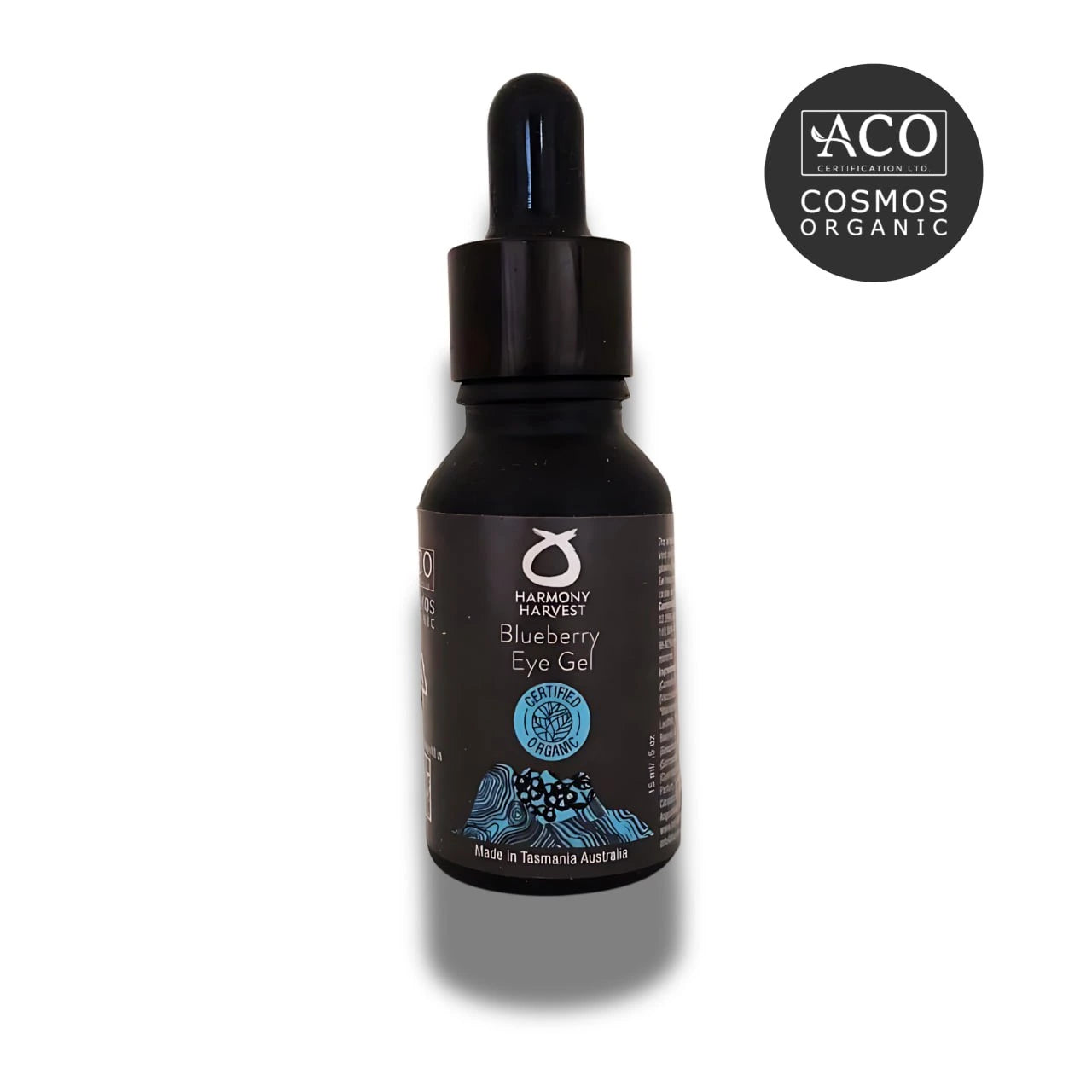
At Harmony Harvest, our facial care range is COSMOS-certified organic and vegan, formulated with Australian botanicals and free from synthetic detergents. Certification is the clearest answer to the greenwashing problem, because it is verified by an independent body rather than self-declared. You can explore the Facial Care collection, a COSMOS-certified organic, vegan, and cruelty-free range, to see how these standards apply in practice.
Conclusion: Choosing Plant Peptides with Confidence
The science behind plant-based peptides is genuinely sound: they signal skin cells to repair, support collagen and defend against environmental stress. The challenge is separating well-made formulas from ones trading on the trend. Discerning consumers must therefore look beyond marketing buzzwords to understand how plant-based collagen science actually influences the structural integrity of the dermal matrix.
Frequently Asked Questions
Are plant-based peptides considered active ingredients?
Yes. Plant-based peptides qualify as active ingredients because they change how skin behaves rather than simply sitting on the surface. They act as signalling molecules, telling cells to step up collagen production, support the skin barrier and calm inflammation. That is a measurable biological effect, not just hydration. In practice, this means a peptide serum belongs in the same category as other targeted treatments, and it works best applied consistently rather than occasionally. Look for products that state the peptide source and concentration so you know the formula contains enough to matter.
How do plant-based peptides differ from synthetic alternatives?
Both types mimic the same signalling molecules your skin already uses, but they get there differently. Synthetic peptides are built in a lab to match a specific amino acid sequence exactly. Plant-based peptides are extracted from protein-rich botanicals through enzymatic hydrolysis, which breaks long protein chains into shorter bioactive fragments. The plant versions often arrive alongside other beneficial compounds from the source plant, such as antioxidants. Neither is inherently better; the deciding factors are formulation quality, bioavailability and how well the peptide survives dermal penetration.
Can plant peptides help with skin elasticity?
They can support it. Skin elasticity depends largely on collagen and elastin, and plant peptides work by signalling fibroblasts to produce more of both while protecting existing collagen from breakdown. Over weeks of consistent use, many people notice firmer-feeling skin and a smoother texture. Results build gradually because you are supporting your skin's own repair processes, not forcing an instant change. Pairing a peptide serum with daily sun protection gives the best chance of maintaining elasticity long term.
How do peptides support the skin's natural barrier?
The skin barrier is a layered structure of lipids and proteins that keeps moisture in and irritants out. Plant peptides contribute amino acids that feed protein synthesis in the barrier, and some bioactive peptides have anti-inflammatory and antioxidant activity that reduces stress on barrier cells. When the barrier is stronger, skin feels calmer, holds hydration better and reacts less to environmental triggers. Using a COSMOS-certified organic peptide formula alongside gentle cleansing supports this process without stripping the lipids the barrier needs.
Navigating the peptide market can feel overwhelming when every label claims the same benefits. Harmony Harvest makes the choice simpler with a COSMOS-certified organic, vegan and cruelty-free range built on Australian botanicals, formulated to support collagen production and a healthy skin barrier without harsh chemicals. Explore the Facial Care collection and give your skin plant-based peptides you can actually trust.
Best Sellers
Read more

Common Scalp Irritants in Commercial Hair Products
Learn to spot common scalp irritants in commercial hair products, from sulfates to fragrance. Discover gentle hair care and signs of allergic reaction.
Read more
Sustainable Packaging in Australian Organic Haircare
Sustainable packaging in Australian organic haircare explained: materials, recyclable standards, refillable bottles and how to spot greenwashing.
Read more