



Is Chamomile Shampoo Safe for Colour-Treated Hair?
Table of Contents
- Does Chamomile Shampoo Strip or Lighten Colour-Treated Hair?
- Benefits of Chamomile for Hair: Shine, Tone and Cuticle Support
- Blonde vs. Brown: How Chamomile Interacts With Different Colour-Treated Hair
- Ingredients to Avoid in Shampoo for Colour-Treated Hair
- How to Use Chamomile Shampoo on Colour-Treated Hair: Step by Step
- How to Maintain Hair Colour Naturally Between Washes
- Conclusion
- Frequently Asked Questions
Last Updated: September 19, 2026
Does Chamomile Shampoo Strip or Lighten Colour-Treated Hair?
Chamomile shampoo does not strip or bleach colour-treated hair. It deposits a soft golden tone on the surface of the strand rather than lifting pigment from inside it.
That distinction matters enormously if you have spent time and money on your colour. Here at Harmony Harvest, we explain it to customers constantly: chamomile is a depositing botanical, not a bleaching agent. It works more like a temporary colour glaze than a lightener.
The confusion comes from the word "lightening." Chamomile can make hair look brighter, but brightness and pigment removal are two different things. Many people find that a gentle overview of how hair colour works from the International Journal of Trichology clarifies the difference between surface tone and internal pigment change.
Below, we'll show you exactly when chamomile shampoo is safe, when it isn't, and how to use it without dulling your colour.
How Chamomile Deposits Colour Instead of Bleaching It
Chamomile contains natural pigments called flavonoids, including apigenin, which attach to the outer layer of the hair strand. This is pigment deposition: the colour sits on the cuticle, not inside the cortex.
Chemical lighteners work the opposite way. They use an alkaline agent plus peroxide to swell the cuticle and oxidise melanin inside the strand. That process is permanent and it is what causes the damage people fear.
Because chamomile never opens the cuticle to remove pigment, it cannot lift your base colour. What it can do is leave a warm, golden tint that reads as extra shine.
Benefits of Chamomile for Hair: Shine, Tone and Cuticle Support
The benefits of chamomile for hair go beyond colour. Chamomile is a botanical extract rich in antioxidants, and it is generally used to smooth the cuticle, add shine, and calm a sensitive scalp.
For colour-treated hair, that cuticle support matters. Oxidative colour raises the cuticle slightly, and a raised cuticle is a dull cuticle. Ingredients that help the cuticle lie flat make colour look richer, because light reflects more evenly off a smooth surface.
Chamomile also pairs well with gentle cleansing. A pH balanced, sulfate-free formula cleans without over-stripping, which helps vibrancy retention between salon visits.
A few practical benefits people notice:
- Softer, smoother strands with less surface roughness
- A subtle golden tint that enhances natural highlights
- Less scalp tightness after washing
- Better light reflection, which reads as shine enhancement
What most guides miss is that these benefits depend on the rest of the formula, not chamomile alone. A chamomile shampoo loaded with harsh surfactants will undo the good work.
Blonde vs. Brown: How Chamomile Interacts With Different Colour-Treated Hair
Blonde and light brown hair show chamomile most clearly. Darker bases show almost nothing, because the deposit is too pale to register against deep pigment.
Think of it as a translucent golden veil. On pale hair, the veil is visible. On dark hair, it disappears.
Hair Base |
Visible Effect from Chamomile |
Risk Level |
|---|---|---|
Platinum blonde |
Noticeable warm golden tint |
Low, but tone shifts fast |
Ash blonde |
Neutralises cool tones, adds warmth |
Medium if you want to stay cool |
Light brown hair |
Soft golden warmth in the sun |
Low |
Medium brown |
Barely visible |
Very low |
Dark brown to black |
No visible change |
Negligible |
If your colour is cool or ashy, this is the section to read twice. Chamomile pushes warm, and warm plus ash equals brassiness over time.
Light Brown Hair and Warm Tones: What to Expect
Light brown hair is the sweet spot. The deposit is subtle enough to look natural and warm enough to mimic sun-kissed highlights.
Expect a gradual shift rather than an instant change. Most people see the warm tone build over several washes, and it fades as the deposit wears off. That slow build is actually a safety feature, because you can stop the moment you have enough warmth.
Ingredients to Avoid in Shampoo for Colour-Treated Hair
The biggest threat to colour-treated hair is rarely chamomile. It is the ingredients sitting beside it in the bottle, and, just as importantly, the pH of the finished formula.
Why pH Matters More Than Any Single Ingredient
Hair has a natural pH of roughly 4.5 to 5.5. Oxidative colour and lightening raise that number, which lifts the cuticle and lets pigment escape. A shampoo that sits close to the hair's natural acidity helps the cuticle lie flat again, sealing colour in. An alkaline shampoo does the opposite: it swells the cuticle, and every wash leaks a little more tone.
This is the mechanism most guides skip. A formula can be sulfate-free and still fade colour quickly if its pH is too high. When you are comparing bottles, look for a stated pH balanced claim rather than assuming gentleness from the front label.
Ingredients Worth Avoiding
Strong sulfates (often listed as sodium lauryl sulfate) clean aggressively and strip both natural oils and colour molecules from the cuticle. A sulfate-free surfactant system is the baseline for protecting a colour investment.
Silicones coat the strand for instant slip, but they can build up over time and dull the tone underneath. They also create a barrier that can interfere with the deposit from a botanical shampoo like chamomile.
Mineral oil sits on top of the hair and can leave a heavy film that traps residue and weighs down fine colour-treated strands.
What to Look For Instead
- Sulfate-free surfactants that cleanse gently
- A pH balanced formula that respects the cuticle
- Botanical extracts rather than synthetic colourants
- No mineral oil, and no heavy silicone load
Chemical Compatibility With Salon Treatments
This is where most colour-safe advice falls short, because 'colour-treated' covers very different chemistry.
Long-Term Buildup vs. Natural Deposit
A fair question is whether chamomile leaves residue that affects future colour appointments. The honest answer is that a well-formulated, sulfate-free chamomile shampoo rinses clean and does not create the kind of stubborn buildup that blocks a colour service. The deposit is surface-level and fades on its own.
How to Use Chamomile Shampoo on Colour-Treated Hair: Step by Step
Using chamomile shampoo on colour-treated hair safely comes down to frequency, temperature and technique. Get those right and you control the tone rather than guessing at it.
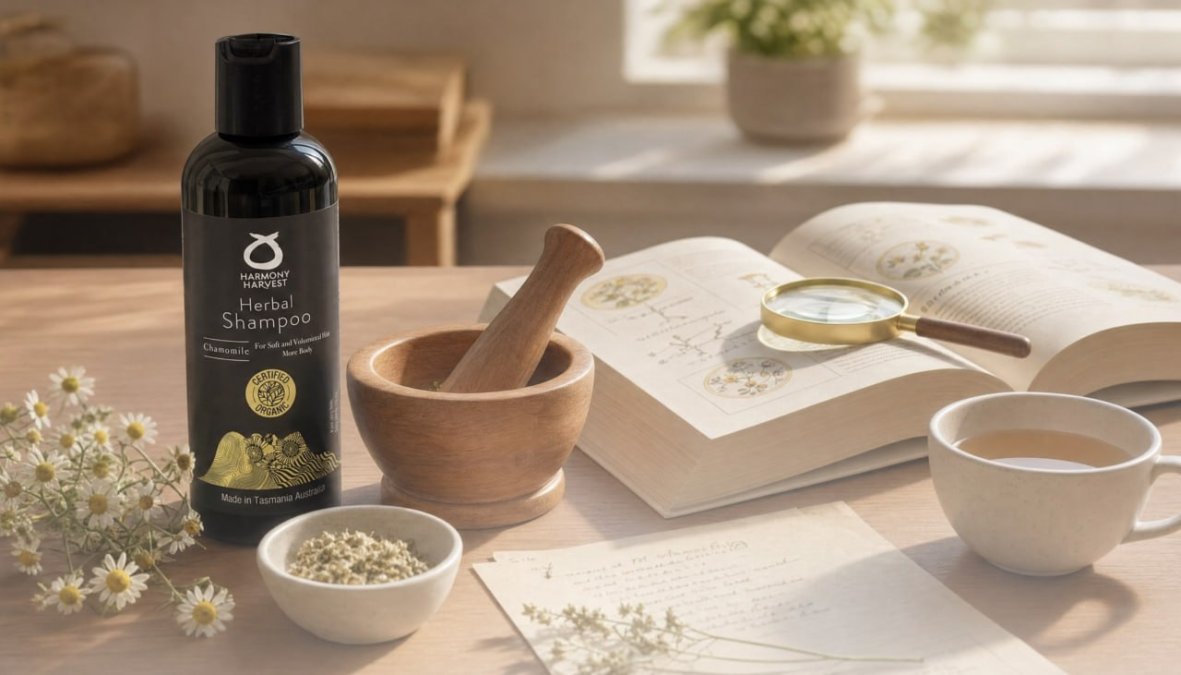
- Wet hair thoroughly with lukewarm water. Hot water raises the cuticle and speeds colour loss. Lukewarm keeps the cuticle flatter.
- Apply a small amount and emulsify in your palms. A little goes further than most people expect, and even distribution prevents patchy tone.
- Massage into the scalp, not the ends. The scalp needs cleansing; the ends need protection and already hold the most deposit.
- Leave it for two to three minutes. This gives the botanical deposit time to settle on the cuticle without over-warming the strand.
- Rinse with cool water. Cool water helps the cuticle close, which seals in both shine and colour.
- Follow with a conditioner on the mid-lengths and ends. Hydration keeps the colour looking fresh and reduces porosity over time.
- Repeat no more than two to three times a week. Daily use builds the warm tone faster than most people want.
Why the Technique Works: pH and the Cuticle
The reason temperature and timing matter is the cuticle. When the cuticle is open, pigment can leave and deposits can enter unevenly. When it is closed, colour stays put and light reflects more evenly, which reads as shine.
How to Maintain Hair Colour Naturally Between Washes
Learning how to maintain hair colour naturally is mostly about reducing what strips it. Every wash removes a little colour, so the goal is fewer, gentler washes.
Conclusion
The real challenge with colour-treated hair is protecting an investment while still getting the soft, sunlit tone you want. It is possible, provided you choose a formula that deposits rather than strips.
Frequently Asked Questions
Does chamomile shampoo strip hair colour?
No, a true chamomile shampoo does not strip colour the way a bleaching agent would. It works by depositing a soft golden tint onto the hair strand rather than lifting pigment out. The bigger risk to colour comes from harsh sulfates, high pH and hot water, which open the hair cuticle and let dye escape. Choosing a sulfate-free, pH balanced formula keeps that cuticle flatter, so your colour stays put for longer.
Can chamomile shampoo lighten dyed hair?
It cannot lighten dyed hair in the way bleach does, because it contains no oxidative colour or bleaching agent. What it can do is add a gentle golden glow over time, which reads as brightness on blonde hair and warmth on light brown hair. If you want a noticeable shift in depth, chamomile alone will not deliver it. Think of it as a tone enhancer rather than a lightener.
How often should you use chamomile shampoo on treated hair?
Two to three washes a week suits most colour-treated hair, alternating with a hydrating shampoo if your strands feel dry. Daily use is fine for some people, but chamomile deposits build up gradually, so more frequent washing can tip blonde shades brassy rather than golden. Watch your tone over the first fortnight and adjust. A weekly deeper cleanse helps reset any buildup.
Are there specific ingredients to avoid in shampoo for colour-treated hair?
Look for sulfates, which lift the cuticle and speed up colour fading, and strong alcohols that leave hair dry and porous. Silicones and mineral oil can coat the strand and dull vibrancy over time, while a high pH throws the cuticle open. A pH balanced, sulfate-free, silicone-free formula with botanical extracts is the safer base for colour-treated hair.
Best Sellers

Read more
Transitioning to Organic Haircare: Beginner Guide 2026
Transitioning to organic haircare? Learn what to expect, how to detox from synthetics and build a routine that works. Start your switch with confidence.
Read more
Best Botanical Shampoos for Sensitive Scalps in 2026
Compare the best botanical shampoos for sensitive scalps in 2026, with gentle sulfate-free picks to calm itchiness and irritation. Discover your match.
Read more