

Best Botanical Shampoos for Sensitive Scalps in 2026
Table of Contents
- Quick Comparison: Best Botanical Shampoos for Sensitive Scalps
- How We Chose These Botanical Shampoos
- 1. Harmony Harvest Scalp Cleansing Treatment: Editor's Pick
- 2. Innersense Organic Beauty Hair Renew Scalp Hairbath
- 3. Tree To Tub Soapberry Shampoo
- 4. ATTITUDE Sensitive Skin Shampoo
- 5. Vanicream Shampoo
- 6. Ethique Heali Kiwi Shampoo Bar
- What Causes a Sensitive Scalp?
- How to Identify a Sensitive Scalp vs Dandruff
- Key Ingredients to Look For in Botanical Shampoos
- How to Transition to Botanical Hair Products
- Tips for Soothing an Itchy or Irritated Scalp
- The Role of pH Balance in Scalp Health
- The Role of Botanical Ingredients vs Clinical Treatments
- Frequently Asked Questions
Last Updated: September 19, 2026
Quick Comparison: Best Botanical Shampoos for Sensitive Scalps
Botanical shampoos are plant-based cleansers that use natural surfactants and botanical extracts instead of harsh synthetic detergents, making them a gentler option for reactive scalps. This guide from Harmony Harvest compares six formulas worth knowing in 2026, covering what each does well and where it falls short.
A sensitive scalp is easy to misread. Itchiness, flaking and redness can point to dryness, dermatitis or simple product overload, and the fix is rarely "scrub harder". It's usually about what you stop putting on your scalp. Below, we'll show you exactly how we assessed each formula and which one suits which scalp type.
Product |
Best For |
Key Ingredients |
Format |
|---|---|---|---|
Harmony Harvest Scalp Cleansing Treatment |
Overall pick for reactive scalps |
Australian botanicals, COSMOS-certified organic |
Liquid treatment |
Innersense Hair Renew Scalp Hairbath |
Dry, irritated scalps |
Aloe vera, chamomile |
Liquid shampoo |
Tree To Tub Soapberry Shampoo |
pH-sensitive scalps |
Wild soapberry, aloe |
Liquid shampoo |
ATTITUDE Sensitive Skin Shampoo |
Fragrance-free basics |
Plant-derived cleansers |
Liquid shampoo |
Vanicream Shampoo |
Extreme sensitivity |
Minimalist, fragrance-free |
Liquid shampoo |
Ethique Heali Kiwi Shampoo Bar |
Low-waste routines |
Neem, karanja oil |
Solid bar |
How We Chose These Botanical Shampoos
We filtered for formulas that avoid the usual irritants: sulfates, parabens, silicones, synthetic fragrance and drying alcohols. From there, we weighed surfactant type, pH balance and whether the botanical content does real work or just decorates the label.
What most guides miss is that "botanical" is unregulated marketing language. A shampoo can list aloe on the front and still lead with a harsh surfactant. We checked the cleansing base first, then the soothing ingredients.
A common mistake is assuming gentle means ineffective. Plant-derived surfactants like soapberry and coco-glucoside lift oil well; they just do it without stripping the scalp barrier. We also favoured brands with clear certification, since third-party verification is harder to fake than a green label.
1. Harmony Harvest Scalp Cleansing Treatment: Editor's Pick
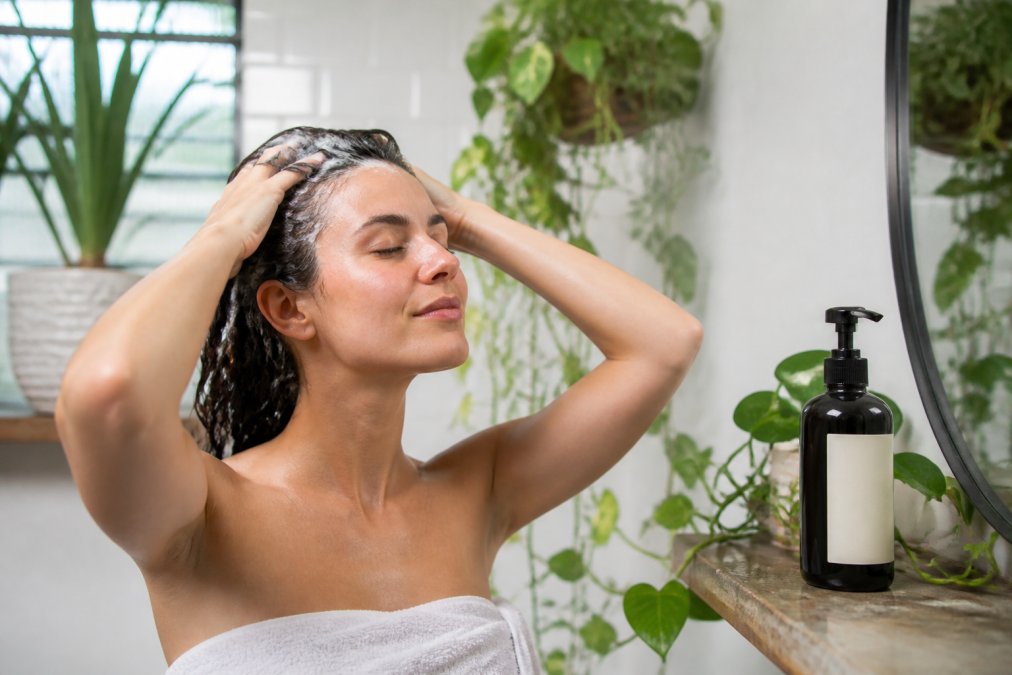
Harmony Harvest's Scalp Cleansing Treatment is our top pick because it treats the scalp as skin, not just hair. It's built on COSMOS-certified organic Australian botanicals and skips synthetic detergents entirely, which matters when your scalp reacts to almost everything.
The formula focuses on calming irritation and supporting the scalp barrier rather than chasing a squeaky-clean feel. For anyone managing a dry, itchy scalp, that shift in approach is the whole point. You can see the full details on the Scalp Cleansing Treatment page.
- COSMOS-certified organic and vegan formulation
- Free from synthetic detergents and harsh chemicals
- Contains Australian botanicals chosen to soothe and nourish
2. Innersense Organic Beauty Hair Renew Scalp Hairbath
Innersense takes a professional-salon approach, with aloe vera and chamomile leading a formula designed to rebalance the scalp microbiome. It's sulfate-free and genuinely moisturising, which suits scalps that feel tight and dry after washing.
The trade-off is cost. It sits at the premium end. If you want a salon-grade feel without much fuss, it's a reasonable choice.
3. Tree To Tub Soapberry Shampoo
Tree To Tub uses wild soapberries as its cleansing base, which is a genuinely different mechanism from standard surfactants. The formula is pH-balanced at 5.5, close to the scalp's natural acidity, and fragrance-free versions are available.
That pH match is the standout feature. An unbalanced shampoo can leave the scalp barrier compromised, and this one avoids that problem. Thick or long hair may need more product per wash, which shortens the bottle's life.
4. ATTITUDE Sensitive Skin Shampoo
ATTITUDE delivers the basics well: sulfate-free, silicone-free, dye-free and dermatologically tested. It's a value pick for anyone who wants hypoallergenic cleansing without a premium price.
The formulation is deliberately simple, so don't expect deep conditioning. It's best for mild sensitivity rather than a scalp in active distress.
5. Vanicream Shampoo
Vanicream strips things back to the minimum: no dyes, no fragrance, no parabens, no botanical extras. For contact dermatitis or extreme reactivity, that restraint is the point.
It's affordable and widely recommended by dermatologists. The catch is experience. There's no botanical scent, no luxury texture, just clean hair without irritation.
6. Ethique Heali Kiwi Shampoo Bar
Ethique's solid bar pairs neem and karanja oil with soap-free, pH-balanced cleansing, and the packaging is plastic-free and compostable. For itchy, flaky scalps and low-waste routines, it covers both concerns. Integrating these gentle botanical ingredients into a broader wellness regimen provides a sustainable way to treat itchy scalps while addressing the underlying causes of persistent irritation.
Solid bars take adjustment. You need to work up a lather in your hands first, and storage between washes matters. Once past that, a single bar outlasts several bottles.
What Causes a Sensitive Scalp?
A sensitive scalp usually comes down to a compromised scalp barrier, which lets irritants penetrate and triggers itchiness, redness and flaking. Common culprits include harsh surfactants, synthetic fragrance, product buildup and over-washing.
Dermatitis, sebum imbalance and environmental dryness all play a role too. The scalp microbiome, the community of organisms living on your scalp, is easily disrupted by stripping cleansers. Once disrupted, irritation becomes a cycle: wash, react, wash more, react worse.
If your scalp stings or itches within hours of washing, the shampoo is the first suspect. Switching to a sulfate-free, pH-balanced botanical formula resolves most mild cases.
How to Identify a Sensitive Scalp vs Dandruff
The distinction matters because the treatments differ. A sensitive scalp shows redness, stinging and tightness, often with fine flaking and no distinct patches. Dandruff produces larger, greasier flakes, usually with a yellow tint, and tends to concentrate around the hairline.
Sensitive scalps react to products. Dandruff is driven by a yeast overgrowth on the scalp and needs specific actives, not just gentler cleansing. If your flaking improves when you stop using a product, it was irritation. If it persists regardless, it's likely dandruff.
Key Ingredients to Look For in Botanical Shampoos
The best botanical shampoos for sensitive scalps pair gentle cleansing with ingredients that calm inflammation and support the barrier. Look for plant-derived surfactants, soothing extracts and humectants that hold moisture.
What to prioritise:
- Plant-derived surfactants: soapberry, coco-glucoside, decyl glucoside
- Soothing botanicals: aloe vera, chamomile, calendula, neem
- Barrier support: glycerin, panthenol, colloidal oatmeal
- pH balance: formulas around pH 5.5 to match scalp acidity
Ingredients to avoid are just as important: sulfates, parabens, silicones, synthetic fragrance and drying alcohols. These are the usual triggers behind scalp inflammation and itchiness.
How to Transition to Botanical Hair Products
Switching formulas rarely feels seamless at first. Botanical shampoos clean differently, and hair used to silicone coating can feel drier for a week or two while natural oils rebalance.
Make the change gradually:
- Swap one wash per week to the new formula
- Reduce wash frequency if your scalp allows
- Skip the conditioner on the scalp, applying mid-length to ends only
- Give it two to three weeks before judging results
If your scalp is in active distress, go cold turkey on the old product instead.
Tips for Soothing an Itchy or Irritated Scalp
Soothing a reactive scalp comes down to reducing what you put on it, not adding more. Gentle cleansing, lukewarm water and a fragrance-free routine settle most irritation within a fortnight.
Practical steps that help:
- Wash with lukewarm, not hot, water
- Use a synthetic fragrance-free formula
- Don't scratch; apply a cool compress instead
- Rinse thoroughly to remove all residue
- Avoid tight hairstyles that pull on the follicles
The Role of pH Balance in Scalp Health
The scalp sits naturally at around pH 5.5, and keeping it there protects the barrier that keeps irritants out. Alkaline shampoos raise scalp pH, which weakens that barrier and leaves skin more reactive.
The Role of Botanical Ingredients vs Clinical Treatments
Botanical formulas calm and support a sensitive scalp, but they don't replace medicated treatment for diagnosed conditions. If you have seborrhoeic dermatitis or a persistent scalp condition, see a pharmacist or doctor first.
Frequently Asked Questions
What should I avoid in shampoo if I have a sensitive scalp?
Look for formulas free from sulfates, parabens, silicones and synthetic fragrance, as these can strip the scalp barrier and trigger itchiness or redness. Choose sulfate-free, paraben-free and silicone-free botanical shampoos that use plant-derived surfactants instead. A pH-balanced formula close to the scalp's natural acidity helps keep the scalp microbiome calm. Harmony Harvest's Scalp Cleansing Treatment is COSMOS-certified organic and vegan, making it a gentle option for reactive scalps.
How do I know if my shampoo is irritating my scalp?
Signs include itchiness, flaking, redness or tightness that appear or worsen after washing, rather than improving. If symptoms flare within a day or two of using a new product, switch to a fragrance-free, hypoallergenic botanical shampoo and see whether things settle. Persistent irritation may point to dermatitis, so check with a healthcare professional if it does not ease.
Are botanical shampoos better for sensitive skin?
Botanical shampoos can be gentler because many use plant-derived surfactants and soothing extracts like aloe and chamomile instead of harsh synthetic detergents. They are not automatically better, though, so check labels for sulfate-free, paraben-free and synthetic fragrance-free claims. Certified options such as COSMOS-certified organic products give extra assurance about what is inside the bottle.
How often should I wash a sensitive scalp with botanical products?
Most sensitive scalps do well with washing every two to three days, using a gentle, pH-balanced botanical shampoo. If your scalp is very dry or reactive, start with once or twice a week and adjust based on how your scalp feels. Over-washing can strip natural oils and worsen irritation, while under-washing lets sebum and product build-up accumulate. A soothing scalp treatment once a week can support the scalp barrier between washes.
Best Sellers
Read more

Is Chamomile Shampoo Safe for Colour-Treated Hair?
Is chamomile shampoo safe for colour-treated hair? Learn how it affects blonde and brown dye, pH balance and fading, plus tips to maintain colour. Explore.
Read more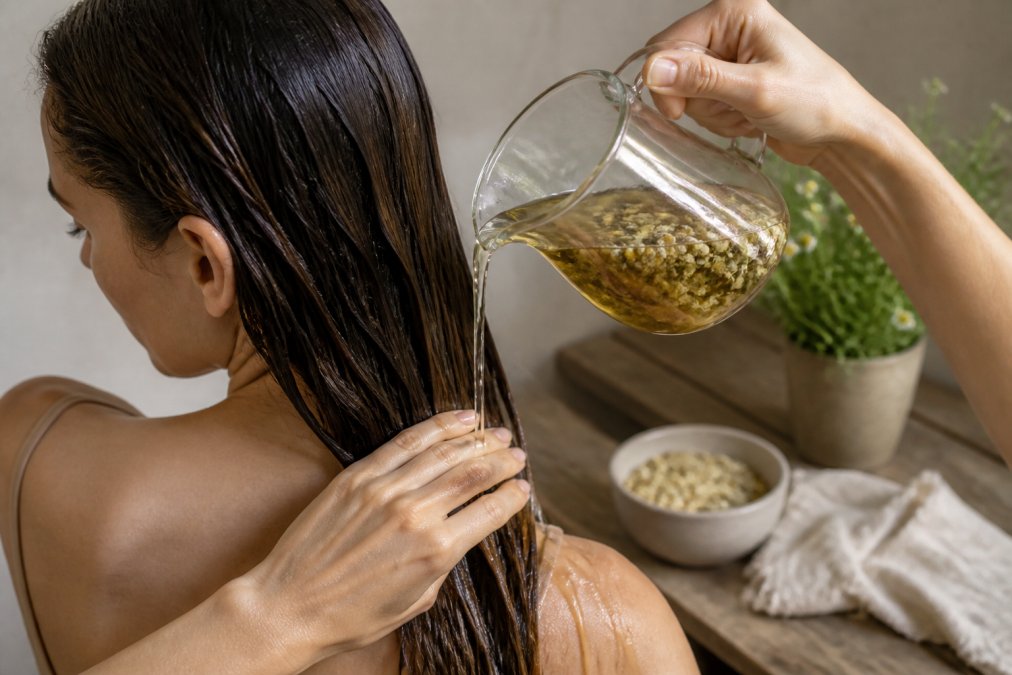
How to Make Chamomile Hair Rinse at Home: 2026 Guide
Learn how to make a chamomile hair rinse at home for softer, shinier hair. Discover steeping tips, safety advice and how long to leave it in.
Read more