


How to Prevent Hair Loss After Pregnancy: A Gentle Guide
Table of Contents
- Understanding Postpartum Hair Loss: What's Normal and What's Not
- Your Postpartum Hair Loss Timeline: When Shedding Starts and Stops
- How to Prevent Hair Loss After Pregnancy: A Low-Effort Routine
- Postpartum Hair Loss Treatment: What Helps and What to Skip
- Postpartum Hair Loss Vitamins and Nutrition for Regrowth
- Postpartum Hair Regrowth: What to Expect and When to Seek Help
- Conclusion
- Frequently Asked Questions
Last Updated: October 16, 2026
Understanding Postpartum Hair Loss: What's Normal and What's Not
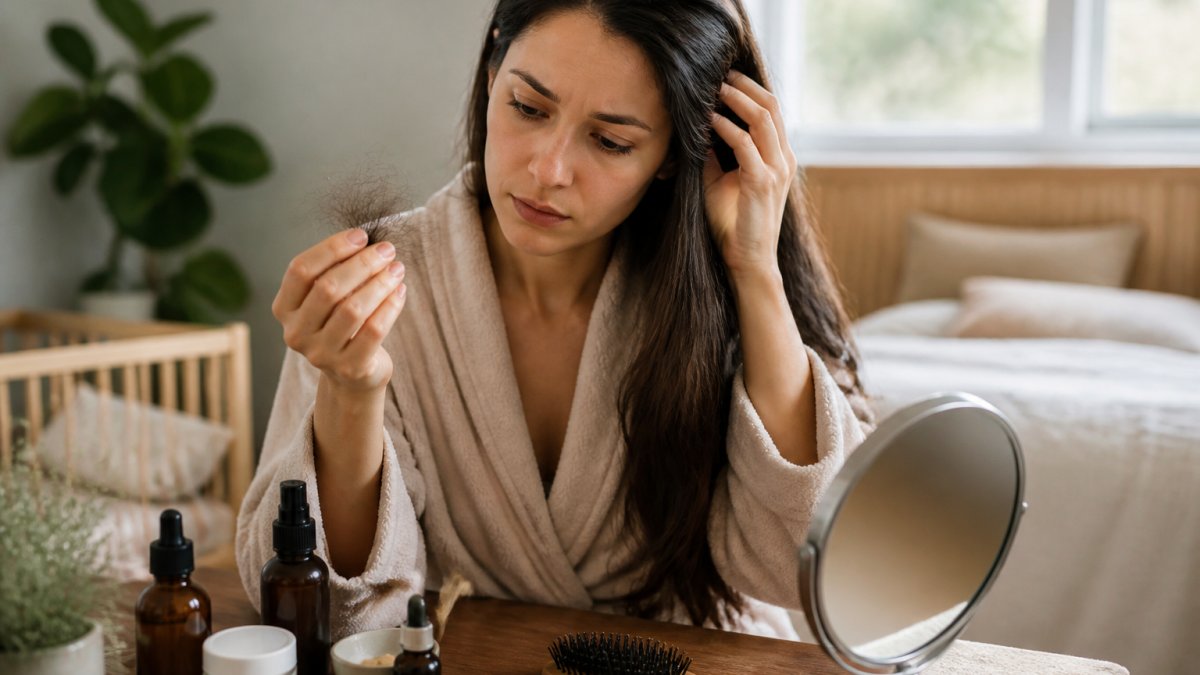
Postpartum hair loss is a common, temporary type of shedding that many women notice in the months after giving birth. The good news: this is usually a normal part of recovery.
The key distinction: you cannot stop the hormonal shedding, but you can protect your hair from breakage to keep it looking fuller while regrowth catches up.
- Normal: a sudden increase in daily shedding around 2-4 months after birth
- Normal: thinning at the temples and along the parting
- Not normal: patchy bald spots, an itchy scaly scalp, or shedding that continues past 12 months
Why Hair Loss Happens After Childbirth
During pregnancy, rising estrogen keeps more hair follicles in the growing phase (pubmed.ncbi.nlm.nih.gov). After childbirth, estrogen drops, and those extra hairs shift into the shedding phase, a process doctors call telogen effluvium (pubmed.ncbi.nlm.nih.gov). The shedding is simply the delayed release of hair that would otherwise have fallen out gradually over the past year.
Hormonal changes are the main driver, though poor sleep, low iron stores, and recovery demands can contribute. None of this means you did anything wrong.
Your Postpartum Hair Loss Timeline: When Shedding Starts and Stops
Most women notice postpartum shedding starting around three months after birth, peaking at four to five months, then tapering off by six to twelve months.
| Stage | Typical Timing | What You May Notice |
|---|---|---|
| Calm before | 0-2 months | Hair still looks full |
| Shedding begins | 2-3 months | More hair on pillows and in the shower |
| Peak shedding | 4-5 months | Visible thinning at temples and parting |
| Tapering | 6-9 months | Daily shedding returns to normal |
| Regrowth | 9-12 months | Short new hairs along the hairline |
Track your shedding week to week, not day to day. Shedding that slows by month nine is on track.
If you are breastfeeding, your timeline may stretch a little longer because prolactin can keep estrogen low, this is expected and not a cause for alarm.
How to Prevent Hair Loss After Pregnancy: A Low-Effort Routine
You cannot prevent hormonal shedding, but you can prevent breakage that makes thinning look worse. This three-step routine takes about five minutes.
Step 1: Gentle Brushing and Detangling
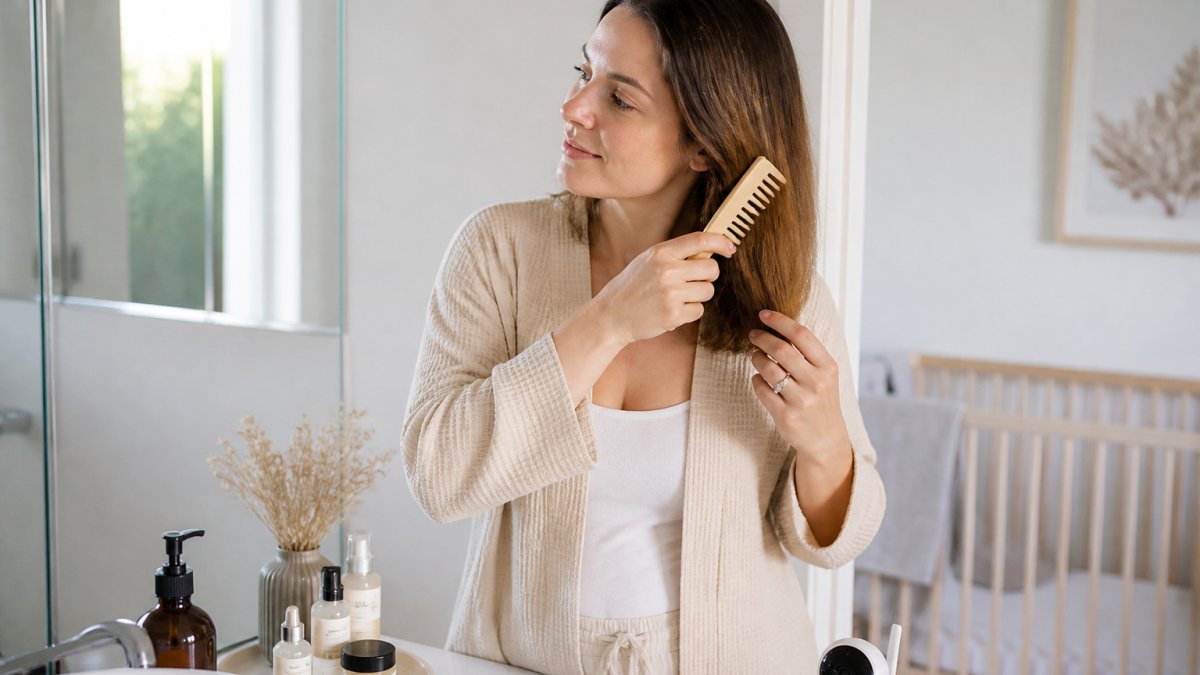
Start at the ends and work upward with a wide-tooth comb on wet hair. Comb conditioner through with your fingers first, hold the mid-length while detangling the ends, and skip brushing on tender scalp days.
Step 2: Washing and Conditioning Without Breakage
Wash less often but keep scalp care consistent. Use a volumising shampoo to lift hair away from the scalp and a lightweight conditioner on mid-lengths and ends only. Pat dry with a soft towel and air dry when possible; heat styling dries fragile strands and increases breakage.
Step 3: Styling and Scalp Care
Choose protective hairstyles that do not pull, a loose braid or low bun is kinder than a tight ponytail. Avoid colouring or perming during shedding if you can. A two-minute fingertip scalp massage during conditioning encourages blood flow without special tools. A COSMOS-certified organic hair oil from our Hair Care collection can soften dry ends without heavy silicones.
Postpartum Hair Loss Treatment: What Helps and What to Skip
No treatment stops hormonal shedding. What genuinely helps is reducing breakage, supporting your overall health, and giving your scalp a calm environment for regrowth.
Four questions to ask before you buy anything
- What is it actually claiming to do? A product claiming to add volume or reduce friction is making a cosmetic claim. A product claiming to stop shedding or regrow hair is making a medical claim regulated by the Therapeutic Goods Administration, treat such promises as a red flag.
- Is the ingredient list doing the work, or the marketing? Look for gentle surfactants, light oils that reduce friction, and humectants that hold moisture. Ingredients that only appear in the brand story are usually there for the label.
- Does it suit your scalp right now? Postpartum scalps are often drier and more sensitive. A product that stings, itches, or leaves a heavy film is not helping. Patch-test anything new first.
- Is the price proportionate to what it can do? A gentle sulphate-free cleanser and lightweight conditioner do most of the work. If a product costs significantly more and its only advantage is a proprietary blend, you are paying for the story.
What is worth trying
- Gentle sulphate-free cleansers that clean the scalp without leaving it tight or irritated
- A soft microfibre towel or a cotton t-shirt for drying, which creates far less friction than a terry towel
- Silk or satin pillowcases, which reduce overnight tugging on fragile strands
What to ask your doctor about
- Medicated scalp treatments if you have dandruff, seborrhoeic dermatitis, or persistent irritation. These are worth treating properly rather than masking with a cosmetic product.
- Blood tests for iron, ferritin, thyroid function, and vitamin D if your shedding is heavy, prolonged, or accompanied by fatigue. Treating a diagnosed deficiency is genuinely useful; guessing is not.
- Any supplement you are considering while breastfeeding, because some ingredients pass into breast milk and some interact with other medications.
What to skip for now
- Harsh chemical straightening or perming during the shedding phase, which weakens strands that are already fragile
- Tight braiding, weaving, or high-tension styles, which can cause traction damage on top of the shedding
- 'Miracle' serums that promise overnight regrowth, because no topical product can restart a hair cycle that hormones are still resetting
A dermatologist or healthcare professional can check for other causes if your shedding is severe or long-lasting. For most women, though, the most effective treatment is patience plus a kind routine.
Postpartum Hair Loss Vitamins and Nutrition for Regrowth
Balanced nutrition matters more than any single supplement.
Iron deficiency is common after childbirth, especially if you lost blood during delivery. Ask your doctor for a blood test before self-prescribing iron levels supplements, because too much iron is harmful.
If you are breastfeeding, check with your doctor before starting any nutritional supplements. Our Supplements collection includes options worth discussing with your practitioner, though please note that not every item in that range is certified organic.
Postpartum Hair Regrowth: What to Expect and When to Seek Help
Postpartum hair regrowth usually begins once shedding slows, and you may spot fine 'baby hairs' along your hairline. These short strands can look wiry and stick up at odd angles at first, but they are a healthy sign that follicles are back in the growing phase.
Expect a regrowth timeline of roughly six to twelve months for visible recovery. Hair texture and hair volume often return to your pre-pregnancy normal, though some women notice lasting changes.
Normal recovery versus something worth investigating
The distinction that matters is between shedding that is tapering and shedding that is not. Normal postpartum shedding peaks around four to five months and then gradually reduces. If your shedding is still heavy at nine months, or has increased again after slowing, that is worth a conversation with your doctor.
| What you may notice | Usually normal | Worth investigating |
|---|---|---|
| Daily shedding | Gradually reducing after the peak | Still heavy at 9-12 months, or increasing again |
| Pattern of thinning | Diffuse thinning at temples and parting | Patchy bald spots, or a widening parting that keeps worsening |
| Scalp | Mild dryness or sensitivity | Itchy, scaly, painful, or inflamed scalp |
| Regrowth | Fine baby hairs along the hairline from around 9 months | No regrowth at all by 12 months |
| How you feel | Tired, as most new parents are | Fatigue, breathlessness, palpitations, or feeling cold alongside the hair loss |
What a doctor may check, and why
If your shedding is persistent or severe, a clinician will look beyond hormones. Common contributors include:
- Thyroid changes. Pregnancy and the postpartum period can trigger thyroid problems, and hair shedding is one of the more visible signs. A simple blood test can rule this in or out.
- Iron deficiency and low ferritin. Blood loss during delivery and the demands of breastfeeding can deplete iron stores, and low ferritin is a well-recognised contributor to hair shedding. This is checked with a blood test, not guessed at.
- Scalp conditions. Seborrhoeic dermatitis, psoriasis, and fungal infections can all cause shedding and irritation, and each has its own treatment.
- Other nutritional deficiencies. Vitamin D, zinc, and vitamin B12 are commonly checked when shedding is unexplained.
When to book an appointment
See a doctor if you notice any of the following:
- Shedding that continues beyond twelve months
- Bald patches or a widening parting that keeps getting worse
- An itchy, scaly, or painful scalp
- Fatigue, breathlessness, palpitations, or feeling unusually cold alongside the hair loss
These can point to thyroid issues, iron deficiency, or another condition that deserves proper care. Raising them early means treatable causes get ruled out quickly, so you can get on with recovery.
Conclusion
Postpartum shedding is exhausting to live through, even when you know it is temporary. Hormones, not your hair-care habits, drive the shedding, so be kind to yourself while your body resets. At Harmony Harvest, our COSMOS-certified organic, vegan, and cruelty-free range is made to support that gentle care, with plant-based formulas free from harsh chemicals. Explore our Hair Care collection to find nourishing, lightweight products that look after your hair through every stage of motherhood.
Frequently Asked Questions
Is there any way to stop hair loss after pregnancy?
You cannot stop the hormonal shedding phase entirely, because it is a natural part of your hair growth cycle resetting after childbirth. What you can do is minimise breakage and support regrowth. Focus on gentle brushing with a wide-tooth comb, avoid heat styling, eat a balanced diet with enough protein and iron, and be patient. Most women see their hair loss after pregnancy slow down within six to twelve months as estrogen levels settle and follicles return to their normal growth pattern.
When does postpartum hair loss usually start and how long does it last?
Postpartum shedding typically begins around three to four months after childbirth, when estrogen levels drop and hair follicles shift from the resting phase into the shedding phase. The heaviest shedding often occurs between months three and six. Most women find that their postpartum hair loss timeline settles within twelve months, though some notice lighter shedding for a little longer, especially while breastfeeding. If shedding continues past a year, speak to your healthcare professional.
Can postpartum hair loss grow back, and what helps regrowth?
Yes, postpartum hair regrowth is normal and expected for most women. As your hormones stabilise, hair follicles re-enter the growth phase and new hair begins to fill in. Supporting regrowth means eating enough iron-rich foods, omega-3 fatty acids and protein, managing stress where you can, and being gentle with your hair. Many women notice fine new hairs around the hairline from around six to twelve months. If you are breastfeeding, check with your healthcare professional before starting any postpartum hair loss vitamins or supplements.
What can I do to reduce hair breakage after pregnancy?
Reducing breakage is different from preventing shedding, and it is the part you have the most control over. Use a wide-tooth comb on damp hair, start detangling from the ends and work upward, skip tight hairstyles, and let your hair air dry when possible. Choose a gentle conditioning shampoo and a lightweight conditioner to keep hair supple. A volumizing shampoo can help hair look fuller while regrowth fills in. Avoid chemical treatments and heat styling during this time to give fragile strands a chance to recover.
Best Sellers

Read more
Buy COSMOS Certified Vegan Face Oil: 2026 Review Guide
Learn how to buy COSMOS certified vegan face oil in 2026. We review certification, ingredients, skin types and how to use facial oil for massage.
Read more
How to Switch to a Clean Beauty Routine: 7 Simple Steps
Ready to switch to a clean beauty routine? Follow seven simple steps to swap products gradually, read labels with confidence and protect your skin barrier.
Read more