

How to Identify Authentic COSMOS Certified Skincare
Table of Contents
- Start With the COSMOS Certification Standard Itself
- Who Sets the Standard and Who Certifies Against It
- How to Verify Organic Skincare Certification in Five Steps
- COSMOS Organic vs COSMOS Natural: Which One Is on the Bottle?
- What a Genuine COSMOS-Certified Skincare Label Looks Like
- Reading the COSMOS Organic Ingredients Percentage on the Pack
- When a Certificate Cannot Be Verified: What to Do Next
- How Harmony Harvest Makes Verification Easy
- Final Thoughts: Build the Checking Habit
- Frequently Asked Questions
Last Updated: October 4, 2026
Start With the COSMOS Certification Standard Itself
COSMOS certification is an independent, third-party standard for organic and natural cosmetics, and identifying authentic COSMOS certified skincare starts with knowing who controls the logo.
That structure separates three roles people often blur together: the standard owner writes the rules, the certifying body audits a business and issues the certificate, and the brand formulates and sells the product.
Who Sets the Standard and Who Certifies Against It
The COSMOS-standard AISBL sets the rules, and independent certification bodies carry out the audits.
For Australian shoppers, the practical question is simple: which body signed off on this bottle? You will usually see ACO Certification Ltd, though other approved bodies operate internationally.
That number is your anchor. Without it, you are reading marketing copy, not proof.
How to Verify Organic Skincare Certification in Five Steps
Verifying organic skincare certification takes about five minutes: find the number, search the directory, check the scope.
- Find the certification number printed on the pack
- Search the certifying body's public directory for that number
- Confirm the certificate is current, not expired
- Match the certified product name to the bottle in your hand
- Check that the certification covers the finished product, not just an ingredient
Most people stop at step one, exactly where greenwashing survives.
Step 1: Find the Certification Number
The certification number is usually printed near the logo or in the small print on the back panel, alongside the certifying body's name. On some packs it sits under the COSMOS mark; on others it is tucked beside the batch code, so read the whole back panel.
If a product shows a COSMOS-style logo but no number and no certifier, treat the claim as unverified until you find one.
Step 2: Search the Official Certification Directory
Every approved certifying body maintains a public directory of certified businesses and products.
Read the record carefully. A typical entry shows the certificate holder's legal name, the certificate number, the status, and the scope.
If nothing comes back, try the business name as well as the number, directories are sometimes indexed by company rather than by certificate.
Step 3: Confirm the Certificate Is Current
Certificates are issued for a fixed term and must be renewed, so one that was valid at launch may have lapsed. Check the status field rather than assuming a listing means active certification.
A past expiry with no renewal does not necessarily mean the product on the shelf is uncertified, stock produced during the valid period may still be in circulation, but you cannot rely on the logo alone.
Step 4: Match the Certified Scope to the Product
This is the step almost everyone skips. A certificate might cover a facility, a single ingredient, or one product line, not everything the brand sells.
A raw material can be approved for use in certified products without every finished product containing it being certified, and a brand can hold certification for one range while launching another that is not yet covered.
Step 5: Confirm the Certification Covers the Finished Product
Finally, make sure the scope names the finished product, not just an ingredient or a process.
If the record covers the brand generally but not the specific item, ask the brand which certificate applies to that product. A brand with genuine certification will answer quickly and point you to the directory entry.
A Note on Scope, Validity and Renewal
Certification is not a one-off stamp. It applies to a defined scope, a product, a range, or a facility, and is valid for a set period before renewal.
When you check a certificate, you are really checking three things at once: that it exists, that it is current, and that it covers what you are holding.
COSMOS Organic vs COSMOS Natural: Which One Is on the Bottle?
COSMOS Organic and COSMOS Natural are two separate labels with different thresholds, and mixing them up is the most common mistake we see. Both are genuine COSMOS certifications, but they promise different things.
| Label | Organic content rule | What it tells you |
|---|---|---|
| COSMOS ORGANIC | At least 95% of the plant-based ingredients must be certified organic, and at least 20% of the total product must be organic | The product meets a defined organic threshold |
| COSMOS NATURAL | No minimum organic percentage, but ingredients must meet natural-origin rules | The product is natural in origin, not necessarily organic |
Neither label is "better" in the abstract. They answer different questions. If organic content is what you care about, you want COSMOS ORGANIC on the pack.
What a Genuine COSMOS-Certified Skincare Label Looks Like
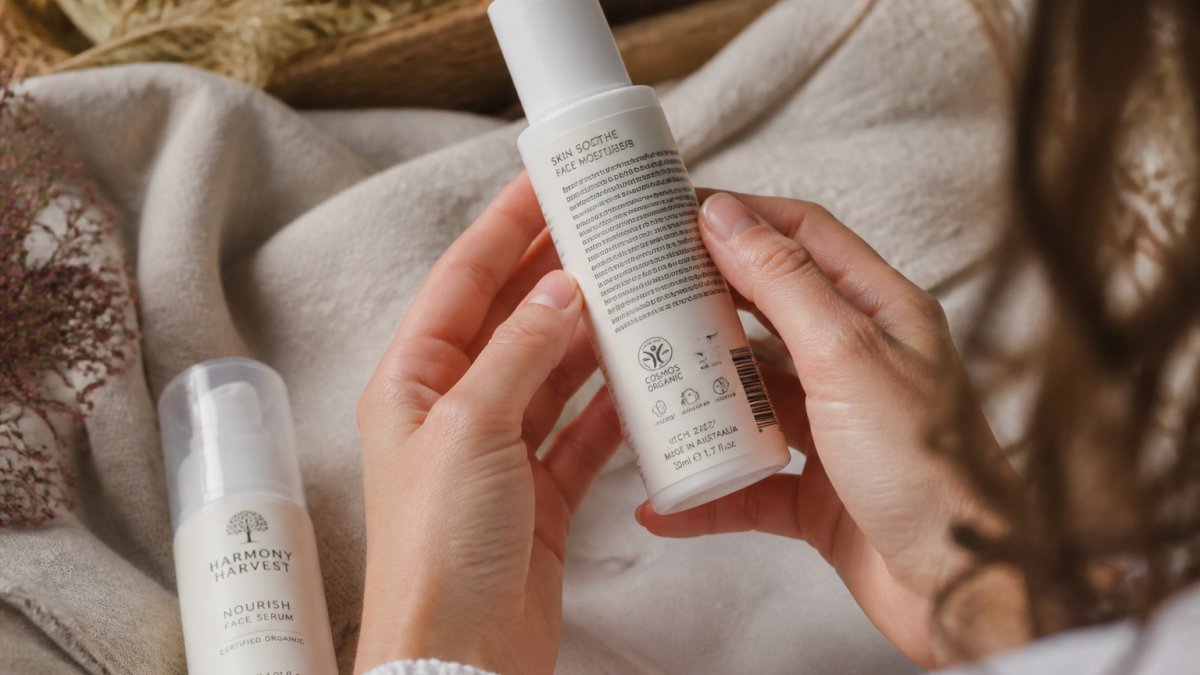
A genuine COSMOS-certified skincare label carries three things together: the COSMOS logo, the certifying body's name, and a certification number. Miss any one, and you are looking at a partial claim.
Turn the bottle over and check the back panel first.
- The COSMOS logo, in its correct form
- The certifying body's name, such as ACO Certification Ltd
- A certification number you can search
Logo Lookalikes and Claims That Mean Nothing
Leaf motifs, the word "pure", "botanical", "clean", and hand-drawn green circles are not certifications. They are design choices. None of them is audited by anyone.
The tell is always the same. A real certification points to a third party you can contact. A lookalike points only to the brand's own marketing.
Reading the COSMOS Organic Ingredients Percentage on the Pack
Those two numbers explain a lot of confusion. A product can be 95% organic in its plant content and still sit near 20% organic overall, because water and minerals make up much of the rest.
So when you compare two bottles, compare the same figure. Comparing one brand's plant-based percentage against another's total percentage is meaningless.
When a Certificate Cannot Be Verified: What to Do Next
If a certificate cannot be verified, do not assume fraud, but do not buy on trust either. Certificates lapse, businesses rebrand, and directories lag. Work through a short checklist before you decide.
A Consumer Checklist for Unverifiable Claims
Work through these in order. Most unverifiable claims resolve at one of the first three steps.
- Is the number missing entirely? Check the carton, the bottle and any insert. If no number appears anywhere, the claim cannot be checked from the pack.
- Does the number return no record? Try the business name as well as the number, directories are indexed differently, and a number entered with or without spaces or prefixes may not match.
- Does the record show an expired date? Note the expiry and ask the brand whether the certificate has been renewed. Stock produced during the valid period may still be on shelves.
What to Ask the Brand
Send a short message with three questions:
- Which body certified this product?
- What is the certificate number?
- Does the certificate cover this specific product?
A brand that holds genuine certification will answer quickly and point you to the directory entry. A brand that cannot will usually reply with a paragraph about its values instead. The difference is not in the warmth of the reply but in whether it contains a number you can search.
Reading the Response
A useful response names the certifying body, gives the certificate number, and confirms the scope covers the product. A response that talks about natural ingredients, ethical sourcing or transparency without naming a certifier or number has not answered the question.
If the brand confirms a certificate but the directory still shows nothing, ask the certifying body directly, they maintain their own records and are usually the fastest route to a definitive answer.
If a Claim Turns Out to Be Misleading
If a brand cannot substantiate a certification claim, that may amount to misleading conduct. The ACCC guidance on false or misleading claims sets out where consumers stand and how to raise a concern. You do not need to be certain of a breach to ask a question, a polite query to the brand is usually enough to resolve the matter.
Where to Check
The ACO Certification Ltd certified products directory lets you search by business name, and the COSMOS-standard official site explains what each label requires. Both are free to use and take a minute to search.
How Harmony Harvest Makes Verification Easy
We built our range so this checking process takes seconds, not an afternoon.
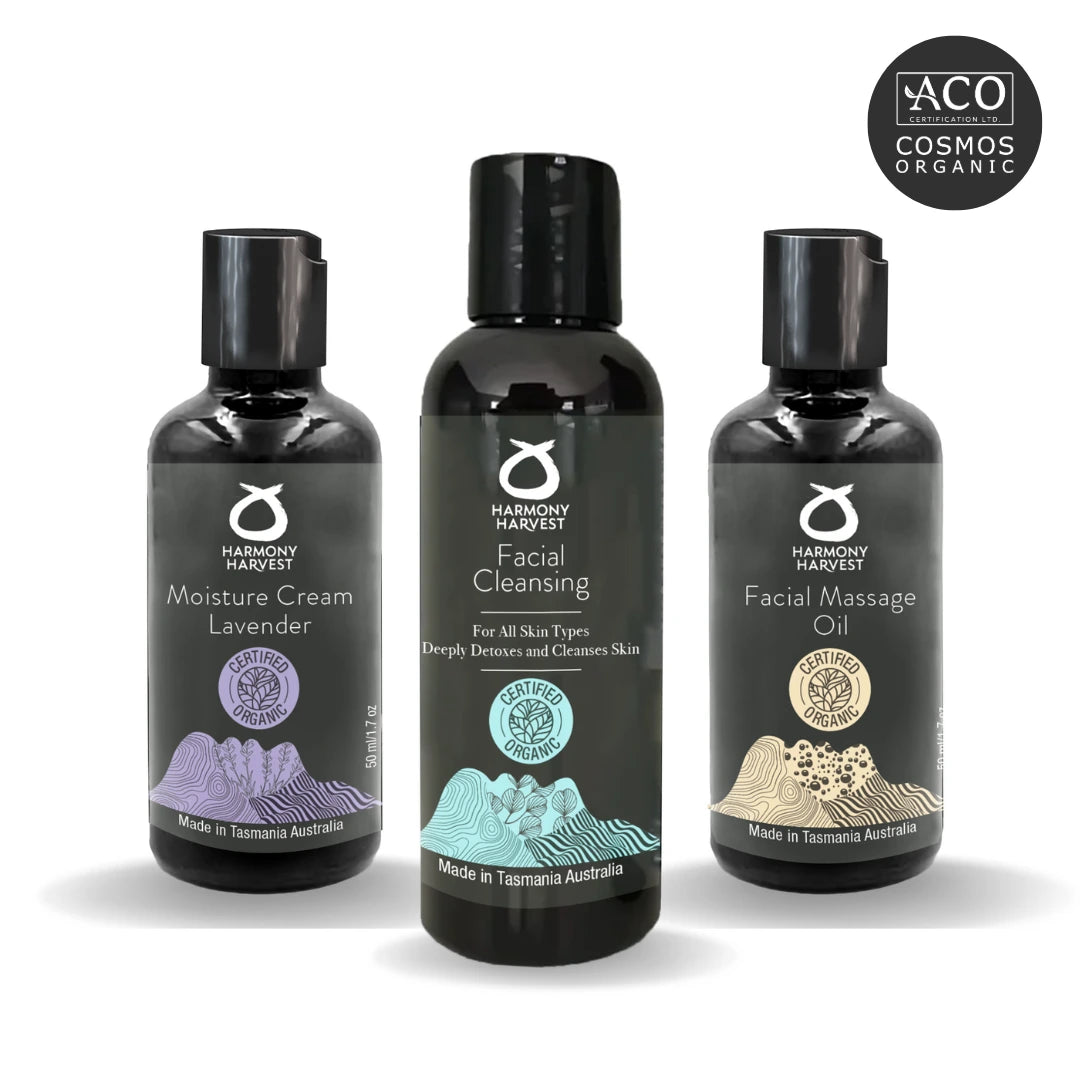
The logo, certifying body and number sit together on the label, so you can search the number yourself and confirm the scope covers the product in your hand.
Our formulas use Australian botanicals, and the range is cruelty-free. The certification is not a badge we added at the end, it shaped how the products were formulated from the start.
Final Thoughts: Build the Checking Habit
Certification only protects you if you actually use it. The habit takes five minutes: find the number, search the directory, match the scope.
The brands worth your money will make that check easy. If a label hides its certifier, that tells you something too.
Once you have run the check and you are confident in what you are buying, you can explore our COSMOS-certified organic, vegan and cruelty-free Facial Care range.
Frequently Asked Questions
How can I check whether a skincare product is genuinely COSMOS-certified?
Look for the COSMOS signature logo plus a certification number on the packaging, then search that number in the certifying body's official certification directory. The entry should list the brand and the specific products covered. If the logo appears without a number, or the number cannot be found, treat the claim as unverified. Harmony Harvest carries ACO COSMOS-Organic certification, so its facial, body and hair care products can be checked the same way.
What is the difference between COSMOS Organic and COSMOS Natural?
Both sit under the same COSMOS certification standard but have different thresholds. COSMOS ORGANIC requires at least 95% of the plant-based ingredients to be certified organic, plus a minimum organic content across the whole formulation. COSMOS NATURAL has no organic-content requirement, but still demands at least 95% natural-origin ingredients and the same restrictions on prohibited ingredients. A product can be COSMOS NATURAL without being COSMOS ORGANIC, so read which word follows the logo.
Does a COSMOS logo mean the whole product is certified?
Not necessarily. Certification applies to a finished product and to a defined scope, so a brand may hold certification for some items and not others. Check that the specific product name appears in the directory listing rather than assuming the whole range is covered. Ingredient approval is also separate: a certified organic ingredient does not make the finished product certified. Always match the certificate scope to the bottle in your hand.
What should I look for on a COSMOS-certified skincare label?
Check four things: the COSMOS signature logo, the word ORGANIC or NATURAL beneath it, the certifying body's name, and a certification number. Then read the ingredient list to confirm no prohibited ingredients appear, and look for the organic percentage statement. If any of these are missing or vague, the product may be using a lookalike logo or an uncertified claim. Harmony Harvest lists its ACO COSMOS-Organic certification clearly so you can confirm it in the directory.
Finding skincare you can trust should not require a research degree. At Harmony Harvest, our Facial Care collection is COSMOS-certified organic, vegan, and cruelty-free, made with Australian botanicals and free from synthetic detergents. Every product carries its certification details on the pack, so you can verify the claim yourself in minutes. Explore the Facial Care collection and start with a formula you can check, not just believe.
Best Sellers
Read more
Sustainable Packaging in Australian Organic Haircare
Sustainable packaging in Australian organic haircare explained: materials, recyclable standards, refillable bottles and how to spot greenwashing.
Read more
Organic vs Conventional Shampoo: Cost Benefit Analysis 2026
Compare organic vs conventional shampoo on cost per wash, ingredients, performance and sustainability to see which delivers real long-term value
Read more