

Best Organic Hair Care for Dry Damaged Hair
Table of Contents
- What Makes Organic Hair Care Different for Dry, Damaged Hair
- Organic Shampoo for Dry Hair: What to Look For
- Organic Conditioner for Damaged Hair: Why It Matters
- Hair Masks, Oils and Leave-In Treatments Compared
- A Simple Hair Care Routine for Damaged Hair
- Hair Care for Dry and Frizzy Hair: Taming Frizz Without Silicones
- Fragrance-Free and Sensitive Scalp Options
- Conclusion: Choosing Organic Hair Care That Works for You
- Frequently Asked Questions
Last Updated: October 14, 2026
What Makes Organic Hair Care Different for Dry, Damaged Hair
If your hair feels straw-like no matter how much conditioner you use, the problem may not be your routine.
Organic hair care is different because it builds moisture and strength from plant-based ingredients rather than coating hair with silicones and synthetic detergents.
The Australian Competition and Consumer Commission's guidance on green claims is clear that "organic" and "natural" labels must be truthful and substantiated.
What COSMOS certification actually means on a label
COSMOS certification is an internationally recognised standard for organic and natural cosmetics, verified by independent auditors rather than self-declared by the brand. It sets minimum thresholds for organic ingredients, restricts synthetic chemicals, and requires sustainable manufacturing and packaging practices.
A product carrying COSMOS certification has been checked at every stage, from ingredient sourcing to final formula. That's a meaningful step beyond a brand simply calling itself "natural."
How to choose based on what caused the damage
Different damage needs different care. Heat damage, colour treatment, and everyday mechanical wear each respond to different ingredients.
- Heat damage: prioritise protein and moisture balance. Plant proteins help rebuild the hair's structure.
- Colour-treated hair: look for gentle, sulphate-free cleansers that won't strip colour.
- Mechanical damage: focus on slip and detangling. Oils and leave-in conditioners reduce friction.
Match the cause to the ingredient and you'll see better results than guessing.
Organic Shampoo for Dry Hair: What to Look For
The best organic shampoo for dry hair cleans gently without stripping the natural oils your scalp needs. Harsh surfactants are the most common culprit behind that tight, squeaky feeling after washing.
Here's what to prioritise:
- Plant-derived cleansers such as coconut-based surfactants
- No sulphates (SLS and SLES), which strip moisture
- Humectants like aloe vera and glycerin to attract water
For dry hair, wash less often than you think you need to. Two to three times a week suits most people with dry or damaged hair. Over-washing is a common mistake, and it can undo the work of every good product in your routine.
Organic Conditioner for Damaged Hair: Why It Matters
Conditioner is where repair actually happens. An organic conditioner for damaged hair replenishes moisture and smooths the cuticle, which is what gives hair its shine and strength.
Look for conditioners built on plant oils and butters rather than silicones. Silicones give instant slip, but they build up over time and can mask damage instead of addressing it.
Apply conditioner from mid-lengths to ends, avoiding the scalp. Leave it for two to three minutes before rinsing.
Hair Masks, Oils and Leave-In Treatments Compared
Intensive treatments are where you'll see the fastest change in dry, damaged hair. Each format suits a different need, so it helps to know which does what, and, just as importantly, which one matches the cause of your damage rather than the symptom you can see.
| Treatment | Best For | How Often | Key Ingredients | Typical Use Per Application |
|---|---|---|---|---|
| Hair mask | Deep hydration and repair | Once a week | Plant proteins, shea butter, aloe vera | 1-2 generous tablespoons |
| Hair oil | Frizz control, shine, sealing ends | 2-3 times weekly | Jojoba, coconut, argan | 3-6 drops |
| Leave-in conditioner | Daily moisture and detangling | Every wash | Humectants, light plant oils | 1-2 pumps |
| Protein treatment | Strengthening weak, stretchy hair | Every 4-6 weeks | Hydrolysed wheat protein, soy protein | Per product directions |
A mask is your weekly reset. Oils are for finishing and taming frizz. Leave-in conditioners protect through the day. Protein treatments are powerful but easy to overdo, so space them out and watch how your hair responds.
Match the treatment to the cause, not just the symptom
Most people reach for the same mask regardless of why their hair is dry. That's a common pattern, and it's why results plateau. A more useful approach is to start from the cause:
- Heat damage: the cuticle is lifted and the cortex is weakened. Alternate a protein treatment with a moisture mask, protein alone makes heat-damaged hair stiff, moisture alone leaves it limp.
- Colour or chemical damage: the hair is more porous and loses moisture quickly. Lean on humectant-rich masks and leave-in conditioners, and keep protein treatments to every six weeks or so.
- Mechanical damage: friction from brushing, towels, and tight styles. Oils and leave-in conditioners that add slip reduce the friction that causes breakage in the first place.
How to tell whether you need protein or moisture
A simple at-home check: take a single shed strand and stretch it gently between your fingers.
- If it snaps quickly with no stretch, your hair is likely protein-deficient and needs a protein treatment.
- If it stretches a long way and feels mushy before breaking, it's likely over-moisturised and needs protein.
- If it stretches slightly and returns to shape, the balance is about right, focus on maintenance.
This isn't a laboratory test, but it can be a useful starting point before committing to a treatment cycle.
What to look for on an intensive treatment label
- Plant proteins such as hydrolysed wheat, soy, or rice protein, these are small enough to penetrate the cuticle, unlike whole proteins.
- Fatty-acid-rich butters like shea and cocoa, which seal moisture without the build-up silicones can cause.
- Humectants such as aloe vera and glycerin, which attract water into the hair shaft.
At Harmony Harvest, our hair care range is COSMOS-certified organic and vegan, which means the botanical ingredients are independently verified rather than self-declared. You can explore the full Hair Care collection | /collections/hair-care to see which formats suit your routine.
A Simple Hair Care Routine for Damaged Hair
A hair care routine for damaged hair doesn't need ten steps. It needs the right four, done consistently, and it needs a realistic sense of how often to do each one.
Your wash-day sequence
- Cleanse with a gentle, sulphate-free organic shampoo. Two to three times a week suits most people with dry or damaged hair. Focus the lather on the scalp, not the lengths, the ends get cleaned when the shampoo rinses through.
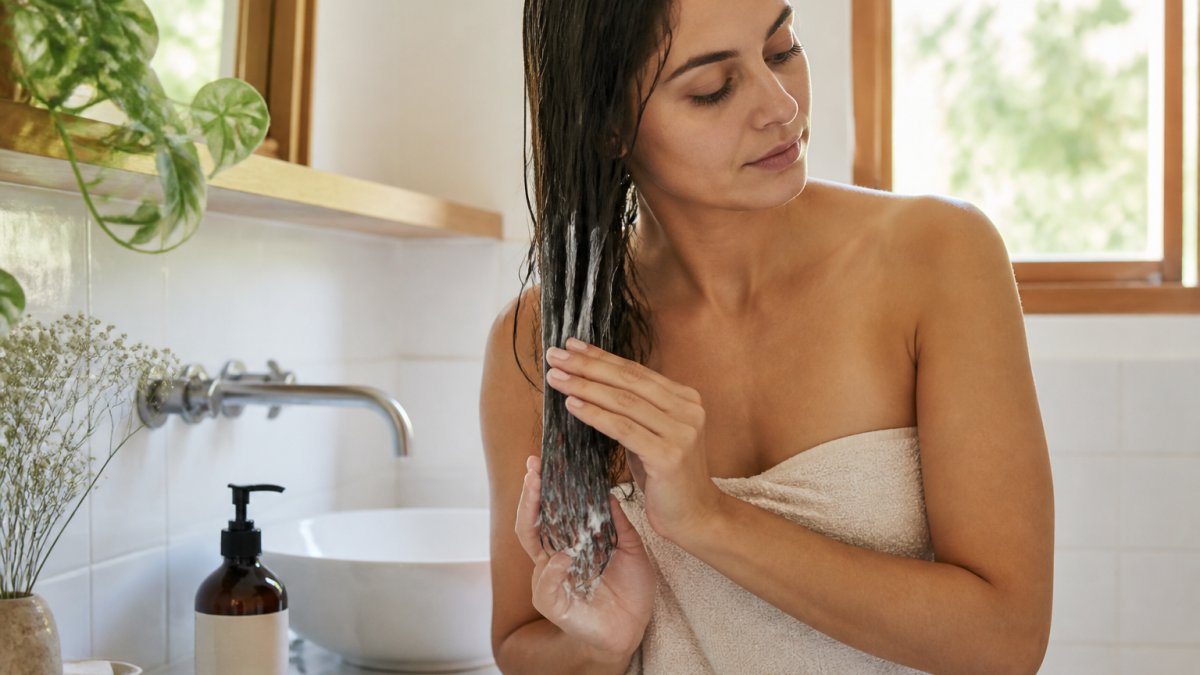
- Condition from mid-lengths to ends every wash. Leave for two to three minutes. This is the step that smooths the cuticle and gives hair its slip.
- Treat with a hydrating mask once a week, or a protein treatment every four to six weeks. Don't stack both in the same wash, alternate them.
- Protect with a leave-in conditioner or a few drops of hair oil on damp ends. This is your defence against friction, heat, and the day ahead.
Order matters. Always apply products from thinnest to thickest, and always to damp hair for the best absorption. Thick butters and oils applied before lighter products can block the lighter ones from penetrating.
Between washes
You don't need to rewet your hair to keep it hydrated. A few small habits carry the routine through the week:
- Refresh ends with a drop of oil on days two and three, focusing on the oldest, driest part of the hair.
- Use a leave-in mist if your hair feels tight or static, a light spritz on dampened ends is enough.
- Sleep on a silk or satin pillowcase, or tie hair loosely in a soft scrunchie, to reduce overnight friction.
How long before you see a difference
Give it four to six weeks of consistency before judging results. Hair repair is gradual, the hair you can see is already dead, so what you're really doing is protecting the new growth and preventing further damage to the lengths.
A useful way to track progress is to take a photo of your ends in natural light on day one, then again at four weeks. Changes are easier to see in a photo than in the mirror.
A note on heat and colour
If you heat-style, use a heat protectant every time and keep the tool on the lowest effective setting. If you colour, space appointments further apart and lean on moisture-focused treatments in the weeks after.
Our COSMOS-certified organic and vegan hair care range is formulated to slot into exactly this kind of routine, without synthetic detergents or silicones that can mask damage.
Hair Care for Dry and Frizzy Hair: Taming Frizz Without Silicones
Frizz is a cry for moisture. When hair lacks hydration, it reaches for water in the air, and the cuticle lifts, creating that fuzzy halo.
Silicone-free frizz control comes down to three things:
- Hydrate with humectants like aloe vera and glycerin
- Seal with plant oils such as jojoba and coconut
- Protect with a leave-in conditioner before heat styling
Rough drying with a towel is a hidden frizz trigger. Swap to a soft microfibre towel or an old cotton t-shirt and pat, don't rub. Small changes like this add up faster than any single product.
Fragrance-Free and Sensitive Scalp Options
A sensitive scalp reacts to fragrance, essential oils, and synthetic additives. If your scalp stings, flakes, or itches after washing, fragrance is often the first place to look.
Fragrance-free doesn't mean unpleasant. Many plant-based formulas rely on the natural scent of their botanicals, or none at all. When you're choosing for a reactive scalp, keep it simple:
- Fewer ingredients means fewer chances of irritation
- Patch test new products on your inner arm first
- Avoid alcohol-heavy formulas that dry the scalp
Our COSMOS-certified organic and vegan range is formulated without synthetic detergents, which suits reactive scalps well. The Therapeutic Goods Administration's information on cosmetic ingredients is a useful reference if you want to check how ingredients are regulated.
Conclusion: Choosing Organic Hair Care That Works for You
Choosing well comes down to understanding your hair's needs and reading labels honestly. Organic hair care for dry, damaged hair works when the ingredients match the cause of the damage, and when you give the routine time to deliver.
The Cosmetic Ingredient Review assessments offer independent safety data if you want to dig deeper into specific ingredients.
Frequently Asked Questions
What ingredients should I look for in organic hair care for dry hair?
Look for plant oils such as coconut and jojoba, humectants like aloe vera, and plant proteins including hydrolysed wheat protein. These ingredients help draw in moisture and temporarily patch damaged sections of the hair shaft. Also check for COSMOS-certified organic claims, which verify the formula meets a recognised standard rather than just using 'natural' as a marketing term.
How often should I wash dry, damaged hair?
Most people with dry or damaged hair do well washing two to three times a week. Over-washing strips natural oils and can make dryness worse. Between washes, use a leave-in conditioner or hair oil on the ends to keep hair moisturised. If your scalp gets oily quickly, focus shampoo on the scalp and let it rinse through the ends rather than scrubbing the lengths.
Can organic conditioner for damaged hair really repair breakage?
Conditioners can't permanently repair broken bonds, but they can temporarily fill gaps in the hair shaft, reduce friction and make hair feel smoother and stronger. Plant proteins and oils help improve manageability and reduce further breakage. For lasting improvement, pair conditioner with a weekly hair mask and avoid heat styling where possible.
Is organic hair care suitable for colour-treated hair?
Yes, many organic formulas are gentle enough for colour-treated hair. Look for products labelled colour-safe and free from harsh sulfates, which can strip colour faster. Plant-based ingredients like antioxidants and aloe vera help maintain moisture, which keeps colour looking fresher for longer. Always patch test a new product if your scalp is sensitive.
Dry, damaged hair needs patience and the right plant-based ingredients, not another quick fix. Explore the Harmony Harvest Hair Care collection for COSMOS-certified organic, vegan, and cruelty-free formulas built to restore moisture, strength, and shine. Start with a gentle shampoo and conditioner, add a weekly mask, and let your hair recover the way it's meant to.
Best Sellers

Read more
Benefits of Australian Botanicals in Skincare: 2026 Guide
Discover the benefits of Australian botanicals in skincare, from Kakadu plum to eucalyptus, plus how to choose and build a botanical routine.
Read more
Buy COSMOS Certified Vegan Face Oil: 2026 Review Guide
Learn how to buy COSMOS certified vegan face oil in 2026. We review certification, ingredients, skin types and how to use facial oil for massage.
Read more