


Scalp Cleansing Treatment: A Complete Guide
Table of Contents
- What Is Scalp Cleansing Treatment?
- Why Your Scalp Needs Regular Cleansing
- Signs Your Scalp Needs a Deep Cleanse
- Scalp Buildup Removal: Understanding the Process
- How to Exfoliate Scalp Safely and Effectively
- Best Ingredients for Scalp Health and Detoxification
- How Often Should You Use Scalp Cleansing Treatment?
- Conclusion
Last Updated: August 7, 2026
What Is Scalp Cleansing Treatment?
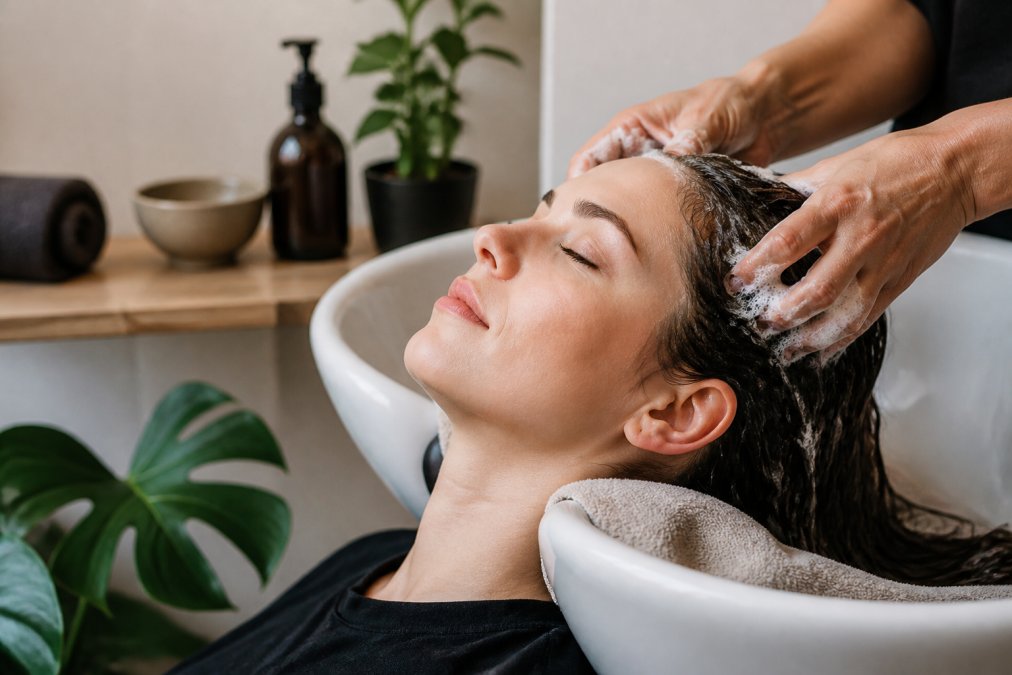
Scalp cleansing treatment is a targeted approach to removing buildup, dead skin cells, and excess sebum from your scalp and hair follicles. Unlike regular shampooing, which focuses on surface cleansing, scalp cleansing treatment works deeper to refresh the scalp microbiome and restore balance to this often-neglected area. At Harmony Harvest, we understand that your scalp is living skin that deserves the same care and attention as your face, and that's where proper cleansing becomes essential.
The scalp naturally accumulates product residue, environmental pollutants, and dead skin cells over time. When these accumulate, they create an environment where hair growth struggles and irritation develops. A proper scalp cleansing treatment combines gentle physical or chemical exfoliation with nourishing ingredients to restore clarity and health. Think of it as a reset for your scalp's natural ecosystem.
Why Your Scalp Needs Regular Cleansing
Your scalp is far more complex than most people realise. It's home to thousands of hair follicles, oil glands, and a delicate microbiome that directly influences hair quality and overall scalp health. When buildup accumulates, whether from product residue, mineral deposits from hard water, or dead skin cells, it disrupts this balance.
Regular scalp cleansing treatment offers several benefits. It removes follicle congestion that can restrict hair growth. It helps restore pH balance, which is crucial for maintaining a healthy scalp barrier. It also allows your scalp's natural oil regulation to function properly, meaning you're less likely to experience the greasy-then-dry cycle many people struggle with.
The microbiome angle matters more than most guides acknowledge. Your scalp hosts billions of microorganisms that, when balanced, support healthy hair and skin. When buildup suffocates this ecosystem, inflammation and irritation follow. A good scalp cleansing treatment doesn't strip away all bacteria, it removes the conditions that allow harmful bacteria to dominate.
Signs Your Scalp Needs a Deep Cleanse
Several clear indicators suggest your scalp would benefit from a proper cleansing treatment. An itchy scalp that persists despite regular washing often signals buildup rather than dryness. Flaky scalp, which many mistake for dandruff, frequently results from product accumulation and follicle congestion rather than a skin condition. If your hair feels limp, weighed down, or loses volume quickly after washing, buildup is likely the cause.
You might also notice that your scalp becomes greasy within hours of shampooing, yet feels tight or uncomfortable. This contradiction happens when product residue prevents natural oils from distributing properly. Some people experience a dull appearance to their hair or notice that colour treatments don't take evenly, both signs that scalp buildup is interfering with hair health.
Scalp tenderness or sensitivity when you touch your scalp can indicate inflammation from congestion. If you've been using the same haircare routine for months without refreshing it, buildup is almost certainly accumulating. Even if you don't notice obvious symptoms, a quarterly deep cleanse supports long-term scalp health and prevents problems before they develop.
Scalp Buildup Removal: Understanding the Process
Scalp buildup forms through several mechanisms. Product residue accumulates when conditioners, styling products, and treatments aren't fully rinsed away. Sebum oxidises and hardens on the scalp surface. Dead skin cells clump together with oils. Environmental particles, dust, pollution, chlorine from swimming, settle into this sticky layer. Hard water minerals bind to your hair shaft and scalp. Over time, these layers create an environment where the scalp cannot breathe properly.
Removing this buildup requires more than standard shampooing. You need a process that physically or chemically loosens these deposits so they can be rinsed away. This is where scalp exfoliation becomes valuable.
Physical vs Chemical Exfoliation
Physical exfoliation uses gentle mechanical action to dislodge buildup. This might involve a soft scalp brush, a gentle scrub with fine particles, or massage techniques that increase circulation. Physical methods work immediately and are satisfying because you feel the action happening. They're particularly effective for visible flakes and surface-level residue.
The limitation of physical exfoliation is that it cannot penetrate deeply into follicle congestion or dissolve mineral deposits. If your buildup is primarily hard-water minerals or stubborn product residue, physical scrubbing alone won't fully address it.
Chemical exfoliation uses acids or enzymes to dissolve and soften buildup. Salicylic acid (beta hydroxy acid) penetrates into follicles and breaks down sebum-based residue. Glycolic acid (alpha hydroxy acid) dissolves dead skin cell bonds. Plant enzymes gently break down protein-based buildup. Chemical exfoliants work below the surface and are more effective for follicle congestion and mineral deposits.
The trade-off is that chemical exfoliation requires proper timing, you can't rush it, and it requires careful rinsing. For sensitive scalps, starting with lower concentrations or alternating with physical methods works better.
Many effective scalp cleansing treatments combine both approaches. A gentle physical massage followed by a chemical exfoliant treatment, then thorough rinsing, addresses buildup at multiple levels.
How to Exfoliate Scalp Safely and Effectively
The safest approach to scalp exfoliation follows a simple sequence. Begin by assessing your scalp's current condition and sensitivity level. If your scalp is already irritated, inflamed, or very sensitive, start with the gentlest method and progress gradually.
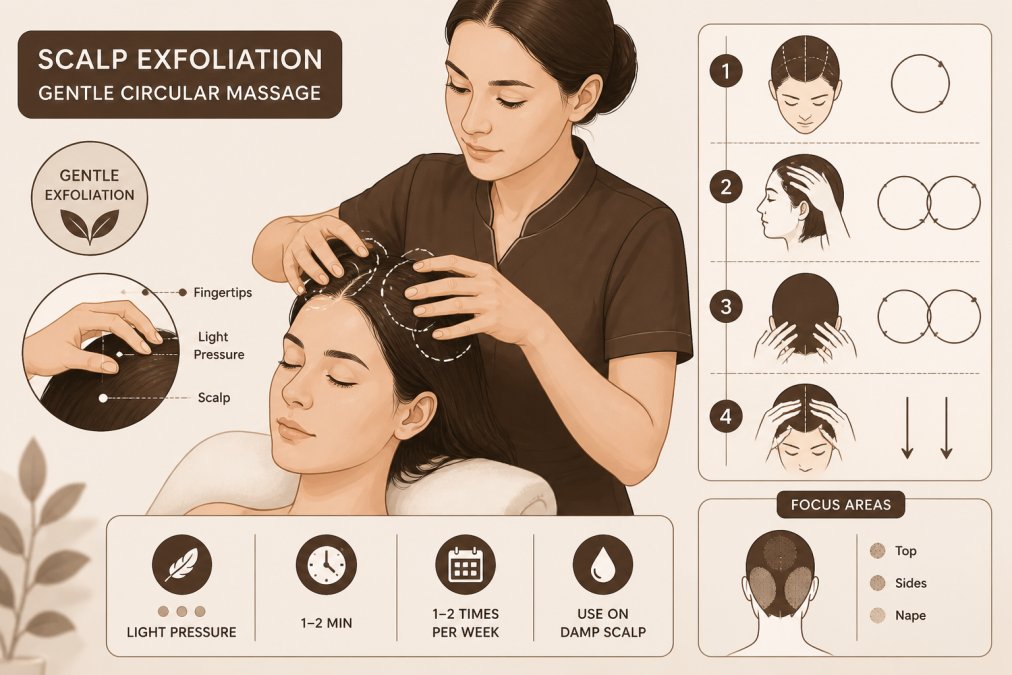
Step 1: Prepare Your Scalp [Time: 5 minutes]
Wet your hair thoroughly with warm (not hot) water. Hot water can over-stimulate oil production and increase sensitivity. Warm water opens the hair cuticle and softens buildup without causing stress. Gently massage your scalp with your fingertips using slow, circular motions. This increases blood flow and prepares the scalp for exfoliation.
Step 2: Apply Your Chosen Exfoliant [Time: 3-5 minutes]
If using a physical scrub, apply it to your scalp in sections. Use your fingertips, never your nails, to gently massage the product in slow circles. Work from the hairline backward, then focus on areas where you notice the most buildup. If using a chemical exfoliant, apply it evenly across your scalp and let it sit for the time recommended (typically 5-10 minutes). Don't rush this step.
Step 3: Massage Gently [Time: 5-7 minutes]
For physical exfoliants, continue gentle circular massage throughout the application time. For chemical exfoliants, you can perform a gentle massage without the scrub product to enhance circulation. Never scrub aggressively or use your nails. The goal is to support the exfoliation process, not to create friction that irritates.
Step 4: Rinse Thoroughly [Time: 5 minutes]
This step cannot be rushed. Rinse with cool water (not cold, which can be shocking) until the water runs completely clear. Incomplete rinsing leaves exfoliant residue that defeats the purpose and can irritate your scalp. Take your time and ensure all product is removed.
Step 5: Follow With a Nourishing Rinse or Treatment [Time: 5-10 minutes]
After exfoliation, your scalp is more receptive to beneficial ingredients. Apply a hydrating scalp serum or conditioning treatment to restore moisture and support barrier repair. This post-cleansing hydration is crucial, exfoliation removes buildup but also temporarily strips natural oils, so replenishing is essential.
Expected Result: Your scalp should feel refreshed, lighter, and clearer. Hair often appears shinier and feels less weighed down immediately after treatment. Over the following days, you'll notice improved oil regulation and reduced itching.
Best Ingredients for Scalp Health and Detoxification
The most effective scalp cleansing treatments combine exfoliating agents with soothing, nourishing ingredients. Understanding what each ingredient does helps you choose the right treatment for your specific scalp needs.
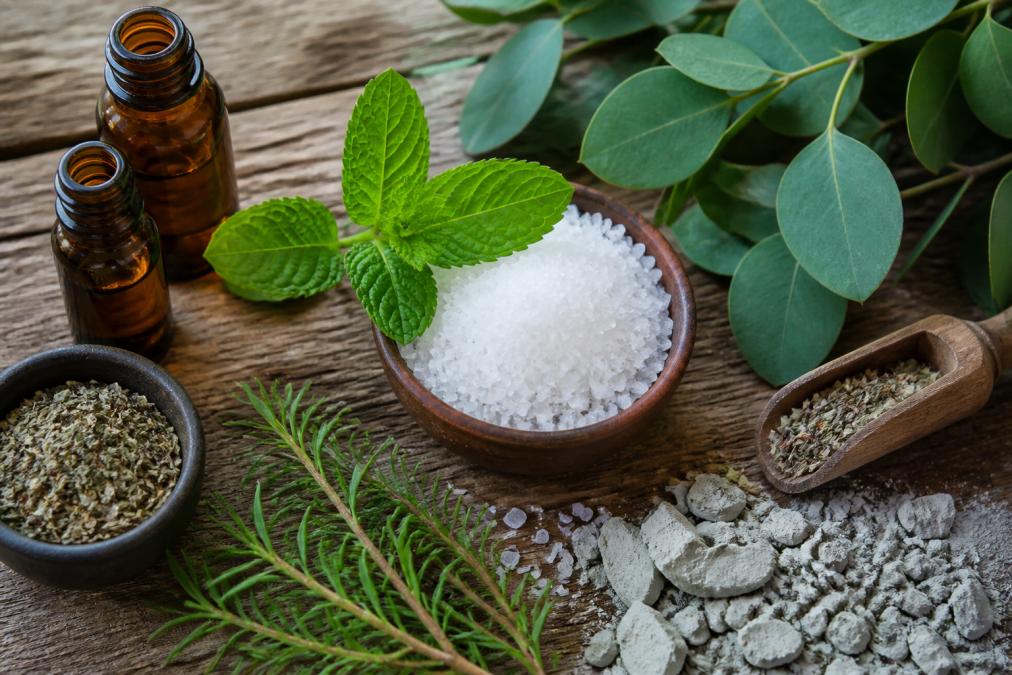
Exfoliating Ingredients:
Salicylic acid is the gold standard for scalp exfoliation. It's lipophilic, meaning it dissolves sebum and product residue effectively. At concentrations of 1-2%, it's gentle enough for regular use yet potent enough to address follicle congestion. Glycolic acid works differently, it dissolves the bonds between dead skin cells, making it excellent for flaky scalp and mineral buildup. Papain (from papaya) and bromelain (from pineapple) are natural enzymes that gently break down protein-based buildup without the strength of chemical acids.
Sea salt provides physical exfoliation with a bonus: it's naturally antimicrobial and helps regulate sebum production. The mineral content also supports scalp health. Charcoal is excellent for drawing out impurities and toxins, though it should be used carefully to avoid over-drying.
Soothing and Nourishing Ingredients:
Zinc pyrithione is clinically proven to support scalp health and reduce inflammation. Niacinamide (vitamin B3) strengthens the scalp barrier and reduces irritation. Tea tree oil has antimicrobial properties and helps refresh the scalp, though it should always be diluted. Peppermint and eucalyptus provide a cooling sensation that feels refreshing and supports circulation.
Plant-based oils like jojoba oil, coconut oil, and argan oil restore hydration after exfoliation. Jojoba is particularly valuable because its composition closely matches the scalp's natural sebum, so it hydrates without leaving residue. Aloe vera soothes irritation and supports barrier repair. Panthenol (provitamin B5) deeply hydrates and strengthens the hair shaft.
Harmony Harvest formulates scalp treatments using COSMOS-certified organic botanical extracts that combine these principles. Rather than relying on synthetic actives, plant-based formulas deliver exfoliation, soothing, and nourishment in one treatment. The botanical compounds work synergistically with your scalp's natural processes rather than forcing results through harsh chemicals.
How Often Should You Use Scalp Cleansing Treatment?
Frequency depends on your scalp type, lifestyle, and the specific treatment you're using. There's no universal answer, but guidelines exist.
For most people, a thorough scalp cleansing treatment once every 2-4 weeks is ideal. This frequency removes accumulation without disrupting your scalp's natural balance. If you have a very oily scalp or use many styling products, you might benefit from monthly treatments. If your scalp is sensitive or dry, every 4-6 weeks is more appropriate.
People who swim regularly, live in hard-water areas, or use heat styling tools frequently should lean toward the more frequent end of this range. The additional environmental stressors and mineral exposure warrant more regular cleansing.
Between deep cleansing treatments, you can support scalp health with gentler methods. A clarifying shampoo once weekly helps prevent excessive buildup. Regular scalp massage (2-3 minutes daily) improves circulation and prevents congestion. These maintenance steps extend the time between deep treatments.
Listen to your scalp rather than following a rigid schedule. If you notice itching, flakiness, or heaviness returning, your scalp needs another treatment sooner. If your scalp feels balanced and healthy, you can extend the interval. Over time, you'll develop intuition about your scalp's needs.
One important note: after a thorough scalp cleansing treatment, your scalp may feel slightly dry for 24-48 hours as it rebalances. This is normal and temporary. Resist the urge to over-wash during this period, let your scalp's natural oil production restore itself. This adjustment period is actually when the most significant barrier repair happens.
Your scalp's health directly influences your hair's appearance, strength, and growth potential. A proper scalp cleansing treatment removes the obstacles preventing your scalp from functioning optimally, and the results speak for themselves. Clearer, healthier scalp means shinier hair, better growth, and reduced irritation.
If you're ready to experience the difference a proper scalp cleansing routine makes, explore Harmony Harvest's Hair Care collection. Our COSMOS-certified organic, vegan formulas are specifically designed to cleanse and refresh your scalp using pure Australian botanicals, without synthetic detergents or harsh chemicals. Discover how nature-inspired scalp care can transform your hair health.
Frequently Asked Questions
What is scalp cleansing treatment and how does it differ from regular shampooing?
Scalp cleansing treatment goes deeper than standard shampooing. While regular shampoo cleanses surface dirt, a dedicated scalp cleansing treatment targets accumulated product residue, sebum buildup, and dead skin cells that regular washing leaves behind. These treatments often use exfoliating or clarifying ingredients to remove follicle congestion and restore pH balance. The result is a refreshed scalp microbiome and improved conditions for healthy hair growth.
How do I know if my scalp needs a cleansing treatment?
Signs include itchy or flaky scalp, visible product buildup at the hair roots, dull or limp hair texture, scalp inflammation, or an oily appearance despite recent washing. Hard water, product accumulation from styling treatments, and environmental pollution can all contribute to these symptoms. If your scalp feels congested or your hair lacks volume and shine, a scalp cleansing treatment can help restore balance and rejuvenate your scalp health.
What's the best way to remove scalp buildup at home?
Start with a clarifying or exfoliating scalp treatment using gentle physical or chemical exfoliants. Massage the product into your scalp using circular motions with your fingertips for 2-3 minutes to loosen residue. Rinse thoroughly with lukewarm water. For best results, follow with a hydrating scalp serum or oil to soothe and restore your scalp barrier after cleansing. Repeat weekly or fortnightly depending on your scalp condition and product use.
Can I use scalp cleansing treatment if I have sensitive or reactive skin?
Yes, but choose treatments formulated for sensitive scalps. Look for COSMOS-certified organic, plant-based formulas free from harsh synthetic detergents and irritating chemicals. Start with a patch test and use gentler exfoliation methods (like soft silicone brushes rather than abrasive scrubs). If your scalp is inflamed, soothe it first with calming botanical ingredients before introducing exfoliation. Harmony Harvest's range of COSMOS-certified organic, vegan scalp products is designed to cleanse effectively without compromising your scalp barrier.
Best Sellers

Read more
5 Best Organic Skincare Products for Sensitive Skin
5 best organic skincare products for sensitive skin: Discover the best organic skincare for sensitive skin. Learn which COSMOS-certified, plant-based.
Read more
Best Moisture Cream for Your Skin: A 2026 Guide
Find the best moisture cream for your skin type. Compare formulas, ingredients, and benefits. Discover COSMOS-certified organic options here.
Read more