

Natural Anti Aging Ingredients for Dry Skin: 2026 Guide
Table of Contents
- Why Dry Skin Ages Differently (and What That Means for Ingredients)
- Natural Anti Aging Ingredients for Dry Skin: What Actually Helps
- Best Oils for Dry Mature Skin: Fatty Acids That Nourish the Barrier
- Hyaluronic Acid for Dry Skin: How to Use It Without Drying It Out Further
- A Skincare Routine for Dry Mature Skin: Order, Timing and Layering
- Concentrations, Labels and Realistic Expectations
- Irritation, Allergies and When Skincare Is Not Enough
- Frequently Asked Questions
Last Updated: October 7, 2026
Why Dry Skin Ages Differently (and What That Means for Ingredients)
Natural anti aging ingredients for dry skin work differently to those made for oily or combination skin. Dry skin produces less sebum, so it loses moisture faster and shows fine lines sooner. That single fact changes which ingredients help.
At Harmony Harvest, we formulate with this in mind. Our range is COSMOS-certified organic and vegan, built around plant oils and humectants rather than harsh actives.
How a Weakened Skin Barrier Accelerates Fine Lines and Wrinkles
A weak skin barrier lets water escape. When skin loses moisture, it looks tight, rough and lined.
The barrier is your skin's outer layer. It holds water in and keeps irritants out. Dry skin often has a thinner, less resilient barrier. So it needs ingredients that rebuild it, not strip it.
A common mistake is reaching for strong exfoliants. These can worsen dryness and make lines look deeper.
Natural Anti Aging Ingredients for Dry Skin: What Actually Helps
The best natural anti aging ingredients fall into two groups: humectants and antioxidants. Humectants pull water into the skin. Antioxidants help protect against daily stress that speeds visible aging.
Here is how the main types compare:
| Ingredient type | What it does | Best for |
|---|---|---|
| Humectants | Draw in and hold water | Dehydration, tightness |
| Plant oils | Nourish and seal the barrier | Dryness, rough texture |
| Antioxidants | Protect against daily stress | Dullness, uneven tone |
| Collagen supporters | Support firmness over time | Fine lines, loss of bounce |
Humectants: Hyaluronic Acid, Hyaluronan and Tremella Mushroom
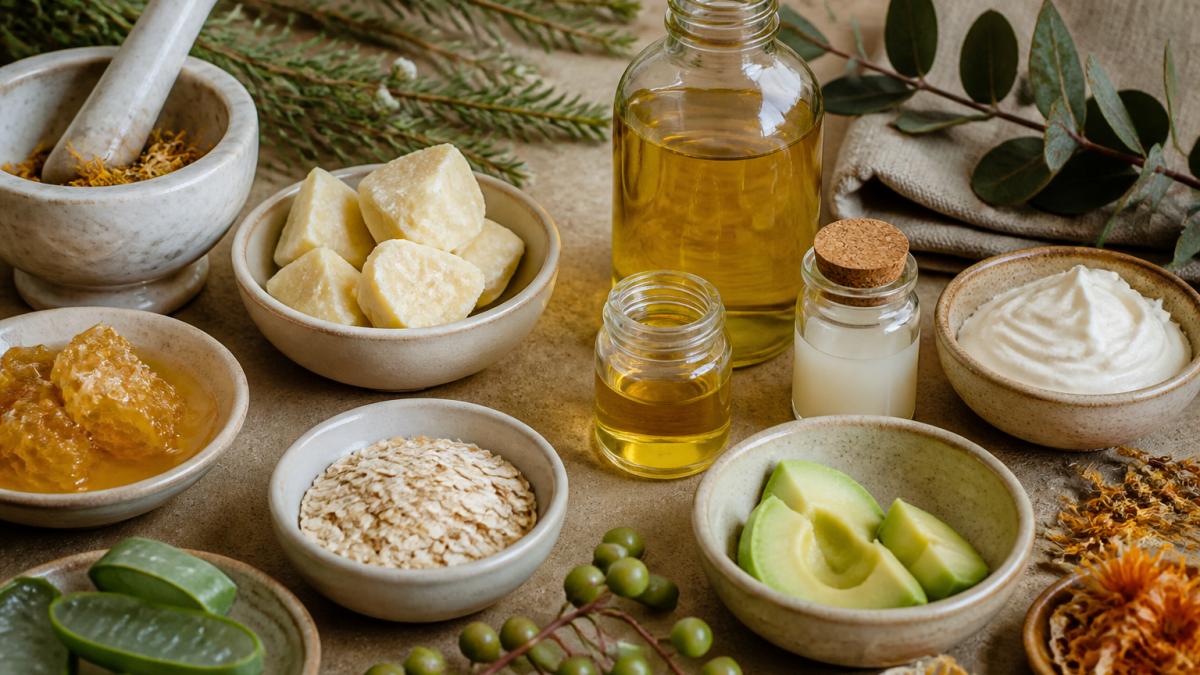
Hyaluronic acid is a humectant that holds many times its weight in water. It is the same molecule as hyaluronan, just a different name.
It works best when applied to damp skin, then sealed with an oil or cream. Tremella mushroom is a plant-based humectant that behaves in a similar way. It suits those who prefer botanical skincare.
Antioxidants and Collagen Support: Vitamin C, Vitamin E and Tea Extracts
Vitamin C is an antioxidant linked to brighter, more even-looking skin. Vitamin E supports the barrier and works well alongside it. Tea extracts add plant antioxidants that help calm and protect.
For collagen support, look for ingredients that nourish rather than irritate. Gentle, consistent care supports the skin's own renewal over time.
Best Oils for Dry Mature Skin: Fatty Acids That Nourish the Barrier
The best oils for dry mature skin are rich in fatty acids that mimic the skin's own lipids. These oils seal in moisture and soften rough texture.
Look for oils high in linoleic acid, oleic acid and omega fatty acids. They nourish the barrier and help skin feel supple again.
Evening Primrose, Olive, Avocado and Flaxseed Oils Compared
- Evening primrose oil: high in gamma-linolenic acid, good for dry, reactive skin
- Olive oil: rich in oleic acid, deeply nourishing for mature skin
- Avocado oil: contains palmitoleic acid, softens and comforts
- Flaxseed oil: high in omega fatty acids, supports the barrier
Each one works well in a facial oil or body oil. Many people find a blend suits dry skin better than a single oil.
Hyaluronic Acid for Dry Skin: How to Use It Without Drying It Out Further
Hyaluronic acid for dry skin only works if you seal it in. Applied alone in a dry room, it can pull moisture from your skin instead of the air.
The fix is simple. Apply it to damp skin, then follow with an oil or cream.
A Skincare Routine for Dry Mature Skin: Order, Timing and Layering
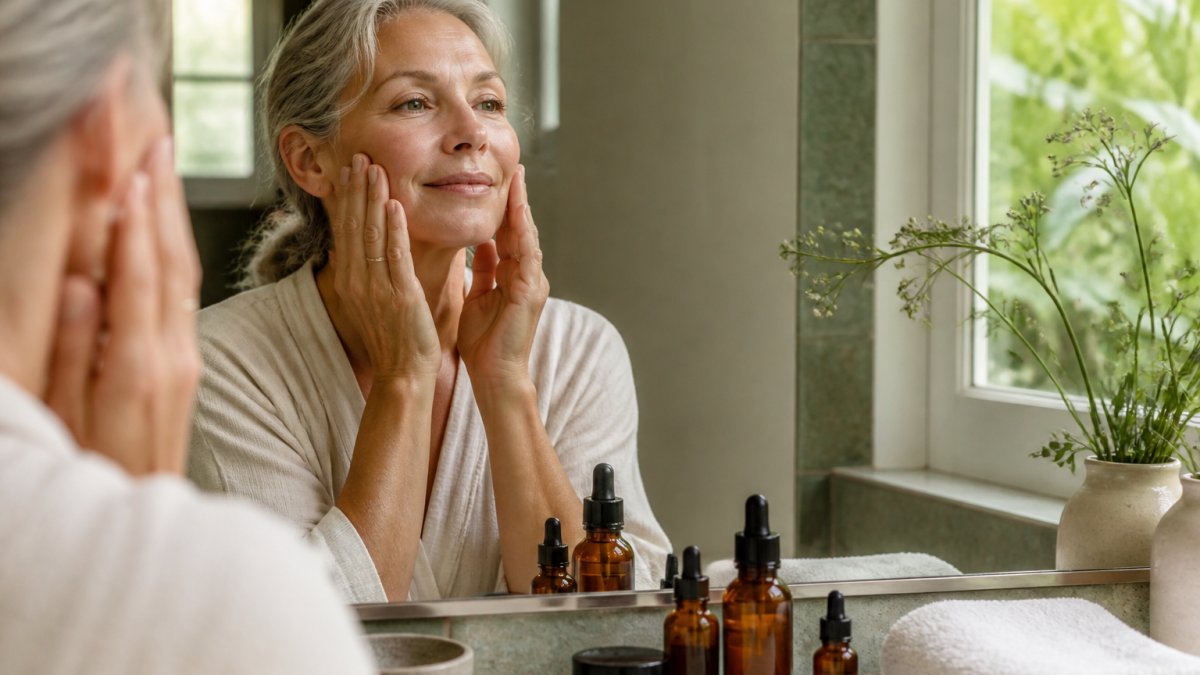
A good skincare routine for dry mature skin is short and consistent. Thin, watery products go first. Thick, oily ones go last.
How to Layer Ingredients So Each One Works
- Cleanse gently with a non-stripping cleanser
- Apply a humectant, like hyaluronic acid, to damp skin
- Add an antioxidant serum, such as vitamin C
- Seal with a plant oil or rich cream
- Use a barrier balm at night if skin feels tight
Keep it to these steps. More products rarely means better results for dry skin.
Concentrations, Labels and Realistic Expectations
Most competitors tell you which ingredients to look for. Very few tell you how to read a label to check whether an ingredient is actually in the product in a meaningful amount. This is the part that separates a useful purchase from a hopeful one.
How to read an ingredient list (INCI)
Ingredients are listed in descending order of concentration, down to about 1%. After that point, they can be listed in any order. Two practical consequences:
- If hyaluronic acid, vitamin C or a botanical extract appears near the bottom, it may be present at a fraction of a percent, enough to name on the label, not necessarily enough to do much.
- If the first five ingredients are water, glycerin, alcohol and silicones, the "hero" botanical further down is doing less work than the marketing suggests.
A useful habit: scan the first five ingredients for humectants (glycerin, hyaluronic acid, sodium hyaluronate, betaine, panthenol) and barrier lipids (shea butter, jojoba, squalane, ceramides). If they are not there, the product is unlikely to be a strong fit for dry skin regardless of what the front of the bottle says.
Concentration is not the same as effectiveness
Higher percentages are not automatically better, especially for dry skin:
- Vitamin C: 10-15% of a well-formulated derivative is often better tolerated than 20% ascorbic acid.
- Hyaluronic acid: low, medium and high molecular weights behave differently. A blend usually hydrates at more than one depth; a single high-molecular-weight version can sit on the surface and feel tacky.
- Niacinamide: 2-5% is generally well tolerated; higher percentages can flush sensitive skin.
- Essential oils: often included at under 1%, but even at that level they can irritate reactive skin. If your skin is dry and sensitive, fragrance and essential oils are the first things to drop.
Formulation matters as much as the number. A 5% vitamin C in a stable, well-buffered base can outperform a 20% version that oxidises in the bottle.
Evidence quality: what to trust
Not all "proven" claims are equal. A rough hierarchy:
- Strong human evidence, vitamin C, vitamin E, niacinamide, hyaluronic acid, glycerin, ceramides, retinoids (including the natural-adjacent retinaldehyde).
- Moderate human evidence, green tea extract, soy isoflavones, some peptides.
- Mostly laboratory or traditional, many botanical extracts, tremella mushroom, most "superfood" oils.
This does not mean the third group is useless. It means the claims should be read as supportive, not transformative.
What to realistically expect, and when
- Days 1-7: skin feels less tight, makeup sits better. This is hydration, not anti-ageing.
- Weeks 2-6: rough texture softens, tone looks more even.
- Weeks 8-12: fine lines look softer as hydration and barrier function improve. This is the earliest point at which antioxidant and collagen-support ingredients show visible change.
- Beyond 12 weeks: gradual, modest improvement with consistent use. Deep wrinkles and sagging are not reversed by topical natural ingredients.
A note on "natural" and "organic" claims
In Australia, "organic" and "natural" are not tightly regulated on cosmetic labels. Third-party certification is the more reliable signal. Harmony Harvest products are COSMOS-certified organic and vegan, which means the formulation has been assessed against a published standard rather than a marketing claim. When you are comparing products, certification is a more useful check than the word "natural" on the front of the bottle.
Irritation, Allergies and When Skincare Is Not Enough
Even natural ingredients can cause irritation. Essential oils and some botanical extracts may trigger reactions in sensitive skin.
Patch test anything new. Apply a small amount to your inner arm and wait 24 hours.
Sometimes skincare is not enough. Persistent dryness, cracking or rashes may need a doctor or dermatologist. This is especially true if skin does not improve with gentle care.
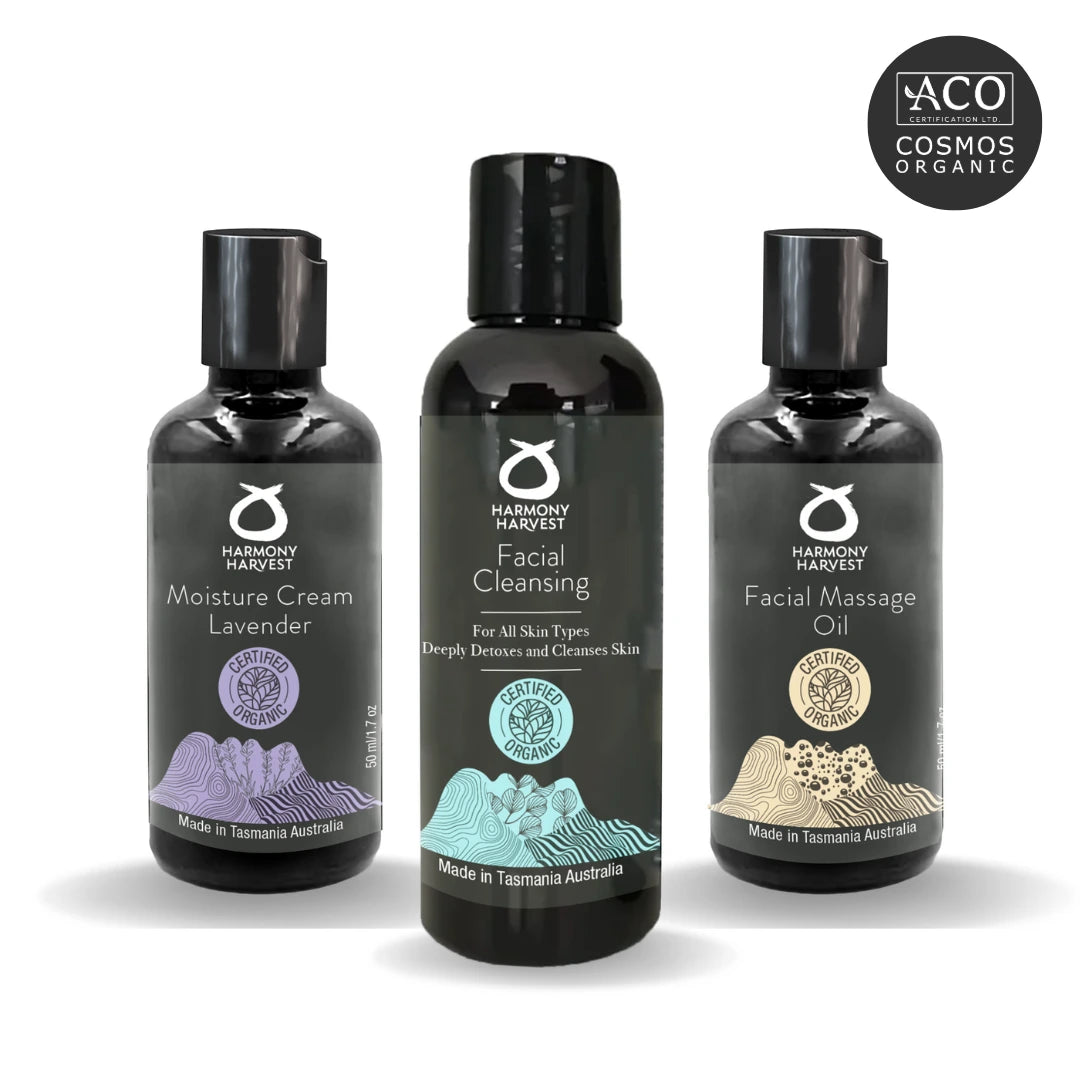
If you would like to build a routine around these ingredients, our Facial Care collection brings together COSMOS-certified organic, vegan and cruelty-free formulas for dry, mature skin, and our Body Care range extends the same gentle approach to the rest of your body.
Frequently Asked Questions
What is the best natural anti-aging ingredient for dry skin?
There is no single winner, but hyaluronic acid and plant oils work best together for dry skin. Hyaluronic acid draws water into the surface layers, while oils such as evening primrose and avocado seal that moisture in and supply fatty acids the skin barrier needs. Antioxidants like vitamin C and E add protection against environmental stress. Layering a humectant first, then an oil or rich cream, gives dry mature skin both hydration and moisture retention.
Can plant oils really help dry skin as it ages?
Yes, when chosen well. Oils high in linoleic acid, such as evening primrose and flaxseed, support the skin barrier and help reduce moisture loss. Oleic-acid-rich oils like olive and avocado feel richer and suit very dry skin. Apply them over damp skin or after a hydrating serum so they lock in moisture rather than sitting on the surface. Patch test first if your skin is reactive.
How long does it take to notice a difference from a new skincare routine?
Hydration and comfort often improve within a week or two, while changes to fine lines, skin tone and firmness take longer, usually eight to twelve weeks of consistent use. Natural ingredients work gradually by supporting the skin barrier and cell renewal rather than forcing rapid turnover. Photograph your skin in the same light each fortnight so you can judge real progress instead of relying on how it feels day to day.
How can I support dry skin without irritating it?
Keep the routine simple and gentle. Use lukewarm water, avoid harsh scrubs, and choose fragrance-free formulas built around humectants, plant oils and antioxidants. Introduce one new product at a time and patch test on your inner arm for a few days. If your skin stings, flakes or reacts, stop the new product and return to basics. Persistent irritation or cracking deserves a review with your doctor or dermatologist.
Dry, mature skin needs patience and the right ingredients, not more products. At Harmony Harvest, our Facial Care collection is made to support this exact concern. Every formula is COSMOS-certified organic, vegan and cruelty-free, crafted from pure Australian botanicals. Explore the Facial Care range and build a gentle routine that helps your skin feel nourished and look radiant.
Best Sellers
Read more
Organic Scalp Treatments for Thinning Hair
Discover organic scalp treatments for thinning hair. Learn which natural ingredients support hair health and scalp balance without synthetic chemicals.
Read more
Is Plant-Based Skincare Effective for Wrinkles?
Is plant-based skincare effective for wrinkles? Explore the evidence on collagen, plant peptides and realistic results for mature skin.
Read more