

Is Organic Skincare Really Worth It? A 2026 Guide
Table of Contents
- What Organic Actually Means on a Skincare Label
- Understanding Organic Skincare Certifications
- The Greenwashing Checklist: How to Spot Real Organic Claims
- What Organic Ingredients Can and Cannot Do for Your Skin
- How to Transition to a Natural Skincare Routine
- The Cost-Benefit Reality of Organic Skincare
- Frequently Asked Questions
Last Updated: September 17, 2026
What Organic Actually Means on a Skincare Label
Walk down any beauty aisle and you'll see the word "organic" printed on everything from face washes to body lotions. But is organic skincare really worth it, or are you paying a premium for clever marketing? The answer depends entirely on whether the product behind the label is genuinely certified, or simply borrowing the vocabulary of clean beauty.
- Consumer law. The Australian Consumer Law prohibits misleading or deceptive conduct and false or misleading representations about goods. The ACCC prohibits misleading or deceptive conduct and false or misleading representations about goods, and its green marketing guidance sets out what businesses must be able to prove.
- Therapeutic goods rules. If a product makes a therapeutic claim, treating acne, eczema, or any diagnosed condition, it may fall under the Therapeutic Goods Act 1989 and be regulated by the TGA, which is a different regime entirely from cosmetics.
- Voluntary certification. Private standards such as COSMOS, ACO (Australian Certified Organic), and Ecocert sit on top of the legal baseline. They are not mandated by law, but they are audited, and that audit is what turns a claim into a guarantee.
ACCC guidance on green marketing claims
Organic vs Natural: The Distinction That Matters
Natural and organic are not interchangeable, and treating them as synonyms is the first mistake most shoppers make.
Why the Percentage Claim Is the Real Test
When a brand says "made with organic ingredients," the number that matters is the proportion of the total formulation that is certified organic, not the proportion of the botanical portion. A product can be 95% organic by plant content and still be mostly water, glycerin, and synthetic emulsifiers by total weight.
Understanding Organic Skincare Certifications
Certification is the single most reliable way to tell real organic skincare from a marketing claim. A certifying body audits the entire supply chain, from the farm to the finished formula, and verifies the percentage of organic content.
What COSMOS Certification Requires
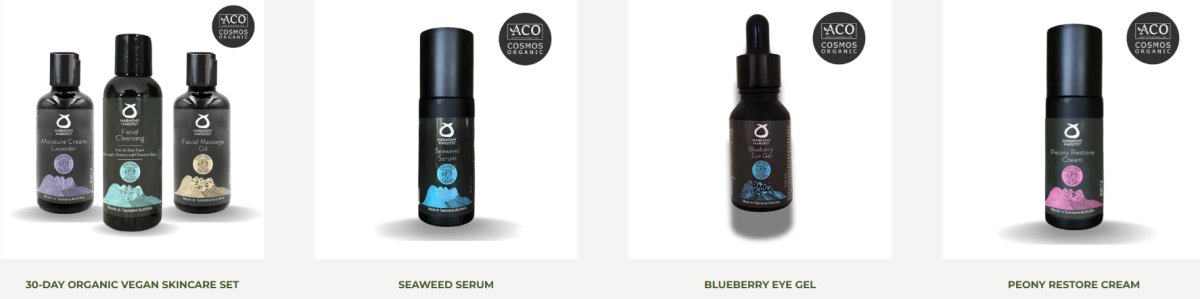
COSMOS is one of the most recognised international standards for organic and natural cosmetics, and it's the benchmark we build our own range around.
The Greenwashing Checklist: How to Spot Real Organic Claims
Greenwashing is the practice of making a product appear more natural or environmentally friendly than it actually is. It's common, and it's legal more often than most people realise.
- Look for a certification logo, not just the word "organic." Recognised marks like COSMOS, ACO, or Ecocert carry real weight. A leaf graphic designed in-house does not.
- Check where "organic" appears. If it's only in the product name or a marketing slogan, be sceptical. Look for it in the actual ingredient list.
- Read the first five ingredients. Ingredients are listed by concentration. If the organic botanicals sit at the bottom, they're present in trace amounts.
- Watch for vague terms. "Chemical-free," "pure," and "botanical" are unregulated. They can mean almost anything.
- Scan for the asterisk. A phrase like "made with organic ingredients" often hides a footnote revealing the product is mostly water and synthetics.
- Verify the claim independently. A genuine certification can be checked through the certifying body's public register.
What Organic Ingredients Can and Cannot Do for Your Skin
Organic ingredients are genuinely good at some things and simply not designed for others. Knowing the difference keeps your expectations realistic.
What they do well:
- Deliver antioxidants and botanical extracts that support the skin barrier
- Provide gentle hydration without harsh surfactants
- Reduce exposure to synthetic preservatives and fragrances that trigger sensitivity
- Support the skin's natural renewal over time
Where they have limits:
- They are not pharmaceuticals.
- Results build gradually rather than overnight.
- Natural formulas can be less stable.
The Pros and Cons of Going Organic
Pros:
- Lower exposure to synthetic pesticides and controversial preservatives
- Gentler on reactive and sensitive skin
- Often cruelty-free and vegan
- Biodegradable ingredients reduce environmental load
- Transparent supply chains when certified
Cons:
- Higher cost, reflecting genuine certification and quality sourcing
- Shorter shelf life
- Slower visible results
- Certification is inconsistent across brands, so label-reading is essential
The honest verdict: organic skincare is worth it if you value what it excludes as much as what it includes. It's less worth it if you're chasing fast, dramatic results from a single product.
How to Transition to a Natural Skincare Routine
Switching to natural skincare doesn't require a ten-step ritual. In fact, the best transitions are gradual, because your skin barrier needs time to adjust to new formulations.
Start with this sequence:
- Introduce one product at a time. Swap your cleanser first, then wait a week before changing anything else. This makes it easy to identify what works.
- Patch test every new product. Apply a small amount behind your ear or on your inner forearm and wait 24 to 48 hours. This is standard practice and it prevents avoidable reactions.
- Simplify before you expand. A gentle cleanser, a hydrating moisturiser, and a facial oil cover most needs. You don't need a full shelf.
- Expect an adjustment period. Some people notice mild dryness or breakouts in the first fortnight as the skin rebalances.
- Keep your routine consistent. Organic ingredients work cumulatively. Give a formula four to six weeks before judging it.
The Cost-Benefit Reality of Organic Skincare
Organic skincare costs more. That's not a marketing trick, it's a reflection of real inputs. Certified organic farming yields less per hectare, independent audits cost money, and short shelf life means less efficient inventory.
Where the Premium Actually Goes
Most guides stop at "it costs more." The more useful exercise is understanding which costs are structural and which are marketing.
- Certification and auditing. A certifying body audits the supply chain from farm to finished formula, and that audit is repeated. It is a real, recurring cost that uncertified brands do not carry.
- Ingredient sourcing. Certified organic botanicals are grown without synthetic pesticides and fertilisers, which typically means lower yields and higher per-kilogram costs than conventional equivalents.
- Preservative systems. Natural preservative systems can lead to shorter shelf life, which means less efficient inventory and more waste absorbed into the price.
- Packaging. Recyclable or responsibly sourced packaging usually costs more than standard plastic.
- Scale. Many certified organic brands are smaller, so they don't benefit from the same economies of scale as mass-market conventional brands.
A Practical Way to Decide
Rather than asking "is organic worth it," ask "is this specific product worth it for my skin and my values." Here's a framework:
What You're Paying For |
What It Delivers |
Who Benefits Most |
|---|---|---|
Certified ingredient sourcing |
Lower pesticide exposure |
Sensitive and reactive skin |
Independent auditing |
Verified claims, no greenwashing |
Skeptical shoppers |
Gentler preservative systems |
Reduced irritation risk |
Barrier-compromised skin |
Sustainable packaging |
Lower environmental impact |
Eco-conscious buyers |
Vegan, cruelty-free formulas |
Ethical alignment |
Values-driven consumers |
The Cost-Per-Use Reframe
A common mistake is comparing sticker prices across products of different sizes and concentrations. A more honest comparison is cost per use, or cost per month of routine.
The Environmental Case Beyond the Bottle
There's also an environmental case that goes beyond the bottle. Certified organic farming practices tend to support soil health, reduce chemical runoff into waterways, and use less energy-intensive inputs. That impact extends well past your bathroom shelf, and it's a benefit you don't personally receive, which is precisely why it's easy to overlook in a cost-benefit calculation.
Australian Certified Organic standards overview
Frequently Asked Questions
Are organic skincare products actually more effective than conventional options?
It depends on the formulation and what you need. Organic skincare excels at hydration, barrier support, and delivering antioxidants from botanical extracts. Conventional products may use synthetic actives like retinol that target specific concerns. The key difference often comes down to formulation stability and how well the product suits your skin. COSMOS-certified organic products must meet strict standards for ingredient sourcing and processing, which supports consistent quality.
How can you tell if a skincare product is truly organic?
Look for third-party certification logos, not just the word 'organic' on the front label. Certifications like COSMOS require minimum percentages of organic ingredients and restrict synthetic chemicals. Check the ingredient list: if water is first and only one or two botanicals appear at the end, it is likely marketing rather than genuine organic formulation. Understanding organic skincare certifications helps you separate real claims from greenwashing.
Does organic skincare have a shorter shelf life?
Often, yes. Without certain synthetic preservatives, organic formulas can have shorter shelf lives. However, certified organic brands use approved natural preservatives and stabilisers to maintain formulation stability. Store products away from direct sunlight and heat, and always check the period-after-opening symbol. Refrigeration can extend shelf life for water-based products.
Is organic skincare worth it if I have sensitive skin?
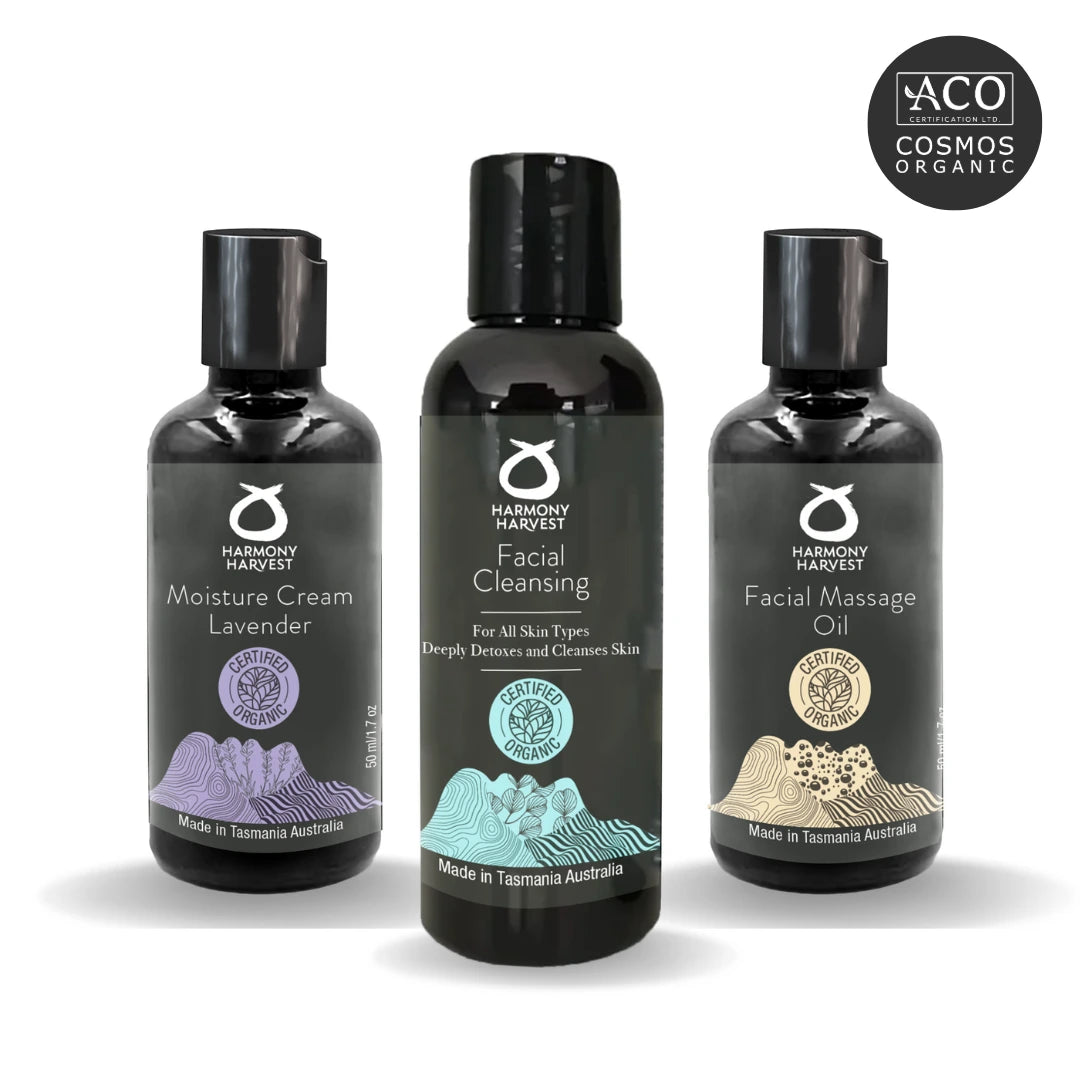
Organic skincare can suit sensitive skin because it avoids many synthetic ingredients linked to contact dermatitis. However, natural does not automatically mean hypoallergenic. Botanical extracts and essential oils can still trigger reactions. Patch testing new products on your inner arm for 48 hours is essential. Look for fragrance-free options and ingredients that support the skin barrier, like plant oils rich in fatty acids. Deciding whether organic skincare is worth it comes down to what you value: verified purity, gentler formulations, and ethical sourcing, or speed and lower upfront cost. If you want skincare you can trust without decoding the label yourself, Harmony Harvest offers a COSMOS-certified organic, vegan, and cruelty-free range built on Australian botanicals. Start with our Facial Care collection and give your skin the nourishment it deserves.
Best Sellers
Read more
How to Read Haircare Labels for Organic Certification
Learn how to read haircare labels for organic certification. Spot COSMOS logos, decode INCI lists, and tell certified organic from greenwashing. Start.
Read more
Transitioning to Organic Haircare: Beginner Guide 2026
Transitioning to organic haircare? Learn what to expect, how to detox from synthetics and build a routine that works. Start your switch with confidence.
Read more