


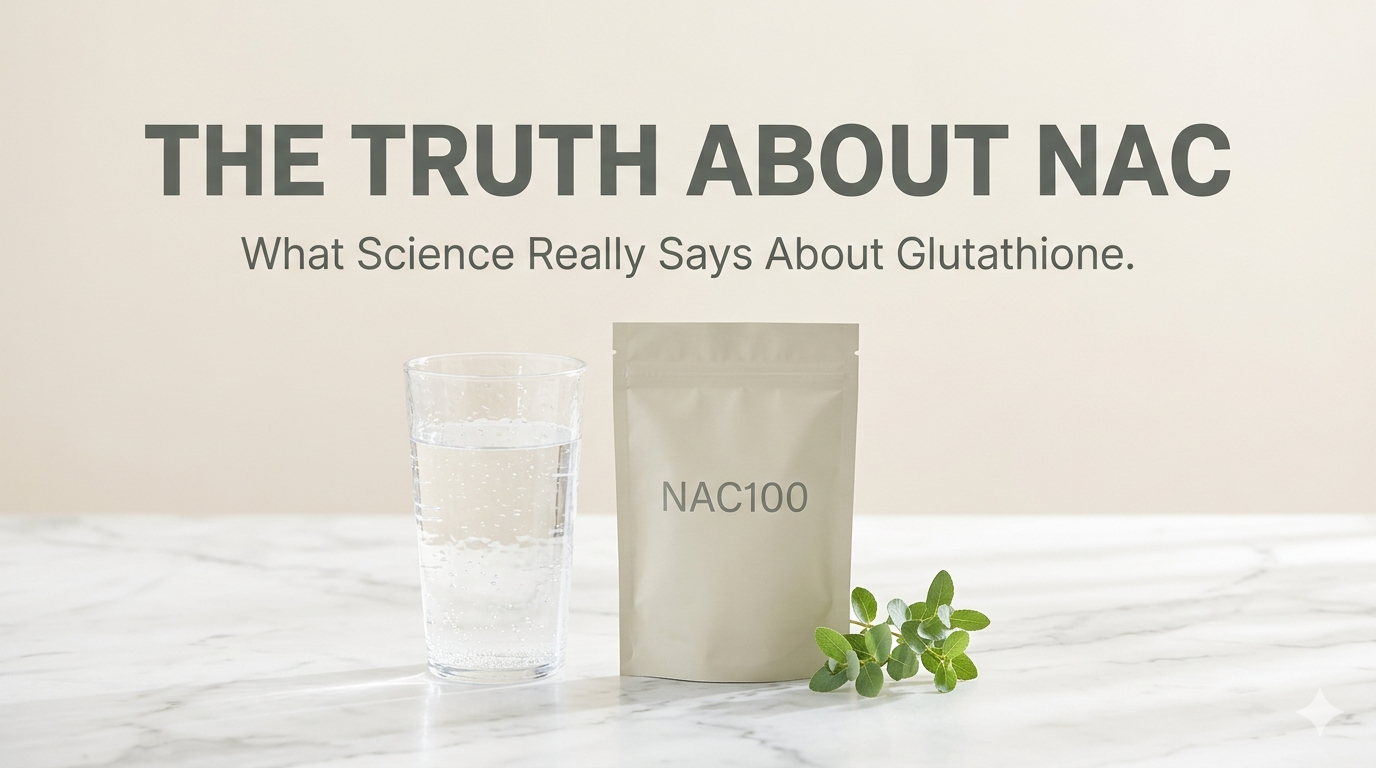
Does NAC Really Increase Glutathione Levels? Here's What the Research Actually Shows
Brought to you by Harmony Harvest, maker of NAC100.
If you've spent any time researching antioxidant supplements, you've probably come across N-Acetylcysteine, better known as NAC. It shows up in conversations about skin health, detox, immunity, and even brain function. But how much of that is backed by real evidence, and how much is wellness-industry shorthand that's been repeated so often it sounds like fact?
Let's separate what's well-established from what's still being studied.
What NAC Actually Is
NAC is a derivative of the amino acid cysteine. Cysteine matters because it's the rate-limiting ingredient your body needs to manufacture glutathione — often called the body's "master antioxidant" because nearly every cell relies on it to neutralize oxidative stress and free radical damage.
The problem with just taking glutathione directly is that oral glutathione needs to be broken down into its constituent amino acids before the body can use it, which limits its effectiveness. NAC sidesteps that issue. It works as a practical, well-absorbed precursor: it's a bioavailable cysteine donor that can increase cellular glutathione levels more reliably than taking glutathione itself in standard oral form.
What the Research Actually Supports
This is where it's worth being precise, because "boosts glutathione" gets thrown around loosely in marketing copy. Here's what's actually backed by clinical and mechanistic research:
The core mechanism is well-documented. NAC, along with two other amino acids, is necessary to make and replenish glutathione in the body. This isn't a fringe theory — it's basic biochemistry that's been studied for decades.
Researchers are still mapping the full picture. Interestingly, even with this established mechanism, researchers don't yet fully understand every pathway by which NAC promotes health — they do know it helps the body produce more glutathione, which in turn helps clear out cell-damaging free radicals. That's an important distinction: the input-output relationship (NAC raises glutathione) is solid, but the downstream effects on specific health outcomes are still being actively researched.
Respiratory health has the strongest evidence base. This is actually where NAC has its longest clinical track record. NAC helps replenish glutathione levels in the lungs and reduces inflammation in the bronchial tubes, which is why it's used in clinical settings for conditions like COPD and chronic bronchitis — well outside the skincare and longevity conversations where it's now trending.
Where the Evidence Gets More Nuanced: Skin
This is the part most product marketing conveniently skips, and it's worth sitting with.
A randomized, double-blind, placebo-controlled trial looked specifically at oral NAC for facial melasma (a common form of skin pigmentation). The result: oral NAC was not more effective than a placebo at reducing pigmentation severity over an eight-week period, even though both groups showed improvement — most likely driven by the daily broad-spectrum sunscreen everyone in the study was using, not the supplement itself.
That doesn't mean NAC has zero relevance to skin. It means the relationship is biologically plausible, not proven for oral supplementation and pigmentation specifically.
Interestingly, the evidence looks different when NAC is applied topically rather than taken orally. In a small clinical study, topical NAC applied over four weeks increased skin hydration and reduced transepidermal water loss in the majority of both healthy volunteers and patients with atopic dermatitis (eczema). That suggests a genuine effect on skin barrier function — a different outcome than pigmentation or "radiance," and one specific to topical application rather than oral dosing.
This is a useful lesson in how supplement claims get oversimplified: "NAC is good for skin" can be true and false at the same time, depending on which outcome you're measuring and how it's delivered.
Beyond Skin: Detox, Immunity, and Brain Health
The detox and immune claims tend to track back to the same mechanism — glutathione is heavily used by the liver in its detoxification pathways, and adequate antioxidant levels support healthy immune cell function. Since NAC reliably increases the glutathione precursor pool, the biochemical logic holds up reasonably well here, even though large-scale human trials directly tying NAC supplementation to measurable "detox" outcomes are limited.
The brain health angle is a bit different. NAC's role isn't just about glutathione — it also appears to help regulate glutamate, a neurotransmitter central to learning, memory, and mood. Research in this area is genuinely promising but still early, particularly when it comes to conditions like depression or neurodegenerative disease. It's an active research area, not a settled conclusion.
So, Does NAC "Really" Increase Glutathione?
Yes — this is the one claim in the entire NAC conversation that's on the firmest ground. The mechanism is well-documented, well-understood, and not seriously disputed in the scientific literature.
What's far less settled is what raising glutathione levels actually does for any specific person, for any specific outcome — especially something as multifactorial as skin appearance, which is also shaped by genetics, sun exposure, sleep, diet, smoking, and skincare habits. A single supplement is unlikely to override all of that on its own.
The Practical Takeaway
If you're considering NAC, the most evidence-backed reasons to do so are respiratory support and general antioxidant/detox pathway support — not specific, guaranteed cosmetic outcomes. Skin benefits remain plausible but are not strongly proven for oral forms, while topical application shows more direct (if limited) evidence for barrier function specifically.
As with any supplement, dosage and individual health context matter. NAC is generally well tolerated, but it's not risk-free at high doses, and it can interact with certain medications. Talking to a healthcare provider before starting it — particularly if you're pregnant, breastfeeding, or managing an existing condition — is the right move, not an afterthought.
The honest answer to "does NAC work" is: it does what the biochemistry says it should do. Whether that translates into the outcome you're hoping for depends on which outcome you mean.
If You're Considering an NAC Supplement
If you've read this far and are weighing whether to try NAC, look for a clean, single-ingredient formulation rather than a proprietary blend — that makes it easier to know exactly what you're taking and at what dose. Harmony Harvest's NAC100 is a straightforward N-Acetylcysteine supplement for this reason — formulated as a single ingredient, without unnecessary fillers.
As above: talk to your doctor before starting, especially if you're pregnant, breastfeeding, or on other medications.
This article is for educational purposes and is not intended to diagnose, treat, or cure any disease.
References
-
WebMD. "N-acetylcysteine (NAC): Health Benefits, Side Effects, Dosage, and More." https://www.webmd.com/diet/health-benefits-nac
-
Healthline. "Top 9 Benefits of NAC (N-Acetyl Cysteine)." https://www.healthline.com/nutrition/nac-benefits
-
Transparent Labs. "Glutathione vs. NAC: An Expert Comparison of Antioxidants." https://www.transparentlabs.com/blogs/all/glutathione-vs-nac
-
"Lack of efficacy of oral N-acetylcysteine in the treatment of facial melasma in women: a randomized, double-blind, placebo-controlled clinical trial." PMC, National Library of Medicine. https://pmc.ncbi.nlm.nih.gov/articles/PMC11551260/
-
"Topical N-acetylcysteine can restore skin barrier function in healthy volunteers and atopic dermatitis patients." Journal of Dermatological Science. https://www.jdsjournal.com/article/S0923-1811(17)30227-X/abstract
-
Face Age. "NAC Supplement Skin Benefits: What Science Shows." https://face-age.net/article/nac-supplement-skin
Best Sellers
Read more
Why "Watery" is the Highest Form of Luxury (and Health)
If you are used to luxury cosmetics, you are probably familiar with thick creams, heavy lotions, and pearly lathers. So, when you try Harmony Harvest for the ...
Read more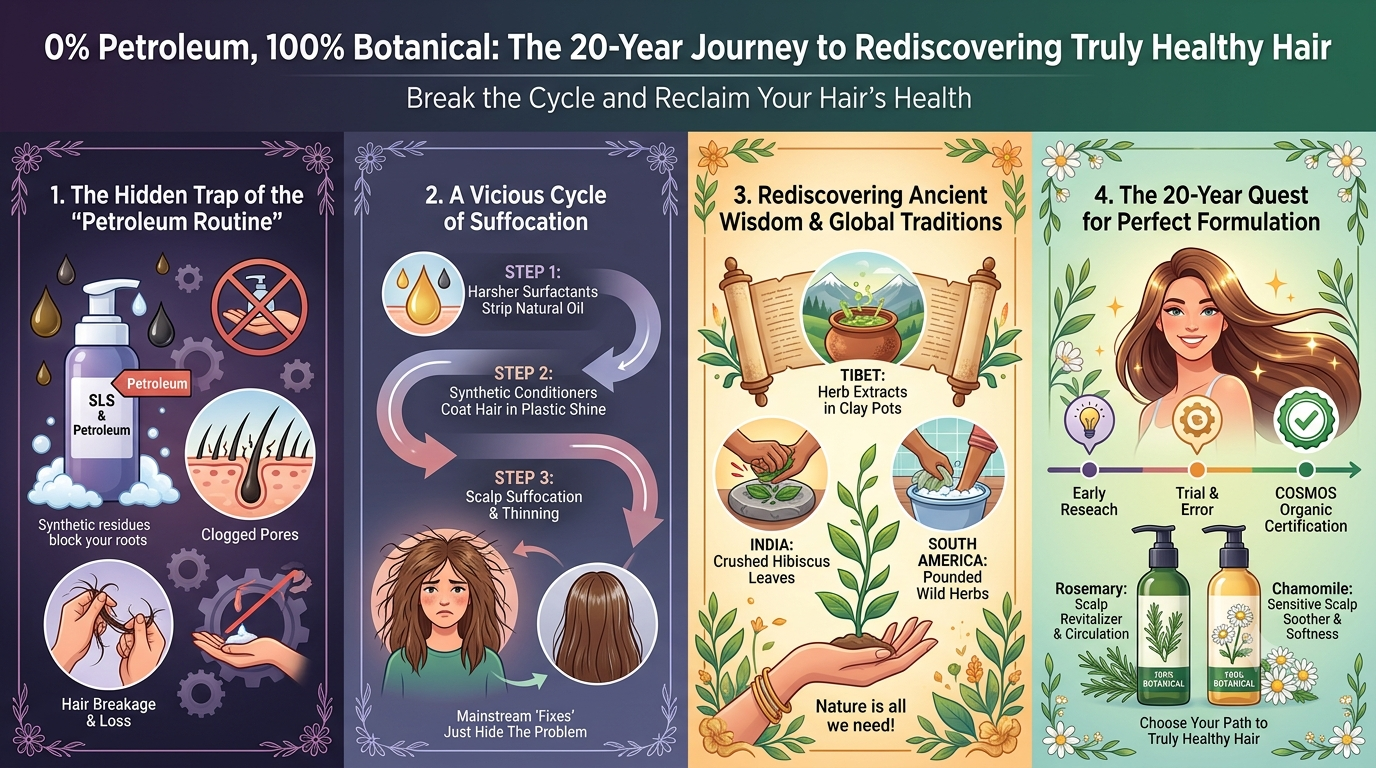
0% Petroleum, 100% Botanical: The 20-Year Journey to Rediscovering Truly Healthy Hair
Most commercial shampoos use petroleum-derived ingredients that create a fake lather while slowly suffocating your scalp. After a 20-year quest to fix my own ultra-sensitive, wire-coarse hair, I un...
Read more